Søk
Filtre
Filtre
Resultat
- 5310studieportal / fakultet-for-samfunn-kunst-og-medier / bachelorniva / 5310
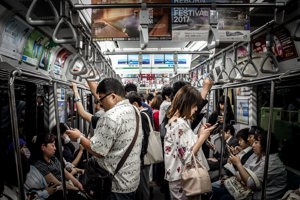
- In the future, being around other people may prolong the lifetime of your smartphone’s batterykunnskap-kristiania / 2022 / 08 / in-the-future-being-around-other-people-may-prolong-the-lifetime-of-your-smartphones-batteryKNOWLEDGE @ KRISTIANIA: Technolgy Today, smartphones are used to aid and improve all kinds of tasks in almost all aspects of daily life. Smartphones, however, are generally considered fairly resource constrained and their available power is the most constrained resource of all— without power the smartphone won’t function. Not surprisingly, battery life has been identified as one of the most desired features of mobile devices. A possible solution For the purpose of improving battery life in settings where users are co-located, we conducted a study to measure the impact on the consumed smartphone energy when data were collected in a distributed manner. This means that every device shared the same data as opposed to every device collecting its own sensor data. The results indicated that a shared distributed collection imposed less energy consumption than traditional approaches. By opportunistically connecting to and sharing common computations with nearby smartphones, co-located users can compute tasks as ‘one entity’. The result of the computations done collectively is then available for all nearby devices and ensures that no computation is done more than once. A more seamless travel experience Let’s take an example of a near-future public transport application, taking advantage of the Be-in/Be-out paradigm. Be-in/Be-out is about enabling user’s of public transport to enter and leave vehicles without having to do any explicit action— a seamless, ticket free travel experience. In order to achieve this, heavy local computations are needed in order to estimate or verify if a user is actually on a public transport vehicle, which vehicle and how long the journey is, in order to achieve accurate ticketing. The Be-in/Be-out scenario in public transport, is a very relevant scenario which we are currently researching through a joint research effort between fluxLoop, Kristiania University College and other public transport operators such as Nordland Fylkeskommune and Ruter. Devices sharing the same data In scenarios such as this, the smartphones of embarking and disembarking travelers can collaborate as one entity in order to calculate whether travelers are embarking, disembarking and which mode of transport the travelers are in. Near-future public transport solutions are examples where opportunistic collaboration could prove beneficial. However, this approach could also be employed in any kind of scenario where devices are co-located and ambient sensor information needs to be collected and processed. Cloud solutions are not necessarily the best solutions The last couple of years, in order to combat the resource scarceness of mobile phones, many applications send heavy computation to the cloud for processing and the result is then returned to the device. This can significantly lower the resource consumption of mobile phones and contribute to a longer lasting battery. At the same time, the concept of the Internet of Things (IoT) has emerged which has led to a drastic increase in connected devices. This, in turn, leads to elevated network traffic which potentially can cause latency and a heightened load on servers worldwide. Not only does this affect the internet backbone and the service providers, but an increase in network usage from mobile devices might also incur added cost for the end-user. In addition, by sending data to the cloud it brings an added risk to security and introduces new attack vectors. Data can be intercepted on the way, or malicious employees working at the service provider can access and steal your data. More processing on device may increase the security of mobile solutions Security concerns, in combination with better hardware and more efficient algorithms has led to the computations again being moved back to the users’ devices. However, the issue of available power on mobile devices still persists. This is quite the predicament! On one hand you have a significant reduction in energy consumption on the user’s device and on the other you have a significant increase in network load and additional security concerns. It is currently hard to deal with all these issues, however, on-device processing and opportunistic collaboration can help mitigate security issues to some extent. A way to reduce energy consumption It is difficult to say exactly which calculations are needed for different solutions in the future. However, for scenarios where multiple devices need to do the same calculations within the same context, collaborating on the computation is a viable approach. Through opportunistic collaboration it is possible to reduce energy consumption, while simultaneously keeping network traffic at a minimum. In the future this solution might contribute to a more seamless travel experience with fairer pricing schemes and hopefully— once implemented, the travelers won’t notice a significant change in their device’s power consumption due to distributed work collaboration. Referanser: Skretting and T.-M. Grønli, "Distributed Sensor Data Collection Using Mobile Clouds for Public Transportation," in IEEE 17th International Conference on Intelligent Computer Communication and Processing, 2021. Ma, Y. Zhao, L. Zhang, H. Wang and L. Peng, "When mobile terminals meet the cloud: computation offloading as the bridge," in IEEE Network, vol. 27, no. 5, pp. 28-33, September-October 2013, doi: 10.1109/MNET.2013.6616112. Text: PHD-candidate Anders Skretting, School of Economics, Innovation and Technology. Anders.Skretting@kristiania.no
- Hvor finner man utesteder med 18-årsgrense i Oslo?aktuelt / hvor-finner-man-utesteder-med-18-arsgrense-i-osloDe fleste utestedene i Oslo har 20-årsgrense, men mange ferske studenter har gjerne ikke fylt 20 år ennå. Derfor har vi laget en guide til deg som vil vite hvor alle i venneflokken kan samles! Nedenfor finner du en håndfull studentpuber, barer og nattklubber som slipper inn deg under 20. Et lite tips: På byens mange studentpuber kan du møte andre studenter, få nye vennskap og kanskje til og med knytte noen nyttige kontakter gjennom studietiden. OBS: Alle studentpuber holder stengt i sommerferien! Noen av byens hyggeligste studentpuber Skjenkestua Type: Studentpub Åpningstider: Torsdag: 17.00-00.00 Fredag: 15.00-00.00 Avslutt skoledagen og gå helgen i møte med en tur på vår studentbar på Fjerdingen. Her arrangeres det spillkvelder, quiz, beerpong-turneringer og karaoke! Følg med på Facebooksiden for å se hva som skjer. Her kan vi love god stemning og servitører som er like hyggelige som prisene i baren. Les mer om Skjenkestua her! Hvelvet Type: Studentpub Åpningstider: Torsdag: 17.00-03.00 En av våre studentpuber, drevet av flinke frivillige fra Studentunionen. Har du noen gang lurt på bakgrunnen for navnet? Det kommer fra at Hvelvet ligger i Oslos eldste bankhvelv midt i Kvadraturen! Her kan du ha en helaften med gode venner. Les mer om Hvelvet her! Samfunnet Bislet Type: Studentpub Åpningstider: Onsdag: 16.00-00.00 Torsdag: 17.00-01.00 Fredag: 20.00-03.00 Denne studentbaren omfavner selve essensen av studenttilværelsen! Mursteinsvegger, bandplakater og pallesofaer. Her skjer det alltid noe: Quiz, konserter og stand-up. Det er heller ikke noe minus at pilsen er blant byens billigste! Les mer om Samfunnet Bislet her! Kjellern Type: Studentpub Åpningstider: Torsdag: 11.00-15.00 Fredag: 17.00-02.00 Universitetet Blinderns studentpub serverer både kaffe og øl til hyggelige priser. Ta t-banen til Blindern, og studentpuben finner sted i Helga Engs hus. Her arrangeres det quiz, halloween-fest og afterski avhengig av sesongen. Et hyggelig sted å møte andre studenter. Les mer om Kjellern her! Det Norske Studentersamfund Type: Studentpub Åpningstider: Mandag – fredag: 14.00-00.00 Lørdag: 20.00 – 02.00 På Chateau Neuf skjer det noe hver eneste dag! Foredrag, quiz, filmvisning, musikaler, workshop, improshow og masse mer. Her er lokalene gigantiske, men prisene i baren likevel små. Følg med på nettsiden for å skje hva som skjer i nærmeste fremtid. Les mer om om Det Norske Studentersamfund her Ta med vennegjengen på en av byens mange barer Oslo har flust av barer i sentrum, og en del av dem har faktisk 18-årsgrense! Flere av stedene serverer også mat. Ta med vennegjengen hit for en hyggelig kveld. Ocean Cafe Bar Type: Bar Åpningstider: Mandag - lørdag: 08.00-03.30 Søndag: 12.00-00.00 Er dette byens lengste åpningstider? Her kan du ta med vennegjengen for en matbit, en runde biljard eller en rimelig halvliter mens dere hører musikk fra jukeboxen. Stort pluss for hyggelige servitører! Her er det masse liv etter 23.00 i helgene. Luna Park Type: Bar Åpningstider: Mandag og tirsdag: 15.00-23.30 Onsdag og torsdag: 17.00-02.00 Luna Park er åpen for de under 20 år på hverdager. Baren ligger ved regjeringskvartalet, i en litt skjult gate. Adressen er Akersgata 47. Drar du hit kan du drikke rimelig pils, mens du hører på gamle, nostalgiske låter. Et hyggelig sted som passer for deg som ønsker å slappe av med gode venner. Les mer om Luna Park her! Cafe Nero Type: Bar Åpningstider: Mandag – søndag: 15.00-01.00 En hyggelig nabolagspub midt på Bislett. Her har de et stort utvalg øl, og et nesten like stort utvalg brettspill. Bor du i nærheten er dette et hyggelig sted å ta turen med vennegjengen! Les mer om Café Nero her! Arrangementer Det er mange arrangementer i Oslo med 18-årsgrense. Du kan følge med på Visit Oslo for en oversikt over konserter, stand-up, teater og mye mer! Vil du danse? Utvalget av nattklubber med 18-årsgrense er dessverre ikke særlig bredt, men frem til du fyller de magiske 20 har du disse alternativene. KJ10 Type: Nattklubb Åpningstider: Fredag og lørdag: 22.00-03.00 Ønsker du å danse til partymusikk ut i de senere nattetimer er dette stedet for deg! Her er det viktig å være i køen før klokken 23, hvis ikke risikerer man å bli stående utenfor resten av kvelden. Inngangsprisen er 100 kr (fredag) og 200 kr (lørdag). Tips: Ikke ta med eldre venner, det er ikke sikkert de kommer inn – her har de nemlig en øvre aldersgrense. Les mer om KJ10 her! John’s Bar Type: Nattklubb Åpningstider: Torsdag: 22.00-03.00 John's Bar har 18-årsgrense hver torsdag. Her kan man danse til musikk som best beskrives som «blanda drops» med alt fra AC/DC til norsk danseband, med innslag fra topplista og gamle Melodi Grand Prix-låter. Her blir det ofte ganske fullt, så ikke vent for lenge med å stille deg i køen! Les mer om John's Bar her! Kos dere med Oslos uteliv, og pass på deg selv og andre!

- Graduation ceremony 2026om-kristiania / kalender / graduation-ceremony-2026School of Economics, Innovation and Technology, Master students
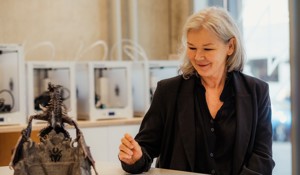
- Møt fagansvarlig for rykende ferske Design Thinkingaktuelt / 2019 / 08 / mot-fagansvarlig-for-rykende-ferske-design-thinking-i-praksisNavn: Heidi Back Faglig studieveileder for: Design Thinking Hva er Design Thinking? Vi skreddersyr en kundereise. Det har ikke noe med å tegne eller lage noe. Det handler om å optimalisere kundereisen for brukeren av f.eks. et produkt eller en tjeneste. Dette gjør man ved å løse opp i alle floker som en kunde opplever. Det kan være alt fra opplevelser som å stå i en lang kø på en cafe, lang ventetid på svar i en telefonkø, til komplekse samfunnsfloker. I denne prosessen benytter vi ulike verktøy for å kartlegge både brukeren og ansatte i en bedrift, for å bedre produktet eller tjenesten. Med en god innsikt i brukerens opplevelse, analyserer vi alt underlag som er samlet inn og har idemyldring for å finne en løsning på problemstillingen. Den beste løsningen utarbeides med en prototype som testes på brukeren. Studiet passer for deg som ønsker et konkurransefortrinn i arbeidsmarkedet.. Hvem passer dette studiet for? Alle. Dette er en god metodikk, med gode verktøy, som alle bedrifter og organisasjoner burde ta i bruk. Studiet passer for deg som ønsker å skape nye verdier og en bedre hverdag for brukere der ute i samfunnet. Det er et praktisk studie, hvor vi jobber i tverrfaglige team. Ikke minst så passer studiet for deg som ønsker et konkurransefortrinn i arbeidsmarkedet. Hva skal til for å lykkes med en utdanning innenfor Design Thinking? Det krever å lære seg prosessen og de verktøyene som brukes. Det er ikke noe du kan lese deg til, men du må ut og oppleve. Ta på deg skoene til brukeren og forstå hvordan de opplever produktet eller tjenesten. Derfor må du også like mennesker, ha empati, være åpen for andres problemstillinger, like å jobbe i team og være kreativ. Hva gleder du deg mest til, med å lede et helt nytt studium? At det er så mye nytt! Det å kunne utforske prosessen sammen med studentene og at de ser hvor viktig denne kompetansen er å ta med seg videre i sin jobbkarriere. Jeg vil jobbe aktivt for at de blir engasjert i å skape nye verdier for brukerne i de casene vi skal jobbe med. Det blir flere spennende caser hvor vi tar inn bransjen i prosessen. Blant annet tar vi utgangspunkt i FNs 17 bærekraftmål og jobber bevisst med samfunnsaktuelle caser for å skape gode verdier. De bedriftene som lykkes, er de som er gode på Design Thinking. Har du noen tips til nye studenter? Jeg tror at utdannelse vil bli mer som moduler etterhvert. På denne måten bygger du opp din egen utdanning med flere forskjellige utdanninger. Min oppfordring er derfor å plukke med deg Design Thinking i praksis. Det er utrolig verdifullt. Det opplever bedrifter mer og mer etterhvert også. De bedriftene som lykkes, er de som er gode på Design Thinking.
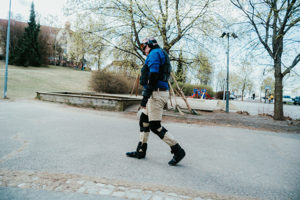
- Applying empathy as a tool for innovative thinkingkunnskap-kristiania / 2021 / 5 / applying-empathy-as-a-tool-for-innovative-thinkingKNOWLEDGE @ KRISTIANIA: Innovation Thanks to modern medicine and improvements in lifestyle people are living longer. Figures suggest that by 2060 there will be more than double the number of older adults over the age of 70, triple the number over 80 and there is a good chance that almost 1 out of 5 will celebrate their 100th birthday. But fewer still will “age in place”; that is, in their own homes. Most of us hope to age in place. But the reality is that only 13% of Norwegians die in their own homes. Read also : Slik kommer du i gang med designtenkning (in Norwegian) Understanding “Age in Place” In order to be able to understand how older adults can “age in place” we need to understand the everyday challenges they face. An empathetic understanding of daily life can give researchers and practitioners the insight to re-frame potential problems and current limitations. At Kristiania University College, students are encouraged to try our “GERT” – an ageing suit to gain insight into an older adult’s world through the completion of simple tasks most adults consider normal, almost automatic activities of daily life. Read also: Designer en bedre verden (in Norwegian) When activities of daily life become a struggle The activities of daily life that most of us consider to be routine and easily completed can become a struggle in our older adult lives. This often leads to changes in behaviour, increased pressure from our environments, and the need for help which affects our personal independence and further, our dignity. Walking, getting up from a seated position, ascending and descending stairs, opening doors, and all the tasks we need to complete in a day to remain independent are attempted in an effort for designers to gain insight into a world they will inhabit in their future. Not to mention navigating retail and public spaces, reading product packaging labels and wayfinding information, paying for their purchases, and getting everything back home. Read also: Eye-shadowing Customers’ Reviews Feeling the restrictions of aging With the GERT suit we can, in effect, enter a world of sensory impairment (and to some degree deprivation) and literally feel the weight and kinaesthetic restrictions of ageing as well as haptic, audio and visual degradations. The activities of daily life become more challenging and what was once a semi-automatic easy task becomes something new as we struggle to cope with our body’s limitations and with new challenges within our familiar surroundings. According to the Lawton and Nahemow’s ecological theory of aging the performance of and comfort with daily activities is possible when an appropriate match between a person and his/her environment is achieved. This match is known as person-environment fit (P-E fit). The P-E fit is important in understanding the dynamic relationship between people and their environments in all fasits of life but especially as we age. Read also: Five principles in defining a powerful purpose Empathy-driven design To gain better personal insights into the subject matter students in interior architecture use this GERT suit as a pedagogical tool to sense the challenges via empathy-driven design. It allows them to feel, on their person, the challenges encountered by growing numbers in society. In order to make independent living and ageing in place possible for as many as possible, with as much dignity as possible, we require more research into the challenges being faced and the “jobs to be done” and to educate future generations to think differently about environments, products and services. Read also: How Business is Accelerating Toward a Fairer Future Sensing solutions My own research involves how our haptic senses “read” spaces and how we move around using kinesthetic and tactile modalities (senses) as our bodies slow down and our visual and auditory modalities decay. Within the domains of architecture and design, vision is the predominant sense. The dominance of the eye (ocularcentrism) and the suppression of the other senses tends to push us into detachment, isolation and exteriority. It is hoped that this research will help to aid architects, product and service designers by giving them more insight into the possibilities, beyond aesthetics, to engage haptics in design solutions to better meet the housing and service needs of a growing, and often misunderstood, user group. Read also: Why consumers co-create Finding innovative ways of reframing problems Empathy, by definition, is an action. It needs to be experienced, as the GERT suit enables, to be understood. Empathy is the first phase of design thinking and plays a critical role in finding innovative ways of redefining and reframing problems. As we age, our bodies go through gradual and progressive changes that can only be truly understood as we grow old. But if we can project this decline forward to the present, we can expose young (and not so young) designers, innovators and researchers to the problems the current and coming generations are facing. References: This article is based on lectures in the Interior Architecture bachelor’s «Ageing in Place» course at School of Arts, Design, and Media , Kristiania University College. The article also presents insights from an ongoing PhD research project on the use of haptics in interior architecture as a tool to extend the independence and dignity of the older adults in society. Text: Lecturer David Coates, Department of Economics and Innovation, Kristiania University College.
- Benytt deg av studentrabattenaktuelt / benytt-deg-av-studentrabattenDu er kanskje klar over studentrabatten på kollektivtransport, men visste du at studentbeviset kan kvalifisere til rabatt på alt fra takeaway til frisør? Passer du på å benytte deg av studentrabatten kan du spare flere hundrelapper, om ikke tusenlapper. Vi deler noen av de beste studentrabattene vi kunne finne der ute! Studentrabatt på abonnementer Spotify: Få Spotify Premium Student én måned gratis, deretter koster abonnementet 75 kr per mnd. Apple Music: Én måned gratis prøveperiode, deretter koster abonnementet 75 kr per mnd. med studentrabatt. Du får også gratis tilgang på Apple TV+ med abonnementet! Adobe Creative Cloud: Trenger du Photoshop, Illustrator eller Premiere til skolearbeidet? Adobe tilbyr hele 70 % rabatt for studenter, hvor man får tilgang til alle applikasjoner for kun 238 , 75 kr per mnd. det første året. Deretter koster abonnementet 492 ,50 kr per mnd. Her får du studentrabatt på mat og drikke Visste du at mange restauranter og kaffebarer tilbyr studentrabatt? Noen prosenter på en middag ute eller takeaway-kaffen er aldri feil! Mat Døgnvill Burger: 10 % på all mat og egne studentpriser på utvalgte drikkevarer. YO! Sushi Østbanehallen: 25 % studentrabatt på all mat. Peppes Pizza: 20 % studentrabatt på alle ordinære priser når du henter selv eller spiser i restauranten. Tullin´s Cafe: Fra mandag til fredag er det lunjstilbud for studenter der du får 10 % på alle retter før kl 16:00. Riviera Restaurant og bar: 20 % studentrabatt på all mat. Sabrura – Sticks & Sushi: Her får du middagsbuffet til 249kr og 10 % på alle take away (må bestilles over telefon eller ved kassa). Domino’s Pizza: 20 % rabatt på alle pizzaer (kun ved henting). Söstrene Hagelin Kong Oscars Gate Bergen: Egen studentmeny og 15 % på all varmmat. Jordbærpikene: 15 % rabatt på mat og drikke. Kaffe Den aller billigste kaffen og lunsjen (foruten å ta med hjemmefra) finner du i Kristianias kantiner og kaffebar. Men du kan også få kaffen litt rimelige andre steder: Cafe Sør Oslo: Gratis svart kaffe og 25 % på mat og alkoholfri drikke for studenter. Albatrossen Kaffe Bergen: 10 % studentrabatt. Fuglen Oslo: 10 % studentrabatt på svart kaffe, og gratis kaffe (og latte) hver niende Starbucks: 15 % studentrabatt på alt i sortimentet. Gjelder alle norske Starbucks-butikker, med unntak av den på Handelshøyskolen BI. 7-Eleven: Flere faste studentrabatter hvis du laster ned appen, blant annet 15 kr for liten kaffe og 18 kr for stor. PS: Mange kaféer tilbyr noen prosenter studentrabatt selv om de ikke har det utlyst, spør i kassa! Bar og uteliv Kristiania har studentvennlige priser i Hvelvet (Campus Kvadraturen), Sjenkestua (Campus Fjerdingen) og Bunkeren (Bergen). Rabalder Bar Oslo: Som student får du en 0,4l til 59 kr . Tonga Bar Bergen: Studentrabatter hver onsdag og torsdag. B54 Oslo: 50 % studentrabatt på shuffleboard, dart og biljard. Syng Oslo: Mandager er det halv pris på karaokerom, og tirsdager er det gratis drop in for studenter. Visste du at hvis du er medlem av Studentunionen Kristiania får du studentrabatter på blant annet utesteder, kantiner, butikker og Akademika? Les mer om fordelene her! Reise Som student får man gunstige priser på både kollektivtransport, fly og hotell. Her får du en oversikt! Kollektivtransport Ruter Oslo: 30 dager studentbillett sone 1: 482 kr, tilsvarer 40 % rabatt av voksenbillett. Skyss Bergen: 30 dager studentbillett sone 1: 506 kr, tilsvarer 40 % rabatt av voksenbillett. Ikke fylt 20 enda? Da kan du betale ungdomsbillett til enda lavere pris både hos Ruter og Skyss! Vy: Studentrabatten gjelder kun for studenter under 30 år og inkluderer 50 % rabatt på enkeltbillett og 30-dagers periodebillett. Flytoget : 50% rabatt til og fra Gardermoen. Fly Norwegian: Alle under 26 år kan bestille ungdomsbillett ved å bruke koden UNDER26 ved bestilling. SAS: SAS har egne ungdomsbilletter for reisende under 26 år. Velg ungdomsbillett når du skal bestille. Widerøe: Widerøe skiller mellom ungdomsbilletter for dem under 26 år, og studentbilletter til dem mellom 26-31 år. Begge har rabatterte priser. En del av flyselskapene benytter seg av ungdomsrabatt i stedet for studentrabatt. Hotell Thon Hotels: 30 % studentrabatt på alle hoteller i Norge (må være medlem av THON+). Scandic: 25 % rabatt for alle mellom 18-25 år på alle hoteller i Norge. Bestilles med bookingkode YOUTH. First Hotels: Mellom 18-25 år får 25 % rabatt på utvalgte hoteller. Tannlege og optiker En tur til tannlegen kan bli dyrt for studentlommeboka. Heldigvis tilbyr flere tannleger studentrabatt på både undersøkelser og behandlinger. Prisene varierer, med undersøkelser fra 300 kr og 15-20 % på behandling. Både i Oslo og Bergen tilbyr studentsamskipnadene SiO og Sammen rimelige tannlegetjenester til studenter. På deres nettsider kan du se fullstendige prislister over alle behandlinger. Trenger du synstest, nye briller eller kontaktlinser? Flere optikere tilbyr studentrabatt. Dette er rabattene hos de største kjedene i Norge: Krogh Optikk: 30 % rabatt på komplett brille og 10 % rabatt på kontaktlinser. Brilleland: Synstest for 395 kr og varierende rabatter på briller og solbriller. Specsavers: Synsundersøkelse for 395 kr og 25 % rabatt på komplett brille. Interoptik: Diverse mindre rabatter på innfatninger, solbriller og synstest. Mange andre lokale optikere tilbyr studentrabatter. Spør personalet! Billigere trening Benytter du naturen eller stuegulvet kan du trene helt gratis, men ofte trenger man et sted å dra til for litt ekstra motivasjon. Mange treningssentre tilbyr studentrabatt, og studentunionen SHK tilbyr aktiviteter helt gratis! Visste du at du kan bli med på idrett arrangert av Studentunionen SHK helt gratis? Det er flere aktiviteter å velge mellom! Les mer på Studentunionens hjemmeside! Studentunionen SHK i både Oslo og Bergen tilbyr gratis aktiviteter for alle studenter ved Kristiania. SiO Athletica I Oslo har SiO Athletica flere treningssentre med tilbud om gruppetimer og personlig trener, samt svømmehaller og baner for ulike aktiviteter som fotball, tennis og squash, alt til studentvennlige priser. For studenter ved Kristiania koster medlemskap 305 kr/mnd. med årlig binding, eller 340 kr/mnd. uten binding. Trene Sammen I Bergen har Trene Sammen syv treningssentre og tilbyr gruppetimer, personlig trening og kostholdsveiledning i tillegg til e-sport, squash og golf. Studenter betaler 259 kr/mnd. med 12 måneder binding, 359 kr/mnd. uten binding. Ønsker du å trene et annet sted? De fleste treningssenterkjedene tilbyr studentrabatt. Sjekk med ditt ønskede treningssenter! Kultur og underholdning Teater og museum Ønsker du litt mer kultur i hverdagen? Flere operaer, teater og museer tilbyr gode studentrabatter. I Oslo finner vi blant annet den Norske Operaen med 50 % rabatt på alle forestillinger for alle under 30 år, Nationaltheatret med 50 % studentrabatt og inngang til Astrup Fearnley Museet for kun 100 kr. I Bergen koster billetter på Bergen Nasjonale Opera 150 kr for alle under 30 år, og hos Den Nasjonale Scene får du 50 % studentrabatt (hvis du er OBOS-medlem får du 25 % oppå studentprisen). Flere av byens museer tilbyr også halv pris eller gratis inngang. De fleste teaterscener og museer tilbyr tilsvarende rabatter, så se etter studentrabatt dit du skal før du kjøper billett! ... Og litt mer lesestoff Visste du at du kan få studentrabatt på flere store aviser? Morgenbladet har 50 % studentrabatt som innebærer både fysisk avis og tilgang til alle artikler, mens Dagens Næringsliv, Bergens Tidende og Aftenposten tilbyr 50% rabatt til alle lesere under henholdsvis 32 (DN) og 30 (BT og AP). Klassekampen har også studentpriser på både fysiske og digitale aviser. Befinner du deg på campus kan du i noen tilfeller få tilgang til artikler bak betalingsmur via mediearkivet Atekst eller Nasjonalbibliotekets digitale aviser. Få mer info på biblioteket sine nettsider her. Underholdning En tur på kino? Bergen Kino har konseptet ”StudentKino” og viser film for kun studenter én gang i måneden gjennom hele semesteret. Billettene har fastpris på 120 kr. I tillegg tilbyr de 20 kr avslag på alle kinobilletter mandag, tirsdag og onsdag. Mer info finner du her! Vil du heller se standup? Latter i Oslo har studentrabatt på flere av sine forestillinger, det samme har som regel stand up-arrangementer i Bergen. Er fotball mer din greie, kan man få studentrabatter på billetter til både Brann i Bergen og Vålerenga i Oslo. Mange andre underholdningssteder tilbyr studentrabatt, som for eksempel bowlinghaller, andre idrettsarrangementer og forestillinger. Blant annet har Oslo Bar og Bowling to serier for prisen av én for alle studenter. Sjekk før du kjøper billett! Få studentrabatt på elektronikk Eplehuset tilbyr 5 % studentrabatt å alle Mac og iPad året rundt. Trenger du ny Mac til skolearbeidet? Eplehuset tilbyr 5 % studentrabatt på alle Mac og iPad året rundt og pleier å ha 10 % studentrabatt ved studiestart. Ellers lønner det seg å følge med på gode tilbud hos de ulike forhandlerne. Og på pensumbøkene Det er fremdeles billigst å kjøpe pensumbøkene brukt eller låne på biblioteket så langt det lar seg gjøre. Må du derimot kjøpe i butikk, har Akademikas app bokkort som gir deg 50 % rabatt på hver femte bok du kjøper fysisk i butikk. Visste du at studenter ved Kristiania har laget en egen Facebookgruppe for kjøp og salg av pensumbøker? Du finner den her! Trenger du å klippe håret? Mange frisører tilbyr studentrabatter med priser helt ned i 250 kr for herreklipp og 350 kr for dameklipp, spesielt mindre, enkeltstående frisører. For å spare penger kan du også spørre om en lærling, spesielt om du skal gjøre mer enn å bare klippe. Eller kanskje du tør å stille som hårmodell for lærlinger som skal gjennomføre eksamen og få en helt ny sveis gratis? Også skjønnhetssalonger tilbyr rabatt på behandlinger som hudpleie, hårfjerning, spraytan og lignende. Kanskje ikke det mest aktuelle (eller nødvendige) på studentbudsjett, men skulle du ønske slike behandlinger, lønner det seg å sjekke! Spør om studentrabatt Mange steder tilbyr studentrabatt uten at du er klar over det. Det skader ikke å spørre, så lenge du er hyggelig! Plutselig sparer du noen kroner her og der. Merk: Studentrabattene som er listet opp i denne artikkelen, kan i likhet med andre rabatter endres eller fjernes av bedriften som tilbyr dem, så gjerne spør før du kjøper. Steder å følge med for flere gode studentrabatter Studenttorget Studentkortet Studentpakken Student Bergen Studentoversikten til lånfordeg

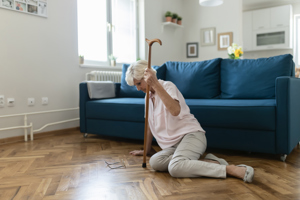
- Here's one way to make senior care saferkunnskap-kristiania / 2025 / 8 / Heres-one-way-to-make-senior-care-saferSCIENCE NEWS FROM KRISTIANIA: Health technology This text was published at Science Norway June 5 2025 titled " Improving elderly care with the latest fall detection technology ". In a recent study on how fall detection systems can improve safety and care quality, family members and next-of-kin expressed greater peace of mind, and healthcare personnel emphasised that fall detection systems improve their ability to respond rapidly. Family members said that knowing their senior relatives had reliable monitoring reduced their anxiety considerably, particularly during nighttime or when they were not physically present. As one family member described: "The most important thing for me is [knowing] that my mother is well taken care of." Healthcare personnel who participated in the study emphasised that the fall detection systems (FD) significantly improve their ability to respond rapidly, enhancing overall service quality. For example, one nurse noted that they can quickly intervene when patients truly need help, minimising unnecessary disturbances. The systems' reliable alerts also meant healthcare workers could better prioritise their workload, ultimately contributing to more efficient use of resources. How fall detection systems work When an elderly person falls, Internet of Things (IoT)-based fall detection systems use a combination of advanced sensors – such as ambient, wearable, and vision-based technologies – to automatically recognise the incident. The system then swiftly alerts caregivers or healthcare staff through smartphone notifications or dedicated monitoring devices, enabling immediate and targeted responses. In addition to making care safer and faster, these systems allow older adults to live independently at home for longer. This combination of sensor technologies ensures accurate detection while respecting individual privacy, which is crucial in healthcare settings. For example, ambient sensors discreetly monitor environmental changes such as vibrations or unusual sounds. Advanced vision-based sensors may utilise infrared or depth cameras, offering detailed detection without compromising personal privacy. Can support independent living at home longer The study shows that IoT-based fall detection systems can help improve senior care. In addition to making care safer and faster, these systems allow older adults to live independently at home for longer. This may reduce the need for institutional care and lead to significant savings for society, while also improving the quality of life for older adults. We also recommend further integrating IoT-based fall detection with broader healthcare technology ecosystems, such as smart home automation and telehealth platforms. This holistic approach can maximise benefits, streamline care processes, and provide comprehensive, personalised support to elderly individuals. Falls among older people pose a global challenge Falls among older people pose a significant and growing challenge globally, with serious consequences for individuals, families, and society. In Norway, nearly one-third of individuals over 65 experience at least one fall annually, leading to severe injuries, diminished quality of life, and increased healthcare costs. Norway ranks among the highest globally in fall-induced hip fractures, with around 9,000 cases each year. The number of falls underlines a need for effective technological solutions to enhance safety and timely care. Master students and researchers at the IDEAS Lab at Kristiania University of Applied Sciences have explored how the Internet of Things (IoT)-based fall detection systems can improve safety and care quality, specifically focusing on user experiences within elderly care services in Ulstein municipality. The study aimed to understand the benefits and challenges healthcare professionals, family members, and system managers faced when implementing such technologies. Participants in the study, including healthcare providers and family members (next-of-kin), highlighted several clear benefits. Limited sensor coverage and false alarms reduce trust Despite largely positive experiences, the study also revealed several challenges requiring attention for broader adoption and satisfaction, particularly in home care environments. Issues of limited sensor coverage appeared frequently due to room layouts or furniture placement, creating 'blind spots' where falls could go unnoticed. Additionally, instances of false alarms reduced users' trust in the system, emphasising the importance of accurate sensor calibration and data integration. Usability and training were also identified as critical improvement areas. Healthcare personnel called for more extensive training to maximise system effectiveness and reduce potential errors. Moreover, integrating these detection systems smoothly into existing digital platforms for healthcare providers remains a significant task for future implementation. Reference: Weng, A. L., Nysæther, M., Haddara, M., & Langseth, M. (2025). User satisfaction with fall detection systems in smart elderly care. Procedia Computer Science, 225, 563–570. Text: Moutaz Haddara , professor, School of Economics, Innovation and Technology, Kristiania University of Applied Sciences. This text was first published on sciencenorway.no on the 5th of June 2025 under the title " Improving elderly care with the latest fall detection technology ". We love hearing from you! Send your comments and questions regarding this article by e-mail to kunnskap@kristiania.no .
- People – not economies – react to climate changekunnskap-kristiania / 2023 / 03 / People-not-economies-react-to-climate-changeKNOWLEDGE AT KRISTIANIA: Europe's Green Deal ambition In 2022 the EU challenged the research community to improve the state-of-the-art of «Integrated Assessment Models» (IAMs), as the existing models are too complicated. Kristiania is one of 10 European partners who joined in a Horizon Europe-funded project called WorldTrans – Transparent assessment for real people . It aims at improving models to see how economic and social development affects climate change. IAMs are models designed to assess how choices about economic and societal development affect each other and the natural world, including climate change. They are different from the classic climate models that are based only on natural science. Today’s models are too complex IAMs are programmed to provide policy-relevant insights into global environmental change and sustainable development. They are named «integrated» because they combine different strands of knowledge to model human society alongside the natural Earth system. They can be used to answer questions like: How can the world avoid global warming of 1.5 °C above pre-industrial levels «at the lowest cost», or «without the use of nuclear power»? However, today’s state-of-the-art IAMs are so large and complicated that their mechanisms are fully understood only by their makers. Because of this, there is a growing information gap between modelers, domain experts, citizens and the people making decisions about climate action in the real world. Engagement of citizens is important to reach Green Deal ambition For Europe to deliver on its Green Deal ambition, which is to make Europe’s economy climate neutral by 2050, the engagement of citizens may be as important as dry facts and figures. An important hypothesis behind the project's approach is: “People (not economies) react to climate change; people make decisions to act or not to act. Such is the nature of a democratic process. It is this realization that has made us choose to address transparency, openness, engagement and to work with models of the system, not its parts.” Kristiania will develop financial and monetary modules WorldTrans will use system dynamics methods to develop models of lower complexity, which are still able to capture key interaction between socioeconomic development and biophysical dynamics. In fact, we aim to expand current best practices to provide better representations of the actual processes of climate change and the functioning of the contemporary financialized economy. This will allow us to answer new questions regarding the distribution effects of climate policy, and the relative merit of financial taxation for green purposes. Kristiania will be responsible for the development of the financial and monetary modules, thus expanding the frontiers of current best global practices. The models must be understandable and usable The team will also work to «bridge the gaps» between models, experts, and user communities to ensure that integrated assessments are understandable and usable for citizens and policymakers alike. In particular, we aim to provide effective visual representations of the key feedback loops operating between the socioeconomic and the natural world. One example is the complex interactions between economic growth, demographic expansion, technological development and CO2 management. We hope to be able to provide everyone with the ability to understand and engage with these complex issues that will be dominating the global political discourse over the next decades. About WorldTrans WorldTrans is a 4-year, €5 million Horizon Europe funded project led by the Norwegian Meterological Institute and supported by 10 partners across Europe. Other partners from Norway are Kristiania and The University of Bergen. The project started 1st of December 2022 and will end 30th of November 2026 with a total budget of € 4 635 775 We would love hearing from you: Send your comments and questions regarding this article by e-mail to kunnskap@kristiania.no .

- The End of Gendered Marketingkunnskap-kristiania / 2020 / 11 / the-end-of-gendered-marketingKNOWLEDGE @ KRISTIANIA: Marketing In 2018, UN Women, a sub-division of the United Nations, launched an initiative called “Unstereotype Alliance”, which aims to eliminate the use of gender-based stereotypes in advertisement. This initiative has rallied large international companies such as Google, Microsoft, HP, Procter & Gamble, and GSK. Far from being anecdotal, this initiative sheds light on a more general phenomenon: the end of gendered marketing. Read also: Eye-shadowing Customers’ Reviews What is gendered marketing? Gendered marketing consists in segmenting consumers based on their gender and in tailoring one or several elements of the marketing mix (product, price, promotion, place) based on gender stereotypes (Powers 2019). One such stereotype is that pink is for girls and blue is for boys and, logically enough, a typical example of gendered marketing is when a product is offered in two colors: pink (targeting female consumers) and blue (targeting male consumers). This pink and blue divide is particularly common for children’s toys, but very different product categories are also affected: stationaries, medication, personal hygiene products, food and drinks to name just a few. Another typical example of gendered marketing is advertisement that portrays men and women in stereotypical gender roles. Read also: Svetter ut kunnskap om kundene dine (in Norwegian) Pink Tax In some instances, the two versions of the same product – one version targeting women and the other targeting men – are priced differently. In 2015, New York City Department of Consumer Affairs reviewed 794 products offered in both a male and a female version and found that the female version was 7% more expensive (on average) than the male version, a phenomenon popularized as the “pink tax”. Read also: Kunnskap Kristiania 2020/2021 (E-magazine). Consumers responses to gendered marketing The assumption behind the practice of gendered marketing is that consumers are more receptive to products or communication tailored to their gender. However, this assumption is challenged by two major societal changes. Traditional gender roles are blurring. For instance, household chores used to be considered the exclusive domain of women, but men and women are now splitting the housework. Conversely, jobs that used to be for men only – such as police jobs – are now dominated by women: in 2020, 51% of the first-year students at the Norwegian Police University College are women. As men and women are increasingly doing the same tasks, activities, and jobs, products or communication based on gender stereotypes become less relevant to consumers. The youngest generation of consumers disputes the binary classification of gender. A survey revealed that 50% of millennials consider gender to be a spectrum. As a result, millennials tend to look away from brands that practice gendered marketing, disapproving their lack of inclusion of consumers who do not identify as either male or female. Reinforcing gender stereotypes Besides, ethical concerns have been raised about gendered marketing. Notably, gendered marketing has been held accountable for reinforcing gender stereotypes (Lyons 2019). By portraying women and men in traditional gender roles, gendered marketing perpetuates the idea that such roles are the norms and goes against the societal changes mentioned above. Another consumer concern relates to the fairness of gendered marketing, particularly when a product targeting one gender is more expensive than the equivalent product targeting the other gender (Stevens and Shanahan 2017). What can marketers do? Because consumers are becoming less and less receptive to gendered marketing, marketing managers should consider practicing gender-neutral marketing. That is, they should consider stopping to use binary gender as a variable to segment consumers. Several brand initiatives exemplify this transition from gendered marketing to gender-neutral marketing. For instance, numerous toy stores have stopped categorizing toys as «for boys» versus «for girls»; instead, they categorize toys based on which occasion children play with them (outdoor, roleplay, etc.). In a similar vein, BIC launched a unisex razor, portraying both men and women in its communication and advertising the razor as «made to shave any hair anywhere», thus offering a truly gender-neutral product. More sophisticated segmentation In conclusion, firms should consider going beyond mere demographics and collecting more sophisticated consumer insights that allow a segmentation of consumers based on their personality traits, their interests, their lifestyle and so on. The goal is to tailor the marketing mix elements in a manner that resonates with what consumers deeply want, instead of assuming that the needs and wants of consumers depend solely on their gender. References: Lyons, E. (2019). Ban on ‘harmful’ gender stereotypes in advertising comes into force. Marketing Week . https://www.marketingweek.com/harmful-gender-stereotypes-advertising/ Powers, K. (2019). Shattering Gendered Marketing. American Marketing Association . https://www.ama.org/marketing-news/shattering-gendered-marketing/ Stevens, J. L., & Shanahan, K. J. (2017). Structured abstract: Anger, willingness, or clueless? understanding why women pay a pink tax on the products they consume. In Creating Marketing Magic and Innovative Future Marketing Trends (pp. 571-575). Springer, Cham. This popular article is first published in Kunnskap Kristiania 2020/2021 . Kunnskap Kristiania is a science Communication Magazine published by Kristiania University College. Text: Associate Professor Delphine Caruelle, Department of Marketing at Kristiania University College.
- How crisis Zoomed us away from Skypekunnskap-kristiania / 2020 / 03 / how-crisis-zoomed-us-away-from-skypeKRISTIANIA THOUGHTS: Brand Value through User Experience I admit, in February 2020, Zoom was unknown to me. Before Covid-19 I thought Skype was competing against Facebook and Google! Skype had such a strong position in 2011 that Microsoft was willing to pay a whopping $ 8.5 billion dollars for reasons no one understood back then (and much less today). Even though Skype was integrated into Microsoft as Skype for Business, hardly anybody was using it. Read also: Why consumers co-create Skype has fallen behind There are several reasons why its popularity dvindeled but few would ever had praised the application for being smart or reliable. Microsoft never managed to capitalise on the brand recognition Skype had. The application remained elementary and of little value for customers when competing platforms offered better quality via mobile operator networks. To be fair, Microsoft has managed to turn Skype into a useful work-communication tool within organisations. As a tool to host larger meetings and events, Skype has fallen behind. Read also: Co-creation of Brands Rocket success The lesson? In tech, brand value is hard to keep without a burning passion for great service design. In order to stay relevant, companies must study how usability can be implemented as valuable features of a brand. Recognition without relevance is a recipe for failure. This post will not dwell on Microsofts misfortune but rather explore the rocket success of Zoom.us. The outbreak of the novel Covid virus eventually lead to temporary lock-downs of business, schools and agencies around the world. In a matter of days, thousands were in need for reliable online tools to host meetings and seminars. There was an urgent demand for a service that facilitated for shared group meetings in a stimulating online scape. Read also: Kunsten å undervise digitalt (in Norwegian) Moving to Zoom Moving Several Universities around the world quickly moved teaching from the classroom to Zoom. The change has been enormous. For example in Norway. In the beginning of March 2020, less than a hundred Zoom meeting were organised daily. By 18th of March, more than 55.000 such meetings are being hosted with students and staff every day. The learning curve was steep for many but the transition has gone incredibly smooth. For this market, Zoom proved to be a fully functional and in-depth video conference tool. Anyone with the right URL can join the meeting, up to 100 participants to be exact. Hosts can divide large group into smaller groups, chat, poll, share, write and record – all at the same time. User experience These are features unknown in Skype but could have easily been there if user experience would have been the guiding light in its design. The sudden popularity of Zoom will be remembered because of great user experience. Such experiences can only be developed with close customer-provider interactions. The timing was perfect luck! No wonder Zoom.us has increased in market value. In less than two months Zoom.us increased in value by 100%. How much will Microsoft be willing to pay this time? Reference: This article was first published on Halldor Engilbertsson’s LinkedIN account on 27th of March 2020 . Text: Assistant Professor Halldor Örn Engilbertsson, Department of Marketing, Kristiania University College.

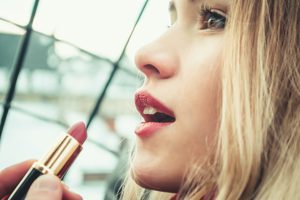
- Eye-shadowing Customers’ Reviewskunnskap-kristiania / 2020 / 11 / eye-shadowing-customers-reviewsKNOWLEDGE @ KRISTIANIA: Technology applied Understanding the customer’s needs and wants is the ultimate dream of marketers worldwide. In order for organizations to stay competitive, they need to transform market opportunities into products available for sale. Transforming the market opportunity into a new product is usually referred to as new product development. A fundamental aspect of new product development is product design, along with various other business considerations. Hence, the development of new products and services is a crucial process for the survival of the modern enterprise. Read also: Why consumers co-create Speed is a key to Success As the cosmetic industry is inherently lucrative, innovative, and fast‐paced, the proper product innovation and development that can fulfil customers’ preferences and expectations and retain their loyalty toward the same products, is the key to success for cosmetics companies. However, it is difficult to anticipate what certain customers will prefer in the future and when these kinds of changes in product preferences will happen. Besides, new products usually take 5 years on average to develop before they are available in the market. In this case, speed, flexibility, together with a strong market‐oriented sense and customer knowledge competence are considered to be indispensable elements to the success of new cosmetic products development. Read also: Hvordan bruker vi smarttelefonen når vi handler i fysiske butikker? (article in Norwegian) Failing to fulfill preferences Cosmetic companies should not only be aware of any trivial change in customers’ preferences but also know how to involve those preferences into their new product development process in order to respond to customers’ new preferences as early as possible. If a company fails to create proper products on time to fulfill customers’ preferences, a plunge in sales will most likely occur, when customers decide to buy other competitors’ products. Hence, analyzing the preferences of current and potential customers, their consumption habits, and their levels of satisfaction should be viewed as the starting point for new product development. Read also: Ruset av smarttelefonen Analyzing customers’ reviews With the rise of big data analytics, many blooming fruits are now ready for harvesting by organizations. In specific, the possibility of scraping and analyzing customers’ reviews on purchased products has opened unprecedented volumes and opportunities for data collection and market research. Through employing Text Mining algorithms, organizations can identify several patterns related to opinions, sentiments, topic extraction, keyword frequency and analysis, among others. In our paper “Exploring customer online reviews for new product development: The case of identifying reinforcers in the cosmetic industry“, we have analyzed 868 reviews on one of L’Oréal’s best-selling lipsticks on a cosmetics-specialized online retailer website ( www.makeupalley.com ). Since that the website collects data regarding several consumer-related attributes, like the reviewer’s eye color, age group, hair color, skin tone, and the consumer’s product rating, we were able to use several text analytics techniques for analysis, and then segment and compare our findings based on those attributes. The reason for segmentation is to identify if there any differences in the preferences of consumers across the different tone and color segments, and also age groups. Read also: Svetter ut kunnskap om kundene dine (in Norwegian) The magic of color When we analyzed the top 10 one-keyword frequency count, we found out the word “color” was the most mentioned word across all reviews and attributes, as shown in the figure. Afterwards, we analyzed the sentiments towards the keyword “color” and our findings show that the majority of reviews had a positive sentiment in relation to the term color. Then we extracted the top 10 mentioned keywords per age group, and we figured out that all age groups had the term “color” as number one keyword, except the eldest group of age 55+. This group had the term “lipstick” as the most mentioned keyword, and “red” as the second. When we started to analyze this group’s reviews, we figured out that they had more than 50% negative sentiments towards the color “red”, and they mostly discuss their wishes to have more natural (K5=nude) colors. We have conducted the same analysis again based on skin tone, hair color, and eye color. According to our results, the customers’ preferences on lipsticks can be generalized into three main categories: color, moisture, and odor and taste. Aiding new product development It is interesting to notice that when the data is grouped according to age, the topics that the customers are discussing in their reviews differ significantly. However, when the segmentation is based on skin tone, the topics that the various segments of customers discuss are almost the same. The only difference among the skin‐tone‐based segmentation is that the customers emphasize their skin tone when their skin is originally darker. Within the cosmetics industry domain, it is believed that the market search process, if done properly, has a sturdy impact on the firm’s ability to manage the marketing mix efficiently, retain its existing customers, acquire new customers, and eventually maximize profits. Thus, this study extracts data‐driven insights from the online customer reviews to understand customers’ preferences and aid new product development managers to identify the consumer preferences based on their personal attributes. References: Haddara, Moutaz, Jenny Hsieh, Asle Fagerstrøm, Niklas Eriksson and Valdimar Sigurðsson (2020). Exploring customer online reviews for new product development: The case of identifying reinforcers in the cosmetic industry. Managerial and Decision Economics, 41(2), pp.250-273, Wiley. This popular article is first published in Kunnskap Kristiania 2020/2021 . Kunnskap Kristiania is a science Communication Magazine published by Kristiania University College. Text: Professor Moutaz Haddara, Department of Technology, Kristiania University College. Photo: By extracting insights from online customer reviews we can better understand customers’ preferences and thus aid new product development managers to identify the consumer preferences based on their personal attributes. Photo by Andriyko Podilnyk on Unsplash.
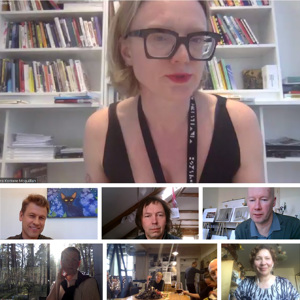
- How an Academic Lecturer became a Talk Show Host on Zoomkunnskap-kristiania / 2020 / 05 / how-an-academic-lecturer-became-a-talk-show-host-on-zoomSCIENCE COMMUNICATION: Talk Show on Design and Architecture “Episode 5 of Trentini Talk Show will look into the future of retail architecture, the domain that will be the most affected by COVID19. We already understand that some typologies are not going to survive the retail crisis, which we have entered with the international lockdowns.” At the end of 2019, the research group ArchCommLAb, that I’m chairing, delivered a book manuscript on retail architecture Fashion Spaces/ a Theoretical View to Dutch publisher Frame. In the forthcoming book, we examine how retail architecture is evolving from being brandscapes to becoming fashion spaces. We suggested that the separation between brandscapes, where the spatial production is closely linked to the brand, and fashion spaces, which can be considered as autonomous and sustainable, lies in the fact that brands might lose control over results (McQuillan, Hansen, 2020). It is important to note that we look at fashion not just as a study of dress, adornment and clothing, but as a broader phenomenon of social change. Listen to Podcast: Vésma Kontere McQuillan on Prada, Fashion Spaces, and Streetwear The release of the book was scheduled for May 28, 2020. Before the book launch came the date February 26, 2020, when the first coronavirus case was registered in Norway and March 12, when a national lockdown was announced. The release of the book is postponed until July 28, 2020. Read also: Co-creation of Brands Would you like to host a Talk Show? Shortly after the lockdown took place, a week before Easter, Mareks Nemme from Trentini called me. Trentini Spaces and Design is a design Gallery, located in Riga, Latvia. Before COVID19, they sold high- end design furniture. Now their objective was to create a new platform for design discussions, the first talk show for architects and designers on Zoom. The idea behind the show is every week, on Thursdays, to invite an internationally recognized professional in their fields such as architecture and design to discuss current topics in architecture and design. Trentini asked me to host the first season. Trentini Talk Show is a project I would never have imagined only two months ago. Read also: Instagram skaper ny arkitektur (article in Norwegian) I was not a TV show host but an academic lecturer I was not sure. On this point, Zoom was an unknown format for me. I was not a TV show host but an academic lecturer. I used to work with a visually strong presentation behind my back. The room was essential to me. I loved to come to space some time ahead of my lecture to make sure that the lights, sound, and position of the audience are working for me. I loved traveling with talks to try out different auditoriums created by other architects. Still, one of my favorites is the black auditorium by Kristin Jardmund Architects at Campus Vulkan, a signature building of Westerdals. Now, the venue is Zoom at the address Zoom Video Conference. The idea of “room” has changed during the COVID-19 situation, and it was an opportunity to test the hypotheses of fashion spaces in practice through the talk show format. New and unexpected zone of social interaction The significant changes in public architecture started already in 2005 with the second digitalization wave when Web 2.0 applications brought changes in consumer’s social and everyday behavior patterns. It was the beginning of the internet’s severe impact on spaces; even it was a voluntary choice by then. Already in 2019, the design society extensively was communicating via smartphones with apps of social media such as Instagram, while the phone owner’s favorite physical space was defined instead by free wi-fi than particular architecture. This year has brought us to a whole new and unexpected zone of social interaction between a retailer, who is the forcing power behind the retail architecture and their consumer. Right now, retailers do not sell products; they are trying to keep their communities via different types of social engagement, such as the talk show I’m hosting now. How will design and architecture change when we go back to physical spaces? Trentini Spaces and Design, has, at least temporarily, turned from a design retailer into a design educator. Right now Zoom is a new site of cultural production, do we want it or not. Retail architecture is developing the way we predicted. The question is – will be brands such as Trentini able to keep control over the cultural sites they are creating right now, and how it will change the architecture after we go back to physical spaces. But there is still time, and I’m thankful for those conversations with architects, designers, and audience. What I have learned so far, the Zoom room has it’s benefits. The last talk was with Sebastian Herkner , a German designer based in Offenbach am Main. He was in his studio, I was in Oslo, Trentini aired from their showroom in Riga while sitting on Herkner’s designed sofas, and design professionals from Stuttgart, Berlin, and Amsterdam joined our conversation. And while everyone is in different geographical places, the significant lesson I learned was an unexpected possibility to look another person in the eyes and connect in some not-yet- realized, imagined place. At the address Zoom Video Conference. Reference: Vésma K. McQuillan (2020): Fashion Spaces: A Theoretical View Paperback Frame Publishers. To be released on July 28, 2020. This feature article is written for Kunnskapsmagasinet Kristiania and first published on May 7, 2020. Text: Vésma K. McQuillan is Professor at Westerdals Department of Communication and Design, at Kristiania University College, Oslo, Norway, where she also chairs the ArchCommLab research group. Currently, she is hosting Trentini Talk Show , the first talk show for architects on ZOOM. Season one consists of eight episodes, which airs from April to June 2020 .
- New clinical study: Fatigue in breast cancer survivors - is acupuncture a treatment option?forskning / forskningssamarbeid / acubreast / 2020 / new-clinical-study-fatigue-in-breast-cancer-survivors---is-acupuncture-a-treatment-optionThe study is a multi-center pragmatic randomized, controlled trial with two parallel arms assessing the effectiveness, cost-effectiveness and safety of acupuncture for breast cancer survivors suffering from fatigue. The two arms are: Acupuncture plus usual care and usual care alone. The intention is to test acupuncture as a complete treatment package i.e. the overall effect of acupuncture-care, which is highly relevant to breast cancer survivors experiencing CRF. Pragmatic trials also ensure that the sorts of interventions tested can be plausibly rolled out in clinical practice and that the outcomes used to assess effectiveness are valid and easily understood by a range of users, including clinicians, patients, policy makers, and health commissioners. As such, a pragmatic trial will help users to choose between options for care. 250 women will be randomized into two groups. One group receives 10-12 acupuncture treatments once or twice weekly from an acupuncturist trained with a Bachelor of Acupuncture from Kristiania University College. The acupuncture treatment is free for the participants. The other group (the control group) receives no treatment during the study. Participants in the control group cannot receive acupuncture treatment or other treatments for fatigue during the study period. However, all participants in the study can take their own actions such as exercising, meditating or changing their diet. All measures of this nature will be registered. All participants will complete a set of questionnaires at the start of the study, after completion of treatment or after 12 weeks for the control group and after six months. Further, any medical care received during the study period will be documented. This includes life styles advice, and to which point they have followed such advices. All participants will receive written information when the study results are available. The three-year study will also record changes in quality of life, anxiety and depression, number of hot flashes during day and sleep - all factors researchers believe may affect fatigue. Who can participate? We will be recruiting breast cancer survivors who have completed their cancer treatment. Women aged 18 years or older will be eligible for the study. Further, to secure a homogeneous group, participants must be on adjuvant medical treatment with anti-estrogens. In order to participate in the study potential participants cannot be using blood-thinning medicine, undergoing treatment for anemia, undergoing palliative care, have been diagnosed with fatigue prior to cancer diagnosis, or are already receiving acupuncture treatment. Further, participants who are pregnant at baseline or planning to get pregnant within the treatment period will be excluded. Potential participants who are unable to understand, speak, or who find it difficult to communicate in Norwegian will be excluded from the study. A sufficient knowledge of Norwegian is necessary for communicating with the acupuncturist and for understanding and filling in all the Norwegian questionnaires within the study. Potential and willing participants please contact the Kristiania University College for a screening telephone interview. Interested in participating in the study? Contact: Mona Solberg Research Coordinator AcuBreast Kristiania University College, School of Health and Science mona.solberg@kristiania.no Do you have any questions about the study? Contact: Professor Terje Alræk Project Manager AcuBreast Kristiania University College, School of Health Science M +47 478 80 170 terje.alraek@kristiania.no The AcuBreast study is funded by Rosa sløyfe, a collaboration between The Norwegian Cancer Society (NCS) and Norwegian Breast Cancer Society. AcuBreast is a research collaboration between researchers in Kristiania University College, University of Bergen, University of York (England), Korean Institute of Oriental Medicine (Korea), Zakim Center for Integrative Therapies Dana-Farber Cancer Institute (Boston, USA) and Integrative Medicine Service, Memorial Sloan Kettering Cancer Center (New York, USA).

- Nine recommendations on risk communication during health criseskunnskap-kristiania / 2023 / 06 / nine-recommendations-on-risk-communication-during-health-crisesKNOWLEDGE FROM KRISTIANIA: Audra Diers-Lawson on risk communication In December 2022 I found myself sitting in a hotel bar in Almaty, Kazakhstan talking with a friend and colleague who works for the World Health Organization. We talked about the importance of building communities of knowledge, practice, and experience to tackle global problems like COVID-19. I was in Kazakhstan to participate in the WHO’s workshop on risk communication and community engagement for Central Asia, offering a keynote address on lessons learned from the pandemic in Europe, as a way of sharing best practice. How governments should communicate during a health crisis To promote self-protective behaviours during a pandemic like covid-19, governments must ensure interactions between all stakeholders – citizens as well as all the managing institutions. In my research I had chosen 9 countries of focus (Bulgaria, France, Germany, Hungary, Italy, Lithuania, the Netherlands, Portugal, and Sweden) and 2 countries for comparison (UK and US), based an exhaustive search for English-language resources related to the pandemic. What I found was this: Trust in the communicating institutions is a central – if not the central – feature of communication success, regardless of relative success in managing the pandemic. Two-way communication or citizen engagement was crucial for communication success. Governments must actively listen and respond to their citizens’ needs. Effective pandemic communication strategies should focus on explaining to citizens what self-protective behaviours should be taken and why , within each country’s national contexts. During a pandemic, governments should adopt a positive tone supporting citizen confidence in taking action, communicating engagement and responsiveness because defensive messages are simply less effective. Citizens prefer transparency and a constructive management of fear and anxiety. Tailoring the messages to meet different demographics’ information needs and attitudes about government is essential. For example, minority communities within countries often have different information and communication needs. A contingency approach to responding to health crises Overall, the literature analysing COVID-19 communication supports the need for an effective stakeholder relationship management framework . This framework focuses on the interactions between the institutions managing COVID-19, citizen interests, and COVID-19-related issues that lead to self-protective behaviours being enacted. This kind of framework is meant to support agile crisis response to allow governments and public health authorities to diagnose the key communication challenges within a population and then design messages to meet those citizen information needs – reflecting one of the best practices learned from COVID-19. Strategies must be informed by context Across the EU, UK, and US literature, citizens’ knowledge of the disease, their own perception of risks, and the amount of control they feel they have directly, affect their willingness to take measures to protect themselves. Within the context of the COVID-19 pandemic, people were already afraid. Therefore, it makes more sense to focus on building positive messages about reducing risk rather than fear-based messages. Countries like England and Hungary used fear-based messaging or emphasised punishment for non-compliance and had lower levels of citizen compliance with instructional messages. A key factor to behaviour is citizens’ trust in institutions In my research of 236 scientific publications and institutional reports related to the COVID-19 pandemic between 2020 and 2022, I found that institutional trust emerged as central to citizen behaviour. Building and maintaining a good reputation and trust – especially related to health issues – is an essential tool for governments and public health authorities in order to effectively manage future pandemics. Whether research was analysing the high-trust environments in Sweden or explaining why political polarisation eroded institutional trust and correlated with a low level of adoption of self-protective behaviours in countries like the US, UK, Bulgaria, and Hungary, institutional trust was the key factor. People do what they believe has an effect Our confidence in our ability to enact certain behaviours AND that those behaviours lead to positive outcomes, guides what we actually do. Such citizen-related factors highlight the demographic and attitudinal predispositions for people to enact self-protective behaviours. Demographic factors matter and depend on location, culture, and timing. The evidence from across the countries clearly concludes that governments and public health authorities should: (1) explain what people should be doing, (2) provide clear instructions on how to perform the behaviour correctly, and (3) provide evidence that there is a benefit for them in performing the behaviours. Information gaps lead to mis- and disinformation Popular media and scientific research widely recognise that the COVID-19 ‘infodemic’ poses a serious threat persuading citizens to adopt self-protective behaviours. When citizens feel they do not have enough quality information from their governments and public health authorities, they will fill perceived information gaps by relying on other sources of information - thus opening the door to mis- and disinformation. Additionally, in such a prolonged crisis, several pieces of research also identified a new challenge related to information fatigue. Information fatigue emerged as a prominent factor in countries like Germany, Italy and Lithuania. Finally, when there are lower levels of information literacy – that is being able to discern good information – citizens are more resistant to adopting self-protective behaviours recommended (or required) by governments and public health institutions. While it is obvious to say that ‘good pandemic communication practice’ is necessary, good pandemic communication practice requires planning, adaptability, and a strong understanding of citizen attitudes. References: Jacob, C., Hausemer, P., Zagoni-Bogsch, A., Dr. Diers-Lawson, A. The effect of communication and disinformation during the COVID-19 pandemic , European Parliament 2023. We love hearing from you: Send your comments and questions regarding this article by e-mail to kunnskap@kristiania.no .

- How different governments communicated during coronaviruskunnskap-kristiania / 2022 / 02 / how-different-governments-communicated-during-coronavirusKNOWLEDGE @ KRISTIANIA: Health communication In times of crisis, people’s health depends on access to timely, accurate information. M any countries plot a tricky path out of coronavirus ravages , fuelled by different rhetoric from governments. Thus , an effective communication model that can be used during a crisis or epidemic became more vital as it can enable leaders to navigate the harsh realities and save lives. Such a communication model can be found in many speeches given during this historical event to be used as a strategy during the next health crisis. A closer look at the government’s rhetoric In my Ph.D. project on the "Leadership Communication Styles of Country Leaders in Times of Crisis" , I review and evaluate the authorities' communication handling the outbreak. I explore how the political leaders in the United States of America (US) , the United Kingdom (UK) , New Zealand and Norway choose their rhetoric and how they frame issues to appeal to a specific audience. To do this, I will use excerpts from speeches given during coronavirus, and compare these selected speeches at a thematic level. We’ve seen a difference in how the leadership is communicated with the public. I n s ome countries, the interventions were military-like where governments enforced policies restricting movements . In other countries such as Sweden , there were no lockdowns or restrictions on the movement of people. Yet, the difference in response did not result in significant mitigation on the spread of the virus. Still, all agreed that communication was vital in controlling the COVID-19 infections . T he virus spread was hinged on human behavior and the public was in need of being informed. Did certain communication styles prolonge the crisis? Ideally, state officials would put political and ideological differences aside in order to concentrate all resources and energy against the threat. Such a coordinated response would be essential in the case of a new, highly infectious disease that has no treatment, vaccine, or cure at the time such as COVID-19. The widening gap we witnessed in some countries begs the question of whether the crisis communication style of leaders has prolonged the pandemic and ultimately endanger ed the resilience by politicizing the response. Split messaging and divisions exacerbated the threat Before the declaration of the pandemic, the US and the UK were the best prepared countries out of 195 nations , according to reports published by the John Hopkins Center for Health Security. Yet, some senior government officials in the UK were forced to resign due to failing to maintain a consistent public health messag e. Thus, the public lost trust in their leadership. In the US, health officials urged people to use face covering , while President Trump refus ed to do so and argued against. The credibility gap between him and experienced government officials, including the health experts who are part of his COVID-19 task force widens. The split message regarding masks and the subsequent political divide over them has come to symbolize the chaos of the U.S. response to the raging pandemic. “United we stand” On the contrary, despite the lack of preparedness, Norway arguably performed well in handling the pandemic quickly and effectively . The government succeeded in the successful collaboration in decision - making with health experts. Former Prime Minister Erna Solberg sent an invitation to work together and share the responsibility " In Norway, we stand together when it comes to. We mobilize for volunteer work and collaboration in small and large local communities. Now this is more important than ever ". Similarly, in New Zealand the government achieved remarkable success in managing the pandemic. Health authorities as well as the political leadership communicated the same strategies and understanding of the pandemic. The positive and consistent messaging inspires confidence and social solidarity. Poor communication can worsen the effects of the crisis In our interpretation, no matter how effective the planned response is, poor communication will significantly undermine national response to a pandemic. In fact, it can exacerbate the threat and lead to greater disease effects as well as a loss of trust and faith in leaders. A closer look into speeches at a thematic level would provide an idea about the political leaders' rhetoric. Also, it will allow us to understand different rhetorical strategies used by leaders on both sides of the aisle and how they frame issues to appeal to a specific audience. Kristiania University College funds the research project, Adnan Kisa is the project leader, and Jens Kjeldsen from the University of Bergen is the main supervisor. References: GHS Index. (2019). The Global Health Security Index-Reports & model 2019. Retrieved September 29, 2020 from https://www.ghsindex.org/ Nicola, M., Sohrabi, C., Mathew, G., Kerwan, A., Al-Jabir, A., Griffin, M., Agha, M., & Agha, R. (2020). Health policy and leadership models during the COVID-19 pandemic-review article. International Journal of Surgery. The Washington Post. (2020). How the split over masks sums up America’s chaotic coronavirus response. Retrieved October 2, 2021. Text: PHD-fellow Magde Mohamed Nour, School of Health Sciences at Kristiania University College We love hearing from you: Send your comments and questions regarding this article by E-mail to kunnskap@kristiania.no .
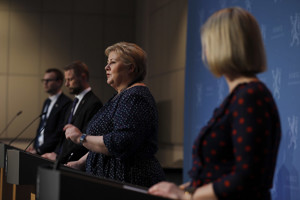
- Vinterdepresjon - 7 tips i mørketidakunnskap-kristiania / 2022 / 11 / vinterdepresjon--7-tips-i-morketidaEr du en av dem som får mindre energi og økt søvnbehov om vinteren? Kanskje synes du at det er vanskeligere å komme deg på trening og kjenner at du stadig har lyst på søtsaker og usunn mat? Du er i så fall ikke alene, 1 av 10 nordmenn lider hvert år av vinterdepresjon. Kvinner rammes mer enn menn, og er du B-menneske, er du ekstra sårbar. Typisk varer vinterdepresjonen fra slutten av november til ut i mars, og du er ikke deprimert resten av året. Mine sju beste tips for å bekjempe vinterdepresjon: 1. Bruk av lyslampe Lyslamper med 10.000 lux har lenge vist seg å gi god effekt for de aller fleste på både humør, energinivå og søvnbehov i vintermørket. Tidligere var disse lampene svært dyre og vanskelig å få tak i. Men i dag selges slike lamper i de fleste forretninger for elektronikk til under tusenlappen, og er altså en veldig god investering. Du trenger ikke stirre rett inn i lampen, den kan stå på bordet mens du spiser frokost eller ved siden av pc-skjermen den første halvtimen på jobb. Dersom du i tillegg kommer deg ut i dagslys litt hver dag så hjelper også det. Det behøver ikke engang være sol, og en tur på en halvtime holder fint. 2. Vitamin D I tidligere tider spiste vi mye fisk i Norge. Man pleide å si at vi må spise fisk i alle måneder med «r» i seg. Dette er fordi vi på våre breddegrader får altfor lite vitamin D fra sola om vinteren. Da er fisk en god erstatning. I våre dager kan dagsbehovet for vitamin D dekkes av å ta et par kapsler med Omega-3 om dagen. Effekten på energi og nedstemthet er god, men allikevel er det mange nordmenn som ikke følger dette enkle og effektive rådet. Selv tar jeg dobbel dose hele vinteren, en dose om morgenen og en om kvelden. 3. Trening Selv om motivasjonen for trening kan være lavere om vinteren, er det desto viktigere å opprettholde trening også i denne årstiden. Kanskje bør du være realistisk på at du ikke får trent like mye som om sommeren, men om du får til to ganger per uke så er det veldig gunstig for din psykiske helse – og derfor vel verdt innsatsen. Dersom du er vant til å trene ute om sommeren, kan du kanskje prøve å finne en innendørsaktivitet som du synes er gøy, som for eksempel squash, svømming, yoga eller buldring. Prøv gjerne ut flere aktiviteter for å finne en du liker. Det viktigste er å være i aktivitet også gjennom vintermånedene. 4. En ferieuke i varmere strøk Doctor’s order: «Ta en uke i Syden i løpet av vinteren». Det viser seg at en ukes opphold i varmere strøk i løpet av vinteren har en anti-depressiv effekt. Og dette gjelder ikke bare den uken du er på ferie. Ofte vil du glede deg i lang tid på forhånd og dessuten ha fylt opp reservoaret av energi til å håndtere resten av vinteren hjemme. Avbrekket bryter opp den lange, mørke vinteren, så den virker kortere. 5. Vær sosial Det er viktig å opprettholde sosiale aktiviteter selv om motivasjonen for dette kan være redusert om vinteren. Vi føler gjerne for å gå litt i sosial dvale. Å gjøre noe hyggelig sammen med andre mennesker er terapeutisk mot både tradisjonell depresjon og vinterdepresjon. Inviterer noen venner på middag. Gå på kino. Stirr inn i peisen sammen. Gå en skitur sammen med noen. 6. Kognitiv terapi Alle får utbytte av å lære seg noen konkrete teknikker fra kognitiv terapi for å håndtere negative tanker, enten det er sommer eller vinter. Slike teknikker hjelper også godt ved vinterdepresjon. Psykologipodcasten Synapsen har en episode om selvfølelse og en episode om metakognitiv terapi, som begge kan være til hjelp. Her kan du lære teknikker du kan implementere i ditt eget liv. Det finnes også gode kognitive verktøy tilgjengelig på kognitiv.no . 7. Søvn De aller fleste nordmenn sover mer om vinteren enn resten av året. Selv om vi ikke går i hi som bjørnen om vinteren, så går vi litt i dvalemodus. I gjennomsnitt sover vi i underkant av en time lenger enn om sommeren. For de som oppfyller diagnosen vinterdepresjon er det økte søvnbehovet i snitt to timer mer enn resten av året. Det lureste du kan gjøre er å akseptere at du har økt søvnbehov om vinteren. Design døgnet ditt slik at du får nok søvn. Vi vil gjerne høre fra deg! Send spørsmål og kommentarer til artikkelen på e-post til kunnskap@kristiania.no . Referanser Sherri Melrose, "Seasonal Affective Disorder: An Overview of Assessment and Treatment Approaches", Depression Research and Treatment , vol. 2015, Article ID 178564, 6 pages, 2015. https://doi.org/10.1155/2015/178564 Andres Magnusson & Diane Boivin (2003) Seasonal Affective Disorder: An Overview, Chronobiology International, 20:2, 189-207, DOI: 10.1081/CBI-120019310 Podcasten Foodies , der artikkelforfatter Lars Dehli er gjest og gir gode råd både for hvordan forebygge og behandle disse plagene:

- Å lede i tider med stor usikkerhet krever ledere som tar mer sjanserkunnskap-kristiania / 2020 / 06 / a-lede-i-tider-med-stor-usikkerhet-krever-ledere-som-tar-mer-sjanserKOMMENTAR: Tom Karp om ledelse Vi vet ikke hvordan samfunn, institusjoner, verdikjeder, markeder og organisasjoner vil se ut etter pandemien. Mye vil endres, mange virksomheter vil ikke overleve, og vi skal takle flere år med stor usikkerhet. Den tidligere lederen av Intel, Andy Grove , sa en gang at: «L eaders need to develop a higher tolerance for disorder, while doing the best to drive what’s around (them) to order» . Men ledere liker forutsigbarhet og orden, og mange av dem får krevende dager på jobben i tidene som kommer. Å lede i tider med stor usikkerhet Det finnes imidlertid modeller som tar hensyn til at virkeligheten er usikker, ustabil og ikke alltid kan forutsies – modeller som handler om lede i tider med stor usikkerhet. At det er regelen og ikke unntaket. En av de første som tenkte i disse baner, var den prøyssiske generalen og strategen Carl von Clausewitz . Han brakte i sin tid psykologi og filosofi inn i ledelsesfag generelt og krigsteori spesielt. For nesten 200 år siden hevdet han at ledelse er å lede i situasjoner preget av friksjon. Evne til å mestre kaos Med friksjon mente von Clausewitz en virkelighet som er annerledes enn den planlagte. For å evne å lede i situasjoner preget av friksjon, måtte lederen, ifølge von Clausewitz, ha en kombinasjon av kvaliteter som evne til å mestre kaos, integritet, mot, intuisjon samt kunne være til stede her og nå. Von Clausewitz kom ikke med noen oppskrifter og han satte høye krav til ledere. Hans teorier er skrevet for militære ledere i en annen tid og han skisserer andre rammebetingelser enn det som møter ledere i et sivilt organisasjonsliv. Likevel hadde von Clausewitz relevante tanker om hva ledere bør gjøre når «kartet ikke stemmer med terrenget». Han beskrev kompleksiteten mange organisasjoner må håndtere. Menneskelig samhandling bestemmer, ikke planer ovenfra Hadde von Clausewitz publisert sine tanker i vår tid, hadde de antageligvis vært en del av det som betegnes som kompleksitetsvitenskap . Premisset her er at en organisasjons bevegelse er et resultat av menneskers samhandling, eller manglende sådan, og ikke en funksjon av sentralstyring og overordnede planer. Temaer som hvordan lederskap oppstår, selvorganisering, makt, og nedenfra-og-opp-initiativ er noe av det som får oppmerksomhet. Kompleksitetsvitenskap er ingen hellig gral og tilbyr ingen lettvinte oppskrifter – snarere tvert imot. Forskerne nøyer seg stort sett med å postulere at ledere må lære seg å leve med usikkerhet og kompleksitet. Vitenskapen bestrides naturlig nok, ikke minst fordi forskere og ledere ikke vil akseptere tanken på at ustabilitet, uforutsigbarhet, turbulens, kaos og uklare ansvarsforhold er viktige rammebetingelser når man leder organisasjoner. Hva ledere må gjøre for å leve bedre med usikkerhet og kompleksitet Men aksepterer man slike premisser bør ledere: Strategisk: Bruke mindre tid på posisjonering og planlegging, mer tid på å forstå mønstre, forberede seg på forskjellige scenarioer, positivt forsterke det som fungerer, prøve og feile med mindre pilotprosjekter før ting rulles ut i stor skala, samt skape et klima for kontinuerlig endring samtidig som man fremmer stabilitet. Operativt: Løse opp i hierarkiske strukturer og kontrollmekanismer, og til en større grad fremme autonomi, selvstyring og midlertidige organisasjonsformer. Personlig: Ta lederskap når påkrevd og ikke la det ene og alene være en funksjon av posisjon. Utvikle robusthet, evne til å improvisere, kunne lede seg selv, samt være sulten på ny læring i stedet for å lete etter bekreftelser på kunnskap man alt har. Medisinen som virker: Løs opp, ta sjanser, prøve og feile Den britiske filosofen Simon Critchley beskriver i sin bok «Infinitely Demanding» fra 2007 en samtid hvor mange lar verdens kompleksitet fungere som en unnskyldning for å ikke engasjere seg i annet enn egen person, de blir navlebeskuende, redde for å prøve nye ting og risikoaverse. Det er en diagnose som kan overføres til organisasjonslivet. Men resepten som skrives ut er ikke sterk ledelse, toppstyrte initiativ, flere planer, mer kontroll og strammere strukturer – men å løse opp, fremme autonomi, ta sjanser, prøve og feile, beholde det som virker, lære nye ting. Det er nok en medisin som sitter langt inne for mange ledere. Referanse: Artikkelen er publisert som kommentarartikkel om ledelse i Dagens Næringsliv 8. juni 2020 (og på dn.no dagen før). Foto: I tider med usikkerhet og kompleksitet må ledere ta mer sjanser, utfordrer Tom Karp. Photo by Razvan Chisu on Unsplash. Tekst: Tom Karp, professor ved Institutt for ledelse og organisasjon ved Høyskolen Kristiania og professor II ved Nord universitet og Høgskolen i Innlandet.

- Age-shaming er en trussel for arbeidslivetkunnskap-kristiania / 2023 / 04 / age-shaming-er-en-trussel-for-arbeidsmiljoetKUNNSKAP KRISTIANIA: Aldersdiskriminering Når du hører om aldersdiskriminering, tenker du kanskje på urettferdig eller dårlig behandling av eldre i arbeidslivet. Det er ikke så rart, fordi det har vært mye oppmerksomhet rettet mot aldersdiskriminering av eldre og hvilke negative konsekvenser dette har. Samtidig viser forskning at også unge voksne, definert som mennesker i slutten av 20- og starten av 30-årene, opplever fordommer og negative holdninger knyttet til alder. Vi mener det er mye å hente dersom en ser på hvilke styrker og kompetanser som trengs i dagens arbeidsmarked – fremfor hvilken alder de ansatte bør ha. Age-shaming – å bli sett på som for ung Age-shaming innebærer at unge voksne opplever diskriminering og negative holdninger knyttet til alder. For eksempel at unge arbeidstakere betegnes som «for unge», med mindre erfaring og dermed også med mindre kompetanse til å løse arbeidsoppgavene sine. Disse holdningene og fordommene er ikke bare skadelige for individet som rammes, men for hele organisasjonen. Hva går vi glipp av i arbeidslivet hvis disse holdningene fortsetter å regjere uten at vi er bevisst på dem? Er det en fare for at det blir en selvoppfyllende profeti? Alder sier lite om kompetanse Vårt utgangspunkt er at alder sier svært lite om hvilke styrker og hvilken type kompetanse et menneske besitter. For hva er egentlig kompetanse, hva er styrker – henger dette sammen med alder? Kompetanse defineres som « evner og ferdigheter som er nødvendige for å nå et bestemt mål» og kan opparbeides gjennom blant annet erfaring og utdanning. Fagspesifikk kompetanse, sosial kompetanse og teknologisk kompetanse er ulike former for kompetanse. Hvilke kvaliteter trengs for å nå målet? For å kunne si om noen har høy eller lav kompetanse, må man starte med å se nærmere på oppgaven eller målet med oppgaven man skal løse. Lang erfaring kan i mange tilfeller føre til god kompetanse på et område, men tilsier ikke nødvendigvis riktig kompetanse for måloppnåelse. Når vi snakker om riktig kompetanse for måloppnåelse, spiller også et begrep som styrker inn. Styrker er underliggende kvaliteter som gir oss energi, bidrar til personlig utvikling og gir grunnlag for mestring. Eksempler på styrker er kreativitet, empati, samarbeid og effektivitet. Når vi bruker styrkene våre bidrar det til gode resultater og engasjement på arbeidsplassen. Det er gjort undersøkelser av sammenhengen mellom alder og styrker, eksempelvis alder og kreativitet. Det er ingen klar korrelasjon mellom alder og kreativitet. Selv om det for eksempel finnes studier som indikerer at eldre kan ha lavere digital kompetanse, er ikke dette nok til at en kan skjære alle over en kam, og si at alle eldre har lav digital kompetanse. Som vi argumenterte for innledningsvis, er det heller aktuelt å se på hvilke styrker og kompetanser som trengs i dagens arbeidsmarked – fremfor hvilken alder de ansatte bør ha. Går glipp av verdifull kompetanse Dagens arbeidsliv preges av endringspress og komplekse problemstillinger. Kreativitet, samarbeid, innovasjonsevne og problemløsningsevne anses som svært ettertraktete styrker og kompetanser for organisasjoner som skal løse de problemstillingene vi står overfor. Forskning viser også at innsats, utholdenhet og lidenskap er like viktig som IQ i mange sammenhenger. Det er lite som tyder på at disse evnene kan knyttes til alder. Derimot kan age shaming føre til at vi går glipp av verdifulle styrker og kompetanser vi gjerne skulle dratt nytte av i arbeidslivet. Selvoppfyllende profeti Vi vet at holdningene våre ofte påvirker adferden vår. Pygmalioneffekten, som også er kjent som «selvoppfyllende profeti», gir en forklaring på hvordan forventingene våre styrer hvordan vi opptrer og påvirker utfallet av hendelser. Dersom du har negative forventinger, påvirker det hva du legger merke til rundt deg, og bevisst eller ubevisst handler du deretter. La oss si at en senior i en organisasjon ser på en junior som mindre kompetent eller som lite kreativ. Da vil muligheten for at senioren lærer noe av junioren være dårligere, samtidig som junioren kan få negativ selvoppfattelse av egne evner. Det kan gjøre at junioren eksempelvis ikke tør å stille spørsmål, eller uttrykke egne meninger og ideer i frykt for å bli oppfattet som uvitende. Age-shaming er negativt for arbeidsmiljøet Lite hemmer organisasjoners og individers læringsprosess så mye som frykt. Og motsatt; hvis kulturen og arbeidsmiljøet er preget av psykologisk trygghet, noe som innebærer at individer opplever det som trygt å ta risiko for eksempel ved å stille spørsmål, være uenig og uttrykke egne meninger, vil det kunne fremme læring, innovasjon og et mangfold av perspektiver. Age shaming kan true arbeidsmiljøet og den psykologiske tryggheten fordi individer blir usikre på egen kompetanse, og derfor unngår å stille spørsmål og uttrykke sine meninger. For å lykkes med å møte de komplekse problemstillingene og endringspresset i organisasjoner, må vi få bukt med negative holdninger og fordommer knyttet til alder. Så hva kan vi gjøre for å håndtere, og forhåpentlig redusere, age shaming på arbeidsplassen? Tre tiltak mot age-shaming Vil vil løfte fram tre tiltak som kan bidra til å minske age shaming på arbeidsplassen: Vær bevisst egne holdninger Har du kanskje en kollega du opplever som «for ung»? Holdninger våre er tillært gjennom våre erfaringer og de påvirker hvordan vi opptrer i ulike situasjoner og hvordan vi møter andre mennesker. Hvis du er bevisst din holdning og i tillegg vet at alder og kompetanse ikke nødvendigvis hører sammen, har du mulighet til å lære noe og samarbeide godt med den «for unge» kollegaen din. Møt hverandre som deltakere gjennom dialog Den norske filosofen Hans Skjervheim bruker begrepene deltaker og tilskuer når han snakker om hvordan vi kan møte andre mennesker gjennom dialog. Ser du på den «for unge» kollegaen din som en deltaker, da er du åpen og nysgjerrig på vedkommedes meninger og retter oppmerksomheten mot dem. Du kan likevel ha egne meninger, som du inviterer kollegaen din til å være enig eller uenig i. Gjennom dialogen møter vi hverandre som likeverdige deltakere der alle har noe å lære av hverandre. Frem god læringsholdning Læringsholdning defineres som en prosess der man stiller spørsmål, reflekterer og stiller seg åpen for feedback. Dersom de ansatte i organisasjonen føler seg trygge til å gjøre dette, vil sannsynligheten for at de lærer mer av hverandre være til stede. Man kan fremme læringsholdning i et team eller i en organisasjon ved å stille spørsmål til hverandre og se hverandre som kompetente mennesker med ulike styrker og perspektiver. Du bør derfor være nysgjerrig på den unge kollegaen din sitt perspektiv. Alle har noe å lære av hverandre I et bærekraftig arbeidsliv bør vi etterstrebe å møte hverandre som likeverdige deltakere, med ulike styrker, kompetanse og erfaringer og kompetanser. Vi har alle noe å lære av andre som er ulike oss selv. Denne teksten er også publisert på forskning.no den 26. april 2023 under tittelen Age shaming er en trussel for arbeidsmiljøet , på Nettavisen den 29. april 2023 under samme tittel og i HR-magasinet den 23. mai 2023 under samme tittel . Vi vil gjerne høre fra deg! Send spørsmål og kommentarer til artikkelen på e-post til kunnskap@kristiania.no. Referanser Binnewies, C., Ohly, S., & Niessen, C. (2008). Age and creativity at work: The interplay between job resources, age and idea creativity. Journal of Managerial Psychology , 23 (4), 438-457. Brook, J., & Brewerton, P. (2016). Optimize Your Strengths: Use your leadership strengths to get the best out of you and your team . John Wiley & Sons. Collins, M. H., Hair, Jr, J. F., & Rocco, T. S. (2009). The older‐worker‐younger‐supervisor dyad: A test of the Reverse Pygmalion effect. Human resource development quarterly , 20 (1), 21-41. Duckworth, A. (2017). GRIT Lidenskapen og standhaftighetens kraft. Cappelen Damm. Littman-Ovadia, H., Lavy, S., & Boiman-Meshita, M. (2017). When theory and research collide: Examining correlates of signature strengths use at work. Journal of Happiness Studies , 18 , 527-548. Edmondson, A. (1999). Psychological safety and learning behavior in work teams. Administrative science quarterly , 44 (2), 350-383. OECD. (2005). The definition and selection of key competencies - Executive Summary, fra http://www.oecd.org/pisa/35070367.pdf. Raymer, M. , Reed, M. , Spiegel, M. & Purvanova, R. K. (2017). An Examination of Generational Stereotypes as a Path Towards Reverse Ageism. The Psychologist-Manager Journal, 20 (3), 148-175. doi: 10.1037/mgr0000057. Skjervheim, H. (1976) Deltakar og tilskodar og andre essays. Oslo: Johan Grundt Tanum Forlag. Weinert, F. E. (2001). Concept of competence: A conceptual clarification. In D. S. Rychen & L. H. Salganik (Eds.), Defining and selecting key competencies (pp. 45–65). Kirkland, WA: Hogrefe & Huber. World Economic Forum, V. (2020). The future of jobs report 2020. Retrieved from Geneva . Denne teksten er også publisert på forskning.no den 26. april 2023 under tittelen Age shaming er en trussel for arbeidsmiljøet og på Nettavisen den 29. april 2023 under samme tittel .

- The Rise of the Counterfeit Industrykunnskap-kristiania / 2020 / 09 / the-rise-of-the-counterfeit-industryKNOWLEDGE & KRISTIANIA: The Counterfeit Industry There is a “Perfect Storm” between two global destructive forces right now – the counterfeit industry and the Covid-19 pandemic. Both are highly undetectable, the fake products hidden in the grey and black markets, and the invisible virus. Amid the Covid-19 pandemic, the Chinese companies sold thousands of fake testing kits and medical masks authorities in Spain, Turkey and the Netherlands. Investigations by Interpol revealed that 2,000 online “pharmacies” sold fake equipment and medicine directed towards the victims of Covid-19. Read also: Korona-profitørene (in Norwegian) Invisible enemies The counterfeit medicine industry did not start now. The production of fake medicine is a major growing global industry. And just like Covid-19, – it is an invisible enemy difficult and costly to detect. It is hidden behind global and complex supply chains. The criminal entrepreneurs producing fake products are not the beach shops on a tourist destination that we perhaps think of. This is an industry that have top know-how of designing and production of counterfeiting products through reverse engineering, 3D-printing, logistics systems that can reach every state in the US and sometimes bitcoin payment technology. The Independent revealed March 25th, 2020 that the same producers of fake products with Ralph Lauren or Gucci labels are now producing masks labeled 3M with CE certification. During the pandemic, this is a dance between the devilish Covid-19 and the darkest online pharmacies, – and they meet only three clicks from your computer right now. Read also: Når kommunikasjon kan redde liv (in Norwegian) Haven of fake medicine The pandemic burns like a wildfire away from the well-organized western health systems into densely populated countries in the third world. Here, the global counterfeits medicine industry thrives and grow underneath fragile and corrupt governments, dysfunctional health systems and ineffective control. According to a report from the World Health Organization in 2017, fake malaria medication causes between 72,000-267,000 fatalities each year in Sub-Sahara. Center for Decease Control (CDC) have for a long time warned against fake malaria medicine. But the criminal entrepreneurs know exactly where the haven of fake medicine are, – it is in the third world. Read also: Hvordan kan vi unngå å kjøpe falskt medisinsk utstyr? (in Norwegian) The Perfect Storm Under the protective umbrella of an ill organized and dysfunctional health system, the peoples only hope against Covid-19 is Malaria medicine. The Hydroxychloroquine has a long history of counterfeits in the third world already. People that want to be prepared for the Covid-19 epidemic therefore turns to the grey medicine markets for help. But they are already caught in the perfect storm between the criminal supply chains and the pandemic. Many will probably buy a fake “lemon” product that in best case have no active ingredients and therefore does nothing harm. Worst case though, fake medicine may include rat poison or lead. An article by Camille Malplat, April 1, 2020 first in The Jakarta Post, indicates that the perfect storm is about to arrive in the third world: “The chloroquine craze is not just affecting the black market for drugs — it is also spurring the production of counterfeit medications. Cameroon’s government has already issued a warning about fake chloroquine, samples of which have surfaced in health centers.” Counterfeit medicine is big business Ordinary people going for a beach vacation probably meet the counterfeits Armani T-Shirts along the boardwalk shops. It looks like a trivial problem. But Brechtelsbauer and his colleagues found in a published paper in 2016 that between 35,000-50,000 online pharmacies, and 96 percent of these companies did not comply with patient protection regulations. These are the primary outlets for counterfeit medicine. A government report from the US Government Accountability Office (2018) found that 40 percent of products sold from well-known webpages were fake. Another recent report from Stroppa, Gatto, Pasha, and Parrella, (2019) found that more than 50,000 Instagram accounts promoted counterfeits, – a 171 percent increase since 2016. This is big business. An investigation from Frontier Economics (2017) estimated the industry to a 1 trillion $ business. This is a dynamic and flexible industry quick to respond to new upcoming demand in the market. For them, it is a perfect time for Covid-19. Dancing with the devil The legendary politician and corporate icon Bob McNamara called it “Fog of War” when leaders had to make decisions under extreme uncertainty. Covid-19 has the war-like similarities. Governments are forced to take quick decisions where the lack of valid information is extreme, and the consequences might be fatal. The pandemic reflects how vulnerable governments are when global supply chains dominate strategic resources for medicine and equipment. This epidemic shows that they have been left with worst case alternatives; to dance with the devil in the international grey markets. When the supply chains are complex, and it is a long geographical and political distance – the fog of war worsen the quality of health decisions. Distance leads to less information and an even more lethal interaction effect between Covid-19 and fake health products. Ill-prepared governments Most governments are ill-prepared for this storm. In spite of the fact that scientists for a long time have warned us. Is this a Pearl Harbor or 9.11 situation where politics are taken by surprise? No, it is not! It is the same criminal industry and the same mechanisms of unaware customers that have driven the other epidemic for years, – the Opioid-crises that killed 67,000 people in the US in 2018. Fake medicine containing the lethal ingredient Fentanyl flows into the grey markets world-wide. It is a global epidemic driven by the fake medicine industry. Covid-19 victims are just new profitable segments for the same industry. They scale up their global supply chains to cover the world demand for fake Hydroxychloroquine, protection gear, 3M masks and test kits. They are the global experts of counterfeiting production, stealing property rights and organize their global supply chains to meet uninformed customers. Deadly interaction Luck should not define consequences of the deadly interaction between pandemics and markets for fake products. Or as the polar explorer Roald Amundsen put it; “ victory awaits him who has everything in order, luck, people call it. Defeat is certain for him who has neglected to take the necessary precautions in time, this is called bad luck .” To base global health precautions on luck, like we now do, – should be contrary to health politics. We will keep losing against the intertwined vicious forces of the Covid-19 pandemic and the fake medicine. The parasite business of fake medicine should have been taken more seriously a long time ago. Because in a war like this, – victory awaits only those who has “everything in order.” What we can hope for So, precautions are precious gifts during crises. One of them are technology that can track down origin, share real-time information with customers, and control real quality. The food chains are already well prepared. Walmart together with IBM have applied blockchain technology that reduced the time to trace an item from the store to the farm from seven days to just 2.2 seconds. Similar technologies are weapons to trace down and catch copies, counterfeits and fake medicine and equipment. Preparedness through tracking technology should probably add to the crises supply resources. Especially during crises, – it is most important to track down the origin of medicine and health products like protection gear. During the Covid-19 crises this is a global problem. We need a system that can save time, – and time is a very scarce resource during a pandemic. References: Daragahi, B., Total disregard for people’s lives’: Hundreds of thousands of fake masks flooding markets as coronavirus depletes world supplies , in The Independent . 2020: UK. World Health Organization: Achieving and maintaining universal coverage with long-lasting insecticidal nets for malaria control . 2017. Center for Disease Control and Prevention, C. Counterfeit and Substandard Antima-larial Drugs . 2020 [cited 2020 April 11]; Available from: h ttps://www.cdc.gov/malaria/malaria_worldwide/reduction/counterfeit.html. Malplat, C., Africans rush for chloroquine as virus tsunami looms| , in The Jakarta Post . 2020. Brechtelsbauer, E.D., et al., Review of the 2015 Drug Supply Chain Security Act. Hospital pharmacy, 2016. 51 (6): p. 493-500. Office, U.S.G.A., Report to the Chairman, Committee on Finance, U.S. Senate, Intellectual Property. Agencies Can Improve Ef-forts to Address Risks Posed by Changing Counterfeits Market . 2018. Stroppa, A., Gatto D., Pasha L., B. Parrella, Instagram and counterfeiting in 2019: new features, old problems , in Ghost Data . 2019: Rome, New York. Economics, F., The economic impacts of counterfeiting and piracy , R.p.f.B.a. INTA, Editor. 2017. Center for Disease Control and Prevention, C. Opioid Overdose . 2018 [cited 2020 April 11]; Available from: https://www.cdc.gov/drugoverdose/ . This article is written for Kunnskapsmagasinet Kristiania (Kristiania Knowledge Magazine) and first published on 10 September 2020. Text: Professor Arne Nygaard, Department of Marketing at Kristiania University College and Professor Ragnhild Silkoset, Department of Marketing at BI Norwegian Business School. Photo: The counterfeit industry is big business. Illustration photo of girl with a mask. Photo by engin akyurt on Unsplash.
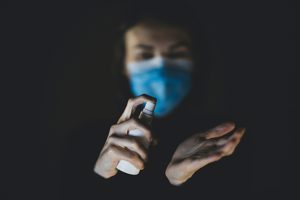
- The fight against fake news and electoral disinformationkunnskap-kristiania / 2020 / 10 / the-fight-against-fake-news-and-electoral-disinformationKNOWLEDGE @ KRISTIANIA: Bente Kalsnes on Fake news Just as COVID-19 is a stress test of every nation’s health system, an election process is a stress test of a nation’s information and communication system. A week away from the US presidential election, the symptoms are not so promising. News reports about the spread of so-called “fake news,” disinformation, and conspiracy theories are thriving as they did in 2016. Disinformation and “fake news” are not new, but the 2016 US presidential election placed the phenomenon squarely onto the international agenda . The spread of false and manipulated information dressed as news is closely associated with social media platforms such as Facebook, Twitter, and YouTube. In a 2018 study , researchers examined the exposure to misinformation during the American election campaign in 2016; they found that Facebook was a key vector of exposure to fake news. Read also: Farene ved falske nyheter (in Norwegian) Harder to differentiate It becomes harder to differentiate between false and trusted information when supposedly everyone can publish and spread information online that looks like news to large groups of people. The spread of disinformation and conspiracy theories has been identified as a problem in several states, for example in Florida , and news publications, such as the New York Times , are daily tracking viral misinformation ahead of the 2020 election. While disinformation and foreign influence was of great concern in the 2016 election, disinformation from domestic sources is additionally reported as a major threat in the 2020 US election. The spread of fake new, rumors, and conspiracy theories is problematic in itself, but the main damage of such orchestrated campaigns might be the systematic erosion of citizens’ capacity to recognize facts, the undermining of established science, and the sowing of confusion about what is real or not. Read also: Kunnskap Kristiania 2020/2021 (Kristiania Knowledge Magazine) The rumor mill turn faster than ever The COVID-19 pandemic has demonstrated how a health situation dominated by uncertainty and the lack of a vaccine makes the rumor mill turn faster than ever. A new study by the Oxford Internet Institute and the Reuters Institute for the Study of Journalism reveals that coronavirus-related misinformation videos are predominantly disseminated through social media and that Facebook is the primary channel for sharing misinformation due to a lack of sufficient fact checks in place to moderate content. Another study found that one in four popular YouTube videos on the coronavirus contained misinformation, while more than 1,300 anti-vaccination pages on Facebook had nearly 100 million followers. Countering disinformation and fake news Countering disinformation and fake news has become such a major issue that international institutions such as the United Nations, the European Union, the World Health Organization, and the World Economic Forum have published reports and recommended actions for how to tackle disinformation, particularly electoral and health disinformation. In June 2020, more than 130 United Nations member countries and official observers called on all states to take steps to counter the spread of disinformation, especially during the COVID-19 pandemic. Nevertheless, tackling false and manipulated information is far from straightforward. It requires a complicated balancing act between countering disinformation and protecting freedom of speech. A report from the United Nations Educational, Scientific, and Cultural Organization (UNESCO) recommends how to avoid sacrificing freedom of speech in the fight against fake news and disinformation. The report warns against “quick fixes” such as “‘fake news’ laws” and other measures to curtail viral disinformation, which may end up censuring legitimate journalism or legitimate criticism of authorities. Four main measures The UNESCO report suggests four main measures to identify and address fake news, disinformation, and misinformation—of particular concern during election campaigns. The report suggests a range of measures, from policy and legislative approaches to technological efforts and media and education literacy initiatives, in order to identify the problematic information, its producers, the distribution mechanism, and its targeted audience: 1. Identification responses (aimed at identifying, debunking, and exposing disinformation). Monitoring and fact-checking Investigative During the US election, news media have conducted live fact checks of the presidential debates, and major hoaxes have been identified and debunked. But to identify and expose all disinformation spreading during the election campaign, particularly on social media, is hardly possible. 2. Responses aimed at producers and distributors (intended towards the altering of the environment that governs and shapes behavior, i.e. law and policy responses) Legislative, pre-legislative, and policy responses National and international counter disinformation campaigns Electoral responses Based on evaluation from independent fact checkers, Facebook and Twitter have marked electoral disinformation, including from president Donald Trump. 3. Responses aimed at the production and distribution mechanisms (pertaining to the policies and practices of institutions mediating content). Curatorial responses Technical and algorithmic responses Economic responses Bots—automated Twitter accounts—are spreading disinformation and sowing division in America. A Carnegie Mellon University study found that nearly half of accounts tweeting about the coronavirus were likely bot, and as a response Twitter has unveiled new labels that will accompany misleading, disputed, or unverified tweets about the coronavirus. 4. Responses aimed at the target audiences of disinformation campaigns. Ethical and normative responses Educational responses Empowerment and credibility labelling efforts Several organizations and groups are offering training and tools both for citizens and journalists to increase skills in fact checking and verification. One of them, the project First Draft , offers tools and training to build resistance against misinformation. Electoral disinformation is of specific concern because it can damage democratic processes and reduce citizens’ rights. Electoral responses to disinformation can thus include a range of real-time detection, such as election-specific fact checks, election ad archives, as well as debunks, counter-content, and retrospective assessments. They can also entail campaigns linked to voter education and regulations about electoral conduct. The health of a democracy’s information system is critical, especially during election campaigns. By applying some or all of these measure during the US election, as well as other election campaigns in the near future, it might be possible to protect democratic elections from disinformation and increase citizens’ capacity to recognize facts. Reference: This article is first published in OUPblog, Oxford University Press’s blog sharing Academic Insights, on October 25th 2020 . Text: Bente Kalsnes is Associate Professor at the Departement of Communication, Kristiania University College. Photo: The health of a democracy’s information system is critical, especially during election campaigns, writes Bente Kalsnes. Photo by Element5 Digital on Unsplash.

- NKS -teknologi og politikk på 90-talletom-kristiania / historie / 1993-2003 / nks--teknologi-og-politikk-pa-90-talletFra midten av 1980-tallet var forsøk og utvikling av nye teknologi i fjernundervisning et viktig strategisk satsingsområde. Det var ingen tvil om at fjernundervisning i fremtiden måtte ta opp i seg andre kommunikasjonsmedier enn det tradisjonelle brevet. Derfor startet NKS forsøk med nye tjenester, medier og teknologier som kunne egne seg i fjernundervisning. Mest fremtidsrettet var forsøkene og driften av datakonferanser i NKS Høgskole i årene 1988-1992. Mest omfattende var Apen Videregående, et samarbeid mellom NKS, NRK-TV, og Statens ressurs- og voksenopplæringssenter (SRV). Teknologisatsingen var også viktig i en større, utdanningspolitisk sammenheng. Det var stor politisk interesse for bruk av teknologi i livslang læring, og NKS ville ha en plass i dette bildet. De to ledende fjernundervisningsinstitusjonene NKS og NKI etablerte i 1988 en felles stiftelse, Senter for fjernundervisning (SEFU). Der dokumenterte de sin kompetanse på moderne fjernundervisning og derfra søkte de en posisjon i utdanningspolitikken. Teknologiutvikling på 80- og 90-tallet En ny mediesituasjon Høsten 1983 ble stiftelsens råd bedt om å gi råd om framtidig teknologiutvikling i NKS. NKS så seg selv i en ny mediesituasjon. Direktør Ljoså stilte flere spørsmål om veivalg: hvilke medier NKS skulle satse på, hvor langt man skulle gå i internasjonalt samarbeid og hvordan man skulle skaffe nødvendig kompetanse. NKS hadde lang tradisjon for systematisk metodeutvikling. I 1972 opprettet NKS en egen ledelse for metodeutvikling, med Erling Ljoså som utviklingsleder. Ljoså var sterkt opptatt av å knytte NKS til det internasjonale fjernundervisningsmiljøet og til det utviklings- og forskningsarbeidet på brev- og fjernundervisning som foregikk internasjonalt, særlig i Storbritannia og Nord-Amerika (USA og Canada). (Se artikkelen «Internasjonalt engasjement») . På 80-tallet var Ljoså sentral i etableringen av et stort metodeutviklingsprosjekt i regi av NFF (Norsk forbund for fjernundervisning) og Brevskolenes utviklingskontor, en viktig forløper for NKS og NKls felles stiftelse: Senter for fjernundervisning (SEFU). Fra midten av 80-tallet ble metodeutviklingsarbeidet ledet av Dagny Blom. (Les om den tidlige fasen i NKS’ forsknings- og utviklingarbeid i Jubileumsboka fra 1989.) Seks år senere, i stiftelsens årsrapport for 1989, sier adm.dir. Ljoså: «Gjennom et systematisk forsøks- og utviklingsarbeid har NKS i siste halvdel av 1980-årene lagt grunnen for 1990-årenes utvikling på området». Det hadde skjedd en rivende utvikling på teknologifronten gjennom 80-tallet. I begynnelsen av 90-årene hadde NKS allerede erfaring med nesten alle de mediene som var aktuelle i fjernundervisning: fjernsyn, radio, telefon, lydkassetter, videokassetter, bildetelefon, telefax, videokonferanser, databaser, elektronisk post og datakonferansesystemer. Statsmonopolet for formidling av radio og fjernsyn var opphevet, og det var fritt fram for NKS og andre å benytte nærradiokanaler og lokalfjernsyn til undervisningsformål. Mange av prosjektene var del av NFFs metodeutviklingsprosjekt og fra 88/89 fram til 1995 ble mange prosjekter gjennomført i regi av SEFU. Teledirektoratets Forskningsavdeling (TF) var en viktig samarbeidspartner, både teknisk og økonomisk. Kirke- og undervisningsdepartementet var også en viktig finansieringskilde. Et mangfold av pilotprosjekter: noen eksempler Samarbeidet innenfor BUS (Brevskolenes utviklingssenter) og SEFU (Senter for fjernundervisning) var mangfoldig. Et stort antall pilotprosjekter utforsket nye teletjenester og teknologier. Målet var å utvide kommunikasjonsmulighetene, skape større nærhet i læringssituasjonen og gjøre fjernundervisning mer effektiv og tilgjengelig. Skolene ville lære, gjøre sine erfaringer og forberede seg i en tid da man ennå ikke visste at svaret var Internett. Lydkassetter: kommentarkassetten Et av de aller første pilotprosjektene var bruk av lydkassetter som kommunikasjonsmedium i fjernundervisning. Det var del av et langsiktig program som hadde som mål å styrke toveiskommunikasjonen mellom lærer og student i fjernundervisning. Kassettens side A var forbeholdt lærerens kommentarer og veiledning, mens side B var til bruk for elevene eller studenten. Slik kunne de kommunisere muntlig i tillegg til den tradisjonelle skriftlige kommunikasjonen. En omfattende evaluering ble foretatt av Anne Grethe Krane. Hun formulerte en generell konklusjon slik: «Gjennomsnittseleven er fornøyd med kassettundervisningen som han mener er hovedårsaken til sitt gode forhold til læreren og som i noen henseender har bidratt til et godt faglig utbytte av kurset. Han kan ha oppnådd bedre sluttresultater enn han ville ha gjort med ordinære brevundervisning, men han er usikker på om lydkassettsupplementet er verdt ekstra betaling.» (Sitat fra Kranes artikkel i Cand. Paed. Nr 1 1988) Bildetelefon: Trysilprosjektet I Trysilprosjektet ble kommunikasjonen mellom lærer og student utvidet til visuell kommunikasjon i sanntid. En lærer fra NKS Høgskole underviste en gruppe trelastarbeidere i Trysil via bildetelefon. Prosjektet ble gjennomført i samarbeid med Teledirektoratets forskningsavdeling (TF) og var like mye et teknisk som et pedagogisk prosjekt. I sammenheng med prosjektet ble det utviklet en utstyrspakke som gjorde bildetelefonen velegnet for undervisningsformål, dvs. med storskjerm og datakommunikasjonsmuligheter. Prosjektet ble avsluttet i 1991 og konklusjonen var at bildetelefon ikke var særlig interessant for NKS så lenge en multipunkt oppkopling ikke var mulig. Satellitt – et landsdekkende nettverk av studiesentra? Den nye mediesituasjonen åpnet for bruk av satellittoverført fjernundervisning. Bruk av satellitt i fjernundervisning var et tema for aktiv debatt og betydelig forsøks- og utredningsvirksomhet blant fjernundervisere verden over. Man så et stort potensial for å nå mange utdanningssøkende med målrettet, sanntids undervisning. Utfordringen var først og fremst å bygge et tilstrekkelig stort nett av lokale studiesteder der studenter over hele landet kunne delta. NKS gjennomførte flere prosjekter med bruk av satellittbaserte forelesninger til studentgrupper rundt omkring i landet. Et av de største og mest vellykkede prosjektene var Forvaltningskunnskap våren 1993, med ca. 30 grupper av studenter, ansatt i kommunal og fylkeskommunal virksomhet. Det var mange samarbeidspartnere: Kommunal Opplæring (KO) som organiserte brukerne, Televerket som stilte satellittkapasitet til rådighet, Fjernundervisning Vest som sto for den lokale organiseringen av gruppene og samarbeidet med Televerket om den tekniske tilretteleggingen, TV-Forum ved UiO som studio/sendested og, ikke minst, Oppland Distriktshøgskole som var faglig ansvarlig for innhold og eksamen. I et foredrag på en KO-konferanse i 1996 avslutter Leif Vistven med følgende ønske for framtiden: «Vi håper og tror at den teknologiske utviklingen vil bidra til at vi i fremtiden vil få fjernundervisning som inneholder det beste fra «satellittmodellen» og samtidig er fleksibelt i tid og rom. Men det er en annen teknologi og et annet foredrag … » Kunnskapsnettet: en egen fjernsynskanal for undervisning? Kunnskapsnettet ble lansert av SEFU i 1989 med det langsiktige målet å medvirke til opprettelsen av en egen fjernsynskanal for undervisning i Norge. I 1989/90 produserte NKS fire program i bedriftsøkonomi og åtte program i matematikk for Kunnskapsnettet. Programmene ble først distribuert over lokalfjernsyn, deretter over satellitt-kanalen Nor-Net ( en videreføring av Fjernundervisning Vest). I 1990/91 ble matematikkprogrammene sendt i reprise over TVNorge med relativt god respons. Norsk Kabel-TV Forbund var initiativtaker og en sentral samarbeidspartner i prosjektet. NKS & NRK: Fornyet samarbeid med nye roller NKS hadde lang tradisjon for samarbeid med NRK, Radio og TV, om store voksenopplæringsprogrammer. NRK produserte radio- og TV-programmer og NKS produserte og administrerte brevkurs. Men med opphevingen av kringkastingsmonopolet og konkurransen fra nye sendestasjoner oppsto en ny situasjon. NRK-TV inviterte til samarbeid med undervisningsinstitusjoner som kunne produsere programmer for sending via NRK. Høsten 1990 ble NKS informert om at NRK ville stille sendetid til disposisjon for undervisningsinstitusjoner som selv kunne planlegge, finansiere og produsere programmer. NKS og NRK hadde allerede erfaring fra en liknende modell i prosjektet Hverdagsjus, som ble produsert i 1989. Åpen videregående NKS grep muligheten og lanserte ideen om en «Åpen videregående» en kombinasjon av brevkurs og fjernsynsprogram. Det skulle være den første programserien i NRKs nye Læringskanal. NKS søkte Kirke- og undervisningsdepartementet om finansiering, og NKS viste til de erfaringene og den kompetansen de hadde fått med programmene i Kunnskapsnettet. Departementet bevilget fire millioner til prosjektet. De var interessert i et fjernundervisningsprosjekt med bred tilgjengelighet, en åpen videregående skole med færrest mulig hindringer for alle som ønsket å skaffe seg studiekompetanse. NRK sendte til sammen 48 programmer over to år, 1991 – 1992, i de seks studiekompetansefagene. NKS hadde prosjektledelsen og utarbeidet manus til alle programmene sammen med Lars-Jørgen Mørland i Mørland Produksjon. Lærere fra Statens Ressurs- og Voksenopplæringssenter (SRV) og Senter for lærerutdanning og skoletjeneste (SLS) ved UiO underviste i programmene. NKS-medarbeider Anne Grethe Krane innledet alle programmene. NRKs egen evaluering etter seriens slutt viste at ca. 50 000 mennesker fulgte programmene, helt eller delvis. I NKS var det ca. 5000 elever som meldte seg til brevkursene og ca. halvparten av disse tok eksamen i ett eller flere fag. Det var gode tall for begge institusjoner. Departementet var også fornøyd. Hverdagsjus og Yrkeslivets jus Det andre store samarbeidsprosjektet med NRK der undervisningsinstitusjonene sto for finansiering, planlegging og produksjon, var et kompetansegivende studietilbud på høyskolenivå om juridiske emner. Prosjektet var todelt: Hverdagsjus (1989) og Yrkeslivets jus (1993). De to studiene utgjorde til sammen Rettslære grunnfag. Her var det flere samarbeidspartnere i tillegg til NKS og NRK Radio og lV: Juridisk fakultet ved Universitetet i Oslo, Folkeuniversitetet og NKS-Forlaget. lV programmene ble sendt i beste sendetid og fikk svært god mottakelse både som allmennkringkasting og undervisning. Det ble ingen flere store samarbeidsprosjekter med NRK etter 1993, bare noen mindre prosjekter i 1995. NRK la etter hvert ned sin rolle som aktør på voksenopplæringsfeltet. De var bundet til å sende programmer fra det statlige organet Norsk Fjernundervisning (NFU) så lenge dette eksisterte (1977 – 2000) og konsentrerte seg ellers om undervisningsprogrammer rettet mot skolene. Datakonferanser og Internett NKS Høgskole – den elektronisk høgskolen NKS Høgskole lanserte seg som en elektronisk høgskole i 1988 da forsøk med datakommunikasjon og datakonferanser ble tatt inn som elementer i undervisningen. I 1989 sier adm. dir. Erling Ljoså at NKS Høgskole er «allerede en ledende elektronisk høgskole i Europa – med nær 400 studenter knyttet opp til sitt datakonferansesystem. Trolig er dette en av fremtidens sentrale utdanningsformer som så vidt har forlatt tegnebrettet og blitt virkelighet.» Rektor Bjørn Baaberg gir uttrykk for samme optimisme året etter: NKS Høgskole «har i løpet av kort tid plassert seg som et nasjonalt og internasjonalt kompetansesenter for bruk av datakonferanser i fjernundervisning.» Morten Søby var prosjektleder, han designet den elektroniske høyskolen i tett kontakt med USE (Universitetets Sentrale Edb-tjeneste) på Universitetet i Oslo. Den elektroniske høgskolen skulle ha de samme tilbudene som en vanlig, fysisk skole, med ulike elektroniske rom for kollokvier, faglige seminarer og bl. a. også en studentcafe, Cafe Online. Høgskolen brukte datakonferansesystemet PortaCOM og leide linjer fra USE som hadde systemet på sin server. Forsøket ble støttet med midler fra bl.a. Teledirektoratets Forskningsavdeling. Fra 1992 ble NKS Høgskole administrert av NKS Fjernundervisning. Fra samme år ble tilbudet om datakonferanser avsluttet. Annita Fjuk skrev en erfaringsrapport om den elektroniske høgskolen fra 1989 – 1992: «Høgskolen hadde nådd fram til en stabil situasjon teknisk sett og hadde funnet fram til pedagogiske løsninger som fungerte godt.» Men det var store utfordringer videre – pedagogisk, faglig, administrativt og ikke minst økonomisk. Det ble for vanskelig å finne en modell som kunne forsvare kostnadene ved å opprettholde tilbudet etter at all forsøksdrift var gjennomført. Høgskolen hadde ikke oppnådd forventet vekst og måtte redusere driftskostnader. Men datakommunikasjon fortsatte som en viktig del av utviklingsarbeidet i NKS. Det ble arrangert store nordiske og internasjonale konferanser i samarbeid med USIT og andre nordiske partnere. Forsøk med nye konferansesystemer ble også gjennomført, bl.a. EIES og liNKS. Likevel skulle det gå mange år før datakommunikasjon igjen ble en integrert del av høyskolestudiene i NKS. (Kapitlet «Til fjern og nær» i Jubileumsboka fra 1989 gir bakgrunnen for mange av de valgene NKS gjorde på slutten av BO-tallet. bl. a. etableringen av NKS Høgskole.) Internett: NKS Nettstudier Med Internett kom nye muligheter og fra slutten av 90-tallet satset NKS for fullt på nettetsom læringsarena. 11998 ble strategien lagt for full overgang fra brev til nett. Avdelingen for metodeutvikling hadde gjennomført mange pilotprosjekter med bruk av Internett. Nå mente man at tiden var moden for en raskest mulig overgang til NKS Nettstudier. Navnet NKS Nettstudier ble første gang lansert i år 2000 og senere gjeninnført i 2007. Det viste seg at først da var markedet modent for nettet som læringsarena. Overgangen fra brev til nett er utførlig beskrevet i artikkelen NKS – i ekstrem forvandling? og blir derfor ikke nærmere beskrevet her. Senter for fjernundervisning (SEFU) 1988 -1995: En strategisk markering Stiftelsen Senter for fjernundervisning (SEFU) ble opprettet av NKS og NKI i 1988. De to skolene hadde felles interesser i å markere seg i en utdanningspolitisk sammenheng. Samtidig ville de videreføre sitt forsøks- og utviklingssamarbeid på teknologifronten. I SEFUs første årsrapport 1989 sier stiftelsens styre at SEFU «ønsker å være et viktig nasjonalt ressursmiljø nå det gjelder utvikling av fjernundervisning (… )slik at den fremtidige bruk av fjernundervisning i Norge kan være tuftet på solid erfaring, bred kunnskap og kreativ fantasi.» SEFU hadde to mål: For det første å markere og synliggjøre de to institusjonenes utviklingsarbeid og kompetanse på et nasjonalt plan. For det andre å benytte denne kompetansen i en strategisk/politisk sammenheng i en tid da fjernundervisning og Norgesnett var i vinden politisk. Fra 1990 konsentrerte SEFU utviklingsarbeidet om bruk av dataformidlet kommunikasjon og bildemedier. Både NKS og NKI hadde etablert elektroniske høyskoler med bruk av datakonferansesystemer på slutten av 80-tallet, og begge skolene fant det riktig å samarbeide om videre utvikling av datakommunikasjon i fjernundervisning selv om de også var i skarp konkurranse med hverandre. Kunnskapsnettet var ett av flere spennende samarbeidsprosjekt når det gjaldt bildemedier. Mange av pilotprosjektene i SEFU ble gjennomført i samarbeid med – og finansiert av – Teledirektoratets forskningsavdeling (TF) på Kjeller. De var interessert i å prøve ut nye teleteletjenester i fjernundervisningssammenheng. Den statlige institusjonen Norsk Fjernundervisning (NFU) ble også med i SEFU-samarbeidet og finansierte blant annet et stort multimediekurs, Fjernundervisning som metode. NFU ble år 2000 del av VOX – Nasjonalt fagorgan for kompetansepolitikk. Mer kunnskap til flere? I historisk sammenheng er det de politiske initiativene fra SEFU som har størst interesse. Stortingsmelding nr. 43 (1988 – 1989) Mer kunnskap til flere fra statsråd Gudmund Hernes var en bred melding om kompetansepolitikk, der livslang læring og fjernundervisning hadde en naturlig plass. I stortingsmeldingens kapittel 9 om fjernundervisning anerkjennes den kompetansen som de frittstående fjernundervisningsorganisasjonene hadde på feltet. NFF og SEFU merket seg uttalelser som denne: «For at vi nasjonalt skal kunne gjøre fullt bruk av de muligheter den teknologiske utviklingen åpner for, bør det satses på å samle og koordinere kreftene gjennom et nært samarbeid mell om offentlige og frittstående institusjoner og organer. (s. 92)» SEFU engasjerte seg i debatten om utvikling av fjernundervisning på høyere nivå i Norge på bakgrunn av Hernes’ stortingsmelding. De to stiftelsene presenterte seg i et notat, Fjernundervisningens tyngdepunkt i Norge: «De to ideelle stiftelsene NKS og NKI driver i dag omkring 80 % av den igangværende fjernundervisning i Norge. Begge institusjoner er sterkt engasjert i internasjonalt, særlig europeisk, faglig samarbeid, og begge driver avdelinger for faglig-pedagogisk forsknings og utviklingsarbeid. I denne situasjonen erkjenner de samarbeidende stiftelsene et spesielt ansvar på grunn av sin totalt dominerende posisjon inn norsk fjernundervisning. Dette er årsaken til at NKS og NKI nå arbeider for å koordinere de viktigste innenlandske ressursene innen feltet og samtidig skape en norskkontrollert åpning mot Europa og den øvrige verden.» Notatet ble benyttet i møter med Kirke- og undervisningskomiteen, Kirke- og undervisningsdepartementet og Kultur- og vitenskapsdepartementet. SEFU presenterte mange grunner til at SEFU burde få en plass i utdanningspolitikken og oppfordret departementet til å stimulere til samarbeid om videreutvikling av fjernundervisning på høyere nivå i Norge. I stedet for å bygge opp kompetanse og apparat ved et stort antall institusjoner og avdelinger, burde samarbeidsmodeller stimuleres. SEFU fulgte opp med flere tiltak som skulle vise organisasjonenes kompetanse og styrke på fjernundervisningsfeltet. I samarbeid med Statens Spesiallærerhøgskole ble det arrangert et arbeidsseminar med den ambisiøse tittelen: Forskningsprogram om fjern undervisning, med bred deltakelse fra norske miljøer innen fjernundervisning. Seminaret tok sikte på å gi et bidrag til planlegging og evaluering av en samlet innsats i 90- årene når det gjaldt utvikling og kompetanseoppbygging på fjernundervisningsfeltet. Ikke minst viste seminaret at SEFU-miljøet hadde god oversikt og gode kontakter mot det internasjonale fjernundervisningsmiljøet. SEFU arrangerte også et større europeisk seminar i april 1991, i samarbeid med EUs delegasjon i Norge ved ambassadør A.R. Hughes: On the potential for open and distanceearning in the European context , der bl. a. statsråd Gudmund Hernes presenterte det norske perspektivet. Invitasjonen var rettet mot norske beslutningstakere og SEFU pekte på ERASMUS- og COMETT-programmene fra EU og etablering av The Budapest Platform (som senere skulle føre til etableringen av EDEN, (the European Distance Education Network), der Erling Ljoså ble den første presidenten). På denne tiden var det miljøet rundt SEFU som hadde de internasjonale kontaktene etter mangeårig samarbeid i internasjonale organisasjoner. Anerkjennelse og samspill Stortingsmeldingen ble fulgt opp med lanseringen av «Norgesnettet» og etableringen av Sentralorganet for fjernundervisning (SOFF) i 1990. SOFF var først et prosjekt, men i 1994 ble det et permanent forvaltningsorgan med oppgave å stimulere tilbyderne av høgre utdanning til å utvikle mer fleksible og brukertilpassede utdanningsopplegg, gjennom tildeling av prosjektmidler, evaluering og informasjon. Norgesnettet hadde også til hensikt å styrke fjernundervisning på høyere nivå. Departementet pekte ut sju «knutepunktinstitusjoner» – de fire universitetene og tre høyskoler som skulle ha en særlig rolle i utviklingen av fjernundervisningstilbud og tildeling av prosjektmidler fra SOFF. Departementets oppfølging av SEFUs mange initiativ og aktiviteter ble svakere enn man hadde ønsket. Hverken NKS eller andre fjernundervisningsinstitusjoner fikk noen plass i det offisielle Norgesnettet. Likevel kan man i tilbakeblikk se at det ble oppnådd en del, ikke minst gjennom samspill mellom det frittstående fjernundervisningsmiljøet og institusjoner som SOFF. Anerkjennelse – nasjonalt og internasjonalt De frittstående institusjonene, med NKS og NKI i spissen, fikk anerkjennelse for sin kompetanse, både nasjonalt og internasjonalt. Departementet gav uttrykk for det på flere måter. Styrerepresentasjon var en viktig erkjennelse av det. Da SOFF ble opprettet i 1990, ble Erling Ljoså medlem av SOFFs styre, som representant for NFF (Norsk Forbund for Fjernundervisning). Det var departementets måte å få del i den kompetansen som det norske fjernundervisningsmiljøet hadde. Ljosås deltakelse i SOFF-styret var uten tvil viktig for oppbyggingen av kompetanse i SOFF. Dessuten fikk både NKS og andre frittstående fjernundervisningsinstitusjoner prosjektmidler fra SOFF på linje med de offentlige lærestedene. På den måten bidro de med nyttig kompetanse til nykommerne på feltet. SOFF ble videreført i en ny statlig institusjon, Norgesuniversitetet, i 2004. Direktør Dagny Blom fra NKS Fjernundervisning gikk inn som styremedlem fra NFF, etterfulgt av utviklingsleder Torstein Rekkedal fra NKI i 2008. Representanter fra fjernundervisningsmiljøet gikk også inn i andre styrer: bl.a. Norsk Læremiddelsenter (NLS), Norsk FjernundervisningNOX og delte sin kunnskap og kompetanse i slike sammenhenger. Det norske fjernundervisningsmiljøet fikk innpass i fora for samspill med de offentlige institusjonene, både som personer og som institusjoner. Ikke minst ble bransjeorganisasjonen NFF (Norsk Forbund for fjernundervisning) et forum for samspill etter at offentlige universitet og høyskoler ble medlemmer i NFF sent på 90-tallet. NFF ble stadig styrket som høringsinstans og aktør i forhold til både Departement og Storting. Miljøet ble hørt, medarbeidere i institusjonene ble bedt om foredrag og artikler i de fleste sammenhenger der fjernundervisning og nettbasert læring var temaet. Samarbeidsmodellen I 1994 skrev Erling L joså et notat til SOFF om mulige samarbeidsmodeller. Les det her . En sterk internasjonal posisjon SEFU-miljøet hadde en sterk internasjonal posisjon og et stort internasjonalt nettverk. Det var en posisjon som ble beholdt gjennom bl. a. valg av tre norske presidenter i The European Distance and elearning Network (EDEN): Erling Ljoså (1992 – 1995), Ingeborg Bø (2003 – 2007) og Morten Flate Paulsen (2010 -). Statlig finansiering av et norsk sekretariat for The International Council for Distance Education (ICDE) var også en anerkjennelse av den posisjonen det norske fjernundervisningsmiljøet hadde. NKI har også deltatt i flere EU-prosjekter helt fram til i dag – noe NKS ikke har prioritert. Situasjonen i dag Samlet sett bidro SEFUs innsats i de viktige årene 1988-95 utvilsomt til at den strategiske posisjonen på feltet ble bedret og man ble tatt hensyn til som viktige aktører på feltet. Samtidig ble NKS og de offentlig godkjente fjernundervisningsinstitusjonene stadig mer marginalisert gjennom 80- og 90-tallet. Man opplevde ulike, til dels uforenlige signaler fra politisk hold. I mange sammenhenger ble bransjens kompetanse anerkjent, men samtidig har nedprioritering av hele voksenopplæringsfeltet vært konsekvent siden ca. 1980. Det gjelder stadige reduksjoner i statsstøtte til feltet, bortfall av en rekke sentrale aktører som NRK, Kommunal Opplæring og Telenor, utbygging av konkurrerende aktører i skolesystemet og, ikke minst, mangel på politiske føringer eller tiltak for å styrke de frittstående, godkjente institusjonene og etablere gode institusjonelle løsninger for samarbeid. Ny Lov om voksenopplæring av 2010 ga nettskolene (det nye navnet på de frittstående fjernundervisningsinstitusjonene) en fortsatt mulighet til statsstøtte. NFF (Norsk Forbund for Fjernundervisning og fleksibel utdanning) samarbeidet tett med departementet i forberedelsene av den nye loven og statsstøtten var en anerkjennelse av nettskolenes bidrag til videre utvikling av feltet. Men det ble ikke uttrykt noen politiske føringer for hvordan man ønsket å utnytte disse institusjonenes i en nasjonal satsing på etter- og videreutdanning. I 2012 er det fortsatt slik at NKS og NKI har en unik rolle som de største tilbyderne av nettstudier til voksne utdanningssøkende. Derfor er det fortsatt viktig for disse skolene å vise sin kompetanse og være attraktive samarbeidspartnere for offentlige utdanningsinstitusjoner rundt omkring i landet. NKS prioriterer slikt samarbeid og har god erfaring for at det skapes gode vinn-vinn situasjoner. På det nasjonalpolitiske planet har VOX – Nasjonalt fagorgan for kompetansepolitikk overtatt som samtalepartner med NFF om kompetansepolitikken og voksnes læring fra 2010. NFF hartatt utfordringen med å vise nettskolenes samlede kompetanse og omfattende studietilbud. Artikkelen er skrevet av Dagny Blom og Erting Ljoså .
- Why do women leave academia after completing a PhD?kunnskap-kristiania / 2023 / 05 / why-do-women-leave-academia-after-completing-a-phdKNOWLEDGE AT KRISTIANIA: Women in academia The proportion of women in academia progressively decreases with advancing career stages. This phenomenon is known as the «leaky pipeline», meaning that women are «leaking out» of the academic pipeline. It affects all research fields. However, the problem is particularly accentuated within Science, Technology, Engineering, and Mathematics – the STEM disciplines. The number of female candidates dramatically decreases from master’s to PhD, and continues declining at the postdoc/researcher level, reaching the lowest point at full professorship. The higher the level, the lower the percentage of women – it’s a lose-lose game Although the number of female candidates reaching PhD-level is higher than the number of male candidates, the reduction slope for women in academia intensifies at the higher levels, as shown in the figure below. It is the opposite for men. So, we have two lines showing male and female numbers in the career path crossing each other, creating a further distance at the highest academic level, giving a scissor-shaped curve. The numbers are different from one discipline and university to another. However, the slope remains. Metaphorically, women are being cut away from the high end of the academic career development path. So the question is, are we losing something here? The clear answer is: Yes. And this is serious for several reasons: We lose the benefits of gender balance. It is against UN Sustainable Development Goals (SDG) and Environmental, Social, and Corporate Governance (ESG) objectives. It means we fail at equality and fairness. It represents a loss of talent and diversity in academic fields. Why are we losing women from academia at the higher level? Several factors cause this problem. There are biological factors, as well as cultural factors. Biologically, women have age limitations for fertility, which unfortunately tend to match the career development period in academia. So, while young men aged 25-45 can focus on achieving success in their careers, especially at the PhD-level and after its completion, women must also consider maternity. Women also tend to consider themselves more successful when they manage to foster several aspects of life in this short time; starting a family, giving birth to a suitable number of kids with good age differences, and raising them, while at the same time remaining healthy, youthful and physically attractive, as well as pursuing a successful career. Society and culture tend to expect the same from a woman. Men, on the other hand, are not to the same degree expected to expand the other aspects of life during this age period such as achieving “settled paternity” while pursuing a successful career at the top stages in academia. While all researchers may face well-known syndromes such as imposter syndrome and depression, female researchers struggle to succeed in various areas of life during a relatively short time slot. As a result, women often struggle to progress in their careers and are more likely to leave academia altogether at the last career development phases. If academia itself is not the direct cause by actively pushing female researchers out through exaggerated expectations of publications, supervision, teaching, etc., academia is no doubt losing them. The numbers are clear. Biology, society, and culture combined create the leaky pipeline problem for women in academia, resulting in the scissor-shaped curve, revealing the dramatic difference between male and female careers within academia. What can be done? Historically there have been many attempts at gender equality measures within many professional areas, with no exception in academia. One example is giving women priority when hiring in cases where two applicants have equal expertise. However, academic women must gain competence, survive in academia, and apply to reach the hiring step. Hence, rather than waiting for a hiring opportunity, academia should create incentives that fit female researchers better to prevent them from “leaking out” of academia. Apart from broadening the hiring strategies, the rules of promotion should be changed in order to keep valuable female researchers who are eager scientists for the future. Considering that the biological, social, and cultural expectations are different for women and men, how can we justify the rules and processes being the same? It is crucial to address this issue not only to provide equal opportunities for women but also to promote diversity and excellence in academic research and teaching. Let’s not lose PhD women in academia, as they are the low-hanging fruits! Author: Toktam Ramezanifarkhani, Associate professor, School of Economics, Innovation and Technology References: Fox, M. F. (2010). Gender, family characteristics, and publication productivity among scientists. Social Studies of Science, 40(5), 879-900. Xie, Y., & Shauman, K. A. (2003). Women in science: Career processes and outcomes. Harvard University Press. Dubois-Shaik, Farah, Bernard Fusulier, and Caroline Vincke. “A gendered pipeline typology in academia.” Gender and Precarious Research Careers. Routledge, 2018. 178-205.11:42 This text was published on forskning.no/sciencenorway.no on the 27th of June under the following heading: " Why do women leave academia after completing a PhD? ". We would love to hear from you: Send your comments and questions regarding this article by e-mail to kunnskap@kristiania.no .

- Researcher calls for a new, sustainable normal after the pandemickunnskap-kristiania / 2021 / 11 / researcher-calls-for-a-new-sustainable-normal-after-the-pandemicKNOWLEDGE @ KRISTIANIA: Sustainability The ongoing COVID-19 pandemic has revealed how fragile our global development trajectory really is. While researchers, activists and public figures have tried to focus the attention on the critical environmental risks associated with unconstrained economic growth for decades, it took a global breakdown to shake the status quo . After two years of pandemic-related loss, fear and lockdowns, we are all eager to go back to normal times, to our career and our routines. But it must be a new normal, if we want to prevent much bigger disruptions down the road. We need to find a way to properly take into account our environmental, social and demographic limits, if we want to ensure that the normal times are here to stay. The Earth4 model The great challenge of the present is not to restore the previous trajectory of development after COVID-19, but to build a new one. And this is the challenge that our Earth4 project aims to help with. Connecting researchers active in different fields from all over Europe, the project aims to deliver the most ambitious sustainable development model ever created. We will combine environmental, social, demographic and economic trends, in order to develop a complex system dynamics model. This model will integrate both economic and environmental mechanisms for the creation, implementation and monitoring of ambitious policies supporting new, resilient growth trajectories. Available to the general public Policy-makers, however, are not the only planned beneficiaries. Earth4 will be made available to the general public, through a dedicated platform being developed by the Club of Rome. This club is a non-governmental organization (NGO) working since 1968 to promote environmental awareness at all societal levels, to enable everyone to engage with the issues at stake, and to monitor both global and local trends. This will measure the variety of socioeconomic and biological dimensions of current policies, aimed at comparing national efforts with what it would take to enact the global shift that we need. The model detects unsustainable development trajectories While the Earth4 model is not ready yet, the latest iterations already illustrate some key dynamics with perfect clarity. For years now, the awareness that environmental and social sustainability are one and the same. The Earth4 model is able to show their complex relations, illustrating how current development trajectories lead to both unsustainable environmental footprint and unsustainable debt ratios at the global level. Furthermore, it shows that policies aimed exclusively towards one side of the sustainability challenge, aggravate the other side, thus being ultimately self-defeating, as social collapse makes environmental progress impossible, and vice versa. Environmental limits and distributional inequality Cancelling or easing debts just accelerate unsustainable consumption and demographic patterns. Vice versa, imposing a qualitative shift towards green production and consumption makes existing debt loads impossible to bear, precipitating social upheaval. Earth4 shows that a holistic approach is not only desirable, but also the only desirable approach, under current conditions. Many solutions are possible. But all solutions must tackle both the environmental limits and the distributional inequality. Just an instrument, not an end To achieve this, academic research is insufficient. While the Earth4 team is looking forward to developing the best possible model integrating both socioeconomic and environmental mechanisms, the model in itself is just an instrument, not an end. The aim is to help activists, policy makers and the concerned public with the crucial political task of selecting, promoting, implementing and defending the policies we need to ensure that the new normal is here to stay. To this end, we plan to diffuse the Earth4 model, indicators, concepts and ideas as far and wide support the thousands of people that are already working, every day, in the same direction. Build a new normal Earth4 may look ambitious, but its complexity is just a pale reflection of the real issues that we are facing today. We need complex instruments to tackle complex problems. But the root of the solution is much simpler: get engaged. We all want a new normal after COVID-19. We need to realize, however, that the new normal will not be delivered to us: we need to build it. Reference: Collste, D., Randers, J., Goluke, U., Stoknes, P. E., Cornell, S., & Rockström, J. (2018). The Empirical Bases for the Earth3 Model: Technical Notes on the Sustainable Development Goals and Planetary Boundaries. Greaker, M., Stoknes, P. E., Alfsen, K. H., & Ericson, T. (2013). A Kantian approach to sustainable development indicators for climate change. Ecological Economics, 91, 10-18. Randers, J., Rockström, J., Stoknes, P. E., Goluke, U., Collste, D., Cornell, S. E., & Donges, J. (2019). Achieving the 17 Sustainable Development Goals within 9 planetary boundaries. Global Sustainability, 2. Text: Beniamino Callegari, Researcher at School of Economics, Innovation and Technology, Kristiania University College. We love hearing from you: Send your comments and questions regarding this article by E-mail to kunnskap@kristiania.no .