Søk
Filtre
Filtre
Resultat
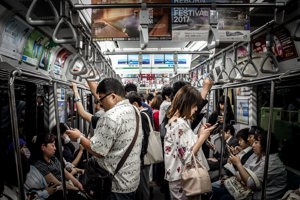
- In the future, being around other people may prolong the lifetime of your smartphone’s batterykunnskap-kristiania / 2022 / 08 / in-the-future-being-around-other-people-may-prolong-the-lifetime-of-your-smartphones-batteryKNOWLEDGE @ KRISTIANIA: Technolgy Today, smartphones are used to aid and improve all kinds of tasks in almost all aspects of daily life. Smartphones, however, are generally considered fairly resource constrained and their available power is the most constrained resource of all— without power the smartphone won’t function. Not surprisingly, battery life has been identified as one of the most desired features of mobile devices. A possible solution For the purpose of improving battery life in settings where users are co-located, we conducted a study to measure the impact on the consumed smartphone energy when data were collected in a distributed manner. This means that every device shared the same data as opposed to every device collecting its own sensor data. The results indicated that a shared distributed collection imposed less energy consumption than traditional approaches. By opportunistically connecting to and sharing common computations with nearby smartphones, co-located users can compute tasks as ‘one entity’. The result of the computations done collectively is then available for all nearby devices and ensures that no computation is done more than once. A more seamless travel experience Let’s take an example of a near-future public transport application, taking advantage of the Be-in/Be-out paradigm. Be-in/Be-out is about enabling user’s of public transport to enter and leave vehicles without having to do any explicit action— a seamless, ticket free travel experience. In order to achieve this, heavy local computations are needed in order to estimate or verify if a user is actually on a public transport vehicle, which vehicle and how long the journey is, in order to achieve accurate ticketing. The Be-in/Be-out scenario in public transport, is a very relevant scenario which we are currently researching through a joint research effort between fluxLoop, Kristiania University College and other public transport operators such as Nordland Fylkeskommune and Ruter. Devices sharing the same data In scenarios such as this, the smartphones of embarking and disembarking travelers can collaborate as one entity in order to calculate whether travelers are embarking, disembarking and which mode of transport the travelers are in. Near-future public transport solutions are examples where opportunistic collaboration could prove beneficial. However, this approach could also be employed in any kind of scenario where devices are co-located and ambient sensor information needs to be collected and processed. Cloud solutions are not necessarily the best solutions The last couple of years, in order to combat the resource scarceness of mobile phones, many applications send heavy computation to the cloud for processing and the result is then returned to the device. This can significantly lower the resource consumption of mobile phones and contribute to a longer lasting battery. At the same time, the concept of the Internet of Things (IoT) has emerged which has led to a drastic increase in connected devices. This, in turn, leads to elevated network traffic which potentially can cause latency and a heightened load on servers worldwide. Not only does this affect the internet backbone and the service providers, but an increase in network usage from mobile devices might also incur added cost for the end-user. In addition, by sending data to the cloud it brings an added risk to security and introduces new attack vectors. Data can be intercepted on the way, or malicious employees working at the service provider can access and steal your data. More processing on device may increase the security of mobile solutions Security concerns, in combination with better hardware and more efficient algorithms has led to the computations again being moved back to the users’ devices. However, the issue of available power on mobile devices still persists. This is quite the predicament! On one hand you have a significant reduction in energy consumption on the user’s device and on the other you have a significant increase in network load and additional security concerns. It is currently hard to deal with all these issues, however, on-device processing and opportunistic collaboration can help mitigate security issues to some extent. A way to reduce energy consumption It is difficult to say exactly which calculations are needed for different solutions in the future. However, for scenarios where multiple devices need to do the same calculations within the same context, collaborating on the computation is a viable approach. Through opportunistic collaboration it is possible to reduce energy consumption, while simultaneously keeping network traffic at a minimum. In the future this solution might contribute to a more seamless travel experience with fairer pricing schemes and hopefully— once implemented, the travelers won’t notice a significant change in their device’s power consumption due to distributed work collaboration. Referanser: Skretting and T.-M. Grønli, "Distributed Sensor Data Collection Using Mobile Clouds for Public Transportation," in IEEE 17th International Conference on Intelligent Computer Communication and Processing, 2021. Ma, Y. Zhao, L. Zhang, H. Wang and L. Peng, "When mobile terminals meet the cloud: computation offloading as the bridge," in IEEE Network, vol. 27, no. 5, pp. 28-33, September-October 2013, doi: 10.1109/MNET.2013.6616112. Text: PHD-candidate Anders Skretting, School of Economics, Innovation and Technology. Anders.Skretting@kristiania.no
- Graduation ceremony 2026om-kristiania / kalender / graduation-ceremony-2026School of Economics, Innovation and Technology, Master students
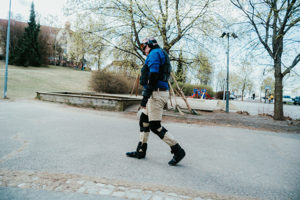
- Applying empathy as a tool for innovative thinkingkunnskap-kristiania / 2021 / 5 / applying-empathy-as-a-tool-for-innovative-thinkingKNOWLEDGE @ KRISTIANIA: Innovation Thanks to modern medicine and improvements in lifestyle people are living longer. Figures suggest that by 2060 there will be more than double the number of older adults over the age of 70, triple the number over 80 and there is a good chance that almost 1 out of 5 will celebrate their 100th birthday. But fewer still will “age in place”; that is, in their own homes. Most of us hope to age in place. But the reality is that only 13% of Norwegians die in their own homes. Read also : Slik kommer du i gang med designtenkning (in Norwegian) Understanding “Age in Place” In order to be able to understand how older adults can “age in place” we need to understand the everyday challenges they face. An empathetic understanding of daily life can give researchers and practitioners the insight to re-frame potential problems and current limitations. At Kristiania University College, students are encouraged to try our “GERT” – an ageing suit to gain insight into an older adult’s world through the completion of simple tasks most adults consider normal, almost automatic activities of daily life. Read also: Designer en bedre verden (in Norwegian) When activities of daily life become a struggle The activities of daily life that most of us consider to be routine and easily completed can become a struggle in our older adult lives. This often leads to changes in behaviour, increased pressure from our environments, and the need for help which affects our personal independence and further, our dignity. Walking, getting up from a seated position, ascending and descending stairs, opening doors, and all the tasks we need to complete in a day to remain independent are attempted in an effort for designers to gain insight into a world they will inhabit in their future. Not to mention navigating retail and public spaces, reading product packaging labels and wayfinding information, paying for their purchases, and getting everything back home. Read also: Eye-shadowing Customers’ Reviews Feeling the restrictions of aging With the GERT suit we can, in effect, enter a world of sensory impairment (and to some degree deprivation) and literally feel the weight and kinaesthetic restrictions of ageing as well as haptic, audio and visual degradations. The activities of daily life become more challenging and what was once a semi-automatic easy task becomes something new as we struggle to cope with our body’s limitations and with new challenges within our familiar surroundings. According to the Lawton and Nahemow’s ecological theory of aging the performance of and comfort with daily activities is possible when an appropriate match between a person and his/her environment is achieved. This match is known as person-environment fit (P-E fit). The P-E fit is important in understanding the dynamic relationship between people and their environments in all fasits of life but especially as we age. Read also: Five principles in defining a powerful purpose Empathy-driven design To gain better personal insights into the subject matter students in interior architecture use this GERT suit as a pedagogical tool to sense the challenges via empathy-driven design. It allows them to feel, on their person, the challenges encountered by growing numbers in society. In order to make independent living and ageing in place possible for as many as possible, with as much dignity as possible, we require more research into the challenges being faced and the “jobs to be done” and to educate future generations to think differently about environments, products and services. Read also: How Business is Accelerating Toward a Fairer Future Sensing solutions My own research involves how our haptic senses “read” spaces and how we move around using kinesthetic and tactile modalities (senses) as our bodies slow down and our visual and auditory modalities decay. Within the domains of architecture and design, vision is the predominant sense. The dominance of the eye (ocularcentrism) and the suppression of the other senses tends to push us into detachment, isolation and exteriority. It is hoped that this research will help to aid architects, product and service designers by giving them more insight into the possibilities, beyond aesthetics, to engage haptics in design solutions to better meet the housing and service needs of a growing, and often misunderstood, user group. Read also: Why consumers co-create Finding innovative ways of reframing problems Empathy, by definition, is an action. It needs to be experienced, as the GERT suit enables, to be understood. Empathy is the first phase of design thinking and plays a critical role in finding innovative ways of redefining and reframing problems. As we age, our bodies go through gradual and progressive changes that can only be truly understood as we grow old. But if we can project this decline forward to the present, we can expose young (and not so young) designers, innovators and researchers to the problems the current and coming generations are facing. References: This article is based on lectures in the Interior Architecture bachelor’s «Ageing in Place» course at School of Arts, Design, and Media , Kristiania University College. The article also presents insights from an ongoing PhD research project on the use of haptics in interior architecture as a tool to extend the independence and dignity of the older adults in society. Text: Lecturer David Coates, Department of Economics and Innovation, Kristiania University College.
- Vennlighet er en egenskap vi har utviklet for å overlevekunnskap-kristiania / 2023 / 04 / vennlighet-gjor-at-mennesket-overleverKUNNSKAP FRA KRISTIANIA: Samfunn og psykisk helse Evolusjonsteorien forteller at den som er best tilpasset, vil overleve. For å hjelpe oss å overleve, har evolusjonen ivaretatt og fremmet våre sosiale evner. Vi har rett og slett lært oss å være vennlige. Den mest åpenbare grunnen til at vennlighet gir et positivt utbytte, er at vennlighet mot andre mennesker ofte resulterer i vennlighet tilbake til deg selv. Det kan være i form av tjenester eller nye muligheter. Vennlighet utløser også en dominoeffekt som kan gi sterkere sosiale bånd, psykologisk trygghet, en mer variert fritid og nye impulser. Bare for å nevne noen. Menneskets behov for sosial tilhørighet For å forstå dybden i hvordan og hvorfor vennlighet kan ha slike effekter, må vi forstå menneskets evolusjonsforankrede behov for sosial tilhørighet. Mennesket er langt ifra det sterkeste dyret i næringskjeden. Vi har lite å stille opp med i kampen mot tigre, mammuter, boaslanger og andre ville dyr. Vi er derimot i stand til å tenke på et langt mer avansert nivå enn de andre dyrene. Med denne avanserte hjernen vi besitter skulle man derfor tro at vi kan overmanne enhver tiger på savannen? Ikke helt; ett menneske alene har ikke mye å stille opp med mot en sulten tiger. "Sammen er vi sterke" Mennesker som samarbeider har derimot klart å overvinne ikke bare en, men store flokker av tigre. Ordtaket «sammen er vi sterke» kunne ikke vært mer riktig. Det har seg nemlig slik at ett menneske alene, tross sin hjerne med enormt potensiale, er ganske begrenset. Det er først når vi kommer sammen at potensialet til hjernen får store konsekvenser. Når vi ser tilbake på våre forfedre som levde for 100 000 år siden, synes vi at de virker primitive. Den gang levde vi i flokker på kanskje 50 – 150 mennesker. Etter hvert som ny kunnskap ble ervervet, ble den delt med de yngre i flokken, som igjen kunne lære dette videre til sine barn. Samarbeid skaper samfunn Slik kunnskapsspredning hadde sin begrensing; kunnskap nådde ikke lengre ut enn menneskene i umiddelbar nærhet. En gang iblant traff man kanskje på andre flokker og utvekslet kunnskap. Vi klarte oss, med andre ord, greit på den tiden – men bare greit. Det var først med utforming av større samfunn at vi kan skryte på oss at vi virkelig har klart oss godt. Et samfunn kan sees på som en organisert måte å dra nytte av ulike menneskers kompetanse og egenskaper. I en middelalder-landsby kunne én person ta seg av bakingen, en annen drev med sauegjeting og et par andre tok seg av kyrene. Slik ble vi alle spesialister og vår spesialkompetanse kunne videreformidles til lærlinger og etter hvert gjennom det skrevne ord. Vennlighet – for ditt eget beste Hva har alt dette med vennlighet å gjøre? Det illustrerer den avgjørende betydningen av sosial interaksjon. Det viser at det ikke nødvendigvis var den som var fysisk sterkest som nådde toppen av hierarkiet etter hvert som menneskene utviklet sine sosiale evner. Av samme grunn har vi dypt iboende biologiske og psykologiske mekanismer som fasiliteter sosiale forhold. Vennlighet er antagelig en av de sentrale evnene våre. At vennlighet er bra for ditt sosiale liv trenger du ikke å bli fortalt. Dette opplever du hver uke. Når du er vennlig mot andre får du bedre relasjoner. Kanskje har du også opplevd at fiendtlighet eller likegyldighet kan bidra til å støte mennesker bort. Vennlighet vekker positive følelser Mennesker har blitt en art som har svært store behov for sosial kontakt. I det moderne samfunn er faktisk sosial isolasjon satt som den strengeste straffen innenfor det juridiske system. Det følger positive følelser med det å være vennlig; medfølelse, kjærlighet, samhørighet og mening er alle emosjoner som ofte kommer som resultat av å være vennlig. Forskerne tror disse følelsene blir vekket for at det skal føles godt å gjøre noe som fremmer dine sosiale forhold. Evolusjon har sørget for at du fortsetter å vise vennlighet for andre – til ditt eget beste. Gode gjerninger er bra for din psykiske helse Setter vi vår evolusjonsforankrede preferanse for det sosiale til side, finnes det også andre grunner til at vennlighet kan være bra for oss. Det viser seg at gode gjerninger for andre vil være med å forme ditt selvbilde. Et selvbilde som da forteller deg at du er en god person som gjør godt for andre. Et slikt positivt selvbilde vil være godt for din psykiske helse. Du endrer ikke bare perspektivet ditt på deg selv til det bedre. En annen effekt er at du også endrer perspektivet ditt på andre mennesker til det bedre. Du får en tendens til å se andre i et mer positivt lys til tross for deres mangler eller utfordringer. Vennlighet skaper med andre ord en positiv spiral som både du og de rundt deg har godt av. Velg vennlighet som en grunnholdning; du vil merke at livet blir ditt blir litt mer positivt og andre mennesker vil komme til deg litt oftere. Og forholdene dine vil bli litt dypere. Tekst: Robin Bjorheim, høyskolelektor, Institutt for psykologi, pedagogikk og juss, Kristiania Referanser: Gilbert, P (2015), The Evolution and Social Dynamics of Compassion. Social and Personality Psychology Compass, 9, 239–254. doi: 10.1111/spc3.12176 . Preston, S. D. (2013). The origins of altruism in offspring care. Psychological Bulletin, 139(6), 1305–1341. https://doi.org/10.1037/a0031755 Denne teksten er publisert på forskning.no den 20. april 2023 under tittelen Vennlighet er en egenskap vi har utviklet for å overleve . Vi vil gjerne høre fra deg! Send spørsmål og kommentarer til artikkelen på e-post til kunnskap@kristiania.no.

- People – not economies – react to climate changekunnskap-kristiania / 2023 / 03 / People-not-economies-react-to-climate-changeKNOWLEDGE AT KRISTIANIA: Europe's Green Deal ambition In 2022 the EU challenged the research community to improve the state-of-the-art of «Integrated Assessment Models» (IAMs), as the existing models are too complicated. Kristiania is one of 10 European partners who joined in a Horizon Europe-funded project called WorldTrans – Transparent assessment for real people . It aims at improving models to see how economic and social development affects climate change. IAMs are models designed to assess how choices about economic and societal development affect each other and the natural world, including climate change. They are different from the classic climate models that are based only on natural science. Today’s models are too complex IAMs are programmed to provide policy-relevant insights into global environmental change and sustainable development. They are named «integrated» because they combine different strands of knowledge to model human society alongside the natural Earth system. They can be used to answer questions like: How can the world avoid global warming of 1.5 °C above pre-industrial levels «at the lowest cost», or «without the use of nuclear power»? However, today’s state-of-the-art IAMs are so large and complicated that their mechanisms are fully understood only by their makers. Because of this, there is a growing information gap between modelers, domain experts, citizens and the people making decisions about climate action in the real world. Engagement of citizens is important to reach Green Deal ambition For Europe to deliver on its Green Deal ambition, which is to make Europe’s economy climate neutral by 2050, the engagement of citizens may be as important as dry facts and figures. An important hypothesis behind the project's approach is: “People (not economies) react to climate change; people make decisions to act or not to act. Such is the nature of a democratic process. It is this realization that has made us choose to address transparency, openness, engagement and to work with models of the system, not its parts.” Kristiania will develop financial and monetary modules WorldTrans will use system dynamics methods to develop models of lower complexity, which are still able to capture key interaction between socioeconomic development and biophysical dynamics. In fact, we aim to expand current best practices to provide better representations of the actual processes of climate change and the functioning of the contemporary financialized economy. This will allow us to answer new questions regarding the distribution effects of climate policy, and the relative merit of financial taxation for green purposes. Kristiania will be responsible for the development of the financial and monetary modules, thus expanding the frontiers of current best global practices. The models must be understandable and usable The team will also work to «bridge the gaps» between models, experts, and user communities to ensure that integrated assessments are understandable and usable for citizens and policymakers alike. In particular, we aim to provide effective visual representations of the key feedback loops operating between the socioeconomic and the natural world. One example is the complex interactions between economic growth, demographic expansion, technological development and CO2 management. We hope to be able to provide everyone with the ability to understand and engage with these complex issues that will be dominating the global political discourse over the next decades. About WorldTrans WorldTrans is a 4-year, €5 million Horizon Europe funded project led by the Norwegian Meterological Institute and supported by 10 partners across Europe. Other partners from Norway are Kristiania and The University of Bergen. The project started 1st of December 2022 and will end 30th of November 2026 with a total budget of € 4 635 775 We would love hearing from you: Send your comments and questions regarding this article by e-mail to kunnskap@kristiania.no .

- How crisis Zoomed us away from Skypekunnskap-kristiania / 2020 / 03 / how-crisis-zoomed-us-away-from-skypeKRISTIANIA THOUGHTS: Brand Value through User Experience I admit, in February 2020, Zoom was unknown to me. Before Covid-19 I thought Skype was competing against Facebook and Google! Skype had such a strong position in 2011 that Microsoft was willing to pay a whopping $ 8.5 billion dollars for reasons no one understood back then (and much less today). Even though Skype was integrated into Microsoft as Skype for Business, hardly anybody was using it. Read also: Why consumers co-create Skype has fallen behind There are several reasons why its popularity dvindeled but few would ever had praised the application for being smart or reliable. Microsoft never managed to capitalise on the brand recognition Skype had. The application remained elementary and of little value for customers when competing platforms offered better quality via mobile operator networks. To be fair, Microsoft has managed to turn Skype into a useful work-communication tool within organisations. As a tool to host larger meetings and events, Skype has fallen behind. Read also: Co-creation of Brands Rocket success The lesson? In tech, brand value is hard to keep without a burning passion for great service design. In order to stay relevant, companies must study how usability can be implemented as valuable features of a brand. Recognition without relevance is a recipe for failure. This post will not dwell on Microsofts misfortune but rather explore the rocket success of Zoom.us. The outbreak of the novel Covid virus eventually lead to temporary lock-downs of business, schools and agencies around the world. In a matter of days, thousands were in need for reliable online tools to host meetings and seminars. There was an urgent demand for a service that facilitated for shared group meetings in a stimulating online scape. Read also: Kunsten å undervise digitalt (in Norwegian) Moving to Zoom Moving Several Universities around the world quickly moved teaching from the classroom to Zoom. The change has been enormous. For example in Norway. In the beginning of March 2020, less than a hundred Zoom meeting were organised daily. By 18th of March, more than 55.000 such meetings are being hosted with students and staff every day. The learning curve was steep for many but the transition has gone incredibly smooth. For this market, Zoom proved to be a fully functional and in-depth video conference tool. Anyone with the right URL can join the meeting, up to 100 participants to be exact. Hosts can divide large group into smaller groups, chat, poll, share, write and record – all at the same time. User experience These are features unknown in Skype but could have easily been there if user experience would have been the guiding light in its design. The sudden popularity of Zoom will be remembered because of great user experience. Such experiences can only be developed with close customer-provider interactions. The timing was perfect luck! No wonder Zoom.us has increased in market value. In less than two months Zoom.us increased in value by 100%. How much will Microsoft be willing to pay this time? Reference: This article was first published on Halldor Engilbertsson’s LinkedIN account on 27th of March 2020 . Text: Assistant Professor Halldor Örn Engilbertsson, Department of Marketing, Kristiania University College.
- Eye-shadowing Customers’ Reviewskunnskap-kristiania / 2020 / 11 / eye-shadowing-customers-reviewsKNOWLEDGE @ KRISTIANIA: Technology applied Understanding the customer’s needs and wants is the ultimate dream of marketers worldwide. In order for organizations to stay competitive, they need to transform market opportunities into products available for sale. Transforming the market opportunity into a new product is usually referred to as new product development. A fundamental aspect of new product development is product design, along with various other business considerations. Hence, the development of new products and services is a crucial process for the survival of the modern enterprise. Read also: Why consumers co-create Speed is a key to Success As the cosmetic industry is inherently lucrative, innovative, and fast‐paced, the proper product innovation and development that can fulfil customers’ preferences and expectations and retain their loyalty toward the same products, is the key to success for cosmetics companies. However, it is difficult to anticipate what certain customers will prefer in the future and when these kinds of changes in product preferences will happen. Besides, new products usually take 5 years on average to develop before they are available in the market. In this case, speed, flexibility, together with a strong market‐oriented sense and customer knowledge competence are considered to be indispensable elements to the success of new cosmetic products development. Read also: Hvordan bruker vi smarttelefonen når vi handler i fysiske butikker? (article in Norwegian) Failing to fulfill preferences Cosmetic companies should not only be aware of any trivial change in customers’ preferences but also know how to involve those preferences into their new product development process in order to respond to customers’ new preferences as early as possible. If a company fails to create proper products on time to fulfill customers’ preferences, a plunge in sales will most likely occur, when customers decide to buy other competitors’ products. Hence, analyzing the preferences of current and potential customers, their consumption habits, and their levels of satisfaction should be viewed as the starting point for new product development. Read also: Ruset av smarttelefonen Analyzing customers’ reviews With the rise of big data analytics, many blooming fruits are now ready for harvesting by organizations. In specific, the possibility of scraping and analyzing customers’ reviews on purchased products has opened unprecedented volumes and opportunities for data collection and market research. Through employing Text Mining algorithms, organizations can identify several patterns related to opinions, sentiments, topic extraction, keyword frequency and analysis, among others. In our paper “Exploring customer online reviews for new product development: The case of identifying reinforcers in the cosmetic industry“, we have analyzed 868 reviews on one of L’Oréal’s best-selling lipsticks on a cosmetics-specialized online retailer website ( www.makeupalley.com ). Since that the website collects data regarding several consumer-related attributes, like the reviewer’s eye color, age group, hair color, skin tone, and the consumer’s product rating, we were able to use several text analytics techniques for analysis, and then segment and compare our findings based on those attributes. The reason for segmentation is to identify if there any differences in the preferences of consumers across the different tone and color segments, and also age groups. Read also: Svetter ut kunnskap om kundene dine (in Norwegian) The magic of color When we analyzed the top 10 one-keyword frequency count, we found out the word “color” was the most mentioned word across all reviews and attributes, as shown in the figure. Afterwards, we analyzed the sentiments towards the keyword “color” and our findings show that the majority of reviews had a positive sentiment in relation to the term color. Then we extracted the top 10 mentioned keywords per age group, and we figured out that all age groups had the term “color” as number one keyword, except the eldest group of age 55+. This group had the term “lipstick” as the most mentioned keyword, and “red” as the second. When we started to analyze this group’s reviews, we figured out that they had more than 50% negative sentiments towards the color “red”, and they mostly discuss their wishes to have more natural (K5=nude) colors. We have conducted the same analysis again based on skin tone, hair color, and eye color. According to our results, the customers’ preferences on lipsticks can be generalized into three main categories: color, moisture, and odor and taste. Aiding new product development It is interesting to notice that when the data is grouped according to age, the topics that the customers are discussing in their reviews differ significantly. However, when the segmentation is based on skin tone, the topics that the various segments of customers discuss are almost the same. The only difference among the skin‐tone‐based segmentation is that the customers emphasize their skin tone when their skin is originally darker. Within the cosmetics industry domain, it is believed that the market search process, if done properly, has a sturdy impact on the firm’s ability to manage the marketing mix efficiently, retain its existing customers, acquire new customers, and eventually maximize profits. Thus, this study extracts data‐driven insights from the online customer reviews to understand customers’ preferences and aid new product development managers to identify the consumer preferences based on their personal attributes. References: Haddara, Moutaz, Jenny Hsieh, Asle Fagerstrøm, Niklas Eriksson and Valdimar Sigurðsson (2020). Exploring customer online reviews for new product development: The case of identifying reinforcers in the cosmetic industry. Managerial and Decision Economics, 41(2), pp.250-273, Wiley. This popular article is first published in Kunnskap Kristiania 2020/2021 . Kunnskap Kristiania is a science Communication Magazine published by Kristiania University College. Text: Professor Moutaz Haddara, Department of Technology, Kristiania University College. Photo: By extracting insights from online customer reviews we can better understand customers’ preferences and thus aid new product development managers to identify the consumer preferences based on their personal attributes. Photo by Andriyko Podilnyk on Unsplash.

- New clinical study: Fatigue in breast cancer survivors - is acupuncture a treatment option?forskning / forskningssamarbeid / acubreast / 2020 / new-clinical-study-fatigue-in-breast-cancer-survivors---is-acupuncture-a-treatment-optionThe study is a multi-center pragmatic randomized, controlled trial with two parallel arms assessing the effectiveness, cost-effectiveness and safety of acupuncture for breast cancer survivors suffering from fatigue. The two arms are: Acupuncture plus usual care and usual care alone. The intention is to test acupuncture as a complete treatment package i.e. the overall effect of acupuncture-care, which is highly relevant to breast cancer survivors experiencing CRF. Pragmatic trials also ensure that the sorts of interventions tested can be plausibly rolled out in clinical practice and that the outcomes used to assess effectiveness are valid and easily understood by a range of users, including clinicians, patients, policy makers, and health commissioners. As such, a pragmatic trial will help users to choose between options for care. 250 women will be randomized into two groups. One group receives 10-12 acupuncture treatments once or twice weekly from an acupuncturist trained with a Bachelor of Acupuncture from Kristiania University College. The acupuncture treatment is free for the participants. The other group (the control group) receives no treatment during the study. Participants in the control group cannot receive acupuncture treatment or other treatments for fatigue during the study period. However, all participants in the study can take their own actions such as exercising, meditating or changing their diet. All measures of this nature will be registered. All participants will complete a set of questionnaires at the start of the study, after completion of treatment or after 12 weeks for the control group and after six months. Further, any medical care received during the study period will be documented. This includes life styles advice, and to which point they have followed such advices. All participants will receive written information when the study results are available. The three-year study will also record changes in quality of life, anxiety and depression, number of hot flashes during day and sleep - all factors researchers believe may affect fatigue. Who can participate? We will be recruiting breast cancer survivors who have completed their cancer treatment. Women aged 18 years or older will be eligible for the study. Further, to secure a homogeneous group, participants must be on adjuvant medical treatment with anti-estrogens. In order to participate in the study potential participants cannot be using blood-thinning medicine, undergoing treatment for anemia, undergoing palliative care, have been diagnosed with fatigue prior to cancer diagnosis, or are already receiving acupuncture treatment. Further, participants who are pregnant at baseline or planning to get pregnant within the treatment period will be excluded. Potential participants who are unable to understand, speak, or who find it difficult to communicate in Norwegian will be excluded from the study. A sufficient knowledge of Norwegian is necessary for communicating with the acupuncturist and for understanding and filling in all the Norwegian questionnaires within the study. Potential and willing participants please contact the Kristiania University College for a screening telephone interview. Interested in participating in the study? Contact: Mona Solberg Research Coordinator AcuBreast Kristiania University College, School of Health and Science mona.solberg@kristiania.no Do you have any questions about the study? Contact: Professor Terje Alræk Project Manager AcuBreast Kristiania University College, School of Health Science M +47 478 80 170 terje.alraek@kristiania.no The AcuBreast study is funded by Rosa sløyfe, a collaboration between The Norwegian Cancer Society (NCS) and Norwegian Breast Cancer Society. AcuBreast is a research collaboration between researchers in Kristiania University College, University of Bergen, University of York (England), Korean Institute of Oriental Medicine (Korea), Zakim Center for Integrative Therapies Dana-Farber Cancer Institute (Boston, USA) and Integrative Medicine Service, Memorial Sloan Kettering Cancer Center (New York, USA).

- Nine recommendations on risk communication during health criseskunnskap-kristiania / 2023 / 06 / nine-recommendations-on-risk-communication-during-health-crisesKNOWLEDGE FROM KRISTIANIA: Audra Diers-Lawson on risk communication In December 2022 I found myself sitting in a hotel bar in Almaty, Kazakhstan talking with a friend and colleague who works for the World Health Organization. We talked about the importance of building communities of knowledge, practice, and experience to tackle global problems like COVID-19. I was in Kazakhstan to participate in the WHO’s workshop on risk communication and community engagement for Central Asia, offering a keynote address on lessons learned from the pandemic in Europe, as a way of sharing best practice. How governments should communicate during a health crisis To promote self-protective behaviours during a pandemic like covid-19, governments must ensure interactions between all stakeholders – citizens as well as all the managing institutions. In my research I had chosen 9 countries of focus (Bulgaria, France, Germany, Hungary, Italy, Lithuania, the Netherlands, Portugal, and Sweden) and 2 countries for comparison (UK and US), based an exhaustive search for English-language resources related to the pandemic. What I found was this: Trust in the communicating institutions is a central – if not the central – feature of communication success, regardless of relative success in managing the pandemic. Two-way communication or citizen engagement was crucial for communication success. Governments must actively listen and respond to their citizens’ needs. Effective pandemic communication strategies should focus on explaining to citizens what self-protective behaviours should be taken and why , within each country’s national contexts. During a pandemic, governments should adopt a positive tone supporting citizen confidence in taking action, communicating engagement and responsiveness because defensive messages are simply less effective. Citizens prefer transparency and a constructive management of fear and anxiety. Tailoring the messages to meet different demographics’ information needs and attitudes about government is essential. For example, minority communities within countries often have different information and communication needs. A contingency approach to responding to health crises Overall, the literature analysing COVID-19 communication supports the need for an effective stakeholder relationship management framework . This framework focuses on the interactions between the institutions managing COVID-19, citizen interests, and COVID-19-related issues that lead to self-protective behaviours being enacted. This kind of framework is meant to support agile crisis response to allow governments and public health authorities to diagnose the key communication challenges within a population and then design messages to meet those citizen information needs – reflecting one of the best practices learned from COVID-19. Strategies must be informed by context Across the EU, UK, and US literature, citizens’ knowledge of the disease, their own perception of risks, and the amount of control they feel they have directly, affect their willingness to take measures to protect themselves. Within the context of the COVID-19 pandemic, people were already afraid. Therefore, it makes more sense to focus on building positive messages about reducing risk rather than fear-based messages. Countries like England and Hungary used fear-based messaging or emphasised punishment for non-compliance and had lower levels of citizen compliance with instructional messages. A key factor to behaviour is citizens’ trust in institutions In my research of 236 scientific publications and institutional reports related to the COVID-19 pandemic between 2020 and 2022, I found that institutional trust emerged as central to citizen behaviour. Building and maintaining a good reputation and trust – especially related to health issues – is an essential tool for governments and public health authorities in order to effectively manage future pandemics. Whether research was analysing the high-trust environments in Sweden or explaining why political polarisation eroded institutional trust and correlated with a low level of adoption of self-protective behaviours in countries like the US, UK, Bulgaria, and Hungary, institutional trust was the key factor. People do what they believe has an effect Our confidence in our ability to enact certain behaviours AND that those behaviours lead to positive outcomes, guides what we actually do. Such citizen-related factors highlight the demographic and attitudinal predispositions for people to enact self-protective behaviours. Demographic factors matter and depend on location, culture, and timing. The evidence from across the countries clearly concludes that governments and public health authorities should: (1) explain what people should be doing, (2) provide clear instructions on how to perform the behaviour correctly, and (3) provide evidence that there is a benefit for them in performing the behaviours. Information gaps lead to mis- and disinformation Popular media and scientific research widely recognise that the COVID-19 ‘infodemic’ poses a serious threat persuading citizens to adopt self-protective behaviours. When citizens feel they do not have enough quality information from their governments and public health authorities, they will fill perceived information gaps by relying on other sources of information - thus opening the door to mis- and disinformation. Additionally, in such a prolonged crisis, several pieces of research also identified a new challenge related to information fatigue. Information fatigue emerged as a prominent factor in countries like Germany, Italy and Lithuania. Finally, when there are lower levels of information literacy – that is being able to discern good information – citizens are more resistant to adopting self-protective behaviours recommended (or required) by governments and public health institutions. While it is obvious to say that ‘good pandemic communication practice’ is necessary, good pandemic communication practice requires planning, adaptability, and a strong understanding of citizen attitudes. References: Jacob, C., Hausemer, P., Zagoni-Bogsch, A., Dr. Diers-Lawson, A. The effect of communication and disinformation during the COVID-19 pandemic , European Parliament 2023. We love hearing from you: Send your comments and questions regarding this article by e-mail to kunnskap@kristiania.no .

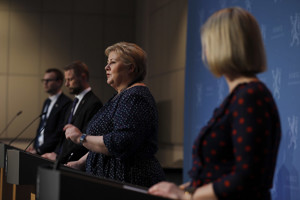
- How different governments communicated during coronaviruskunnskap-kristiania / 2022 / 02 / how-different-governments-communicated-during-coronavirusKNOWLEDGE @ KRISTIANIA: Health communication In times of crisis, people’s health depends on access to timely, accurate information. M any countries plot a tricky path out of coronavirus ravages , fuelled by different rhetoric from governments. Thus , an effective communication model that can be used during a crisis or epidemic became more vital as it can enable leaders to navigate the harsh realities and save lives. Such a communication model can be found in many speeches given during this historical event to be used as a strategy during the next health crisis. A closer look at the government’s rhetoric In my Ph.D. project on the "Leadership Communication Styles of Country Leaders in Times of Crisis" , I review and evaluate the authorities' communication handling the outbreak. I explore how the political leaders in the United States of America (US) , the United Kingdom (UK) , New Zealand and Norway choose their rhetoric and how they frame issues to appeal to a specific audience. To do this, I will use excerpts from speeches given during coronavirus, and compare these selected speeches at a thematic level. We’ve seen a difference in how the leadership is communicated with the public. I n s ome countries, the interventions were military-like where governments enforced policies restricting movements . In other countries such as Sweden , there were no lockdowns or restrictions on the movement of people. Yet, the difference in response did not result in significant mitigation on the spread of the virus. Still, all agreed that communication was vital in controlling the COVID-19 infections . T he virus spread was hinged on human behavior and the public was in need of being informed. Did certain communication styles prolonge the crisis? Ideally, state officials would put political and ideological differences aside in order to concentrate all resources and energy against the threat. Such a coordinated response would be essential in the case of a new, highly infectious disease that has no treatment, vaccine, or cure at the time such as COVID-19. The widening gap we witnessed in some countries begs the question of whether the crisis communication style of leaders has prolonged the pandemic and ultimately endanger ed the resilience by politicizing the response. Split messaging and divisions exacerbated the threat Before the declaration of the pandemic, the US and the UK were the best prepared countries out of 195 nations , according to reports published by the John Hopkins Center for Health Security. Yet, some senior government officials in the UK were forced to resign due to failing to maintain a consistent public health messag e. Thus, the public lost trust in their leadership. In the US, health officials urged people to use face covering , while President Trump refus ed to do so and argued against. The credibility gap between him and experienced government officials, including the health experts who are part of his COVID-19 task force widens. The split message regarding masks and the subsequent political divide over them has come to symbolize the chaos of the U.S. response to the raging pandemic. “United we stand” On the contrary, despite the lack of preparedness, Norway arguably performed well in handling the pandemic quickly and effectively . The government succeeded in the successful collaboration in decision - making with health experts. Former Prime Minister Erna Solberg sent an invitation to work together and share the responsibility " In Norway, we stand together when it comes to. We mobilize for volunteer work and collaboration in small and large local communities. Now this is more important than ever ". Similarly, in New Zealand the government achieved remarkable success in managing the pandemic. Health authorities as well as the political leadership communicated the same strategies and understanding of the pandemic. The positive and consistent messaging inspires confidence and social solidarity. Poor communication can worsen the effects of the crisis In our interpretation, no matter how effective the planned response is, poor communication will significantly undermine national response to a pandemic. In fact, it can exacerbate the threat and lead to greater disease effects as well as a loss of trust and faith in leaders. A closer look into speeches at a thematic level would provide an idea about the political leaders' rhetoric. Also, it will allow us to understand different rhetorical strategies used by leaders on both sides of the aisle and how they frame issues to appeal to a specific audience. Kristiania University College funds the research project, Adnan Kisa is the project leader, and Jens Kjeldsen from the University of Bergen is the main supervisor. References: GHS Index. (2019). The Global Health Security Index-Reports & model 2019. Retrieved September 29, 2020 from https://www.ghsindex.org/ Nicola, M., Sohrabi, C., Mathew, G., Kerwan, A., Al-Jabir, A., Griffin, M., Agha, M., & Agha, R. (2020). Health policy and leadership models during the COVID-19 pandemic-review article. International Journal of Surgery. The Washington Post. (2020). How the split over masks sums up America’s chaotic coronavirus response. Retrieved October 2, 2021. Text: PHD-fellow Magde Mohamed Nour, School of Health Sciences at Kristiania University College We love hearing from you: Send your comments and questions regarding this article by E-mail to kunnskap@kristiania.no .
- Vinterdepresjon - 7 tips i mørketidakunnskap-kristiania / 2022 / 11 / vinterdepresjon--7-tips-i-morketidaEr du en av dem som får mindre energi og økt søvnbehov om vinteren? Kanskje synes du at det er vanskeligere å komme deg på trening og kjenner at du stadig har lyst på søtsaker og usunn mat? Du er i så fall ikke alene, 1 av 10 nordmenn lider hvert år av vinterdepresjon. Kvinner rammes mer enn menn, og er du B-menneske, er du ekstra sårbar. Typisk varer vinterdepresjonen fra slutten av november til ut i mars, og du er ikke deprimert resten av året. Mine sju beste tips for å bekjempe vinterdepresjon: 1. Bruk av lyslampe Lyslamper med 10.000 lux har lenge vist seg å gi god effekt for de aller fleste på både humør, energinivå og søvnbehov i vintermørket. Tidligere var disse lampene svært dyre og vanskelig å få tak i. Men i dag selges slike lamper i de fleste forretninger for elektronikk til under tusenlappen, og er altså en veldig god investering. Du trenger ikke stirre rett inn i lampen, den kan stå på bordet mens du spiser frokost eller ved siden av pc-skjermen den første halvtimen på jobb. Dersom du i tillegg kommer deg ut i dagslys litt hver dag så hjelper også det. Det behøver ikke engang være sol, og en tur på en halvtime holder fint. 2. Vitamin D I tidligere tider spiste vi mye fisk i Norge. Man pleide å si at vi må spise fisk i alle måneder med «r» i seg. Dette er fordi vi på våre breddegrader får altfor lite vitamin D fra sola om vinteren. Da er fisk en god erstatning. I våre dager kan dagsbehovet for vitamin D dekkes av å ta et par kapsler med Omega-3 om dagen. Effekten på energi og nedstemthet er god, men allikevel er det mange nordmenn som ikke følger dette enkle og effektive rådet. Selv tar jeg dobbel dose hele vinteren, en dose om morgenen og en om kvelden. 3. Trening Selv om motivasjonen for trening kan være lavere om vinteren, er det desto viktigere å opprettholde trening også i denne årstiden. Kanskje bør du være realistisk på at du ikke får trent like mye som om sommeren, men om du får til to ganger per uke så er det veldig gunstig for din psykiske helse – og derfor vel verdt innsatsen. Dersom du er vant til å trene ute om sommeren, kan du kanskje prøve å finne en innendørsaktivitet som du synes er gøy, som for eksempel squash, svømming, yoga eller buldring. Prøv gjerne ut flere aktiviteter for å finne en du liker. Det viktigste er å være i aktivitet også gjennom vintermånedene. 4. En ferieuke i varmere strøk Doctor’s order: «Ta en uke i Syden i løpet av vinteren». Det viser seg at en ukes opphold i varmere strøk i løpet av vinteren har en anti-depressiv effekt. Og dette gjelder ikke bare den uken du er på ferie. Ofte vil du glede deg i lang tid på forhånd og dessuten ha fylt opp reservoaret av energi til å håndtere resten av vinteren hjemme. Avbrekket bryter opp den lange, mørke vinteren, så den virker kortere. 5. Vær sosial Det er viktig å opprettholde sosiale aktiviteter selv om motivasjonen for dette kan være redusert om vinteren. Vi føler gjerne for å gå litt i sosial dvale. Å gjøre noe hyggelig sammen med andre mennesker er terapeutisk mot både tradisjonell depresjon og vinterdepresjon. Inviterer noen venner på middag. Gå på kino. Stirr inn i peisen sammen. Gå en skitur sammen med noen. 6. Kognitiv terapi Alle får utbytte av å lære seg noen konkrete teknikker fra kognitiv terapi for å håndtere negative tanker, enten det er sommer eller vinter. Slike teknikker hjelper også godt ved vinterdepresjon. Psykologipodcasten Synapsen har en episode om selvfølelse og en episode om metakognitiv terapi, som begge kan være til hjelp. Her kan du lære teknikker du kan implementere i ditt eget liv. Det finnes også gode kognitive verktøy tilgjengelig på kognitiv.no . 7. Søvn De aller fleste nordmenn sover mer om vinteren enn resten av året. Selv om vi ikke går i hi som bjørnen om vinteren, så går vi litt i dvalemodus. I gjennomsnitt sover vi i underkant av en time lenger enn om sommeren. For de som oppfyller diagnosen vinterdepresjon er det økte søvnbehovet i snitt to timer mer enn resten av året. Det lureste du kan gjøre er å akseptere at du har økt søvnbehov om vinteren. Design døgnet ditt slik at du får nok søvn. Vi vil gjerne høre fra deg! Send spørsmål og kommentarer til artikkelen på e-post til kunnskap@kristiania.no . Referanser Sherri Melrose, "Seasonal Affective Disorder: An Overview of Assessment and Treatment Approaches", Depression Research and Treatment , vol. 2015, Article ID 178564, 6 pages, 2015. https://doi.org/10.1155/2015/178564 Andres Magnusson & Diane Boivin (2003) Seasonal Affective Disorder: An Overview, Chronobiology International, 20:2, 189-207, DOI: 10.1081/CBI-120019310 Podcasten Foodies , der artikkelforfatter Lars Dehli er gjest og gir gode råd både for hvordan forebygge og behandle disse plagene:

- Å lede i tider med stor usikkerhet krever ledere som tar mer sjanserkunnskap-kristiania / 2020 / 06 / a-lede-i-tider-med-stor-usikkerhet-krever-ledere-som-tar-mer-sjanserKOMMENTAR: Tom Karp om ledelse Vi vet ikke hvordan samfunn, institusjoner, verdikjeder, markeder og organisasjoner vil se ut etter pandemien. Mye vil endres, mange virksomheter vil ikke overleve, og vi skal takle flere år med stor usikkerhet. Den tidligere lederen av Intel, Andy Grove , sa en gang at: «L eaders need to develop a higher tolerance for disorder, while doing the best to drive what’s around (them) to order» . Men ledere liker forutsigbarhet og orden, og mange av dem får krevende dager på jobben i tidene som kommer. Å lede i tider med stor usikkerhet Det finnes imidlertid modeller som tar hensyn til at virkeligheten er usikker, ustabil og ikke alltid kan forutsies – modeller som handler om lede i tider med stor usikkerhet. At det er regelen og ikke unntaket. En av de første som tenkte i disse baner, var den prøyssiske generalen og strategen Carl von Clausewitz . Han brakte i sin tid psykologi og filosofi inn i ledelsesfag generelt og krigsteori spesielt. For nesten 200 år siden hevdet han at ledelse er å lede i situasjoner preget av friksjon. Evne til å mestre kaos Med friksjon mente von Clausewitz en virkelighet som er annerledes enn den planlagte. For å evne å lede i situasjoner preget av friksjon, måtte lederen, ifølge von Clausewitz, ha en kombinasjon av kvaliteter som evne til å mestre kaos, integritet, mot, intuisjon samt kunne være til stede her og nå. Von Clausewitz kom ikke med noen oppskrifter og han satte høye krav til ledere. Hans teorier er skrevet for militære ledere i en annen tid og han skisserer andre rammebetingelser enn det som møter ledere i et sivilt organisasjonsliv. Likevel hadde von Clausewitz relevante tanker om hva ledere bør gjøre når «kartet ikke stemmer med terrenget». Han beskrev kompleksiteten mange organisasjoner må håndtere. Menneskelig samhandling bestemmer, ikke planer ovenfra Hadde von Clausewitz publisert sine tanker i vår tid, hadde de antageligvis vært en del av det som betegnes som kompleksitetsvitenskap . Premisset her er at en organisasjons bevegelse er et resultat av menneskers samhandling, eller manglende sådan, og ikke en funksjon av sentralstyring og overordnede planer. Temaer som hvordan lederskap oppstår, selvorganisering, makt, og nedenfra-og-opp-initiativ er noe av det som får oppmerksomhet. Kompleksitetsvitenskap er ingen hellig gral og tilbyr ingen lettvinte oppskrifter – snarere tvert imot. Forskerne nøyer seg stort sett med å postulere at ledere må lære seg å leve med usikkerhet og kompleksitet. Vitenskapen bestrides naturlig nok, ikke minst fordi forskere og ledere ikke vil akseptere tanken på at ustabilitet, uforutsigbarhet, turbulens, kaos og uklare ansvarsforhold er viktige rammebetingelser når man leder organisasjoner. Hva ledere må gjøre for å leve bedre med usikkerhet og kompleksitet Men aksepterer man slike premisser bør ledere: Strategisk: Bruke mindre tid på posisjonering og planlegging, mer tid på å forstå mønstre, forberede seg på forskjellige scenarioer, positivt forsterke det som fungerer, prøve og feile med mindre pilotprosjekter før ting rulles ut i stor skala, samt skape et klima for kontinuerlig endring samtidig som man fremmer stabilitet. Operativt: Løse opp i hierarkiske strukturer og kontrollmekanismer, og til en større grad fremme autonomi, selvstyring og midlertidige organisasjonsformer. Personlig: Ta lederskap når påkrevd og ikke la det ene og alene være en funksjon av posisjon. Utvikle robusthet, evne til å improvisere, kunne lede seg selv, samt være sulten på ny læring i stedet for å lete etter bekreftelser på kunnskap man alt har. Medisinen som virker: Løs opp, ta sjanser, prøve og feile Den britiske filosofen Simon Critchley beskriver i sin bok «Infinitely Demanding» fra 2007 en samtid hvor mange lar verdens kompleksitet fungere som en unnskyldning for å ikke engasjere seg i annet enn egen person, de blir navlebeskuende, redde for å prøve nye ting og risikoaverse. Det er en diagnose som kan overføres til organisasjonslivet. Men resepten som skrives ut er ikke sterk ledelse, toppstyrte initiativ, flere planer, mer kontroll og strammere strukturer – men å løse opp, fremme autonomi, ta sjanser, prøve og feile, beholde det som virker, lære nye ting. Det er nok en medisin som sitter langt inne for mange ledere. Referanse: Artikkelen er publisert som kommentarartikkel om ledelse i Dagens Næringsliv 8. juni 2020 (og på dn.no dagen før). Foto: I tider med usikkerhet og kompleksitet må ledere ta mer sjanser, utfordrer Tom Karp. Photo by Razvan Chisu on Unsplash. Tekst: Tom Karp, professor ved Institutt for ledelse og organisasjon ved Høyskolen Kristiania og professor II ved Nord universitet og Høgskolen i Innlandet.

- Age-shaming er en trussel for arbeidslivetkunnskap-kristiania / 2023 / 04 / age-shaming-er-en-trussel-for-arbeidsmiljoetKUNNSKAP KRISTIANIA: Aldersdiskriminering Når du hører om aldersdiskriminering, tenker du kanskje på urettferdig eller dårlig behandling av eldre i arbeidslivet. Det er ikke så rart, fordi det har vært mye oppmerksomhet rettet mot aldersdiskriminering av eldre og hvilke negative konsekvenser dette har. Samtidig viser forskning at også unge voksne, definert som mennesker i slutten av 20- og starten av 30-årene, opplever fordommer og negative holdninger knyttet til alder. Vi mener det er mye å hente dersom en ser på hvilke styrker og kompetanser som trengs i dagens arbeidsmarked – fremfor hvilken alder de ansatte bør ha. Age-shaming – å bli sett på som for ung Age-shaming innebærer at unge voksne opplever diskriminering og negative holdninger knyttet til alder. For eksempel at unge arbeidstakere betegnes som «for unge», med mindre erfaring og dermed også med mindre kompetanse til å løse arbeidsoppgavene sine. Disse holdningene og fordommene er ikke bare skadelige for individet som rammes, men for hele organisasjonen. Hva går vi glipp av i arbeidslivet hvis disse holdningene fortsetter å regjere uten at vi er bevisst på dem? Er det en fare for at det blir en selvoppfyllende profeti? Alder sier lite om kompetanse Vårt utgangspunkt er at alder sier svært lite om hvilke styrker og hvilken type kompetanse et menneske besitter. For hva er egentlig kompetanse, hva er styrker – henger dette sammen med alder? Kompetanse defineres som « evner og ferdigheter som er nødvendige for å nå et bestemt mål» og kan opparbeides gjennom blant annet erfaring og utdanning. Fagspesifikk kompetanse, sosial kompetanse og teknologisk kompetanse er ulike former for kompetanse. Hvilke kvaliteter trengs for å nå målet? For å kunne si om noen har høy eller lav kompetanse, må man starte med å se nærmere på oppgaven eller målet med oppgaven man skal løse. Lang erfaring kan i mange tilfeller føre til god kompetanse på et område, men tilsier ikke nødvendigvis riktig kompetanse for måloppnåelse. Når vi snakker om riktig kompetanse for måloppnåelse, spiller også et begrep som styrker inn. Styrker er underliggende kvaliteter som gir oss energi, bidrar til personlig utvikling og gir grunnlag for mestring. Eksempler på styrker er kreativitet, empati, samarbeid og effektivitet. Når vi bruker styrkene våre bidrar det til gode resultater og engasjement på arbeidsplassen. Det er gjort undersøkelser av sammenhengen mellom alder og styrker, eksempelvis alder og kreativitet. Det er ingen klar korrelasjon mellom alder og kreativitet. Selv om det for eksempel finnes studier som indikerer at eldre kan ha lavere digital kompetanse, er ikke dette nok til at en kan skjære alle over en kam, og si at alle eldre har lav digital kompetanse. Som vi argumenterte for innledningsvis, er det heller aktuelt å se på hvilke styrker og kompetanser som trengs i dagens arbeidsmarked – fremfor hvilken alder de ansatte bør ha. Går glipp av verdifull kompetanse Dagens arbeidsliv preges av endringspress og komplekse problemstillinger. Kreativitet, samarbeid, innovasjonsevne og problemløsningsevne anses som svært ettertraktete styrker og kompetanser for organisasjoner som skal løse de problemstillingene vi står overfor. Forskning viser også at innsats, utholdenhet og lidenskap er like viktig som IQ i mange sammenhenger. Det er lite som tyder på at disse evnene kan knyttes til alder. Derimot kan age shaming føre til at vi går glipp av verdifulle styrker og kompetanser vi gjerne skulle dratt nytte av i arbeidslivet. Selvoppfyllende profeti Vi vet at holdningene våre ofte påvirker adferden vår. Pygmalioneffekten, som også er kjent som «selvoppfyllende profeti», gir en forklaring på hvordan forventingene våre styrer hvordan vi opptrer og påvirker utfallet av hendelser. Dersom du har negative forventinger, påvirker det hva du legger merke til rundt deg, og bevisst eller ubevisst handler du deretter. La oss si at en senior i en organisasjon ser på en junior som mindre kompetent eller som lite kreativ. Da vil muligheten for at senioren lærer noe av junioren være dårligere, samtidig som junioren kan få negativ selvoppfattelse av egne evner. Det kan gjøre at junioren eksempelvis ikke tør å stille spørsmål, eller uttrykke egne meninger og ideer i frykt for å bli oppfattet som uvitende. Age-shaming er negativt for arbeidsmiljøet Lite hemmer organisasjoners og individers læringsprosess så mye som frykt. Og motsatt; hvis kulturen og arbeidsmiljøet er preget av psykologisk trygghet, noe som innebærer at individer opplever det som trygt å ta risiko for eksempel ved å stille spørsmål, være uenig og uttrykke egne meninger, vil det kunne fremme læring, innovasjon og et mangfold av perspektiver. Age shaming kan true arbeidsmiljøet og den psykologiske tryggheten fordi individer blir usikre på egen kompetanse, og derfor unngår å stille spørsmål og uttrykke sine meninger. For å lykkes med å møte de komplekse problemstillingene og endringspresset i organisasjoner, må vi få bukt med negative holdninger og fordommer knyttet til alder. Så hva kan vi gjøre for å håndtere, og forhåpentlig redusere, age shaming på arbeidsplassen? Tre tiltak mot age-shaming Vil vil løfte fram tre tiltak som kan bidra til å minske age shaming på arbeidsplassen: Vær bevisst egne holdninger Har du kanskje en kollega du opplever som «for ung»? Holdninger våre er tillært gjennom våre erfaringer og de påvirker hvordan vi opptrer i ulike situasjoner og hvordan vi møter andre mennesker. Hvis du er bevisst din holdning og i tillegg vet at alder og kompetanse ikke nødvendigvis hører sammen, har du mulighet til å lære noe og samarbeide godt med den «for unge» kollegaen din. Møt hverandre som deltakere gjennom dialog Den norske filosofen Hans Skjervheim bruker begrepene deltaker og tilskuer når han snakker om hvordan vi kan møte andre mennesker gjennom dialog. Ser du på den «for unge» kollegaen din som en deltaker, da er du åpen og nysgjerrig på vedkommedes meninger og retter oppmerksomheten mot dem. Du kan likevel ha egne meninger, som du inviterer kollegaen din til å være enig eller uenig i. Gjennom dialogen møter vi hverandre som likeverdige deltakere der alle har noe å lære av hverandre. Frem god læringsholdning Læringsholdning defineres som en prosess der man stiller spørsmål, reflekterer og stiller seg åpen for feedback. Dersom de ansatte i organisasjonen føler seg trygge til å gjøre dette, vil sannsynligheten for at de lærer mer av hverandre være til stede. Man kan fremme læringsholdning i et team eller i en organisasjon ved å stille spørsmål til hverandre og se hverandre som kompetente mennesker med ulike styrker og perspektiver. Du bør derfor være nysgjerrig på den unge kollegaen din sitt perspektiv. Alle har noe å lære av hverandre I et bærekraftig arbeidsliv bør vi etterstrebe å møte hverandre som likeverdige deltakere, med ulike styrker, kompetanse og erfaringer og kompetanser. Vi har alle noe å lære av andre som er ulike oss selv. Denne teksten er også publisert på forskning.no den 26. april 2023 under tittelen Age shaming er en trussel for arbeidsmiljøet , på Nettavisen den 29. april 2023 under samme tittel og i HR-magasinet den 23. mai 2023 under samme tittel . Vi vil gjerne høre fra deg! Send spørsmål og kommentarer til artikkelen på e-post til kunnskap@kristiania.no. Referanser Binnewies, C., Ohly, S., & Niessen, C. (2008). Age and creativity at work: The interplay between job resources, age and idea creativity. Journal of Managerial Psychology , 23 (4), 438-457. Brook, J., & Brewerton, P. (2016). Optimize Your Strengths: Use your leadership strengths to get the best out of you and your team . John Wiley & Sons. Collins, M. H., Hair, Jr, J. F., & Rocco, T. S. (2009). The older‐worker‐younger‐supervisor dyad: A test of the Reverse Pygmalion effect. Human resource development quarterly , 20 (1), 21-41. Duckworth, A. (2017). GRIT Lidenskapen og standhaftighetens kraft. Cappelen Damm. Littman-Ovadia, H., Lavy, S., & Boiman-Meshita, M. (2017). When theory and research collide: Examining correlates of signature strengths use at work. Journal of Happiness Studies , 18 , 527-548. Edmondson, A. (1999). Psychological safety and learning behavior in work teams. Administrative science quarterly , 44 (2), 350-383. OECD. (2005). The definition and selection of key competencies - Executive Summary, fra http://www.oecd.org/pisa/35070367.pdf. Raymer, M. , Reed, M. , Spiegel, M. & Purvanova, R. K. (2017). An Examination of Generational Stereotypes as a Path Towards Reverse Ageism. The Psychologist-Manager Journal, 20 (3), 148-175. doi: 10.1037/mgr0000057. Skjervheim, H. (1976) Deltakar og tilskodar og andre essays. Oslo: Johan Grundt Tanum Forlag. Weinert, F. E. (2001). Concept of competence: A conceptual clarification. In D. S. Rychen & L. H. Salganik (Eds.), Defining and selecting key competencies (pp. 45–65). Kirkland, WA: Hogrefe & Huber. World Economic Forum, V. (2020). The future of jobs report 2020. Retrieved from Geneva . Denne teksten er også publisert på forskning.no den 26. april 2023 under tittelen Age shaming er en trussel for arbeidsmiljøet og på Nettavisen den 29. april 2023 under samme tittel .

- The Rise of the Counterfeit Industrykunnskap-kristiania / 2020 / 09 / the-rise-of-the-counterfeit-industryKNOWLEDGE & KRISTIANIA: The Counterfeit Industry There is a “Perfect Storm” between two global destructive forces right now – the counterfeit industry and the Covid-19 pandemic. Both are highly undetectable, the fake products hidden in the grey and black markets, and the invisible virus. Amid the Covid-19 pandemic, the Chinese companies sold thousands of fake testing kits and medical masks authorities in Spain, Turkey and the Netherlands. Investigations by Interpol revealed that 2,000 online “pharmacies” sold fake equipment and medicine directed towards the victims of Covid-19. Read also: Korona-profitørene (in Norwegian) Invisible enemies The counterfeit medicine industry did not start now. The production of fake medicine is a major growing global industry. And just like Covid-19, – it is an invisible enemy difficult and costly to detect. It is hidden behind global and complex supply chains. The criminal entrepreneurs producing fake products are not the beach shops on a tourist destination that we perhaps think of. This is an industry that have top know-how of designing and production of counterfeiting products through reverse engineering, 3D-printing, logistics systems that can reach every state in the US and sometimes bitcoin payment technology. The Independent revealed March 25th, 2020 that the same producers of fake products with Ralph Lauren or Gucci labels are now producing masks labeled 3M with CE certification. During the pandemic, this is a dance between the devilish Covid-19 and the darkest online pharmacies, – and they meet only three clicks from your computer right now. Read also: Når kommunikasjon kan redde liv (in Norwegian) Haven of fake medicine The pandemic burns like a wildfire away from the well-organized western health systems into densely populated countries in the third world. Here, the global counterfeits medicine industry thrives and grow underneath fragile and corrupt governments, dysfunctional health systems and ineffective control. According to a report from the World Health Organization in 2017, fake malaria medication causes between 72,000-267,000 fatalities each year in Sub-Sahara. Center for Decease Control (CDC) have for a long time warned against fake malaria medicine. But the criminal entrepreneurs know exactly where the haven of fake medicine are, – it is in the third world. Read also: Hvordan kan vi unngå å kjøpe falskt medisinsk utstyr? (in Norwegian) The Perfect Storm Under the protective umbrella of an ill organized and dysfunctional health system, the peoples only hope against Covid-19 is Malaria medicine. The Hydroxychloroquine has a long history of counterfeits in the third world already. People that want to be prepared for the Covid-19 epidemic therefore turns to the grey medicine markets for help. But they are already caught in the perfect storm between the criminal supply chains and the pandemic. Many will probably buy a fake “lemon” product that in best case have no active ingredients and therefore does nothing harm. Worst case though, fake medicine may include rat poison or lead. An article by Camille Malplat, April 1, 2020 first in The Jakarta Post, indicates that the perfect storm is about to arrive in the third world: “The chloroquine craze is not just affecting the black market for drugs — it is also spurring the production of counterfeit medications. Cameroon’s government has already issued a warning about fake chloroquine, samples of which have surfaced in health centers.” Counterfeit medicine is big business Ordinary people going for a beach vacation probably meet the counterfeits Armani T-Shirts along the boardwalk shops. It looks like a trivial problem. But Brechtelsbauer and his colleagues found in a published paper in 2016 that between 35,000-50,000 online pharmacies, and 96 percent of these companies did not comply with patient protection regulations. These are the primary outlets for counterfeit medicine. A government report from the US Government Accountability Office (2018) found that 40 percent of products sold from well-known webpages were fake. Another recent report from Stroppa, Gatto, Pasha, and Parrella, (2019) found that more than 50,000 Instagram accounts promoted counterfeits, – a 171 percent increase since 2016. This is big business. An investigation from Frontier Economics (2017) estimated the industry to a 1 trillion $ business. This is a dynamic and flexible industry quick to respond to new upcoming demand in the market. For them, it is a perfect time for Covid-19. Dancing with the devil The legendary politician and corporate icon Bob McNamara called it “Fog of War” when leaders had to make decisions under extreme uncertainty. Covid-19 has the war-like similarities. Governments are forced to take quick decisions where the lack of valid information is extreme, and the consequences might be fatal. The pandemic reflects how vulnerable governments are when global supply chains dominate strategic resources for medicine and equipment. This epidemic shows that they have been left with worst case alternatives; to dance with the devil in the international grey markets. When the supply chains are complex, and it is a long geographical and political distance – the fog of war worsen the quality of health decisions. Distance leads to less information and an even more lethal interaction effect between Covid-19 and fake health products. Ill-prepared governments Most governments are ill-prepared for this storm. In spite of the fact that scientists for a long time have warned us. Is this a Pearl Harbor or 9.11 situation where politics are taken by surprise? No, it is not! It is the same criminal industry and the same mechanisms of unaware customers that have driven the other epidemic for years, – the Opioid-crises that killed 67,000 people in the US in 2018. Fake medicine containing the lethal ingredient Fentanyl flows into the grey markets world-wide. It is a global epidemic driven by the fake medicine industry. Covid-19 victims are just new profitable segments for the same industry. They scale up their global supply chains to cover the world demand for fake Hydroxychloroquine, protection gear, 3M masks and test kits. They are the global experts of counterfeiting production, stealing property rights and organize their global supply chains to meet uninformed customers. Deadly interaction Luck should not define consequences of the deadly interaction between pandemics and markets for fake products. Or as the polar explorer Roald Amundsen put it; “ victory awaits him who has everything in order, luck, people call it. Defeat is certain for him who has neglected to take the necessary precautions in time, this is called bad luck .” To base global health precautions on luck, like we now do, – should be contrary to health politics. We will keep losing against the intertwined vicious forces of the Covid-19 pandemic and the fake medicine. The parasite business of fake medicine should have been taken more seriously a long time ago. Because in a war like this, – victory awaits only those who has “everything in order.” What we can hope for So, precautions are precious gifts during crises. One of them are technology that can track down origin, share real-time information with customers, and control real quality. The food chains are already well prepared. Walmart together with IBM have applied blockchain technology that reduced the time to trace an item from the store to the farm from seven days to just 2.2 seconds. Similar technologies are weapons to trace down and catch copies, counterfeits and fake medicine and equipment. Preparedness through tracking technology should probably add to the crises supply resources. Especially during crises, – it is most important to track down the origin of medicine and health products like protection gear. During the Covid-19 crises this is a global problem. We need a system that can save time, – and time is a very scarce resource during a pandemic. References: Daragahi, B., Total disregard for people’s lives’: Hundreds of thousands of fake masks flooding markets as coronavirus depletes world supplies , in The Independent . 2020: UK. World Health Organization: Achieving and maintaining universal coverage with long-lasting insecticidal nets for malaria control . 2017. Center for Disease Control and Prevention, C. Counterfeit and Substandard Antima-larial Drugs . 2020 [cited 2020 April 11]; Available from: h ttps://www.cdc.gov/malaria/malaria_worldwide/reduction/counterfeit.html. Malplat, C., Africans rush for chloroquine as virus tsunami looms| , in The Jakarta Post . 2020. Brechtelsbauer, E.D., et al., Review of the 2015 Drug Supply Chain Security Act. Hospital pharmacy, 2016. 51 (6): p. 493-500. Office, U.S.G.A., Report to the Chairman, Committee on Finance, U.S. Senate, Intellectual Property. Agencies Can Improve Ef-forts to Address Risks Posed by Changing Counterfeits Market . 2018. Stroppa, A., Gatto D., Pasha L., B. Parrella, Instagram and counterfeiting in 2019: new features, old problems , in Ghost Data . 2019: Rome, New York. Economics, F., The economic impacts of counterfeiting and piracy , R.p.f.B.a. INTA, Editor. 2017. Center for Disease Control and Prevention, C. Opioid Overdose . 2018 [cited 2020 April 11]; Available from: https://www.cdc.gov/drugoverdose/ . This article is written for Kunnskapsmagasinet Kristiania (Kristiania Knowledge Magazine) and first published on 10 September 2020. Text: Professor Arne Nygaard, Department of Marketing at Kristiania University College and Professor Ragnhild Silkoset, Department of Marketing at BI Norwegian Business School. Photo: The counterfeit industry is big business. Illustration photo of girl with a mask. Photo by engin akyurt on Unsplash.
- The fight against fake news and electoral disinformationkunnskap-kristiania / 2020 / 10 / the-fight-against-fake-news-and-electoral-disinformationKNOWLEDGE @ KRISTIANIA: Bente Kalsnes on Fake news Just as COVID-19 is a stress test of every nation’s health system, an election process is a stress test of a nation’s information and communication system. A week away from the US presidential election, the symptoms are not so promising. News reports about the spread of so-called “fake news,” disinformation, and conspiracy theories are thriving as they did in 2016. Disinformation and “fake news” are not new, but the 2016 US presidential election placed the phenomenon squarely onto the international agenda . The spread of false and manipulated information dressed as news is closely associated with social media platforms such as Facebook, Twitter, and YouTube. In a 2018 study , researchers examined the exposure to misinformation during the American election campaign in 2016; they found that Facebook was a key vector of exposure to fake news. Read also: Farene ved falske nyheter (in Norwegian) Harder to differentiate It becomes harder to differentiate between false and trusted information when supposedly everyone can publish and spread information online that looks like news to large groups of people. The spread of disinformation and conspiracy theories has been identified as a problem in several states, for example in Florida , and news publications, such as the New York Times , are daily tracking viral misinformation ahead of the 2020 election. While disinformation and foreign influence was of great concern in the 2016 election, disinformation from domestic sources is additionally reported as a major threat in the 2020 US election. The spread of fake new, rumors, and conspiracy theories is problematic in itself, but the main damage of such orchestrated campaigns might be the systematic erosion of citizens’ capacity to recognize facts, the undermining of established science, and the sowing of confusion about what is real or not. Read also: Kunnskap Kristiania 2020/2021 (Kristiania Knowledge Magazine) The rumor mill turn faster than ever The COVID-19 pandemic has demonstrated how a health situation dominated by uncertainty and the lack of a vaccine makes the rumor mill turn faster than ever. A new study by the Oxford Internet Institute and the Reuters Institute for the Study of Journalism reveals that coronavirus-related misinformation videos are predominantly disseminated through social media and that Facebook is the primary channel for sharing misinformation due to a lack of sufficient fact checks in place to moderate content. Another study found that one in four popular YouTube videos on the coronavirus contained misinformation, while more than 1,300 anti-vaccination pages on Facebook had nearly 100 million followers. Countering disinformation and fake news Countering disinformation and fake news has become such a major issue that international institutions such as the United Nations, the European Union, the World Health Organization, and the World Economic Forum have published reports and recommended actions for how to tackle disinformation, particularly electoral and health disinformation. In June 2020, more than 130 United Nations member countries and official observers called on all states to take steps to counter the spread of disinformation, especially during the COVID-19 pandemic. Nevertheless, tackling false and manipulated information is far from straightforward. It requires a complicated balancing act between countering disinformation and protecting freedom of speech. A report from the United Nations Educational, Scientific, and Cultural Organization (UNESCO) recommends how to avoid sacrificing freedom of speech in the fight against fake news and disinformation. The report warns against “quick fixes” such as “‘fake news’ laws” and other measures to curtail viral disinformation, which may end up censuring legitimate journalism or legitimate criticism of authorities. Four main measures The UNESCO report suggests four main measures to identify and address fake news, disinformation, and misinformation—of particular concern during election campaigns. The report suggests a range of measures, from policy and legislative approaches to technological efforts and media and education literacy initiatives, in order to identify the problematic information, its producers, the distribution mechanism, and its targeted audience: 1. Identification responses (aimed at identifying, debunking, and exposing disinformation). Monitoring and fact-checking Investigative During the US election, news media have conducted live fact checks of the presidential debates, and major hoaxes have been identified and debunked. But to identify and expose all disinformation spreading during the election campaign, particularly on social media, is hardly possible. 2. Responses aimed at producers and distributors (intended towards the altering of the environment that governs and shapes behavior, i.e. law and policy responses) Legislative, pre-legislative, and policy responses National and international counter disinformation campaigns Electoral responses Based on evaluation from independent fact checkers, Facebook and Twitter have marked electoral disinformation, including from president Donald Trump. 3. Responses aimed at the production and distribution mechanisms (pertaining to the policies and practices of institutions mediating content). Curatorial responses Technical and algorithmic responses Economic responses Bots—automated Twitter accounts—are spreading disinformation and sowing division in America. A Carnegie Mellon University study found that nearly half of accounts tweeting about the coronavirus were likely bot, and as a response Twitter has unveiled new labels that will accompany misleading, disputed, or unverified tweets about the coronavirus. 4. Responses aimed at the target audiences of disinformation campaigns. Ethical and normative responses Educational responses Empowerment and credibility labelling efforts Several organizations and groups are offering training and tools both for citizens and journalists to increase skills in fact checking and verification. One of them, the project First Draft , offers tools and training to build resistance against misinformation. Electoral disinformation is of specific concern because it can damage democratic processes and reduce citizens’ rights. Electoral responses to disinformation can thus include a range of real-time detection, such as election-specific fact checks, election ad archives, as well as debunks, counter-content, and retrospective assessments. They can also entail campaigns linked to voter education and regulations about electoral conduct. The health of a democracy’s information system is critical, especially during election campaigns. By applying some or all of these measure during the US election, as well as other election campaigns in the near future, it might be possible to protect democratic elections from disinformation and increase citizens’ capacity to recognize facts. Reference: This article is first published in OUPblog, Oxford University Press’s blog sharing Academic Insights, on October 25th 2020 . Text: Bente Kalsnes is Associate Professor at the Departement of Communication, Kristiania University College. Photo: The health of a democracy’s information system is critical, especially during election campaigns, writes Bente Kalsnes. Photo by Element5 Digital on Unsplash.

- Why do women leave academia after completing a PhD?kunnskap-kristiania / 2023 / 05 / why-do-women-leave-academia-after-completing-a-phdKNOWLEDGE AT KRISTIANIA: Women in academia The proportion of women in academia progressively decreases with advancing career stages. This phenomenon is known as the «leaky pipeline», meaning that women are «leaking out» of the academic pipeline. It affects all research fields. However, the problem is particularly accentuated within Science, Technology, Engineering, and Mathematics – the STEM disciplines. The number of female candidates dramatically decreases from master’s to PhD, and continues declining at the postdoc/researcher level, reaching the lowest point at full professorship. The higher the level, the lower the percentage of women – it’s a lose-lose game Although the number of female candidates reaching PhD-level is higher than the number of male candidates, the reduction slope for women in academia intensifies at the higher levels, as shown in the figure below. It is the opposite for men. So, we have two lines showing male and female numbers in the career path crossing each other, creating a further distance at the highest academic level, giving a scissor-shaped curve. The numbers are different from one discipline and university to another. However, the slope remains. Metaphorically, women are being cut away from the high end of the academic career development path. So the question is, are we losing something here? The clear answer is: Yes. And this is serious for several reasons: We lose the benefits of gender balance. It is against UN Sustainable Development Goals (SDG) and Environmental, Social, and Corporate Governance (ESG) objectives. It means we fail at equality and fairness. It represents a loss of talent and diversity in academic fields. Why are we losing women from academia at the higher level? Several factors cause this problem. There are biological factors, as well as cultural factors. Biologically, women have age limitations for fertility, which unfortunately tend to match the career development period in academia. So, while young men aged 25-45 can focus on achieving success in their careers, especially at the PhD-level and after its completion, women must also consider maternity. Women also tend to consider themselves more successful when they manage to foster several aspects of life in this short time; starting a family, giving birth to a suitable number of kids with good age differences, and raising them, while at the same time remaining healthy, youthful and physically attractive, as well as pursuing a successful career. Society and culture tend to expect the same from a woman. Men, on the other hand, are not to the same degree expected to expand the other aspects of life during this age period such as achieving “settled paternity” while pursuing a successful career at the top stages in academia. While all researchers may face well-known syndromes such as imposter syndrome and depression, female researchers struggle to succeed in various areas of life during a relatively short time slot. As a result, women often struggle to progress in their careers and are more likely to leave academia altogether at the last career development phases. If academia itself is not the direct cause by actively pushing female researchers out through exaggerated expectations of publications, supervision, teaching, etc., academia is no doubt losing them. The numbers are clear. Biology, society, and culture combined create the leaky pipeline problem for women in academia, resulting in the scissor-shaped curve, revealing the dramatic difference between male and female careers within academia. What can be done? Historically there have been many attempts at gender equality measures within many professional areas, with no exception in academia. One example is giving women priority when hiring in cases where two applicants have equal expertise. However, academic women must gain competence, survive in academia, and apply to reach the hiring step. Hence, rather than waiting for a hiring opportunity, academia should create incentives that fit female researchers better to prevent them from “leaking out” of academia. Apart from broadening the hiring strategies, the rules of promotion should be changed in order to keep valuable female researchers who are eager scientists for the future. Considering that the biological, social, and cultural expectations are different for women and men, how can we justify the rules and processes being the same? It is crucial to address this issue not only to provide equal opportunities for women but also to promote diversity and excellence in academic research and teaching. Let’s not lose PhD women in academia, as they are the low-hanging fruits! Author: Toktam Ramezanifarkhani, Associate professor, School of Economics, Innovation and Technology References: Fox, M. F. (2010). Gender, family characteristics, and publication productivity among scientists. Social Studies of Science, 40(5), 879-900. Xie, Y., & Shauman, K. A. (2003). Women in science: Career processes and outcomes. Harvard University Press. Dubois-Shaik, Farah, Bernard Fusulier, and Caroline Vincke. “A gendered pipeline typology in academia.” Gender and Precarious Research Careers. Routledge, 2018. 178-205.11:42 This text was published on forskning.no/sciencenorway.no on the 27th of June under the following heading: " Why do women leave academia after completing a PhD? ". We would love to hear from you: Send your comments and questions regarding this article by e-mail to kunnskap@kristiania.no .

- Researcher calls for a new, sustainable normal after the pandemickunnskap-kristiania / 2021 / 11 / researcher-calls-for-a-new-sustainable-normal-after-the-pandemicKNOWLEDGE @ KRISTIANIA: Sustainability The ongoing COVID-19 pandemic has revealed how fragile our global development trajectory really is. While researchers, activists and public figures have tried to focus the attention on the critical environmental risks associated with unconstrained economic growth for decades, it took a global breakdown to shake the status quo . After two years of pandemic-related loss, fear and lockdowns, we are all eager to go back to normal times, to our career and our routines. But it must be a new normal, if we want to prevent much bigger disruptions down the road. We need to find a way to properly take into account our environmental, social and demographic limits, if we want to ensure that the normal times are here to stay. The Earth4 model The great challenge of the present is not to restore the previous trajectory of development after COVID-19, but to build a new one. And this is the challenge that our Earth4 project aims to help with. Connecting researchers active in different fields from all over Europe, the project aims to deliver the most ambitious sustainable development model ever created. We will combine environmental, social, demographic and economic trends, in order to develop a complex system dynamics model. This model will integrate both economic and environmental mechanisms for the creation, implementation and monitoring of ambitious policies supporting new, resilient growth trajectories. Available to the general public Policy-makers, however, are not the only planned beneficiaries. Earth4 will be made available to the general public, through a dedicated platform being developed by the Club of Rome. This club is a non-governmental organization (NGO) working since 1968 to promote environmental awareness at all societal levels, to enable everyone to engage with the issues at stake, and to monitor both global and local trends. This will measure the variety of socioeconomic and biological dimensions of current policies, aimed at comparing national efforts with what it would take to enact the global shift that we need. The model detects unsustainable development trajectories While the Earth4 model is not ready yet, the latest iterations already illustrate some key dynamics with perfect clarity. For years now, the awareness that environmental and social sustainability are one and the same. The Earth4 model is able to show their complex relations, illustrating how current development trajectories lead to both unsustainable environmental footprint and unsustainable debt ratios at the global level. Furthermore, it shows that policies aimed exclusively towards one side of the sustainability challenge, aggravate the other side, thus being ultimately self-defeating, as social collapse makes environmental progress impossible, and vice versa. Environmental limits and distributional inequality Cancelling or easing debts just accelerate unsustainable consumption and demographic patterns. Vice versa, imposing a qualitative shift towards green production and consumption makes existing debt loads impossible to bear, precipitating social upheaval. Earth4 shows that a holistic approach is not only desirable, but also the only desirable approach, under current conditions. Many solutions are possible. But all solutions must tackle both the environmental limits and the distributional inequality. Just an instrument, not an end To achieve this, academic research is insufficient. While the Earth4 team is looking forward to developing the best possible model integrating both socioeconomic and environmental mechanisms, the model in itself is just an instrument, not an end. The aim is to help activists, policy makers and the concerned public with the crucial political task of selecting, promoting, implementing and defending the policies we need to ensure that the new normal is here to stay. To this end, we plan to diffuse the Earth4 model, indicators, concepts and ideas as far and wide support the thousands of people that are already working, every day, in the same direction. Build a new normal Earth4 may look ambitious, but its complexity is just a pale reflection of the real issues that we are facing today. We need complex instruments to tackle complex problems. But the root of the solution is much simpler: get engaged. We all want a new normal after COVID-19. We need to realize, however, that the new normal will not be delivered to us: we need to build it. Reference: Collste, D., Randers, J., Goluke, U., Stoknes, P. E., Cornell, S., & Rockström, J. (2018). The Empirical Bases for the Earth3 Model: Technical Notes on the Sustainable Development Goals and Planetary Boundaries. Greaker, M., Stoknes, P. E., Alfsen, K. H., & Ericson, T. (2013). A Kantian approach to sustainable development indicators for climate change. Ecological Economics, 91, 10-18. Randers, J., Rockström, J., Stoknes, P. E., Goluke, U., Collste, D., Cornell, S. E., & Donges, J. (2019). Achieving the 17 Sustainable Development Goals within 9 planetary boundaries. Global Sustainability, 2. Text: Beniamino Callegari, Researcher at School of Economics, Innovation and Technology, Kristiania University College. We love hearing from you: Send your comments and questions regarding this article by E-mail to kunnskap@kristiania.no .

- The pervasive dangers of autocratic responses to criseskunnskap-kristiania / 2024 / 04 / the-pervasive-dangers-of-autocratic-responses-to-crisesSCIENCE NEWS FROM KRISTIANIA: Adnan Kisa on global responses to crises Although Brazil and Turkey captured international attention with their audaciously autocratic responses to COVID-19, it's imperative to underscore that analogous trends have permeated throughout various countries across the globe. In numerous nations, leaders have adeptly manipulated the crisis as a potent pretext to constrict civil liberties, mute opposition, and consolidate power in an autocratic fashion. Quite frequently, these leaders have intentionally downplayed the pandemic's severity, disseminated misinformation, and utilized a palette of divisive rhetoric. Such tactics not only impedingly obfuscated effective pandemic response, but also significantly eroded trust within public institutions. The erosion of democratic norms In Hungary, for instance, Prime Minister Viktor Orbán strategically utilized the pandemic to push through emergency legislation, rendering him the power to rule indefinitely by decree. Though ostensibly framed as a responsive measure to the crisis, it has tangibly undermined democratic checks and balances, fostering pervasive concerns about Hungary's future trajectory as a democratic state. In the Philippines, President Rodrigo Duterte implemented a stringent lockdown, endowing security forces with sweeping powers to enforce quarantine measures, which critics argue were astutely used to suppress dissent and strategically target political adversaries. Nationalism and the blame game Various leaders have resorted to wielding nationalism, framing the pandemic as an external threat and strategically orchestrating a blame game. Such an approach often involved deftly deflecting blame onto other nations, thereby diverting attention from domestic failures in managing the pandemic response effectively. Globally, governments have enforced stringent crackdowns on opposition and insidiously restricted freedom of speech during the pandemic Former President Donald Trump's articulation of the "China virus" exemplifies this strategic tactic, wherein he incessantly blamed China for the virus's spread. Analogously, leaders in Russia and India have employed nationalist narratives to overshadow their governments’ respective shortcomings. Suppressing dissent and underreporting cases Globally, governments have enforced stringent crackdowns on opposition and insidiously restricted freedom of speech during the pandemic. Public demonstrations were often outright banned or met with unabated force in a myriad of countries, thereby inhibiting the potential for dissident voices to be heard and their concerns aired. Another alarming trend was the conspicuous underreporting of COVID-19 cases and deaths. In some instances, governments intentionally manipulated data to downplay the scale of the crisis, impeding global efforts to combat the virus effectively. International collaboration remains crucial Autocratic responses to the pandemic have also manifested questions regarding the role of international organizations. On several fronts, leaders have questioned the credibility and validity of global health authorities like the World Health Organization (WHO), veering toward more isolationist approaches. In Brazil and Turkey, debates concerning withdrawal from international organizations and dependence on national expertise for pandemic response emerged. This palpable shift away from international cooperation could spell formidable implications for managing future global health crises. The covid-19 pandemic has unveiled the pervasive dangers of autocratic responses to crises in disparate parts of the world. Leaders prioritizing their parochial interests over public health and democratic norms perilously undermine the foundational pillars of stable governance and international cooperation. To adeptly address the multifaceted challenges posed by future pandemics, it is fundamentally essential for leaders to valorize transparency, instill trust in scientific expertise, and ardently protect democratic institutions. The importance of international collaboration remains crucial, as pandemics inherently transcend national borders. As starkly witnessed in nations such as Brazil and Turkey and echoed in other countries, autocratic approaches during crises serve as a poignant reminder of the quintessential importance of staunchly upholding democratic values, respecting human rights, and preserving the integrity of robust public health systems. This text was published at Science Norway on the 5th of April, titled " T he Covid-19 pandemic has unveiled the pervasive dangers of autocratic responses to crises" References: Gulseven E. (2021). Identity, Nationalism and the Response of Turkey to COVID-19 Pandemic. Chinese Political Science Review. 6(1):40–62. doi: 10.1007/s41111-020-00166-x. Kisa, A. (2023). A Comparison of the Authoritarian Strategies Used by Brazil and Turkey to Tackle the COVID-19 Crisis. Journal of Applied Business and Economics, 25(4). https://doi.org/10.33423/jabe.v25i4.6348 Kisa, A. (2021). Turkey’s COVID-19 strategy: “the west is jealous of us”. Journal of Public Health Policy, 42(4), 612-621. https://doi.org/10.1057/s41271-021-00314-w . Lasco, G. (2020). Medical populism and the COVID-19 pandemic. Global Public Health, 15(10), 1417-1429. https://doi.org/10.1080/17441692.2020.1807581 . Ortega, F., & Orsini, M. (2020). Governing COVID-19 without government in Brazil: Ignorance, neoliberal authoritarianism, and the collapse of public health leadership. Global Public Health, 15(9), 1257-1277. https://doi.org/10.1080/17441692.2020.1795223 . We love hearing from you: Send your comments and questions regarding this article by e-mail to kunnskap@kristiania.no .

- Project Management at the Theatrekunnskap-kristiania / 2021 / 08 / project-management-at-the-theatreONGOING RESEARCH @ KRISTIANIA Creative industries To many in creative industries, the framework and vocabulary of project management seems unfamiliar to how they perceive their project-based work. Nonetheless they manage to develop and complete complex large-scale projects. The flexible and dynamic nature of project management in creative industries, along with an impressive ability to complete complex projects within set deadlines are under-researched and highlight the promise this field holds for the future of project management studies. Read also: Kunnskap Kristiania, the Innovation Issue (E-magazine) Increasing popularity From their roots in traditional organizational models of engineering and industrial mass production, a myriad of project management frameworks have emerged over the last few decades. Spearheaded by the software development industry, new and agile approaches to project management which emphasize creativity and flexibility, have been widely popularized and adapted in a wide range of industries, including creative industries. Despite their increasing popularity and usage however, knowledge about the appropriateness of project management philosophies in creative industries is limited. This is all the more surprising considering that this sector is considered to be one of the most established `industries’ when it comes to project-based, temporary organizational structures. Read also: Bak musikkbransjens glamorøse fasade (in Norwegian) Challenges Facing Creative Industries The increasing use of `project´ as a form of organization of work in both the private and public sector, also within creative industries, has made it possible to talk about a projectification of society. Some have gone so far as to suggest that short-term, project-based and contractual models of organization observed in the creative industries are harbingers of the next `new economy´ and could become the dominating organizational model for the broader, knowledge-based economy. Since the creative industry is highlighted as a rapidly growing part of international labor markets and play an increasing role for many countries' value creation and attractiveness, it is necessary to improve our understanding of how these organizational and leadership models work alongside the problems they face. The biggest challenge connected to the application of project methods and tools in the creative industries is the potential mismatch between using a streamlined and rigid approach of project management within the more flexible, creative industries. Project view on artistic production There is a need for more research exploring the contribution of the artistic, creative and explorer mindsets to project management. I will explore this field through a PhD and the research will be framed around the following key questions; How do the creative industries manage to complete large-scale, complex projects despite not necessarily identifying with project management terms and methodology? What elements of their practices can be understood to match with existing approaches and which, if any, represent entirely new ways of approaching the management of projects? To what extent can these insights be fruitfully applied to other project based work, both within and outside the creative industries? The project work form is important in the creative industry because all artistic production can be seen as a single project, be it a concert, a festival, a dance performance, a film or a theatre production. Read also: Skapte nye forbindelser mellom sang, dans og skuespill Characteristics of theatre projects To explore my key questions I intend to focus on the performing arts, in particular theatre productions (projects). They differs from other industries in having a variety of unique aspects which can provide important insights. Most theatrical producers and directors work with project management and planning in order to be able to coordinate everything. However, even though they use models for project context, they don´t necessarily identify with project management terms and methodology. The history of theatre is much longer than the comparatively short history of modern project management and during this long tradition a set of successful routines emerged which, consequently, could be considered as models for project contexts outside of theatre. While theatre productions exhibit a strong focus on human, creative and aesthetic aspects, they also involve other activities that are similar to more standard project management functions. Managerial personnel in a theatre operation must manage a complex of interrelated processes to ensure that crucial activities are completed on time. During the project, manuscripts are finished, teams are designed, scene construction and costumes developed, plans for rehearsal processes are made, plays and music are rehearsed. In parallel to these activities, the upcoming play is marketed and tasks related to economy, work conditions and stake-holders among others. An interesting aspect of theatre work is the common goal; the premiere. The completion of the project (production of the play) is subject to perhaps an even more critical deadline than projects managed in other industries, for example construction. It is very rare to hear about postponing or delaying a play in theatre, an interesting and possibly useful aspect that could be applied to other industries. Together, these unique characteristics highlight how the performing arts provide a rich and under-researched setting for new approaches and insights in the field of project management. References: Jones, Candanse, Mark Lorenzen, and Jonathan Sapsed. 2017. The Oxford Handbook of Creative Industries. Oxford: Oxford University Press. Petrović, Dejan, Vesna Milićević, and Adam Sofrinijević. 2017. “Application of project management in creative industry”. European Project Management Journal 7 (2): 59-66. Pielichaty, Hanya, Georgiana Els, Ian Reed, and Vanessa Mawer. 2017. Events project management. Adingdon: Routledge. This popular article presents higlights form a research proposal on Project management and creative industries in the era of projectification. This article is first published in Kunnskap Kristiania, The Innovation Issue (link to E-magazine) released on August 19, 2021. Text: Assistant professor Silje Straume, School of Arts, Design and Media, Kristiania University College. We love hearing from you: Send your comments and questions regarding this article by E-mail to kunnskap@kristiania.no .

- USA ser til Norge – men dette kan de ikke bare kopierekunnskap-kristiania / 2026 / 10 / barnevaksiner-usa-ser-pa-antallet-norden-pa-systemetKUNNSKAP FRA KRISTIANIA: Folkehelse og vaksiner Denne teksten ble først publisert på forskersonen.no den 20. august 2026 under tittelen “Barnevaksinasjon: USA lærer av Norge” I august i år signerte president Donald Trump en presidentordre som Det hvite hus omtaler som «Gold Standard Childhood Vaccine Recommendations». Myndighetene skal nå rutinemessig anbefale vaksiner mot 11 sykdommer til alle barn – mot 18 sykdommer i det amerikanske programmet i 2024. Andre vaksiner skal i større grad vurderes ut fra risiko eller i samråd mellom foreldre og helsepersonell . Bakgrunnen er en gjennomgang fra det amerikanske helsedepartementet, HHS . Her ble USAs eksisterende program sammenlignet med programmene i 20 andre utviklede land, blant dem Norge, Danmark, Sverige, Finland, Storbritannia , Tyskland , Frankrike , Canada, Australia og Japan. Rapporten viser at USA anbefalte flere vaksiner og flere doser enn sammenligningslandene . Det er en interessant observasjon . Men den forteller ikke hele historien . Barnevaksinasjonsprogrammer er forskjellige fordi land har ulike sykdomsbilder , helsesystemer og prioriteringer . Det som er hensiktsmessig i ett land, trenger derfor ikke å være den beste løsningen i et annet . Få vaksiner, høy oppslutning HHS trekker særlig fram Danmark. Det danske programmet tilbyr alle barn gratis vaksinasjon mot ti infeksjonssykdommer . Danmark har dermed et relativt smalt universelt program, samtidig som oppslutningen er høy . Norge viser noe av det samme . Her tilbys vaksiner gratis gjennom helsestasjonene og skolehelsetjenesten . Programmet beskytter mot tolv sykdommer , og vaksinasjon er frivillig . Likevel får rundt 19 av 20 barn de fleste programvaksinene til omtrent riktig tid . Systemet rundt vaksinene er viktig En viktig del av både det norske og det danske systemet er hvordan vaksinasjonen er organisert . Kombinasjonsvaksiner gjør at ett stikk kan beskytte mot flere sykdommer . I Norge kan små barn for eksempel få beskyttelse mot difteri , stivkrampe , kikhoste , polio, Hib- infeksjon og hepatitt B i samme injeksjon . MMR- vaksinen beskytter mot meslinger , kusma og røde hunder . Det betyr færre stikk og færre situasjoner der en dose kan bli glemt . Vaksinasjonsdekning handler også om hvor enkelt det er å få vaksinen . I Norge følger helsestasjonen og skolehelsetjenesten barna gjennom oppveksten . Vaksinene er gratis, og dosene blir registrert i det nasjonale vaksinasjonsregisteret SYSVAK. Danmark har på samme måte et nasjonalt vaksinasjonsregister og sender påminnelser til foreldre når en vaksine nærmer seg eller mangler. Slike praktiske forhold er viktige . Om foreldre må bestille flere legetimer selv , betale for konsultasjoner eller holde oversikt over mange separate doser , kan påvirke hvor lett det er å fullføre et vaksinasjonsforløp . Dette er også et helseøkonomisk spørsmål . Flere konsultasjoner betyr mer tidsbruk både for familiene og for helsetjenesten . Et program kan derfor ikke vurderes bare ut fra hvor mange sykdommer det dekker . Man må også se på hvordan det gjennomføres , hva det koster å organisere , og hvor godt det faktisk når befolkningen . Vi kan ikke bare kopiere et annet lands program Det er fornuftig at land sammenligner seg med hverandre når helsepolitikk utvikles . Norge og Danmark viser at det er mulig å ha frivillige vaksinasjonsprogrammer med høy oppslutning . Men det betyr ikke at ett lands vaksineprogram uten videre kan kopieres av et annet . Sykdomsbildet , finansieringen av helsetjenesten , tilgjengeligheten og befolkningens tillit er forskjellige . Den mest interessante lærdommen fra Norden er derfor kanskje ikke hvor mange vaksiner som står på listen. Den ligger i systemet rundt vaksinasjonen : enkel tilgang , gratis tilbud , oppfølging over tid og en helsetjeneste som møter nesten alle barn. En vaksineliste er lett å sammenligne . Det er vanskeligere å sammenligne – og enda vanskeligere å kopiere – systemet som får den til å fungere . Tekst : Adnan Kisa , professor, Fakultet for helse og teknologi. Referanser: The White House (2026). Delivering Gold Standard Childhood Vaccine Recommendations for Americans. Executive Order, 10. august 2026. https://www.whitehouse.gov/presidential-actions/2026/08/delivering-gold-standard-childhood-vaccine-recommendations-for-americans/ U.S. Department of Health and Human Services (2026). Assessment of the U.S. Childhood and Adolescent Immunization Schedule Compared to Other Countries. https://www.hhs.gov/sites/default/files/assessment-of-the-us-childhood-and-adolescent-immunization-schedule-compared-to-other-countries.pdf Folkehelseinstituttet (2026). Barnevaksinasjonsprogrammet – håndbok for helsepersonell . https://www.fhi.no/va/vaksinasjonshandboka/vaksinasjon/barnevaksinasjonsprogrammet/ Folkehelseinstituttet (2026). Barnevaksinasjonsprogrammet 2026–2030: Mål , prinsipper og prioriteringer . https://www.fhi.no/publ/2026/barnevaksinasjonsprogrammet-2026-2030---mal-prinsipper-og-prioriteringer/ Statens Serum Institut (2026). Det danske børnevaccinationsprogram . https://www.ssi.dk/vaccinationer/boernevaccination Vi vil gjerne høre fra deg! Send spørsmål og kommentarer til artikkelen på e-post til kunnskap@kristiania.no .
- How social media made Swedish far-right extremism mainstream onlinekunnskap-kristiania / 2025 / 1 / how-social-media-made-swedish-far-right-extremism-mainstream-onlineSCIENCE NEWS FROM KRISTIANIA: Communication Looking back twenty years ago, Sweden was known as a country based on equality, anti-racism, and nonviolence. But in 2010, this image started to erode. Sweden experienced a resurgence of far-right movements and extremist violence that, relative to its population, is among the highest in Europe. In 2015-2016, there was a rise in anti-immigrant movements and hate crimes in the form of property damage and arson attacks against asylum- and refugee housing. On the internet, racist and anti-immigration ideas became more commonplace. Communication campaigns such as 'Bevara Sverige Svenskt' (Keep Sweden Swedish), and later 'Gör Sverige Bra Igen' (Make Sweden Good Again), with influence from Neo-Nazist and global far-right movements, spread across the political sphere and public arenas. The anti-immigration party, Sweden Democrats, under the leadership of Jimmy Åkesson, rose to be one of the biggest political parties in Sweden. Why has this change happened? Humour emerged as a potent tool for spreading far-right ideologies in the public sphere, especially through memes based on satire. To understand why and how far-right movements became more acceptable and widespread, one can look at two aspects: the change in leadership and the change in rhetoric, especially in the online landscape of social media and internet forums. Neutral language as a strategy Let´s first take a look at leadership. When Jimmy Åkesson assumed control of the Sweden Democrats in 2005, the party experienced a transformation in rhetoric to align itself more with mainstream views and to normalise its image. In essence, through their language, the party could employ neutral messages that cloaked their far-right sentiments with open-ended questions and value-free statements, replacing outright racist and anti-semitic words with 'globalisation' or 'mass immigration.' Similarly, social media influencers started to adopt strategically neutral language instead of being explicitly racist. This use of noncombatant rhetoric made their messages more palatable to everyday individuals who might otherwise be alarmed by explicitly racist words. Under the guise of neutrality, far-right influencers can spread their ideas to a broader audience across social media and alternative forums. Humour is a potent tool Next, let's examine the behaviour of regular users. While influencers and political leaders generally adopted neutral language, humour emerged as a potent tool for spreading far-right ideologies in the public sphere, especially through memes based on satire. Through satirical memes, individuals can ridicule concepts such as 'political correctness,' the 'elite,' 'liberals,' and people of non-White backgrounds in easily digestible, 'bite-sized' formats. Memes – whether images, videos, or GIFs – are easily understood and spread easily across the Internet from anonymous sources. Much like photographs, they are 'worth more than a thousand words.' Not only do satirical racist memes push the boundary of 'normal,' but they also function to push people's buttons. Memes of racist satire in Sweden draw inspiration from fringe online communities like 4chan and 8chan/8kun, as well as white supremacist movements in the US and Germany. They have also been used by the extreme-right neo-Nazi organisation called the Nordic Resistance Movement (NRM). When NRM shifted their communication style by embracing humorous memes, they moved away from traditional National Socialist (Nazi) rhetoric and imagery. Instead, they adopted a more palatable and light-hearted form of propaganda presented with entertainment, humour, and satire through images of frogs and apes. They introduced a layer of irony that renders far-right ideas more appealing, legitimate, and acceptable to a broader audience. The strategic deployment of memes infiltrates extremist ideologies into public discourse and enables far-right ideas to transition from internet fringes to more mainstream platforms. "Just kidding" - when jokes target marginalised groups Satirical memes have a dual function and nature. First, satirical and racist memes can create an in-group for people who are 'in on the joke.' Racist jokes can disrupt mainstream boundaries of reason by pushing the boundary of what is deemed 'acceptable' and provide an outlet for people to express violent and racist fantasies that they would otherwise repress. Not only do satirical racist memes push the boundary of 'normal,' but they also function to push people's buttons. By blending popular cultural iconography with stereotypes depicting homophobia, anti-feminism, anti-Semitic ideas, etc., memes can function as a type of 'controlling humour.' Controlling humour inflicts conflicts in relationships by ridiculing someone, triggering negative emotions, and signalling superiority. By ridiculing a 'target,' these jokes can keep people in line and motivate them to adopt a behaviour to escape this ridicule. It can also motivate others to not speak out for fear of being the new target of ridicule. The other function of satirical memes is to create an out-group. The structure of online racist jokes normalises prejudiced attitudes toward 'the Other' while reinforcing racist claims to 'truth' by contributing to the reduction of modern ambivalence toward those who are ridiculed. In the process of laughing at 'the Other,' it can construct a racist order which introduces a power imbalance between those making the joke and those laughed at. Moreover, jokes targeting marginalised groups are meant to be humorous, meaning a frivolity that deflects accountability under the guise of 'mere jokes,' thereby making online advocacy of political violence and exclusion more palatable to a broader audience. Individual extremists were protected by in-group Understanding the roots of Sweden's adoption of far-right and extremist ideas requires a nuanced examination of the political and societal events that shaped the nation throughout the 2010s, and continue to impact Sweden today. The neutral language by far-right leaders alongside the widespread dissemination of satirical memes online, allows extremist viewpoints to be normalised. It has created a sense of nonaccountability, as those using this language can simply say: “It´s just a joke” or “I´m not serious” when confronted with their controversial statements. This becomes a rhetorical device that both shields individuals from scrutiny through deflection while fostering solidarity within the in-group and reinforces prejudiced narratives against perceived 'outsiders.' As memes spread across the internet, be they funny memes or not-funny memes, these ideas take on a life of their own. References: Åkerlund, M. (2020). The importance of influential users in (re) producing Swedish far-right discourse on Twitter. European Journal of Communication , 35(6), 613–628. Askanius, T. (2021). On Frogs, Monkeys, and Execution Memes: Exploring the Humor-Hate Nexus at the Intersection of Neo-Nazi and Alt-Right Movements in Sweden. Television & New Media , 22(2), 147–165. https://doi.org/10.1177/1527476420982234 Billig, M. (2001). Humour and hatred: The racist jokes of the Ku Klux Klan. Discourse & Society , 12(3), 267–289. Billig, M. (2005). Laughter and ridicule: Towards a social critique of humour. Laughter and Ridicule , 1–272. DeCook, J. R. (2018). Memes and symbolic violence:# proudboys and the use of memes for propaganda and the construction of collective identity. Learning, Media and Technology , 43(4), 485–504. Text: Anna Elisabeth Hasselström, Ph.D.- candidate at the institute of communication, Kristiania. This text was published on sciencenorway.no on the 29th of November 2024 with the title " This is how social media made Swedish far-right extremism normal online " and features in the print magazine Kunnskap Kristiania - Hvem stoler du på?. We love hearing from you! Send your comments and questions regarding this article by e-mail to kunnskap@kristiania.no .

- Making your knowledge more impactfulkunnskap-kristiania / 2020 / 09 / making-your-knowledge-more-impactfulKNOWLEDGE & KRISTIANIA: Science in Society New research does not create value for society before it is translated into innovative new practice. This can take the form of better decisions, better policies, smarter ways of doing things, or new products and services. Universities, university colleges and other research institutions are doing a lot of great work spreading the results of research and making it known to a wider audience. Researchers are trained in writing and communicating their research in a language that newspaper readers can understand. This training provides visible results in the form of feature articles, editorials and media coverage, mostly in traditional media. At the same time, the Research Councils in Europe works with universities to ensure that everyone has free, open access to research. Read also: The Power of a Story From research to better practice If research is to be incorporated into existing practice, it is necessary that research is readily understood and accessible. Unfortunately, that is not enough. Research must also be communicated in a way that it is perceived as relevant and interesting to those who can put the knowledge into practice. If new research is to contribute to a better way of doing things, traditional one-way research communication from researchers and institutions must be supplemented with two-way and multi-way research communication . The word communication comes from the Latin, communicare , which means «to make something common». If we are to succeed in making something common, we must draw those who can apply the knowledge into both dialogue about the research as well as participating and looking for possible practical applications of the research. It is not enough just to publish research results. Read also: Ti nøkler til å løse skrivekoden (in Norwegian) Strategic tool for putting research into practice Science communication can be a strategic tool for making research both understandable, relevant and interesting for those who can use the knowledge. The goal of effective science communication is to contribute to making a better society, not only getting as much publicity as possible in traditional and online media. Publicity still has its value, but as an indirect channel to those who can actually put the knowledge into practice. In recent years, the UK has changed its funding model for research. As much as a one-fourth (25 percent) of basic grants for research depend on the institution being able to prove that outstanding research at the institution has resulted in concrete changes in society, so-called «impact». Here in Norway as well, talk is increasing that we must become better at translating new research-based knowledge into better practice. So far, there has been more talk than concrete action. What can researchers do to contribute to new research-based knowledge being translated into a better way of doing things? Eight pathways to Impact May I be so bold as to suggest eight ways researchers can change the world for the better, at least a little. Talk about your research when starting new projects and request input. Traditionally, we have looked at research and dissemination as two isolated activities. First, research must be peer reviewed through scientific journals. Then through public outreach we can spread the results and hope something happens. Alternatively, we can imagine science communication as an integral part of the research process. This perspective can for example lead to inviting practitioners to provide input that can improve the research and make it more relevant. You will also build a network among whom you can share results. Give advice on research applications. Don’t settle for just publishing results. Point out the possible practical implications of the study. What can your research be used for? Give practitioners advice on the possible applications of the research. Arrange and attend physical and digital gatherings between researchers and those who can apply the knowledge. New ideas and applications are often born in personal discussions between researchers and those who can put the knowledge into practice. Invite practitioners to suggest topics for breakfast meetings or other types of gatherings. Then the programme can provide research-based answers to the challenges experienced by the practitioners. Set aside plenty of time for discussion. Establish a network of practitioners. In order to increase the chance of new knowledge being translated into better practice, make it a habit to involve those who can benefit from your research. Share and talk about your research in social media. You build a professional, digital identity through blogging and sharing your knowledge on LinkedIn, Twitter and Facebook. If you regularly share knowledge, these pages will rank high on Google. When managers, politicians, journalists, those funding research, students and anyone else is searching for answers for what they are wondering about, you increase the chances of your expertise being discovered. Through social media, you can also communicate with those who can put your knowledge into practice. Creative multi-use gives you increased impact. If you have had a feature article published or written a good article communicating your research, you can use the same content in different genres among various channels aimed at different target groups with just a bit of adaptation. A feature article can also be posted on your blog and shared in other social media. You can bring up the topic in a breakfast meeting. You can make a podcast, post a video on YouTube, or you can make an educational game. Offer courses and seminars to translate knowledge into better practice. The Learning Environment Centre at the University of Stavanger, for example, offers a comprehensive programme of courses for schools and day-care centres that gives advice on how research and experience-based knowledge can bring about a better learning environment. Tell good stories. What can we learn from them? Find examples of how research is put into practice. What was done so this was able to happen? What can we learn from these success stories? Do you have other examples and ideas on how we can make Science more impactful? Looking forward to hearing from you. References: Farbrot, Audun (2013): Forskningskommunikasjon. Praktisk håndbok for forskere og kommunikasjonsrådgivere. Cappelen Damm Akademisk. This article is published as a blogpost in Audun Farbrots blog Forskningskommunikasjon on 20 January 2020 . Text: Audun Farbrot, Head of Science Communication and Impact at Kristiania University College. Photo: Making knowledge more impactful. Illustration Photo by ThisisEngineering RAEng on Unsplash.
- Teaching is a profession in crisiskunnskap-kristiania / 2023 / 12 / teaching-is-a-profession-in-crisisSCIENCE NEWS FROM KRISTIANIA: Leila Ferguson on teachers' situation “Lack of training, unattractive working conditions and inadequate funding all undermine the teaching profession and aggravate the global learning crisis. UNESCO has always placed teachers at the heart of the fight for the right to inclusive and quality education. There is an urgent need to better recognise this profession on which the future of our children depends”. ( UNESCO Director-General Audrey Azoulay, 2022) While the teaching profession was previously held in high regard, teachers in many countries are no longer privy to such respect. T eacher education programmes and schools around the world are struggling to recruit and UNESCO has sounded the alarm on the global teacher shortage crisis . There are multifarious explanations for the current lack of qualified teachers and high dropout rates from teacher education and the teaching profession . In the digital age acknowledge building is de-valu ed and students may have illusion s of expertise and skewed views of knowledge . Teachers need help to regain pride, status and professionalism around the world. This article offers 5 steps to help teachers as well as students meet changing society . The de-valuing of knowledge building and the rise of information managing A key characteristic of the digital age , in general , and the smart phone in particular, has been the proliferation and ease of access to information. Given the convenience, speed and relative cheapness of smart phones , the need to ponder over tricky quandaries , or take the time to jog one’s memory, have been virtually eliminated: “Googl e it” has become the solution to almost every possible imaginable problem . I t thereby follows that y oung people question the value of struggling to comprehend and build a knowledge base ( knowledge building ) over accessing, using and , ultimately forgetting snippets of information. T he relative value of knowledge acquisition , elaboration and deep understanding has been eroded . This initial decline plummeted even more steeply with the advent of artificial intelligence solutions like C hat GPT , which has left academics around the world struggling to keep up with how to test students’ ability to understand, analyse and apply what they are supposed to learn through their studies , and students struggling to comprehend why they should bother. Everyone’s an expert Current trends in educational approaches , including inquiry- and problem-based learning , aim to maximize student activity, and perhaps counter passivity . T hey emphasis e students’ ability to ask novel questions , gather relevant information and use it to present innovative solutions. These are twenty-first century skills that may help young people to engage in lifelong learning . But there are empirical and theoretical reasons to critique this kind of didactic approach , and these student-centred methods h ave been heavily criticized for downplaying the importance of knowledge . Coupled with omni-presen t, ever - alluring online resources like Khan Academy and YouTube tutorials , that explain complex phenomena in simple steps , digital technology may be contributing to young people assum ing expertise, or fall ing for the “easiness effect”. This means that people feel like experts without really understanding complex issues or phenomenon, and, once again, reducing their experienced need (and motivation) for schooling. All opinions are equal When “everyone’s an expert” and “facts are lies ”, it can be tempting to believe that facts and opinions are the same thing , and that they are constantly evolving , at neck-break speed . In our “ p ost-truth era” , it has become difficult, exhausting even, for laypeople to judge the veracity of information. If, indeed, everyone is an expert, then it becomes tempting for individuals to discount scientific research in light of their own “theories and research ”, often conducted on social media and available to them because algorithms are trained to give the reader more of what they already “know ”. And let’s face it, i f all opinions are equal, then why should students listen to their teachers – what do they have to teach them? A ll of the above can lead to apath y and confusion in students, and teachers who struggle to motivate them . Five s uggest ions for change If students are going to rely on solutions from artificial intelligence and search engines , they need to be able to make judgements about what they read and who has written it. In today’s world that also includes knowledge about how knowledge is produced and made available to us. Here are some research-based suggestions from educational psychology that teachers can implement to motivate and empower their students, and themselves. Teach critical thinking . Since information is always at the tip of their fingers, students need deep knowledge in order to judge other knowledge claims and the ir validity . Furthermore, they need to be wary of echo chambers and willing to engage with views that conflict with their own. They need help from teachers to become critical thinkers. Build advanced views of knowledge. Anything goes views of knowledge and science - skepticism that plague students in the digital world are actually a necessary stage of young people’s developing views of knowledge. T o help students to move beyond this and develop more advanced views of knowledge , teachers can open up scientific and argumentative methods and processes for students , showing them how science and its discourse evolves over time. Teach sourcing skills . To help students , teachers can stress the importance of checking the source of information . Sourcing skills like checking author s’ motives, credentials and perspective, can be taught in schools by teachers with deep knowledge of their discipline . Teach knowledge building practices. Teachers can combine inquiry and direct learning , so that students have the knowledge they need to ask good questions and to realise what knowledge they lack , or the motivation to do so . Everyone who has ever immersed themselves in a larger task knows that learning more ultimately leads to realizing how much they do not understand. However, the greatest predictor of students’ learning is precisely that – the prior knowledge that they have when they start working with a topic. Teacher educators and researchers also have a role to play in conducting r igorous and relevant research that they communicate , and raising teachers’ awareness of the importance of using evidence-based practices and teaching them how they can integrate this into their practice . Text: Leila Ferguson, Professor, Department of Health Sciences, Kristiania This text was first published at Science Norway on the 28th of November 2023 titled "T eaching is a profession in crisis ". References: Alexander, P.A. (2018). Information Management Versus Knowledge Building: Implications for Learning and Assessment in Higher Education. In: Zlatkin- Troitschanskaia , O., Toepper , M., Pant, H., Lautenbach, C., Kuhn, C. (eds) Assessment of Learning Outcomes in Higher Education. Methodology of Educational Measurement and Assessment. Springer. Braasch , J. L. G., Bråten, I., Strømsø, H. I., Anmarkrud , Ø. & Ferguson, L. E. (2013). Promoting secondary school students’ evaluation of source features of multiple documents. Contemporary Educational Psychology , 38, 3, 180-195. De Jong , T. et al . ( online first ). Let's talk evidence – The case for combining inquiry-based and direct instruction. Educational Research Review , 39. Dobson, S. (2023): Why universities should return to oral exams in the AI and ChatGPT era. T he Conversation . Accessed 01.09.23 https://theconversation.com/why-universities-should-return-to-oral-exams-in-the-ai-and-chatgpt-era-203429 Ferguson, L. E. (202 1 ) . Evidence-informed teaching and practice-informed research. Zeitschrift für pädagogische Psychologie , 35 (2-3), 199-208 . Kirschner, P. A., Sweller , J. & Clark , R. E. (2006). Why minimally guided instruction does not work: An analysis of the failure of constructivist, discovery, problem-based, experiential, and inquiry-based teaching. Educational Psychologist , 41 (2), 75-86 . Munthe , E. & See, B. H. (2022). Å rekruttere og beholde lærere i barnehage og skole – et kunnskapsgrunnlag . Kunnskapssenter for Utdanning , University of Stavanger. Scharrer , L., Rupieper , Y., Stadtler , M., & Bromme , R. (2016). When science becomes too easy: Science popularization inclines laypeople to underrate their dependence on experts. Public Understanding of Science , 26 (8) , 1003–1018 Sinatra, G. M. & Lombardi, D. (2020). Evaluating sources of scientific evidence and claims in the post-truth era may require reappraising plausibility judgments. Educational Psycholo gist , 55 ( 3 ) , 120–131. UNESCO (2022). World Teachers’ Day: UNESCO sounds the alarm on the global teacher shortage crisis ( Unesco Press Release, accessed 30.08.23) Varkey Foundation (2018). Global t eacher s tatus i ndex . (Accessed 30.08.23) We love hearing from you: Send your comments and questions regarding this article by e-mail to kunnskap@kristiania.no .

- Gamification for Innovationkunnskap-kristiania / 2022 / 04 / gamification-for-innovationKNOWLEDGE @ KRISTIANIA: Innovation The quest for innovation has more competitors than ever. The entrance of Netflix disrupted the DVD rental industry with such force that Blockbuster closed their business for good. The German pharmacy-chain Schlecker filed for bankruptcy after being ousted by the new no-frills retail approach. Apple’s rise led to the fall of Nokia - the plethora of examples goes on. The tales of demise are all different; some were a result of product innovation, a selection was a consequence of pricing innovation, others fell due to business model innovation. In order to be safe from defeat, organizations cannot merely innovate parts of their business; innovation must permeate the whole operation end-to-end. What is Gamification? Innovation literature widely agrees that while there are several tools available for elevating innovation activities within a business, however there is a lack of specification as to how gamification can be used for enterprise or process innovation. This article seeks to present the current arguments in research addressing the potential of creating innovation-fostering environments in businesses through gamification techniques. Our main findings suggest that gamification techniques have the potential to create a bridge between the sociological and technical aspects within enterprises’ culture. While the concept of it is not new, the term “Gamification” has recently started to receive attention, and this attention is bringing along promising opportunities. Zichermann & Cunningham (2011) define gamification as the process of using game-thinking and gaming elements and mechanics to involve audiences and solve problems. In a nutshell, it is the use of game-mechanics in a non-gaming context. Game elements and mechanics may involve tasks and challenges, leaderboards, points and XPs, statuses, rewards, levels, among others. Why Gamification is a big thing? People love to play, challenge others, be good at things, and have fun! Thus, there is no surprise in knowing that the global gaming market size is around 2.69 billion gamers , and was valued at USD 173.70 billion in 2020, and it is expected to reach a value of USD 314.40 billion by 2026, registering a compound annual growth rate of 9.64% over 2021-2026. According to International Data Corporation (IDC) data, the videogame industry is a bigger moneymaker than the global movie and North American sports industries combined. That’s one of the reasons that pushed NETFLIX to introduce its own gaming platform in November 2021 for free for its members, to probably attract gamers to register for memberships. Based on statistics published by the Entertainment Software Association, over 65% American households play games, with the average age being 35 years old, and almost evenly split on both female and male players, and ca. 65% of gamers like to play with others. Gaming in a non-gaming context How can we translate this dedication to gaming in a non-gaming context? In our case; the different enterprise systems in organizations. Enter gamification, which is a tool to increase engagement from employees at work, by utilizing design principles from gaming. Gamification has had a surge of popularity in the information systems (IS) field, and there has been a push in using these concepts in enterprise systems. Reasons for the rising popularity is theorized to be due to cheaper technology and the success and prevalence of the game medium. Potential of Gamification for Organizations The enterprise gamification and innovation blending are largely unexplored. Arguably due to the fact that gamification is still in its infancy. In general, manifesting the concepts of gamification into technical features is a complex task, and it is rational to start with the more straightforward dimensions of gamification whilst exploring the concept. This is usually referred to as the front-end of gamification; user engagement and motivation. Still, the secondary effects of gamification, or the back-end of it, do indeed carry an untapped potential. This is an opportunity for organizations to gain a first-mover advantage. Pioneers in the application and use of the back-end of gamification can gain a competitive edge in their existing business models. The loud absence of understanding these potentials also presents an opportunity to gain and sell such expertise as a service to businesses. Much like Amazon started selling expertise in server hosting as a service after they succeeded with their initial business model, which focused solely on online book retailing. Key ingredients to innovation Games are built upon engagement and imagination, which are key ingredients to innovation. Hence, gamification in enterprise resource planning (ERP) systems can be a promising solution to the flexibility versus control issue in innovation. ERP systems allow businesses to have control and knowledge of their current business processes whilst keeping them integrated. Introducing gamification elements in the business through ERP systems can add innovation-fostering characteristics to those processes. If done in a conscious manner, this can potentially set in motion a culture allowing for more natural and continual innovation of a product or service, price model, business processes, business model and everything in between. Gamification applications in a business setting One of the most important aspects of gamification is the fact that it happens outside a well-defined space. Businesses that let themselves be inspired by this can incorporate the same trait to their innovation activities. It presents an opportunity to allow for exploration and idea-generation processes for other parts of the business than only the R&D departments. The key factors in relation to improving the gamification design processes revolves around improved ideation and prototyping, facilitating learning opportunities, using more meaningful design features, and most relevantly, developing innovative mechanics. However, as the current research confirms, to be innovative or to create an innovative environment is hard to make feasible. The guidelines and principles mostly refer to ensuring the presence of abstract traits like flexibility, freedom, exploration etc. Gamification theory aims towards achieving much of the same traits in the process of creating games. Further research should therefore try and test whether these gamification practices are applicable to business processes. The amount of studies attempting to pinpoint models that can aid in gamification applications in business setting, demonstrate the need to make business models more feasible and applicable. IDEAS Lab at Kristiania University College: The Innovation & Digitalization for Businesses And Society Laboratory (IDEAS Lab) at Høyskolen Kristiania focuses on Innovation research in general, and Gamification applications in specific. For more info visit www.ideaslab.no . References: Humlung, O., & Haddara, M. (2019). The hero’s journey to innovation: gamification in enterprise systems. Procedia Computer Science, 164, 86-95.98) Algashami, A., Vuillier, L., Alrobai, A., Phalp, K., & Ali, R. (2019). Gamification risks to enterprise teamwork: taxonomy, management strategies and modalities of application. Systems, 7(1), 9. Zichermann, G., & Cunningham, C. (2011). Gamification by design: Implementing game mechanics in web and mobile apps. " O'Reilly Media, Inc.". This popular research article is first published in the Future Issue of Kunnskap Kristiania 2022-03 . The article is an edited excerpt from Humlung, O., & Haddara, M. (2019). The hero’s journey to innovation: gamification in enterprise systems. Procedia Computer Science, 164, 86-95.98) Text: Oda Humlung, MSc Information Systems, and professor Moutaz Haddara, School of Economics, Innovation and Technology . Haddara is director of IDEAS Lab at Kristiania. We love hearing from you: Send your comments and questions regarding this article by E-mail to kunnskap@kristiania.no .