Søk
Filtre
Filtre
Resultat
- 2611studieportal / fagskolen-kristiania / fagskoleniva / 2611
- Set-Theoretic Methodsstudieportal / hoyskolen-kristiania / doktorgradsniva / pit9210-3 / set-theoretic-methods
- Set-Theoretic Methodsstudieportal / hoyskolen-kristiania / doktorgradsniva / pit9210 / set-theoretic-methods
- VFX 1 Set Extensionsstudieportal / fagskolen-kristiania / fagskoleniva / vfx2100 / vfx-1-set-extensions
- Project Management at the Theatrekunnskap-kristiania / 2021 / 08 / project-management-at-the-theatreONGOING RESEARCH @ KRISTIANIA Creative industries To many in creative industries, the framework and vocabulary of project management seems unfamiliar to how they perceive their project-based work. Nonetheless they manage to develop and complete complex large-scale projects. The flexible and dynamic nature of project management in creative industries, along with an impressive ability to complete complex projects within set deadlines are under-researched and highlight the promise this field holds for the future of project management studies. Read also: Kunnskap Kristiania, the Innovation Issue (E-magazine) Increasing popularity From their roots in traditional organizational models of engineering and industrial mass production, a myriad of project management frameworks have emerged over the last few decades. Spearheaded by the software development industry, new and agile approaches to project management which emphasize creativity and flexibility, have been widely popularized and adapted in a wide range of industries, including creative industries. Despite their increasing popularity and usage however, knowledge about the appropriateness of project management philosophies in creative industries is limited. This is all the more surprising considering that this sector is considered to be one of the most established `industries’ when it comes to project-based, temporary organizational structures. Read also: Bak musikkbransjens glamorøse fasade (in Norwegian) Challenges Facing Creative Industries The increasing use of `project´ as a form of organization of work in both the private and public sector, also within creative industries, has made it possible to talk about a projectification of society. Some have gone so far as to suggest that short-term, project-based and contractual models of organization observed in the creative industries are harbingers of the next `new economy´ and could become the dominating organizational model for the broader, knowledge-based economy. Since the creative industry is highlighted as a rapidly growing part of international labor markets and play an increasing role for many countries' value creation and attractiveness, it is necessary to improve our understanding of how these organizational and leadership models work alongside the problems they face. The biggest challenge connected to the application of project methods and tools in the creative industries is the potential mismatch between using a streamlined and rigid approach of project management within the more flexible, creative industries. Project view on artistic production There is a need for more research exploring the contribution of the artistic, creative and explorer mindsets to project management. I will explore this field through a PhD and the research will be framed around the following key questions; How do the creative industries manage to complete large-scale, complex projects despite not necessarily identifying with project management terms and methodology? What elements of their practices can be understood to match with existing approaches and which, if any, represent entirely new ways of approaching the management of projects? To what extent can these insights be fruitfully applied to other project based work, both within and outside the creative industries? The project work form is important in the creative industry because all artistic production can be seen as a single project, be it a concert, a festival, a dance performance, a film or a theatre production. Read also: Skapte nye forbindelser mellom sang, dans og skuespill Characteristics of theatre projects To explore my key questions I intend to focus on the performing arts, in particular theatre productions (projects). They differs from other industries in having a variety of unique aspects which can provide important insights. Most theatrical producers and directors work with project management and planning in order to be able to coordinate everything. However, even though they use models for project context, they don´t necessarily identify with project management terms and methodology. The history of theatre is much longer than the comparatively short history of modern project management and during this long tradition a set of successful routines emerged which, consequently, could be considered as models for project contexts outside of theatre. While theatre productions exhibit a strong focus on human, creative and aesthetic aspects, they also involve other activities that are similar to more standard project management functions. Managerial personnel in a theatre operation must manage a complex of interrelated processes to ensure that crucial activities are completed on time. During the project, manuscripts are finished, teams are designed, scene construction and costumes developed, plans for rehearsal processes are made, plays and music are rehearsed. In parallel to these activities, the upcoming play is marketed and tasks related to economy, work conditions and stake-holders among others. An interesting aspect of theatre work is the common goal; the premiere. The completion of the project (production of the play) is subject to perhaps an even more critical deadline than projects managed in other industries, for example construction. It is very rare to hear about postponing or delaying a play in theatre, an interesting and possibly useful aspect that could be applied to other industries. Together, these unique characteristics highlight how the performing arts provide a rich and under-researched setting for new approaches and insights in the field of project management. References: Jones, Candanse, Mark Lorenzen, and Jonathan Sapsed. 2017. The Oxford Handbook of Creative Industries. Oxford: Oxford University Press. Petrović, Dejan, Vesna Milićević, and Adam Sofrinijević. 2017. “Application of project management in creative industry”. European Project Management Journal 7 (2): 59-66. Pielichaty, Hanya, Georgiana Els, Ian Reed, and Vanessa Mawer. 2017. Events project management. Adingdon: Routledge. This popular article presents higlights form a research proposal on Project management and creative industries in the era of projectification. This article is first published in Kunnskap Kristiania, The Innovation Issue (link to E-magazine) released on August 19, 2021. Text: Assistant professor Silje Straume, School of Arts, Design and Media, Kristiania University College. We love hearing from you: Send your comments and questions regarding this article by E-mail to kunnskap@kristiania.no .

- RAMPP - Forskning på anvendt musikkproduksjonspraksisforskning / forskningsgrupper / ramppRAMPP – Research in Applied Music Production Practices
- Om pensum i bibliotekets samlingom-kristiania / biblioteket / pensumlister / pensum-for-studenter / om-pensum-i-bibliotekets-samlingBøker Studenter må belage seg på å anskaffe pensumlitteratur selv. Biblioteket anskaffer et begrenset antall eksemplar til utlån av bøker, men det er ikke et eksemplar av boken til hver student til enhver tid. E-bøker I enkelte tilfeller kan vi tilby lesetilgang til e-bøker. Dette vil man se i pensumlistens innførsel som "Les online" eller "View online". Artikler og andre elektronisk tilgjengelige dokumenter Artikler vil som hovedregel være digitalt tilgjengelig gjennom våre tilganger så sant ikke annet er spesifisert.
- Fra Kirkegata til Kirkebakkenaktuelt / 2019 / 08 / fra-kirkegata-til-kirkebakkenVår egen første høyskolelektor Ketil Raknes har forsket på Arendalsuka og sett på hva bidragsyterne får igjen for å delta. Kort fortalt viser resultantene at deltagerne får utbytte av uken, men store investeringer er ikke avgjørende for hvor stort utbytte er. Denne kunnskapen har vi selvsagt utnyttet for å få mest mulig igjen for lav investering, og kjører Arendalsuka på sparebluss. Vi har leid et hus i Kirkebakken der alle bor. Hit kan vi invitere aktuelle gjester til gode samtaler og diskusjoner. I tillegg har vi pløyd programmet og meldt vår interesse for å delta som paneldeltagere og bidragsytere. Resultatet er at rektor Arne H. Krumsvik, prorektorene Christen Krogh og Sander Sværi, dekan Morten Irgens, Bente Karlsnes og Ketil Raknes deltar i en rekke poster på programmet denne uken. I tillegg til de overnevnte deltar også Kjell Terje Ringdal, Ragnhild Eeg og Trond Blindheim i debatter. Her er mer utfyllende program om Kristianias deltagelse. MANDAG 12. AUGUST: Kl. 17.00 deltar Morten Irgens på «Kompetanse for framtiden»: https://arendalsuka.no/event/user-view/11723 Kl. 17.30 deltar Kjell Terje Ringdal deltar på «Mandagsmøte med Nora Rydne og Eva Grinde: https://arendalsuka.no/event/user-view/12764 TIRSDAG 13. AUGUST: Kl. 10.00 deltar Morten Irgens på «Skal alle egentlig ha praksis i utdanningen?»: https://arendalsuka.no/event/user-view/11362 Kl. 11.00 deltar Morten Irgens på «Bør vi ha kunstig intelligente lærere?»: https://arendalsuka.no/event/user-view/10842 Kl. 12.00 deltar Ragnhild Eeg på «Kan lykke digitaliseres?»: https://arendalsuka.no/event/user-view/11754 Kl. 14.00 deltar Sander Sværi på «Heltidsstudenten – illusjonen som brast»: https://arendalsuka.no/event/user-view/11410 Kl. 14.00 deltar Christen Krogh på «Kompetente hender»: https://arendalsuka.no/event/user-view/11435 Kl. 14.30 deltar Arne H. Krumsvik på «Hvordan skal vi organisere en lærekraftig utvikling?»: https://arendalsuka.no/event/user-view/10753 Kl. 14.30 deltar Ketil Raknes på «Hvorfor vokser demokratifestivalene og hva betyr de for demokratiet?»: https://arendalsuka.no/event/user-view/11484 Kl. 16.00 deltar Trond Blindheim på «Fagskolen: Arbeidslivets høyere utdanning»: https://arendalsuka.no/event/user-view/12656 Kl. 17.00 deltar Ketil Raknes på «Svingdør i full sving: Klassekampen inviterer til lobbydebatt»: https://arendalsuka.no/event/user-view/12745 ONSDAG 14. AUGUST: Kl. 10.03 deltar Bente Kalsnes i «Ekko» på NRK P2 for å snakke om falske nyheter i lokalmedia sammen med bl.a. Eivind Ljøstad i Fædrelandsvennen. Kl. 17.30 deltar Bente Kalsnes deltar på «Arendal Analytica: Hvordan målretter de politiske partiene politisk reklame?»: https://arendalsuka.no/event/user-view/12038 Kl. 19.30 deltar Ketil Raknes på «Hvorfor er det ingen partier som foreslår at staten skal bruke mindre penger?»: https://arendalsuka.no/event/user-view/12045 TORSDAG 15. AUGUST: Kl. 10.00 deltar Christen Krogh på «Er universitetene og høyskolene rigget for at vi skal lære hele livet?»: https://arendalsuka.no/event/user-view/12018
- Går inn for å styrke anerkjent reklamebyråfor-studenter / karriere / gar-inn-for-a-styrke-anerkjent-reklamebyraMjau! Fra venstre: Michael Solbakken og Ed Raison Michael tok en fagskoleutdanning i reklame og merkekommuniksajon , før han fikk jobb som tekstforfatter og regissør i Norges eldste og største radioproduksjonsbyrå Både Og . Nå, fire år senere, skal han begynne på nye eventyr som videojournalist hos Kitchen. Ed kommer fersk fra studier med en bachelorgrad i film og TV som han fullførte i vår. Ved siden av studiene har han jobbet med en rekke prosjekter; der han blant annet har produsert, filmet og spilt i Humornieu-nettserien «Funnier Down Under» . Head of content i Kitchen , Maria Egeland, forteller til Kampanje at de ser et økende behov for videoproduksjon blant alle deres eksisterende kunder. Michael og Ed går nå inn for å styrke Kitchens muskler i en bransje hvor kundene etterspør mer og mer video, skriver Kampanje . Svært attraktive for stillingene Ed fikk en telefon fra en god venn som tipset han om stillingen. Han tok kontakt med Kitchen, og noen dager senere fant han seg selv på et intervju. – Intervjuet slo jeg «out of the park» og de hadde ingen andre valg enn å ansatte meg post haste, forteller Ed med en humoristisk tone. Michael opplevde mye av det samme som Ed. – Jeg fikk tips om at Kitchen så etter noen som meg. Så jeg søkte på stillingen, fikk intervju og skjønte at her må jeg jobbe. Heldigvis tenkte de det samme om meg. Michael Solbakken Kitchen fikk inn mellom 60 og 70 søknader på stillingen Michael nå besitter. – Da vi kom over Michael sin søknad, så tenkte vi at han her må vi ha. Han imponerte oss med casene sine, og sin forståelse for kundenes behov, forteller Maria Egeland til Kampanje . Da vi kom over Michael sin søknad, så tenkte vi at han her må vi ha. ↳ Maria Egeland, Head of content, Kitchen Relevant utdannelse Ed forteller at hans tre år på film og TV har vært en bra start på arbeidslivet. – Studiet var veldig relevant, der jeg har klart å bygge en grunnleggende forståelse innenfor mange forskjellige områder. Nå skal Ed få bryne seg som klipper i Kitchen, der han skal få bruke sine ferdigheter til å utvikle aktuelt og berikende innhold til web, sosiale medier og TV. – Slik jeg forstår det blir det også muligheter for meg å jobbe i mange andre fagfunksjoner på ulike oppdrag, forklarer Ed. Ed Raison Michael forteller at de to årene han hadde på fagskolestudiet i reklame og merkekommunikasjon er fundamentet for hvor han er i dag. – Jeg har var aldri noe særlig på å lære gjennom bøker og prøver. Jeg må lære gjennom å gjøre og det fikk vi på fagskolen, der ble jeg faktisk forberedt på hverdagen i reklamebransjen. På fagskolen ble jeg faktisk forberedt på hverdagen i reklamebransjen. Michael kan og fortelle at han tror bransjen vil trenge flere med et spredt kompetanseområde. – Det jeg tror byråene ser etter er engasjerte kreatører som har et ønske om å skape, og jo flere verktøy du kan desto flere flater kan de ende opp med å utfolde deg i. Del dette: Email
- New clinical study: Fatigue in breast cancer survivors - is acupuncture a treatment option?forskning / forskningssamarbeid / acubreast / 2020 / new-clinical-study-fatigue-in-breast-cancer-survivors---is-acupuncture-a-treatment-optionThe study is a multi-center pragmatic randomized, controlled trial with two parallel arms assessing the effectiveness, cost-effectiveness and safety of acupuncture for breast cancer survivors suffering from fatigue. The two arms are: Acupuncture plus usual care and usual care alone. The intention is to test acupuncture as a complete treatment package i.e. the overall effect of acupuncture-care, which is highly relevant to breast cancer survivors experiencing CRF. Pragmatic trials also ensure that the sorts of interventions tested can be plausibly rolled out in clinical practice and that the outcomes used to assess effectiveness are valid and easily understood by a range of users, including clinicians, patients, policy makers, and health commissioners. As such, a pragmatic trial will help users to choose between options for care. 250 women will be randomized into two groups. One group receives 10-12 acupuncture treatments once or twice weekly from an acupuncturist trained with a Bachelor of Acupuncture from Kristiania University College. The acupuncture treatment is free for the participants. The other group (the control group) receives no treatment during the study. Participants in the control group cannot receive acupuncture treatment or other treatments for fatigue during the study period. However, all participants in the study can take their own actions such as exercising, meditating or changing their diet. All measures of this nature will be registered. All participants will complete a set of questionnaires at the start of the study, after completion of treatment or after 12 weeks for the control group and after six months. Further, any medical care received during the study period will be documented. This includes life styles advice, and to which point they have followed such advices. All participants will receive written information when the study results are available. The three-year study will also record changes in quality of life, anxiety and depression, number of hot flashes during day and sleep - all factors researchers believe may affect fatigue. Who can participate? We will be recruiting breast cancer survivors who have completed their cancer treatment. Women aged 18 years or older will be eligible for the study. Further, to secure a homogeneous group, participants must be on adjuvant medical treatment with anti-estrogens. In order to participate in the study potential participants cannot be using blood-thinning medicine, undergoing treatment for anemia, undergoing palliative care, have been diagnosed with fatigue prior to cancer diagnosis, or are already receiving acupuncture treatment. Further, participants who are pregnant at baseline or planning to get pregnant within the treatment period will be excluded. Potential participants who are unable to understand, speak, or who find it difficult to communicate in Norwegian will be excluded from the study. A sufficient knowledge of Norwegian is necessary for communicating with the acupuncturist and for understanding and filling in all the Norwegian questionnaires within the study. Potential and willing participants please contact the Kristiania University College for a screening telephone interview. Interested in participating in the study? Contact: Mona Solberg Research Coordinator AcuBreast Kristiania University College, School of Health and Science mona.solberg@kristiania.no Do you have any questions about the study? Contact: Professor Terje Alræk Project Manager AcuBreast Kristiania University College, School of Health Science M +47 478 80 170 terje.alraek@kristiania.no The AcuBreast study is funded by Rosa sløyfe, a collaboration between The Norwegian Cancer Society (NCS) and Norwegian Breast Cancer Society. AcuBreast is a research collaboration between researchers in Kristiania University College, University of Bergen, University of York (England), Korean Institute of Oriental Medicine (Korea), Zakim Center for Integrative Therapies Dana-Farber Cancer Institute (Boston, USA) and Integrative Medicine Service, Memorial Sloan Kettering Cancer Center (New York, USA).

- The Rise of Generation Cokunnskap-kristiania / 2020 / 09 / the-rise-of-generation-coKNOWLEDGE @ KRISTIANIA: Nicholas Ind on Geberation Co We know different societies vary in terms of their orientation towards individualism (me) and collectivism (we), rooted in their histories, political systems and cultural values. We also know that the orientation—from Asian Confucianism to northern European social democracy to American individualism—has consequences in terms of social trust and cohesion. What we have seen, in the context of the COVID-19 crisis, is that wherever societies start from on the “me-we” continuum, there has been a movement towards the “we”. This is not universal: we can observe steps in the other direction, particularly by those who feel threatened by others who are seen to be somehow culpable for spreading the virus or for restraining individual freedom. Read also: Why consumers co-create Yet, what can be observed in the innumerable acts of kindness towards others, the willingness to raise funds for social causes, the commitment of health care professionals and service workers, and the ongoing concern for the well-being of friends and family, is a resurgence of “we”—the sense of a common humanity underpinning society. The question is, will this endure? Read also: Co-creating Brands with a Purpose Generation Co Our judgement is that Generation Co—a multi-generational cohort—will maintain its commitment to others. This will be expressed locally, face-to-face, as people work together to solve problems and seize opportunities in their community, and globally, primarily through online networks that can bring together people with shared interests and common passions—whether it be conscious fashion, sustainable food sourcing or climate change. Whereas, local versus global, has often been described in terms of oppositions (citizens of Somewhere against citizens of Nowhere), we view the global and local as co-existing in Generation Co. People are simultaneously embedded in local activities and part of global networks. Identity will increasingly be determined both by our Somewhere and Nowhere roles. There are three interconnected factors that support this. Read also: Making your knowledge more impactful The means to connect Philosophers, sociologists, psychologists and anthropologists give strong emphasis to the importance of being-with; being connected to others is essential for us. This is concerned both with frequency of contact and the depth of relationship, which in turn determines how emotionally connected we are and how altruistic we are to each other. The more open we are, the better we are able to empathize and to understand other people’s motivations and intentions. Ironically, while the COVID-19 crisis has created social distancing, it has also stimulated an awareness of the need for social connection. This has led to a realization of the importance of being with others, both physically in small groups, but also online through social media and the power of platforms such as Zoom and Teams. Whereas the former is very specifically local, online platforms allow for global connectivity. It is likely that this will continue. The effervescence of social life, which describes the buzz of being with others and the lingering sensation of joy afterwards, is a powerful incentive for people to connect and share. Taking responsibility If the dopamine generated by social connectedness provides people with the motivation to connect, collectivity enables them to effect change. As the philosopher Karl Popper observed, institutions cannot improve themselves—that is the responsibility of people. A powerful example of this, prior to the COVID-19 crisis, was the campaigning on climate change by Greta Thunberg. She is an apt example of Popper’s point, in that she took on the responsibility to improve the failings of institutions in terms of climate change. She did not start out on a global quest, but her organic, localized protest, amplified by media (social and otherwise) became global and highly influential. The crisis also generated local heroes, such as Capt Tom Moore, who at age 99, set out to complete 100 laps of his garden before his 100th birthday as a way to raise £1,000 for the National Health Service and ended up raising £32 million; and individuals who have contributed to collectives such as Coronavirus Makers, where some 20,000 people have designed, produced and distributed material for health institutions to fight COVID-19. As these examples demonstrate, spurred by perceived injustices, unfair practices or causes that need addressing, people will take responsibility for the world around them, independent of institutions. However, we might add that governments also play a role in sponsoring change. It was noteworthy, that the Dutch prime minister Mark Rutte also asked the young people of the Netherlands to help think about how the country should tackle the coronavirus crisis. Co-creating solutions that are participative and fair Rutte’s request was interesting, not least because it demonstrated a willingness to listen to citizens. For the greater good, governments have mandated behavioural change on a significant scale and overridden many of the concerns of citizens. As some of the constraints of COVID-19 begin to loosen, albeit falteringly, we would argue that Rutte’s response is the right one. Governments, institutions and businesses need to recognize that citizens want to play an active role in deliberating about their futures. Voters are adults, who expect to be part of a “grown-up” debate, not just individuals to be influenced to vote this way or that in computer-assisted, targeted communication. This doesn’t negate the role of government as an arbiter and influencer, but it does recognize the important role people can play in co-creating post-pandemic solutions that are participative and fair—and not dictated by narrow self-interest. In conclusion, overall our view is essentially optimistic. The Generation Co that has emerged in the crisis is cognizant of not only their connectedness to others, but their responsibility to shape their local and global environments for the common good. The power of a strong idea and the prevalence of social media also enables a cause to transcend the local and realize broader benefits. We foresee that wise governments will encourage this initiative and promote genuine democracy. We expect to see a new generation of more “conscientious” leaders arising from Generation Co, driven less by self-interest (or self-obsession) and more by a social compass. References: C. Hampden-Turner and F. Trompenaars: Building Cross-Cultural Competence: How to Create Wealth from Conflicting Values. Yale, Conn.: Yale University Press 2000. F. Fukuyama: Trust: the Social Virtues and the Creation of Prosperity . New York: the Free Press 1995. D. Goodhart: The Road to Somewhere: the Populist Revolt and the Future of Politics . London: C. Hurst & Co. 2017. Theresa May, the Prime Minister of the UK also used this theme at the 2016 Conservative party conference when she said, ‘… if you believe you are a citizen of the world, you are a citizen of nowhere. You don’t understand what citizenship means.’ C. Gamble. J. Gowlett and R. Dunbar: Thinking Big: How the Evolution of Social Life Shaped the Human Mind. London: Thames and Hudson 2018. D. C. Dennett: Darwin’s Dangerous Idea: Evolution and the Meanings of Life. New York: Simon and Schuster 1995. K. Popper: The Open Society and Its Enemies. Milton Park: Routledge 2002. This article is previously published as a blogpost on the web pages of Medinge Group on September 17, 2020 under the headline « Generation Co on Society: From me to we ». Text: Professor Nicholas Ind, Department of Economics and Innovation, Kristiania University College and Holger Schmidt. Photo: Generation Co influencing society. Illustration Photo by Priscilla Du Preez on Unsplash.

- Application form for EU/EEA/Swiss applicantssoknad / international-applicantsAdmission for 2026 is open* If you have a Norwegian Social Security number, you must apply in our regular application portal . *Please note that the deadline for submitting an application for non-EU/EEA applicants who needs a study permit in order to study in Norway was February 15th. Application registrations received after this deadline will not be processed. If you have any questions regarding your application, please contact admission@kristiania.no by e-mail.
- Making your knowledge more impactfulkunnskap-kristiania / 2020 / 09 / making-your-knowledge-more-impactfulKNOWLEDGE & KRISTIANIA: Science in Society New research does not create value for society before it is translated into innovative new practice. This can take the form of better decisions, better policies, smarter ways of doing things, or new products and services. Universities, university colleges and other research institutions are doing a lot of great work spreading the results of research and making it known to a wider audience. Researchers are trained in writing and communicating their research in a language that newspaper readers can understand. This training provides visible results in the form of feature articles, editorials and media coverage, mostly in traditional media. At the same time, the Research Councils in Europe works with universities to ensure that everyone has free, open access to research. Read also: The Power of a Story From research to better practice If research is to be incorporated into existing practice, it is necessary that research is readily understood and accessible. Unfortunately, that is not enough. Research must also be communicated in a way that it is perceived as relevant and interesting to those who can put the knowledge into practice. If new research is to contribute to a better way of doing things, traditional one-way research communication from researchers and institutions must be supplemented with two-way and multi-way research communication . The word communication comes from the Latin, communicare , which means «to make something common». If we are to succeed in making something common, we must draw those who can apply the knowledge into both dialogue about the research as well as participating and looking for possible practical applications of the research. It is not enough just to publish research results. Read also: Ti nøkler til å løse skrivekoden (in Norwegian) Strategic tool for putting research into practice Science communication can be a strategic tool for making research both understandable, relevant and interesting for those who can use the knowledge. The goal of effective science communication is to contribute to making a better society, not only getting as much publicity as possible in traditional and online media. Publicity still has its value, but as an indirect channel to those who can actually put the knowledge into practice. In recent years, the UK has changed its funding model for research. As much as a one-fourth (25 percent) of basic grants for research depend on the institution being able to prove that outstanding research at the institution has resulted in concrete changes in society, so-called «impact». Here in Norway as well, talk is increasing that we must become better at translating new research-based knowledge into better practice. So far, there has been more talk than concrete action. What can researchers do to contribute to new research-based knowledge being translated into a better way of doing things? Eight pathways to Impact May I be so bold as to suggest eight ways researchers can change the world for the better, at least a little. Talk about your research when starting new projects and request input. Traditionally, we have looked at research and dissemination as two isolated activities. First, research must be peer reviewed through scientific journals. Then through public outreach we can spread the results and hope something happens. Alternatively, we can imagine science communication as an integral part of the research process. This perspective can for example lead to inviting practitioners to provide input that can improve the research and make it more relevant. You will also build a network among whom you can share results. Give advice on research applications. Don’t settle for just publishing results. Point out the possible practical implications of the study. What can your research be used for? Give practitioners advice on the possible applications of the research. Arrange and attend physical and digital gatherings between researchers and those who can apply the knowledge. New ideas and applications are often born in personal discussions between researchers and those who can put the knowledge into practice. Invite practitioners to suggest topics for breakfast meetings or other types of gatherings. Then the programme can provide research-based answers to the challenges experienced by the practitioners. Set aside plenty of time for discussion. Establish a network of practitioners. In order to increase the chance of new knowledge being translated into better practice, make it a habit to involve those who can benefit from your research. Share and talk about your research in social media. You build a professional, digital identity through blogging and sharing your knowledge on LinkedIn, Twitter and Facebook. If you regularly share knowledge, these pages will rank high on Google. When managers, politicians, journalists, those funding research, students and anyone else is searching for answers for what they are wondering about, you increase the chances of your expertise being discovered. Through social media, you can also communicate with those who can put your knowledge into practice. Creative multi-use gives you increased impact. If you have had a feature article published or written a good article communicating your research, you can use the same content in different genres among various channels aimed at different target groups with just a bit of adaptation. A feature article can also be posted on your blog and shared in other social media. You can bring up the topic in a breakfast meeting. You can make a podcast, post a video on YouTube, or you can make an educational game. Offer courses and seminars to translate knowledge into better practice. The Learning Environment Centre at the University of Stavanger, for example, offers a comprehensive programme of courses for schools and day-care centres that gives advice on how research and experience-based knowledge can bring about a better learning environment. Tell good stories. What can we learn from them? Find examples of how research is put into practice. What was done so this was able to happen? What can we learn from these success stories? Do you have other examples and ideas on how we can make Science more impactful? Looking forward to hearing from you. References: Farbrot, Audun (2013): Forskningskommunikasjon. Praktisk håndbok for forskere og kommunikasjonsrådgivere. Cappelen Damm Akademisk. This article is published as a blogpost in Audun Farbrots blog Forskningskommunikasjon on 20 January 2020 . Text: Audun Farbrot, Head of Science Communication and Impact at Kristiania University College. Photo: Making knowledge more impactful. Illustration Photo by ThisisEngineering RAEng on Unsplash.
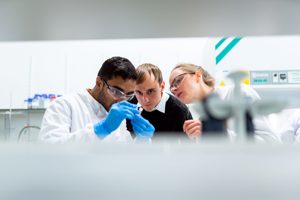
- Fighting Fake Newskunnskap-kristiania / 2020 / 11 / fighting-fake-newsKNOWLEDGE @ KRISTIANIA: Teaching If there is one term that has dominated in media during the last years, it is “fake news”. “Fake news” refers to false information that is disseminated with dishonest intent. In addition, and most dangerously, fake news resembles accurate (validated, or fact-checked) news, but rather originates from non-trustworthy or dubious sources. Fake news is a type of disinformation, and can be contrasted with misinformation that refers to spreading false information in good faith, with intent to inform rather than deceive. Read also: Kunnskap Kristiania 2020/2021 (E-magazine). Designed to look real The spreading of false information that is designed to look real is not a new phenomenon, but the rate at which it can be produced, distributed and accessed by the public, are. In combination with other factors, this has led to the dawn of the “post-truth era” (Sinatra & Lombardi, 2020). A defining feature of the post-truth era is that many people are inclined to rely on their own beliefs rather than scientific knowledge, and even prominent figures, such as presidents, allegedly invent their own truths. Read also: The fight against fake news and electoral disinformation «Let me google that for you» Many higher education students are digital natives – the generation that have grown up with the Internet and Google at their fingertips. What’s more, these students may believe that facts, and thereby knowledge, are social constructions, and, in turn, all truths are relative. The same students have also been taught source evaluations skills in schools, but they may often fail to use these skills in daily life or in meeting with higher education courses. What’s more, fake news proliferators are so advanced that the skills students have been taught are becoming increasingly difficult to apply, redundant even. Les også: Slik lærer du barna dine å være kildekritiske Modern digital technology allows “anyone” to publish and share information. Due to the rate at which this occurs, the “self-cleansing” nature of the internet, where people can edit and correct one another’s mistakes, is “out of order”. Also, many search-engines work in a way that means that the first hits on a search result are not always the most scientifically objective, but rather likely to be paid advertisements. In other words, students who simply choose the first result that their search engine provides are likely to gain a skewed view of the issue in question. Read also: Farene ved falske nyheter (in Norwegian) “Everyone’s entitled to an opinion” Educational attempts to keep pace with societal advances, like teaching about critical source intervention, may be inadequate (Sinatra & Lombardi, 2020). For example, it is no longer sufficient to study the “about” information on websites, since this can easily be manipulated. Additionally, people and organisations in positions of authority may spread misinformation in good faith, so defaulting to trusting an authority may no longer work. In the face of this, students may experience feelings of frustration or a lack of trust in authority. Read also: Tsunami av falske nyheter, rykter og desinformasjon (in Norwegian) Students that hold stances such as “all opinions are equal”, “all knowledge is uncertain and created by human minds”, “critical thinking and attention to source information are (therefore) irrelevant”, is the stuff of educational research on epistemic beliefs. Epistemic beliefs are beliefs about knowledge and the process of knowing. “Everything’s broken” Traditionally, researchers have found that students progress through stages from viewing the world and it’s knowledge from categorical, right-or-wrong thinking, to anything-goes and everyone is entitled to an opinion, and eventually (hopefully) where students judge knowledge claims according to criteria like argument and evidence, and employ critical thinking and source evaluation. We now know that views like this develop in relation to specific knowledge domains, or topics, and that higher education seems to help this process. But could this progress be threatened or slowed down by fakes news and alternative facts, and lead to feelings that “everything’s broken”? Read also: Bruker falske nyheter for å slå ned på ytringer som ikke faller i smak (in Norwegian) How teachers can help students Source evaluation skills such as paying attention to who said what, based on what evidence and for what reason, as well as noting the author’s expertise continue to be vital. Students also need to learn that although everyone is entitled to an opinion, some opinions are better qualified than others, as well as understanding the importance of validating claims by cross-checking information sources. But in addition, students need to learn to think critically and analytically about claims, sources, and the links between, to compose and evaluate reasoned arguments, and develop understanding of methods and how to interpret research results. To be able to use these skills in relation to their studies and everyday life, they should be taught in context, as part of higher education courses, and not as a generic “study skills class”. Higher education teachers’ main foci are the subject they teach and their students’ well-being. Academic success and well-being in terms of being informed and making good decisions need time to develop. Some questions higher education teachers might ask themselves when considering how to help students to learn to navigate an alternative fact world are: How can I ensure that students are gradually introduced to the complexities of my subject? How can I help students see that knowledge claims are interconnected, developing and sometimes conflicting? What background knowledge do students need to be able to navigate (potentially false) claims in my subject? Can I include multiple (even conflicting) information resources to help shed light on phenomena from different sides and help students understand how different perspectives can co-exist? How can I show students that different authors have different beliefs that influence how they interpret issues and relations between them? Can I help students to gain an understanding of the processes researchers and scientists use to arrive at valid knowledge claims, for example, by including them in my own research? This list is not exhaustive and should be adapted to the intricacies of teachers’ specialist fields of knowledge, with the same being true of the teaching methods that educators use. Some suggestions for teaching include: starting discussions where students are asked to adopt different perspectives and argue a case that they don’t necessarily believe, inviting guest lecturers with clashing views or presenting findings from different research paradigms as ways to improve perspective-taking and argumentation skills. Involvement in designing research projects, collecting and analysing data, and communicating results will also help improve students’ understanding of what research reports mean and how results can be misrepresented, or even faked. References: Greene, J. A., Sandoval, W. A., & Bråten, I. The handbook of epistemic cognition , New York, NY: Routledge. Kendeou, P., Robinson, D. H., & McCrudden, M. T. (Eds.). (2019). Misinformation and fake news in education . Charlotte, NC: Information Age Publishing. Kuhn, D., Cheney, R., & Weinstock, M. (2000). The development of epistemological understanding. Cognitive Development, 15, 309-328. Sinatra, G. M., & Lombardi, D. (2020). Evaluating sources of scientific evidence and claims in the post-truth era may require reappraising plausibility judgments. Educational Psychologist, 55 , 120-131. Wendling, M. The (almost) complete history of ‘fake news’ (22.01.18) https://www.bbc.com/news/blogs-trending-42724320 . This popular article is first published in Kunnskap Kristiania 2020/2021 . Kunnskap Kristiania is a science Communication Magazine published by Kristiania University College. Text: Professor Leila Ferguson, School of Health Sciences at Kristiania University College.
- Gamification for Innovationkunnskap-kristiania / 2022 / 04 / gamification-for-innovationKNOWLEDGE @ KRISTIANIA: Innovation The quest for innovation has more competitors than ever. The entrance of Netflix disrupted the DVD rental industry with such force that Blockbuster closed their business for good. The German pharmacy-chain Schlecker filed for bankruptcy after being ousted by the new no-frills retail approach. Apple’s rise led to the fall of Nokia - the plethora of examples goes on. The tales of demise are all different; some were a result of product innovation, a selection was a consequence of pricing innovation, others fell due to business model innovation. In order to be safe from defeat, organizations cannot merely innovate parts of their business; innovation must permeate the whole operation end-to-end. What is Gamification? Innovation literature widely agrees that while there are several tools available for elevating innovation activities within a business, however there is a lack of specification as to how gamification can be used for enterprise or process innovation. This article seeks to present the current arguments in research addressing the potential of creating innovation-fostering environments in businesses through gamification techniques. Our main findings suggest that gamification techniques have the potential to create a bridge between the sociological and technical aspects within enterprises’ culture. While the concept of it is not new, the term “Gamification” has recently started to receive attention, and this attention is bringing along promising opportunities. Zichermann & Cunningham (2011) define gamification as the process of using game-thinking and gaming elements and mechanics to involve audiences and solve problems. In a nutshell, it is the use of game-mechanics in a non-gaming context. Game elements and mechanics may involve tasks and challenges, leaderboards, points and XPs, statuses, rewards, levels, among others. Why Gamification is a big thing? People love to play, challenge others, be good at things, and have fun! Thus, there is no surprise in knowing that the global gaming market size is around 2.69 billion gamers , and was valued at USD 173.70 billion in 2020, and it is expected to reach a value of USD 314.40 billion by 2026, registering a compound annual growth rate of 9.64% over 2021-2026. According to International Data Corporation (IDC) data, the videogame industry is a bigger moneymaker than the global movie and North American sports industries combined. That’s one of the reasons that pushed NETFLIX to introduce its own gaming platform in November 2021 for free for its members, to probably attract gamers to register for memberships. Based on statistics published by the Entertainment Software Association, over 65% American households play games, with the average age being 35 years old, and almost evenly split on both female and male players, and ca. 65% of gamers like to play with others. Gaming in a non-gaming context How can we translate this dedication to gaming in a non-gaming context? In our case; the different enterprise systems in organizations. Enter gamification, which is a tool to increase engagement from employees at work, by utilizing design principles from gaming. Gamification has had a surge of popularity in the information systems (IS) field, and there has been a push in using these concepts in enterprise systems. Reasons for the rising popularity is theorized to be due to cheaper technology and the success and prevalence of the game medium. Potential of Gamification for Organizations The enterprise gamification and innovation blending are largely unexplored. Arguably due to the fact that gamification is still in its infancy. In general, manifesting the concepts of gamification into technical features is a complex task, and it is rational to start with the more straightforward dimensions of gamification whilst exploring the concept. This is usually referred to as the front-end of gamification; user engagement and motivation. Still, the secondary effects of gamification, or the back-end of it, do indeed carry an untapped potential. This is an opportunity for organizations to gain a first-mover advantage. Pioneers in the application and use of the back-end of gamification can gain a competitive edge in their existing business models. The loud absence of understanding these potentials also presents an opportunity to gain and sell such expertise as a service to businesses. Much like Amazon started selling expertise in server hosting as a service after they succeeded with their initial business model, which focused solely on online book retailing. Key ingredients to innovation Games are built upon engagement and imagination, which are key ingredients to innovation. Hence, gamification in enterprise resource planning (ERP) systems can be a promising solution to the flexibility versus control issue in innovation. ERP systems allow businesses to have control and knowledge of their current business processes whilst keeping them integrated. Introducing gamification elements in the business through ERP systems can add innovation-fostering characteristics to those processes. If done in a conscious manner, this can potentially set in motion a culture allowing for more natural and continual innovation of a product or service, price model, business processes, business model and everything in between. Gamification applications in a business setting One of the most important aspects of gamification is the fact that it happens outside a well-defined space. Businesses that let themselves be inspired by this can incorporate the same trait to their innovation activities. It presents an opportunity to allow for exploration and idea-generation processes for other parts of the business than only the R&D departments. The key factors in relation to improving the gamification design processes revolves around improved ideation and prototyping, facilitating learning opportunities, using more meaningful design features, and most relevantly, developing innovative mechanics. However, as the current research confirms, to be innovative or to create an innovative environment is hard to make feasible. The guidelines and principles mostly refer to ensuring the presence of abstract traits like flexibility, freedom, exploration etc. Gamification theory aims towards achieving much of the same traits in the process of creating games. Further research should therefore try and test whether these gamification practices are applicable to business processes. The amount of studies attempting to pinpoint models that can aid in gamification applications in business setting, demonstrate the need to make business models more feasible and applicable. IDEAS Lab at Kristiania University College: The Innovation & Digitalization for Businesses And Society Laboratory (IDEAS Lab) at Høyskolen Kristiania focuses on Innovation research in general, and Gamification applications in specific. For more info visit www.ideaslab.no . References: Humlung, O., & Haddara, M. (2019). The hero’s journey to innovation: gamification in enterprise systems. Procedia Computer Science, 164, 86-95.98) Algashami, A., Vuillier, L., Alrobai, A., Phalp, K., & Ali, R. (2019). Gamification risks to enterprise teamwork: taxonomy, management strategies and modalities of application. Systems, 7(1), 9. Zichermann, G., & Cunningham, C. (2011). Gamification by design: Implementing game mechanics in web and mobile apps. " O'Reilly Media, Inc.". This popular research article is first published in the Future Issue of Kunnskap Kristiania 2022-03 . The article is an edited excerpt from Humlung, O., & Haddara, M. (2019). The hero’s journey to innovation: gamification in enterprise systems. Procedia Computer Science, 164, 86-95.98) Text: Oda Humlung, MSc Information Systems, and professor Moutaz Haddara, School of Economics, Innovation and Technology . Haddara is director of IDEAS Lab at Kristiania. We love hearing from you: Send your comments and questions regarding this article by E-mail to kunnskap@kristiania.no .

- Offering products "for him” or “for her” is risky businesskunnskap-kristiania / 2024 / 06 / offering-products-for-him-or-for-her-is-risky-businessSCIENCE NEWS FROM KRISTIANIA: On gendered marketing Over the past decade, multiple brands have been accused of sexis m as they offered products that seemed unnecessarily gendered: from “BIC for her ”, a line of pens just for women, to Kleenex with its “m ansize ” tissues. The epitome may have been reached when the CEO of PepsiCo announced that Doritos was working on “lady-friendly” chips, arguing that women “don’t like to crunch too loudly in public ”. Consumers were outraged, accusing Doritos of sexism. To better understand this phenomenon, I investigate d how consumers respon d to gendered products , focusing on whether they view the brands behind those gendered products as sexist. Consumers are negative about gendered products To start my investigation , I conducted an experiment in which I told participants that SodaCola — a fictive brand — announced they would launch a low-calorie soda. To h alf of the participants , I told this new soda would be called “Lady SodaCola ” and have pink packaging . To the other half of the participants, I told it would be called “Diet SodaCola ” and have yellow packaging. I then asked participants how sexist they perceived SodaCola to be and how likely they were to spread word-of-mouth about it . As I predicted , participants informed about “Lady SodaCola ” (i.e., a gendered product) viewed the brand as more sexist than participants informed about “Diet SodaCola ” (i.e., a non-gendered product) and they were more willing to spread negative word-of-mouth about it. Besides, launching a low-calorie soda named “Lady SodaCola ” was perceived as a less legitimate practice than launching a low-calorie soda named “Diet SodaCola ”. In sum, t hese results confirmed that consumers respond adversely to a gendered product. Personal beliefs affect response I also predicted that two personal characteristics could modify how consumers respond to gendered products: if they are feminist and if they endorse sexist beliefs . I found this was indeed the case. C onsumers who identify as feminist are m ore inclined to view brands behind gendered product s as sexist . Conversely, consumers who endorse sexist beliefs are less prone to view brands behind gendered products as sexist. Legitimate if based on biological differences Noting that consumers seem less sceptical towards some types of gendered products than towards othe r types , I decided to distinguish between products that are gendered based on a stereotype (e.g., men l ike and tolerate spicy food more than women do) and products that are gendered based on a seemingly biological difference (e.g., men need , on average, a higher protein intake than women). I tested this in a new study and found that launching protein-rich chips “for men” was perceived to be more legitimate than launching spicy chips “for men ”. Furthermore, for participants who believed that men and women have different biological needs in terms of protein intake , launching protein-rich chips “for men” was viewed less sexist than launching spicy chips “for men ”. Text: Delphine Caruelle, Associate Professor, School of Communication, Leadership and Marketing Reference: Caruelle, D. (2024). Are brands that perform gendered product differentiation perceived as sexist? An experimental investigation. The Journal of Product & Brand Management . https://doi.org/10.1108/JPBM-07-2023-4590 This text was published at Science Norway on the 4th of July 2024 titled " Offering products "for him" or "for her" is risky business. " We love hearing from you: Send your comments and questions regarding this article by e-mail to kunnskap@kristiania.no .

- In the future, being around other people may prolong the lifetime of your smartphone’s batterykunnskap-kristiania / 2022 / 08 / in-the-future-being-around-other-people-may-prolong-the-lifetime-of-your-smartphones-batteryKNOWLEDGE @ KRISTIANIA: Technolgy Today, smartphones are used to aid and improve all kinds of tasks in almost all aspects of daily life. Smartphones, however, are generally considered fairly resource constrained and their available power is the most constrained resource of all— without power the smartphone won’t function. Not surprisingly, battery life has been identified as one of the most desired features of mobile devices. A possible solution For the purpose of improving battery life in settings where users are co-located, we conducted a study to measure the impact on the consumed smartphone energy when data were collected in a distributed manner. This means that every device shared the same data as opposed to every device collecting its own sensor data. The results indicated that a shared distributed collection imposed less energy consumption than traditional approaches. By opportunistically connecting to and sharing common computations with nearby smartphones, co-located users can compute tasks as ‘one entity’. The result of the computations done collectively is then available for all nearby devices and ensures that no computation is done more than once. A more seamless travel experience Let’s take an example of a near-future public transport application, taking advantage of the Be-in/Be-out paradigm. Be-in/Be-out is about enabling user’s of public transport to enter and leave vehicles without having to do any explicit action— a seamless, ticket free travel experience. In order to achieve this, heavy local computations are needed in order to estimate or verify if a user is actually on a public transport vehicle, which vehicle and how long the journey is, in order to achieve accurate ticketing. The Be-in/Be-out scenario in public transport, is a very relevant scenario which we are currently researching through a joint research effort between fluxLoop, Kristiania University College and other public transport operators such as Nordland Fylkeskommune and Ruter. Devices sharing the same data In scenarios such as this, the smartphones of embarking and disembarking travelers can collaborate as one entity in order to calculate whether travelers are embarking, disembarking and which mode of transport the travelers are in. Near-future public transport solutions are examples where opportunistic collaboration could prove beneficial. However, this approach could also be employed in any kind of scenario where devices are co-located and ambient sensor information needs to be collected and processed. Cloud solutions are not necessarily the best solutions The last couple of years, in order to combat the resource scarceness of mobile phones, many applications send heavy computation to the cloud for processing and the result is then returned to the device. This can significantly lower the resource consumption of mobile phones and contribute to a longer lasting battery. At the same time, the concept of the Internet of Things (IoT) has emerged which has led to a drastic increase in connected devices. This, in turn, leads to elevated network traffic which potentially can cause latency and a heightened load on servers worldwide. Not only does this affect the internet backbone and the service providers, but an increase in network usage from mobile devices might also incur added cost for the end-user. In addition, by sending data to the cloud it brings an added risk to security and introduces new attack vectors. Data can be intercepted on the way, or malicious employees working at the service provider can access and steal your data. More processing on device may increase the security of mobile solutions Security concerns, in combination with better hardware and more efficient algorithms has led to the computations again being moved back to the users’ devices. However, the issue of available power on mobile devices still persists. This is quite the predicament! On one hand you have a significant reduction in energy consumption on the user’s device and on the other you have a significant increase in network load and additional security concerns. It is currently hard to deal with all these issues, however, on-device processing and opportunistic collaboration can help mitigate security issues to some extent. A way to reduce energy consumption It is difficult to say exactly which calculations are needed for different solutions in the future. However, for scenarios where multiple devices need to do the same calculations within the same context, collaborating on the computation is a viable approach. Through opportunistic collaboration it is possible to reduce energy consumption, while simultaneously keeping network traffic at a minimum. In the future this solution might contribute to a more seamless travel experience with fairer pricing schemes and hopefully— once implemented, the travelers won’t notice a significant change in their device’s power consumption due to distributed work collaboration. Referanser: Skretting and T.-M. Grønli, "Distributed Sensor Data Collection Using Mobile Clouds for Public Transportation," in IEEE 17th International Conference on Intelligent Computer Communication and Processing, 2021. Ma, Y. Zhao, L. Zhang, H. Wang and L. Peng, "When mobile terminals meet the cloud: computation offloading as the bridge," in IEEE Network, vol. 27, no. 5, pp. 28-33, September-October 2013, doi: 10.1109/MNET.2013.6616112. Text: PHD-candidate Anders Skretting, School of Economics, Innovation and Technology. Anders.Skretting@kristiania.no

- BA Dansekunst andreklasse - visning av selvstendig prosjektom-kristiania / kalender / ba-dansekunst-andreklasse---visning-av-selvstendig-prosjektStudentene har selv koreografert, og danser i, til sammen seks verk som vises på hovedscenen.

- Consumers expect brands to take a stance on key issueskunnskap-kristiania / 2021 / 08 / consumers-expect-brands-to-take-a-stance-on-key-issuesKNOWLEDGE @ KRISTIANIA: Sustainability During the 2017 Super Bowl, Anheuser-Busch (the makers of Budweiser) ran an advertisement about the German immigrant founders of the company. On one reading this was the American Dream written large—and indeed the end caption was ‘When nothing stops your dream.’ On another, it was a pro-immigration message as Adolphus Busch arrives in the US to be confronted with, ‘You’re not wanted here. Go back home’. Read also: Kunnskap Kristiania, the Innovation Issue (E-magazine) A sociopolitical choice of beer In the supercharged immigration rhetoric of the time, the advertisement was attacked and applauded along partisan lines. It made drinking Budweiser beer a sociopolitical choice. This shouldn’t be much of a surprise. As societies have become more politically polarized and trust in political systems has eroded, so consumers have become more aware of the way their choices can influence the world around them. They now have the opportunity, amplified through social media, both to construct their own sense of identity through what they consume and to influence the opinions of others. To explore this phenomenon, we established a research project to explore the way consumers and brands were adapting to this new reality. Read also: Do the Right Thing: How Business Can Respond to the Challenge of Racial Injustice Consumers want authenticity Using focus groups and a series of experiments in Germany, UK and USA, our research shows that consumers increasingly expect brands to adopt positions on key issues. They argue that this helps to create a point of difference and makes them feel closer to a brand. However, there is an important caveat here. Taking a stance is only credible when it is seen as authentic. This means that the brand has to match communication and action and to be consistent over time. Consumers only use brands in their own identity projects when they feel the overall brand experience is positive, in terms of the quality delivered, and the sociopolitical brand associations are aligned with the core of the business. The existing research diverges on whether authenticity is more credible for principle-driven brands such as Patagonia and Ben & Jerry’s versus more consumers driven brands such as Nike and Pepsi-Cola. However, our findings show that cause and commercialism can comfortably co-exist, as long as the former is not compromised by the latter, as the following quotes demonstrate: ‘I would say it’s fine for a brand to have a point of view … but only if it’s something that they truly believe in and they’re not just trying to jump on something that’s current and that everybody else feels strongly about … something that’s not core to themselves’ (UK). ‘No matter which direction you go, as a brand you should consistently stand behind it’ (Germany). ‘A brand like Ben & Jerry’s has always been outspoken, this is who they are, what they’re all about. The problem is when a brand like Pepsi tries to be woke by trivializing something as important as Black Lives Matter. Not only was this poorly executed, but it wasn’t authentic’ (U.S.). Read also: How enterprises can create meaningful purpose together with their stakeholders The opportunity and dangers for business In addition to the consumer research, we also had input from 34 senior marketing and brand managers. The literature argues that most businesses opt for comfortable issues and avoid highly politicized issues because they have the potential to alienate customers. However, this caution may be changing, as some brands are willing to support more contentious issues such as pro-choice (Yelp, H&M, Lush), LGBTQ (Burger King, Honey Maid, IKEA) and pro-immigration causes (Starbucks, Levi Strauss, Chobani, Edeka). This both reflects a shift of these causes into the mainstream and the willingness of business to fill a sociopolitical space, led by more activist Chief Executive Officers (CEOs). Our findings show that managers believe that taking a stance can help differentiate a brand, attract new customers, build emotional and self-expressive benefits, boost brand image, and generate customer loyalty. Managers recognize that their stakeholders want them to have a view and to express it: ‘Brands are much more conscious of their consumers being better educated, more environmentally aware and concerned about moral and political issues that affect life now, and in the future’ (Director of Brand Management, U.K.). ‘Consumers are increasingly demanding from their brands. Not only do they expect brands to meet their functional and emotional needs, but they expect the brands to have a purpose and stand for something’ (Senior Marketing Director, U.S.). ‘Not saying anything says a lot about who you are as a brand. Consumers expect brands to have values and be clear about them. At the same time issues that weren’t political in the past have been politicized, making it more complicated for brands to simply do what’s right without appearing to take political sides’ (Senior Director of Marketing, USA). Read also: How Business is Accelerating Toward a Fairer Future What should managers do? However, even if managers sense the opportunity, 20 out of 34 organizations had not taken a stance on an issue. The primary reason given to not adopt an explicit sociopolitical orientation was that it did not match the organization’s values and beliefs or did not align with the profile of the organization’s core target audience. Many managers perceive the risks involved are too high – that you can get stuck supporting a cause which is divisive. Our view is that managers cannot not take a stance. Actions are increasingly seen within a political context and consumers and other stakeholders increasingly expect brands to take a lead on sociopolitical issues. Instead of veering away, managers should be aware that associating with such issues is valuable when approached strategically and integrated into the core of the brand. Reference: Schmidt, Holger J, Nicholas Ind, Francisco Guzmán and Eric Kennedy (2021): ‘ Sociopolitical Activist Brands ’. The Journal of Product & Brand Management. This article is first published in Kunnskap Kristiania, The Innovation Issue (link to E-magazine) released on August 19, 2021. Text: Professor Nicholas Ind, School of Economics, Innovation and Technology E-mail: NicholasJonathan.Ind@kristiania.no We love hearing from you: Send your comments and questions regarding this article by E-mail to kunnskap@kristiania.no .

- Gir ut akademisk coffee table bokaktuelt / 2020 / 12 / gir-ut-coffee-table-bokMcQuillan er tilknyttet School of Arts, Design and Media der hun har utviklet skolens Bachelorgrad i Retail Design. Forrige uke ga hun ut boken Fashion Spaces – A Theoretical View hos Frame forlag. Opplaget på 2000 eksemplarer består av prosjektoppgaver skrevet av fjorårets studenter (døpt ´The Pioneers´) ved School of Arts, Design and Media. Professoren har stor interesse for arkitektur, design og ikke minst – mote. For å fylle forsknings-gapet innenfor «fashion spaces» har hun i samarbeid med Kjeld Hansen, lektor på Institutt for Teknologi hos Høyskolen Kristiania, utviklet en teoretisk forskningsmodell. Modellen anvendes i boken for å konseptualisere hvordan retail design utvikler seg og legger samtidig grunnlag for fremtidig forskning. Vi hjelper studentene med å få deres navn ut til et større publikum Studenter fra inn- og utland, blant annet utvekslingsstudenter fra Düsseldorf og Helsinki, er de første til å teste ut denne nye modellen i prosjektoppgavene. Sammen med studentene ønsket hun å lage en faglig bok med akademisk tekst som også inneholder inspirerende bilder – rett og slett en akademisk tung «coffee table» bok! – I min professorstilling kan jeg få studentene med på akademiske prosjekter, men vitenskapelige magasiner når ofte ikke ut til mange nok. Jeg ønsker å bli lest og hjelper studentene med å få deres navn ut til et større publikum, forteller McQuillan. Da samfunnet vårt er i stadig endring, har McQuillan sett behovet for å drive prosjektet videre gjennom en plattform på nett. #nofilter Space er dette neste steget (navnet kommer fra hashtaggen #nofilter på Instagram, red.anm.) der hun arbeider som Editor in Chief. Med seg i redaksjonen har hun to studenter, en senior editor fra 3. klasse og en junior editor fra 1. klasse. Det er studentene selv som velger hvilke tema innenfor retail design de ønsker å skrive om. En av de ferskeste prosjektene er drevet av Kristiania-alumni Daniel Jørgensen. Han har utviklet kleskonseptet BINARY , som består av kjønnsnøytral mote, unisex-kolleksjoner og en androgyn stil. McQuillan forsøker å lære studentene at alt er mulig: – Du må bare jobbe hardt and «be nice to people», avslutter hun. Her kan du lese bokens pressemelding .

- Tidligere student i ny norsk storfilmaktuelt / 2017 / 12 / tidligere-student-i-ny-norsk-storfilmTidligere Skuespillstudent Ole Victor Corral i rollen som Magnus Kvalvik i ny norsk storfilm. Hei Ole! Gratulerer med rolle, hvem spiller du i filmen? – Jeg spiller Magnus Kvalvik, en av de 12 Bratholmgutta fra Kompani Linge som ble sendt til Troms for å sabotere tyske fartøy. En ganske badass fyr for å si det sånn. Han ble henrettet av tyskere i 1943 etter at en operasjon gikk skeis. (Ja, jeg dør på film). Hvordan fikk du den rollen? – Jeg gjorde en kortfilm som heter «Satelitter» med en veldig flink, ung regissør som heter Håkon Olavsen som ble vist på Cinemateket. I salen satt selveste Petter Holmsen, regiassistenten til Harald Zwart og så på. Han likte det han så og ville ha meg inn for en audition, men det var faktisk for en av de andre rollene. Så jeg gikk inn, spilte så tårene rant, fikk stående applaus (i hodet mitt) også hørte jeg ikke noe mer fra dem på ca. tre måneder. Jeg trodde jo de hadde glemt meg, men så fikk jeg plutselig en telefon av Petter. Han sa “Beklager Ole, vi gav rollen din til en annen, men hvis du vil spille Magnus, så er rollen din”. Selvfølgelig takket jeg ja! Jeg har sikkert 15-20 kortfilmer på dataen min som jeg har laget med flinke folk som går på skolen, og tro meg, det har hjulpet utrolig med å være trygg på set. Jeg har sikkert 15-20 kortfilmer på dataen min som jeg har laget med flinke folk som går på skolen, og tro meg, det har hjulpet utrolig med å være trygg på set. Hva lærte du av å være med på en så stor produksjon? – Dette er den største produksjonen jeg har vært med på, og jeg var jo bare en liten brikke i hele opplegget, så det jeg lærte mest av var å være «på» hele tiden. De har ikke tid eller mannskap til å passe på alle hele tiden så man må være litt proaktiv og forberedt på hva som kommer til å skje resten av dagen, ligge ett steg foran, forteller Ole Victor. – Når det er sagt – og her kommer det litt skryt av høyskolen – så har Skuespill-utdanningen rusta meg godt ved å ha en så god og talentfull Film og TV-utdanning som jeg har jobbet sammen med siden første klasse. Jeg har sikkert 15-20 kortfilmer på dataen min som jeg har laget med flinke folk som går på skolen, og tro meg, det har hjulpet utrolig med å være trygg på et set. Fordi uansett hvor stort settet er, så er det veldig likt det vi gjør på skolen! Du har innspillingslederen som fyker rundt og roper klokkeslett, lydmannen som skal under skjorta di, lysmannen som setter lyset. Så alt det var jeg allerede ganske rutinert på. Så ja, takk til Westerdals! (Skolens tidligere navn, red.anm.) Hvordan var overgangen fra skolehverdagen til en filmjobb i bransjen? Overgangen gikk bra. Jeg prøvde å ta det rolig og ikke bli opphengt i at det var jobb. Det har ikke så mye å si om det er film eller teater, eller skole eller jobb. Pluss at de som jobba der var så hyggelige og flinke folk, så det var lett å kose seg! Lærte du noe nytt? – Jeg lærte at denne bransjen er en maraton, ikke en sprint. Du hører om skuespillere som plutselig får en stor rolle i en film eller tv-serie for så å bli «kjendis over natta». Men man hører sjelden om all jobben de gjorde før de kom til det punktet. All øvingen, puggingen, skrivingen. Å være i miljøet, å bli sett og hørt og håper på at noen ser deg, samtidig som du har en heltidsjobb ved siden av for å betale leia. Hvis man prøver å sprinte til målstreken i denne bransjen tror jeg man fort kan bli skuffa. Ikke forvent at telefonen skal ringe bare fordi du gjorde en god jobb. Det er for mange om beinet rett og slett, så hold deg heller aktiv så vil det skje noe etterhvert, forsikrer Ole Victor. Hvor annerledes er det å spille i en flerkameraproduksjon versus å spille på en teaterscene? – Hvis du tenker på klassisk teater, så spiller man jo fortsatt realisme, men likevel er det en litt annerledes spillestil. I film må man kutte den avstanden man har til publikum og gjøre det mer «personlig» med den du spiller med. – I teater må man passe på at publikum ser deg ved å ikke vende ryggen til hele tiden, og du må heve stemmen din sånn at publikum hører deg. I film må du absolutt ignorere alt og alle som ikke er med i scenen og være litt mer egoistisk. Men det er jo mange likhetstrekk også. Det viktigste av alt er å ikke la andre fortelle deg hva du skal gjøre i scenen. Ta det regissøren sier som et forslag, men det er du som må eie det, det er du som må forstå det og ha et forhold til det. – Så tør å lede. Ta plass. Ikke vent på at alle skal fortelle deg hva du skal gjøre. Dette gjelder spesielt for filmproduksjoner hvor du får tilsendt en manus på forhånd, men ikke møter crewet før første innspillingsdag. Da er det viktig at du har gjort opp noen ideer i hodet ditt, avslutter Ole Victor. Filmplakat for «Den 12. mann». Håkon T. Nilsen fra klassen under Ole Victor var også med i filmen som en av de 12. mennene. Håkon hadde også en av hovedrollene når høyskolen satt opp stykket «Ifigenia i Aulis» i 2017.

- Graduation ceremony 2026om-kristiania / kalender / graduation-ceremony-2026School of Economics, Innovation and Technology, Master students
- Oslo: 30 studiepoengfor-studenter / valgemner-og-praksis / valgemner / valgemner-i-oslo-30-stpValgemner Oslo - Vår 2027
- Five principles in defining a powerful purposekunnskap-kristiania / 2021 / 01 / five-principles-in-defining-a-powerful-purpose2KRISTIANIA TOOLBOX: Defining a meaningful purpose The traditional view of purpose is that it is an articulation of the essence of an organization, its reason for being, why it does what it does, and why that is relevant to its future. Yet, presentations on the subject tend to step over, the ‘meaning’ attached to a purpose, and ‘how’ it is arrived at. Generally, it is seen as the task of management to filter out the superfluous and focus in on that, which best represents the uniqueness of the organization. Inevitably this editing process brings some aspects of the organization into view and pushes others into the background. Even when the process is rooted in gaining feedback from people, this is still an inside-out approach. Read also: How enterprises can create meaningful purpose together with their stakeholders Engaging all stakeholders The alternative to the inside out approach is to become closer to stakeholders and to engage them as partners in the process of defining purpose together. An organizational purpose that involves all stakeholders is likely to be seen as more meaningful, drive better engagement, and generate developmental impacts that are more sustainable. Read also: The Power of a Story In a Fortune survey in May 2020 , around half the CEOs believed that COVID would accelerate the move to stakeholder capitalism. This shift requires purpose to become a core tenet of how an organization meets the needs of its different stakeholders. How? We recommend the following: 1. Make it simple, but not too bland A purpose statement only acquires meaning when it is used to steer the actions of stakeholders. Make a statement too complex and it will be ignored. Rather organizations should err on the side of simplicity and concision, but if a statement is so bland that it could apply to any organization at any time, then it is unlikely to appear relevant to employees and others. Of course, a purpose statement does not exist in isolation, and will be supported by other statements and values, but if it fails in its primary duty to direct and inspire, it becomes pointless. 2. Co-create it Organizations always have a purpose – from the start-up to the multinational enterprise. However, as organizations grow and develop, they move from an intuitive understanding of purpose, to one that is more nuanced and that needs to be articulated. If a purpose is to meet the needs of stakeholders, it should not simply be a managerial creation, but rather the result of a participative and involving process. This may slow things down, but it also helps to create something that is authentic and relevant to both internal and external audiences. 3. Integrate it A core benefit of a clear purpose is its role in decision-making. A purpose that is lived can guide strategy, but also the detailed everyday decisions that people make. This helps companies to be agile, because the boundaries of choice become clearer. In COVID times, this has been particularly important in enabling companies to innovate rapidly in such areas as personal protection equipment, track and trace systems, home working processes and small business funding. 4. Let others enrich it Alongside the managerial commitment to deliver on a purpose, organizations need to recognise that they also have to let go of the purpose and let others in their experience ecosystems build on it, develop it and enrich it. There is sometimes a fear that letting go can lead to a purpose that heads off in an unintended direction. There is certainly a risk here, but this is ameliorated, when a properly integrated purpose and effective governance processes combine to determine the way companies work with the ecosystem. 5. Communicate outcome impacts Often purpose statements deal in generalities about a future state – policies rather than outcomes and their impacts. This inhibits their organizational relevance, because it is hard to see what the impact will be and how stakeholders can contribute to it. Also, given that a purpose is designed to be enduring, how does an organization know whether it is making progress or needs to adjust. A company such as Philips, which has a target is in a better position in that it can measure its progress towards realising the purpose and motivate everyone involved. Read also: How Business is Accelerating Toward a Fairer Future Organizations will only realise the potential of purpose if it is used to guide managerial choices and the actions of stakeholders. This co-creative approach means a purpose has to be seen as a fluid, ever-evolving idea rather then something fixed. References: Gast A., Illanes, P., Probst N., Schaninger B. and Simpson B. (2020). Purpose: Shifting from why to how. McKinsey Quarterly. April 22 2020. Ramaswamy V. and Gouillart F. (2010) “Building the Co-Creative Enterprise,” Harvard Business Review, October 2010. https://hbr.org/2010/10/building-the-co-creative-enterprise Younger, R, Mayer, C. and Eccles, R. (2020) Enacting Purpose within the Modern Corporation: A Framework for Boards of Directors. EPI. This article is an excerpt from the article «How enterprises can create meaningful purpose together with their stakeholders» published in The European Business Review on January 21, 2021. Text: Professor Nicholas Ind, Department of Economics and Innovation at Kristiania University College and Professor Venkat Ramaswamy , the Ross School of Business, University of Michigan, Ann Arbor, USA.