Søk
Filtre
Filtre
Resultat
- Master ceremony 2024 Osloom-kristiania / kalender / master-ceremony-2024Welcome to our Master ceremony 2024

- Masters Ceremony 2025 School of Economics, Innovation and Technologyom-kristiania / kalender / avgangsseremoni-for-school-of-communication-leadership-and-marketing2522Kristiania invites all masters graduating students at the School Economics, Innovation and Technology to a graduation ceremony.
- Graduation ceremony 2026om-kristiania / kalender / graduation-ceremony-2026School of Economics, Innovation and Technology, Master students
- A simple trick for personalized Christmas photos - with an added science bonuskunnskap-kristiania / 2023 / 12 / A-simple-trick-for-personalized-Christmas-photos-with-an-added-science-bonusCHRISTMAS AT KRISTIANIA: Álvaro Lomba on blur and bokeh in photos The end of the year is approaching and with it comes the time to meet family and loved ones, materialising their existence into a physical form that we can experience through all our senses and not through a mere digital interface. These are moments for taking dreamy photographic memories in front of bright Christmas lights to the delight of our social media contacts. Here's a little project for customizing your family photos ’ high lights using a DIY creative “ bokeh ”: Step 1: Cut out a recognizable shape Use cardboard or thick paper and cut out a shape you like: a heart, a tree, a star, your cat - use your imagination! Start with a small cut-out shape first (2x2cm). Its size depends on your lens’ aperture, if you cut it too big, the effect won’t work. Step 2: Place the card in front of your lens and focus on an object Make sure the paper is placed close, even touching the glass in front of your lens. Step 3: Shoot the picture The same picture shot with and without our heart-shaped-card. How is this effect created? Lens bokeh , taking its name from the Japanese term “boke”, means “blur” or “haze”. Bokeh is the name given to the quality of the out-of-focus areas in a photograph, and its appearance depends on the construction of the lens. Let’s start by explaining the meaning of out-of-focus and how this happens. Optical lenses use the properties of multiple glass elements to spread and bend light into converging at the camera’s sensor. When we rotate the focus ring on a camera lens (or chose the focus on a mobile phone), we are changing the position of those glass elements, altering the convergence or meeting point of the light rays inside the lens. By doing this, the light from all the objects the lens “sees” at a specific distance come together, producing sharp contours. These “objects” may be your family members, who you want to be in focus. The rest of the room will be blurred because the rays from those areas don’t converge on your sensor. In those areas, the photosensitive sensor will not be hit by the light of a especific point but rather from a wider area called circle of confusion , blending all the details into a blurry, featureless blob. Bokeh occurs on all areas of all photographs. However, its effects are much more noticeable in the very out-of-focus areas due to the bigger circle of confusion. And especially in dimly lit scenes with small points of light far from the focal point. Imagine a night shot of a person in front of distant city lights, sinilar to the header photo in this article. This creates rear bokeh. A party sparkler very close to the camera while the focus is on a on a person farther behind would create front bokeh . Rear and front bokeh of the same lens in different positions. Notice the uneven distribution of light on the screen. Rear bokeh has darker and softer edges while front bokeh shows a brighter edge. The size of the bokeh can be adjusted by changing the lens aperture. Bokeh size and aperture are proportional. This is because the aperture determines how big the area, through which light enters the sensor. That way the bigger that area is, the bigger the circle of confusion and consequently, the bigger the bokeh. By placing our cut-out card in front of the lens we are blocking the light from some specific directions, an effect barely noticeable in the in-focus areas, but clearly visible in the parts where the circle of confusion is bigger (out-of-focus areas). Bokeh “character” is determined by the construction of the lens elements, leaving limited space for artistic expression, but its shape can be easily altered by partially blocking the incoming light in front of the lens. This is why we can create the shapes we want out of the lights in our photos – hearts, trees, stars, snow flakes; use your imagination and add a personal touch to your Christmas photos! Text: Álvaro Lomba , høyskolelektor ved Westerdals Institutt for film og medier, School of Arts, Design and Media ved Kristiania. Foto: Álvaro Lomba og Hilde Finnseth. We love hearing from you! Send us your questions or comments by e-mail: kunnskap@kristiania.no . Stay up to date on news from Kunnskap Kristiania: News letter Facebook

- Status og siste nytt i integrasjonsprosjektetom-kristiania / integrasjonsprosjekt-med-nki / status-og-siste-nytt-i-integrasjonsprosjektetIntegrasjonskontoret 1.mars tiltrådte Marte Gram Johannessen som prosjektleder for integrasjonskontoret, som vikar for Krister Vangen frem til 1. august. Resten av integrasjonskontoret består av: Eilen Skjæraasen , Joachim Børlie , Pegah Khademi , Tora Madsen Reite og Lene Torjul Reutz . Informasjon til studentene Det er etablert en egen informasjonsside for studentene med oppdatert informasjon om integrasjonen, inkludert tidslinjer og hva de kan forvente fremover. Dette bidrar til økt forutsigbarhet og færre henvendelser til fagmiljøer og støttefunksjoner. Milepæler frem mot gjennomføring Milepælsplanen ligger fast, og flere aktiviteter intensiveres frem mot sommeren : Følgende datoer er særlig viktige: 10. juli: Frys i arbeidskrav og fleksibel eksamen for aktive studenter i NKIs systemer 1. august: Alle s tudenter kjøper emner via Kristianias portal og får tilgang til Canvas 14.–16. august: Migrering av studenter (Canvas og Salesforce fryses for endringer) 17. august: Alle studenter er ferdig migrert, inkludert progresjonsdata Frem mot disse datoene vil det være behov for tett oppfølging i flere enheter, særlig knyttet til ferdigstillelse av emner, kvalitetssikring og avklaringer i systemene. Innplassering av ansatte og organisasjonskart Det pågår arbeid med å kvalitetssikre oversikt over alle ansatte som skal inn i den nye fagskolen fra 01.08.26. Arbeidet gjøre s av HR, som også håndterer nye kontrakter der stillinger endres. Status: Organisasjonskart på ledernivå 3 er besluttet og kommunisert Ledere og ansatte er innplassert i avdelinger Organisasjonskartet fra 1. august Den nye strukturen organiseres under rektor i seks hovedområder: campusstudier, nettstudier, digital produktutvikling, strategi og kvalitet, markedsføring og salg, samt virksomhetsstyring. Strukturen skal tydeliggjøre ansvar og styrke samspillet mellom fag, teknologi og marked. Enkelte avklaringer, særlig innen digital produktutvikling og UX, gjøres videre i etterkant av Styrk2-prosessen. Videre: Nye arbeidskontrakter sendes ut 01.05–01.06 (gjelder fra 01.08.2026) Stillings beskrivelser skal foreligge ved inntreden i stilling Akkreditert studieportefølge på MedLearn og videre prosess for NKI-porteføljennformasjon til studentene Studieporteføljen til MedLearn er akkreditert og inngår nå i Fagskolen Kristiania. Arbeidet med å klargjøre tilbudet for markedet og integrer e det i systemene pågår. Det startes nå et arbeid for å klargjøre studieporteføljen fra NKI på nettsidene og i øvrige systemer.
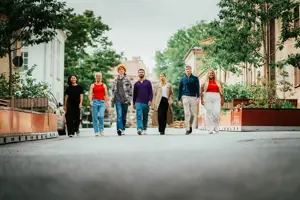
- Students and locals team up to build a safer, more inclusive citykunnskap-kristiania / 2025 / 9 / students-and-locals-team-up-to-build-a-safer-more-inclusive-citySCIENCE NEWS FROM KRISTIANIA: Urban development In the heart of Oslo lies Grønland — an area in the Old Oslo borough that embodies both the opportunities and the contrasts of modern urban life. Known for its rich cultural diversity, Grønland also faces challenges such as social exclusion, overcrowding, social inequalities, and a lack of perceived safety. Through the Media Art Innovation Lab (MAIL) — a new interdisciplinary joint course at Westerdals Institute of Film and Media at Kristiania — we will connect tomorrow’s film and media education more closely to the resources of the local community in Grønland. The institute is located at Urtegata 9 in Grønland, and our teaching building has become part of a larger urban development that is changing the area’s dynamics and opening up new possibilities. A laboratory for artistic exploration The Media Art Innovation Lab is an interdisciplinary joint course that brings together students from four different bachelor’s programmes — Film and TV, Screenwriting, Sound Design, and Computer Arts (with specialisations in animation, visual effects, 3D graphics, and game design). The joint course serves as a laboratory for cross‑disciplinary collaboration and innovation. Students are challenged to think in new ways and to experiment with creative solutions in film and media as responses to current societal issues. MAIL emphasises sustainability, diversity, and inclusion — values that students integrate into both their processes and their final products. This makes the course a platform for artistic exploration and, at the same time, a venue for tangible solutions to challenges in the local community. Preservation of buildings and cultural heritage Grønland’s cultural diversity and urban complexity create opportunities for mutual learning and collaboration between students and the local community. One of the challenges raised by the Old Oslo borough and the local community around Grønland is the risk that new construction projects may lead to the loss of older buildings, cultural heritage, and local knowledge. Students can contribute by documenting the area and supporting the local community in preserving and clarifying its identity. In addition, the borough seeks students’ help with a tree‑planting project and invites collaboration with Vahl Neighborhood School on media‑based after‑school activities. Concrete projects — such as light installations in public spaces, digital artworks, and local media productions — make Grønland a learning arena for both students and the community Projects may explore the district’s historical development and cultural diversity through innovative storytelling in film and sound, or develop artistic and technological solutions for safer and more inclusive urban spaces. Creating value for students and the local community When students from different programmes come together, they bring with them diverse perspectives and skills. Through collaboration, they not only learn from each other but also how to apply their strengths in new ways in other constellations and contexts. These are tomorrow’s leaders and innovators, who wish to contribute positively to the local community. By strengthening ties with the local neighbourhood, students face real challenges that affect both their own daily lives and the society around them. The collaboration between the borough and the Media Art Innovation Lab aims to create value for both the students and the local community. Through concrete projects — such as light installations in public spaces, digital artworks, and local media productions — Grønland will become a learning arena where Kristiania’s students both develop their professional competence and contribute to positive social development. When, in June 2025, we hosted ELIA Academy — one of the most prestigious conferences in arts education — this project demonstrated how “life‑integrated learning” works in practice. The collaboration between the school, the local community, and the borough is an example of how higher arts education can be connected to the local community to create sustainable and inclusive cities. Text: Synne Tollerud Bull , Professor, School of Arts, Design and Media, Kristiania, and Leo Rygnestad, Special Consultant in the Urban Development Team, Oslo Municipality. We love hearing from you! Send your comments and questions regarding this article by e-mail to kunnskap@kristiania.no .
- Bridging the gap between art and sciencekunnskap-kristiania / 2021 / 09 / bridging-the-gap-between-art-and-scienceKNOWLEDGE @ KRISTIANIA: Artistic Research When Johannes Kepler drew musical notes in his books reflecting on the universe as a harmony in music and when Albrecht Dürer developed the linear system in painting based on scientific calculations, science, humanities, art, knowledge production, epistemology had not yet been exposed to systematic institutionalisation and claustrophobic categorisation. Kepler, the scientist, and Dürer, the artist, shared basic ways of producing knowledge and approaching their material, e.g., by observing, by finding patterns and by conceptualizing. To them mixing the fields of art and science did not represent a schism, it offered possibilities and solutions they could not have accessed by treating either field separately. Read also: Kunnskap Kristiania, the Innovation Issue (E-magazine) What qualifies as Artistic Development Work? Today Artistic Development Work presents us with an opportunity to enhance our perception of art, science and academia in general. Art is intrinsically reflective, researching and investigative, so what kind of artistic activity qualifies as Artistic Development Work and not simply as art? Whereas making art contains different forms of reflection and knowledge production the primarily objective is production of art within a given artistic community, i.e., a given art product being the main goal. Artistic Development Work, on the other hand, attempts in and through the art production (the process and the practice) not only to participate in and contribute to the artistic community, but also to gain an epistemological outcome of art making and art practice, i.e., to what we comprehend and cognize. Thus, Artistic Development Work includes a wide range of explorative and reflective methods, concepts, and ideas rooted in the making of art. Read also: Project Management at the Theatre Useful beyond the sphere of art Since the focal point of Artistic Development Work is to create new knowledge within a given area there is generally a strong emphasis on developing new methods and practices. This exploratory – and not explanatory – approach to research is often seen as contrary to traditional scholarly research. However, Artistic Development Work-methods have turned out to be useful also beyond the sphere of art. Artistic Development Work-projects are documented to intertwine with non-artistic projects on a variety of fields such as gender issues, environment, political matters, globalization etc. Perhaps the most tangible example of the benefits of Artistic Development Work-methodology in science is the concept of art-science. Typically, art-science projects are conducted as artist-in-residence programs. The artists may function as advisors, collaborators, interlocutors or give workshops or work on an artwork. Fusion of science, technology and arts The STARTS (Science + Technology + Arts)-project, initiated and funded by the European Commission, is an emblematic example of how art-science can contribute to technological innovation safeguarding human needs and values. The fusion of science, technology and arts has shown how transdisciplinary approaches can handle complex challenges not only within the realm of science and technology, but also with regards to organizations and organizational structures. Read also: Skapte nye forbindelser mellom sang, dans og skuespill (in Norwegian) Platform for transdisciplinary collaboration Kristiania University College is an adequate platform for transdisciplinary collaboration. Health sciences, innovation and technology are obvious areas where Artistic Development Work can be involved in developing new knowledge and new methods and simultaneously gain experience with and insight into theories and methods beyond art and Artistic Development Work. As the largest centre of arts education in Norway, the School of Arts, Design and Media at Kristiania is a crucible of creativity and learning. Students meet music, dance, film, music theatre, creative writing, acting, and more under the same roof while Artistic Development Work is grounded in a diverse academic environment. Read also: Bak musikkbransjens glamorøse fasade (in Norwegian) Tool for reaching out Together a variety of disciplines from seemingly adversarial professional zones can bridge the academic gap between art and science. Transdisciplinary collaborations within Kristiania could even be used as a tool for reaching out, initiating research alliances and partnerships with both public institutions and private companies, nationally as well as internationally. So, the paradigmatical gaze of the scientist can indeed be combined with the mystifying gaze of the artist researcher. Or maybe that is the wrong way to put it. Perhaps there is a closer affinity between the scholar’s approach to finding out and the artist’s way of exploring than institutional borders suggest. Furthermore, the typical meeting the extraordinary, the typical linked with the idiosyncratic, the general facing the individual etc. is not only enriching both science and Artistic Development Work in itself, but also forcing us to continuously revaluate what science and research is all about, and eventually spur us on to find what we are not looking for. Reference: This article is first published in Kunnskap Kristiania, The Innovation Issue (link to E-magazine) released on August 19, 2021. Text: Associate professor Ole Egeberg, School of Arts, Design and Media, Kristiania University College. We love hearing from you: Send your comments and questions regarding this article by E-mail to kunnskap@kristiania.no .

- Vennlighet er en egenskap vi har utviklet for å overlevekunnskap-kristiania / 2023 / 04 / vennlighet-gjor-at-mennesket-overleverKUNNSKAP FRA KRISTIANIA: Vennlighet og psykisk helse Evolusjonsteorien forteller at den som er best tilpasset, vil overleve. For å hjelpe oss å overleve, har evolusjonen ivaretatt og fremmet våre sosiale evner. Vi har rett og slett lært oss å være vennlige. Den mest åpenbare grunnen til at vennlighet gir et positivt utbytte, er at vennlighet mot andre mennesker ofte resulterer i vennlighet tilbake til deg selv. Det kan være i form av tjenester eller nye muligheter. Vennlighet utløser også en dominoeffekt som kan gi sterkere sosiale bånd, psykologisk trygghet, en mer variert fritid og nye impulser. Bare for å nevne noen. Menneskets behov for sosial tilhørighet For å forstå dybden i hvordan og hvorfor vennlighet kan ha slike effekter, må vi forstå menneskets evolusjonsforankrede behov for sosial tilhørighet. Mennesket er langt ifra det sterkeste dyret i næringskjeden. Vi har lite å stille opp med i kampen mot tigre, mammuter, boaslanger og andre ville dyr. Vi er derimot i stand til å tenke på et langt mer avansert nivå enn de andre dyrene. Med denne avanserte hjernen vi besitter skulle man derfor tro at vi kan overmanne enhver tiger på savannen? Ikke helt; ett menneske alene har ikke mye å stille opp med mot en sulten tiger. "Sammen er vi sterke" Mennesker som samarbeider har derimot klart å overvinne ikke bare en, men store flokker av tigre. Ordtaket «sammen er vi sterke» kunne ikke vært mer riktig. Det har seg nemlig slik at ett menneske alene, tross sin hjerne med enormt potensiale, er ganske begrenset. Det er først når vi kommer sammen at potensialet til hjernen får store konsekvenser. Når vi ser tilbake på våre forfedre som levde for 100 000 år siden, synes vi at de virker primitive. Den gang levde vi i flokker på kanskje 50 – 150 mennesker. Etter hvert som ny kunnskap ble ervervet, ble den delt med de yngre i flokken, som igjen kunne lære dette videre til sine barn. Samarbeid skaper samfunn Slik kunnskapsspredning hadde sin begrensing; kunnskap nådde ikke lengre ut enn menneskene i umiddelbar nærhet. En gang iblant traff man kanskje på andre flokker og utvekslet kunnskap. Vi klarte oss, med andre ord, greit på den tiden – men bare greit. Det var først med utforming av større samfunn at vi kan skryte på oss at vi virkelig har klart oss godt. Et samfunn kan sees på som en organisert måte å dra nytte av ulike menneskers kompetanse og egenskaper. I en middelalder-landsby kunne én person ta seg av bakingen, en annen drev med sauegjeting og et par andre tok seg av kyrene. Slik ble vi alle spesialister og vår spesialkompetanse kunne videreformidles til lærlinger og etter hvert gjennom det skrevne ord. Vennlighet – for ditt eget beste Hva har alt dette med vennlighet å gjøre? Det illustrerer den avgjørende betydningen av sosial interaksjon. Det viser at det ikke nødvendigvis var den som var fysisk sterkest som nådde toppen av hierarkiet etter hvert som menneskene utviklet sine sosiale evner. Av samme grunn har vi dypt iboende biologiske og psykologiske mekanismer som fasiliteter sosiale forhold. Vennlighet er antagelig en av de sentrale evnene våre. At vennlighet er bra for ditt sosiale liv trenger du ikke å bli fortalt. Dette opplever du hver uke. Når du er vennlig mot andre får du bedre relasjoner. Kanskje har du også opplevd at fiendtlighet eller likegyldighet kan bidra til å støte mennesker bort. Vennlighet vekker positive følelser Mennesker har blitt en art som har svært store behov for sosial kontakt. I det moderne samfunn er faktisk sosial isolasjon satt som den strengeste straffen innenfor det juridiske system. Det følger positive følelser med det å være vennlig; medfølelse, kjærlighet, samhørighet og mening er alle emosjoner som ofte kommer som resultat av å være vennlig. Forskerne tror disse følelsene blir vekket for at det skal føles godt å gjøre noe som fremmer dine sosiale forhold. Evolusjon har sørget for at du fortsetter å vise vennlighet for andre – til ditt eget beste. Gode gjerninger er bra for din psykiske helse Setter vi vår evolusjonsforankrede preferanse for det sosiale til side, finnes det også andre grunner til at vennlighet kan være bra for oss. Det viser seg at gode gjerninger for andre vil være med å forme ditt selvbilde. Et selvbilde som da forteller deg at du er en god person som gjør godt for andre. Et slikt positivt selvbilde vil være godt for din psykiske helse. Du endrer ikke bare perspektivet ditt på deg selv til det bedre. En annen effekt er at du også endrer perspektivet ditt på andre mennesker til det bedre. Du får en tendens til å se andre i et mer positivt lys til tross for deres mangler eller utfordringer. Vennlighet skaper med andre ord en positiv spiral som både du og de rundt deg har godt av. Velg vennlighet som en grunnholdning; du vil merke at livet blir ditt blir litt mer positivt og andre mennesker vil komme til deg litt oftere. Og forholdene dine vil bli litt dypere. Tekst: Robin Bjorheim, høyskolelektor, Institutt for psykologi, pedagogikk og juss, Kristiania Referanser: Gilbert, P (2015), The Evolution and Social Dynamics of Compassion. Social and Personality Psychology Compass, 9, 239–254. doi: 10.1111/spc3.12176 . Preston, S. D. (2013). The origins of altruism in offspring care. Psychological Bulletin, 139(6), 1305–1341. https://doi.org/10.1037/a0031755 Denne teksten er publisert på forskning.no den 20. april 2023 under tittelen Vennlighet er en egenskap vi har utviklet for å overleve . Vi vil gjerne høre fra deg! Send spørsmål og kommentarer til artikkelen på e-post til kunnskap@kristiania.no.

- Your eco-certified products might be lying to youkunnskap-kristiania / 2024 / 12 / your-eco-certified-products-might-be-lying-to-youSCIENCE NEWS FROM KRISTIANIA: Marketing and sustainability At the supermarket , a shopper carefully studies a label , thinking , “This product has a certification . Must be environmentally friendly . I’ll buy it.” And like that shopper, millions around the world make that same decision every day . Sustainability certifications have become crucial tools to promote eco-friendly practices , protect human rights and boost the credibility of environmentally responsible brands. But challenges remain . There are concerns about greenwashing and free riding . But also the inability of certification systems to adapt to changes, and failing to incentivise the adoption of newer , more sustainable technologies . Greenwashing , where companies falsely claim eco-friendly credentials without meeting required standards, is a significant issue . Similarly , free riding allows businesses to benefit from the positive image of certifications without genuinely implementing sustainable practices . The number of sustainability certifications has surged globally in recent years . The International Institute for Sustainable Development (IISD) reports that more than 400 certifications now cover sectors such as food , agriculture , energy , environment , health and social responsibility . Consumer awareness This growth reflects increasing consumer awareness of sustainability and the desire of companies to showcase their commitment to eco-friendly practices . Certifications serve as essential market signals, enabling businesses to distinguish themselves by adhering to recognised environmental and social standards. Certifications can encourage companies to exploit these authentications for profit. Some of the internationally recognised certifications include the Leadership in Energy and Environmental Design for green buildings , the Forest Stewardship Council for sustainable forestry and the Fair Trade certification , which ensures that products meet strict social , environmental and labour criteria . Another key example is the Roundtable on Sustainable Palm Oil certification , which promotes the production of palm oil in a way that minimises environmental harm, protects biodiversity and ensures fair treatment of workers and local communities . Perverse incentives for greenwashing Certifications typically involve third-party evaluations to assess compliance with criteria such as environmental and economic impact or fair labour practices . Despite widespread adoption , certifications face growing scrutiny . For instance , consumer demand for eco-friendly products has led to companies charging higher prices for green products . While many consumers are willing to pay this premium , it can create perverse incentives for companies to engage in greenwashing . Certifications , intended to assure consumers of a product’s environmental and social standards, can paradoxically encourage companies to exploit these authentications for profit . When businesses realise they can charge a premium for eco-labelled goods , the temptation to stretch the truth or manipulate the certification increases . Erosion of trust As more companies exploit these eco-friendly claims without verification , it becomes harder for consumers to differentiate between authentic and deceptive environmental practices , potentially undermining the credibility of certification systems. This highlights the urgent need for stronger mechanisms to mitigate these risks, ensuring that certification systems are not only effective but also resilient against exploitation . Consumer awareness of sustainability is rising Certification bodies can tighten standards, increase transparency and implement stronger verification processes to reflect evolving sustainability standards and prevent misuse . Additionally , independent audits and greater rigour throughout the supply chain would hold companies accountable for their claims . Investigation into the root causes of greenwashing is necessary to understand how and why companies manipulate sustainable claims . One key issue is that certification processes often focus on specific criteria and may not capture the broader environmental or social impacts of a product . Selective compliance A company may meet the minimum requirements for certification in one area, such as reducing carbon emissions , while ignoring other important sustainability factors such as labour conditions or biodiversity conservation . This selective compliance allows companies to appear more sustainable than they truly are , feeding into the cycle of greenwashing . Consumers can be educated on how to critically evaluate certification labels to avoid falling prey to greenwashing tactics . By reinforcing certification systems with robust monitoring and compliance mechanisms , the credibility of sustainable products can be preserved , and the integrity of genuine sustainability efforts can be upheld . NGOs provide valuable input Non- governmental organisations and activist groups play a critical role in developing and implementing certification systems. These organisations provide valuable input during the creation of sustainability standards and help monitor compliance , ensuring that certification systems remain credible . For example , the Forest Stewardship Council certification system for responsible forestry was developed in 1993 with input from environmental NGOs such as Greenpeace and the World Wildlife Fund . NGOs advocate for higher sustainability standards, while certifications give them leverage to hold businesses accountable . By working together , NGOs and certification bodies can drive meaningful change toward a more sustainable future . The interaction between state institutions , laws , and certification systems is also vital to ensuring the credibility and effectiveness of sustainability efforts . Governments often set baseline sustainability requirements , while certification systems provide an additional layer of accountability . A clear example is the Roundtable on Sustainable Palm Oil certification now used in 21 countries . Resistance to change One challenge facing certification bodies is internal structural inertia . This refers to resistance to change , preventing the adoption of innovative green technologies . To stay relevant and support ongoing environmental progress, certification organisations can work to overcome structural inertia and actively seek ways to update their standards in response to new innovations . However , certifications , while essential tools for promoting sustainable practices , face limitations . Greenwashing , free -riding, and institutional inertia can undermine their value , posing challenges for businesses and consumers alike . As markets evolve , certifications risk becoming obsolete unless they adapt to new environmental and technological challenges . Reference: Bø, E. og Nygaard, A. (2024) Bærekraftige forsyningskjeder: et logistikk- og markedsføringsperspektiv. Ledelse av forsyningskjeder. Fagbokforlaget, Bergen. Text : Arne Nygaard, P rofessor at the School of Communication , Leadership and Marketing at Kristiania University College. This text was first published on 360info.org on the 2nd of October 2024 with the title ‘ How bran d s can exploit green certification ’. We love hearing from you! Send your comments and questions regarding this article by e-mail to kunnskap@kristiania.no .

- Dette er årets prisvinnere av Gullspiren 2021aktuelt / 2021 / 06 / dette-er-arets-prisvinnere-av-gullspiren-2021Hvert år avsluttes skoleåret ved Fagskolen Kristiania med en storslått prisutdeling, hvor de beste studentarbeidene kåres. Utdelingen av Fagskoleprisen er et av høydepunktene under Gullspiren. Se listen over alle vinnerne lengre ned i saken! Fagskoleprisen er den høyeste utmerkelsen en student ved Fagskolen Kristiania kan motta, og tildeles én student som har utmerket seg ekstra mye gjennom studietiden. Dette er en kåring på tvers av alle fagskolens studier i Oslo og Bergen, basert på nominasjoner fra de fagansvarlige og vurdering av en ekstern bransjejury. Kriteriene for Fagskoleprisen er at studenten viser arbeid som fremstår som kreativt og nyskapende, at arbeidet kjennetegnes av god gjennomføring og teknisk utførelse. Studenten må vise arbeid av høyt nivå innenfor sitt fag, og må i tillegg ha vist frem Fagskolen Kristiania på en god måte gjennom samfunnsengasjement, praksis eller oppdrag. – Fikk gåsehud Årets bransjejury bestod av Stian Klepp, leder salg og forretningsutvikling i teknologiselskapet Forse, Christine Akerø, Area Sales Manager i Vitra og Bjørn Ivar Thomassen, seniordesigner i designbyrået Kind. Juryleder var Randi Hobøl, leder design og kommunikasjon ved Fagskolen Kristiania. En enstemmig jury har i år besluttet at vinneren av Fagskoleprisen 2021 er Martin Østby Haugen fra Musikkdesign ved Fagskolen Kristiania i Oslo. Cecilie Myrland, Jennipher Johansen, Camilla Haugland, Stine Holen ved Grafisk design vant sølv for visuell identitet til «Musikaliteten» . Linn Savert ved Illustrasjon tok bronse for «selvvalgt fordypningsprosjekt» Produksjonen fremstår som en ekstremvariant av en showreel for Martins nedslagsfelt som musikkdesigner Martin ble nominert for sin audiovisuelle fortelling «Den som våger». I sin begrunnelse sa juryen at Martin holder et svært høyt faglig nivå. – Produksjonen og det tverrfaglige samarbeidet har vært i fagskolens ånd. Martin har en meget god formidlingsevne og man kan virkelig føle engasjementet hans, og at dette er noe han virkelig brenner for. Juryen beskriver Martins audiovisuelle fortelling som engasjerende, nervepirrende og intens. – Vi fikk gåsehud og måtte se enkelte partier flere ganger fordi det var så bra. Produksjonen er svært omfangsrik og dekker store deler av pensum, og fremstår helstøpt med høy kvalitet i alle ledd. Martin beveger seg bort fra det tradisjonelle, og går grundig til verks for å lage en intens audiovisuell opplevelse for oss. Gratulerer så mye! – En viktig ressurs Fagansvarlig for Musikkdesign ved Fagskolen Kristiania, Jørgen Orheim, forteller at Martin har jobbet aktivt hele semesteret for å vise frem sitt kompetanseområde på best mulig måte, og at «Den som våger» er en svært kreativ og kompleks måte å vise frem ferdighetene sine på. – Produksjonen fremstår som en ekstremvariant av en showreel for Martins nedslagsfelt som musikkdesigner. Han har ferdigheter som vil kunne bringe ham inn i store produksjoner fremover, og med denne filmen får han vist dem frem, sier Orheim stolt. Ifølge Orheim har Martin vært en viktig ressurs i Musikkdesign-klassen fra dag én, og trekker frem hans engasjement i tverrfaglige produksjoner. – Martin har gjennom slike samarbeider knyttet bånd og kontakter som han aktivt har tatt i bruk i senere produksjoner. I «Den som våger» har Martin engasjert studenter han tidligere har samarbeidet med fra Film i produksjonen, for å få inn høy faglig kompetanse i alle ledd. Kreative spirer verdt å merke seg I tillegg til Fagskoleprisen, deles det ut en gullspire-pris til en student eller gruppe per studieretning i Oslo og Bergen, som har vist svært god faglig utvikling gjennom studietiden. Her er det de fagansvarlige som bestemmer hvem som går av med seieren. Kriteriene for å vinne er som følger: faglig dyktighet og utvikling, samt innsats kombinert med faglig leveranse. I tillegg må man ha inspirert andre studenter gjennom sitt arbeid. Dette er vinnerne av Gullspiren 2021 Oslo: Interaksjonsdesign: Øyvind Fjørtoft Frontend-utvikling: Stefanie Dziadkowiec Design Thinking i praksis: Saeedeh Jaberian Digital innholdsproduksjon: Celine Finnøy Interiør: Celine Paolucci Illustrasjon: Mathilde Rørmark Reklame og merkekommunikasjon: Thea Brodesen Grafisk design: Anneli Kvalø Produksjonsledelse for film og TV: Anine Blomdal Film: Jørgen Torkildsen 3D og animasjon: Denise Da Silva Spillutvikling: Brage Kasa Hansen Music Business: Kristiane Lunde Musikkdesign: Alva Grytting Sunde Prosjektledelse: Sara Barata Bergen: Grafisk design: Lene Heggøy 3D og animasjon: Khyzia Therese Chua Interiør: Natalia Elize Munoz Borsholm Film: Victoria Turøy
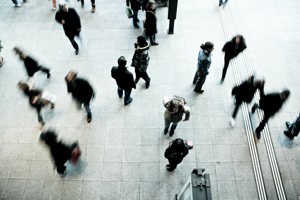
- Predicting your next movekunnskap-kristiania / 2021 / 09 / predicting-your-next-moveKNOWLEDGE @ KRISTIANIA: Human mobility Crowds of people being on the road characterize our cities. Commuting to work, strolling as a tourist through the city, or heading for a leisure activity are just a few of our daily movements. Human mobility, i.e. the movement of individuals and groups in space and time, is largely driven by our work, social relationships, and leisure activities. If we would observe the motions of crowds, human mobility may seem chaotic and random. However, our movements display a high level of regularity. To illustrate this, imagine drawing a line on a map connecting the origin and destination station each time you make a trip with public transport. Over time, a pattern would emerge showing that your travel patterns are quite homogenous. Thus, we frequent a selected number of destinations on a regular basis. Read Also: The Innovation Issue: Kunnskap Kristiania (Link to E-magazine) Human mobility has a strong impact on the societies we live in Using statistical and machine learning methods, we are able to predict the whereabouts of people in the future. This provides us not only with a better understanding of human mobility, but it also has a direct impact on urban planning, traffic forecasting, autonomous driving and epidemiologic modelling, amongst many others. For example, during a pandemic, we can assess and predict people’s mobility in response to movement restrictions, predict infection rates and evaluate the risk of local outbreaks. These insights can inform policymakers on necessary interventions as well as their future impact. While accurate predictions of events are very useful, they are sometimes difficult to achieve. Predicting human mobility is no exception. Human behavior is heterogeneous and depends on many variables - such as the social network - that need to be considered. Read also: Consumers expect brands to take a stance on key issues More competitive with the aid of artificial intelligence In contrast to the challenges of human mobility prediction, it is not difficult to predict that we are faced with major challenges in the future, such as the aging population, digitalization, and climate change. With applications of artificial intelligence, we can become more competitive and maintain our welfare which is threatened by these challenges. The European Commission's High-Level Expert Group on Artificial Intelligence (AI) defines artificial intelligence as “ systems [that] act in the physical or digital dimension by perceiving their environment, processing and interpreting information and deciding the best action(s) to take to achieve the given goal. Some AI systems can adapt their behaviour by analysing how the environment is affected by their previous actions”. Intelligent transport systems Recently, the Norwegian digitalization minister Nikolai Astrup launched a national strategy on artificial intelligence. The mobility and transport sector have a particularly strong standing in this national strategy on artificial intelligence. The advancement of intelligent transport systems and human mobility predictions have been named as two of the main pillars in advancing the mobility sector in Norway. The expansion of Internet of things-technology and access to anonymized metadata will further facilitate this ongoing endeavor. Together with an industrial partner, fluxLoop AS , and public transportation providers, Ruter and Nordland county council, Kristiania University College is contributing to the advancement of the transportation and mobility sector in Norway. As part of an interdisciplinary research project at the intersection of mobility and information-/communication technologies we are contributing with expertise to guide the development of new ticketing approaches and business models in public transport and well as improving human mobility predictions. The fundamental value of privacy Drawing on methods and applications in artificial intelligence one can harness the vastly increasing amount of data to reveal new insights on human mobility. Cellular network or GPS data processed on mobile phones is predominantly used for human mobility predictions. We work solely with anonymized data to hide and protect the identity of mobile phone users. In addition, exact locations information of mobile phone users never reaches the research environment but only rough information of a larger area a mobile phone user is in. Overall, the multitude of emerging possibilities of human mobility prediction for society, health, and economy cannot be left unused in the future. References: This article is based on a collaborative research project (“Be-insight”) between the Mobile Technology Lab at Kristiania University College and fluxLoop AS and is funded by the Norwegian Research Council for a period of two years. This article is first published in the Innovation Issue of Kunnskap Kristiania (link to E-Magazine), released on 19th of August 2021. Text: Postdoctor Malte Bieler, School of Economics, Innovation and Technology, Kristiania University College. Feedback: We would love to hear your opinion. Send your comments and questions regarding this article by E-mail to kunnskap@kristiania.no .
- Designing as the Motor of Changekunnskap-kristiania / 2022 / 09 / designing-as-the-motor-of-changeKNOWLEDGE @ KRISTIANIA: Innovation There was a time was when the academics lived and worked in an ivory tower and sought to understand the world. Questions that academia sought to find answers to were: What are we? What do we do? Why do we do what we do? Some ventured further and tried to predict what may happen when we do something. The gaining of wisdom for its own sake was valued, and even supported by society. The dominant paradigm was explanatory research. Time though, does not stand still. And as Bob Dylan sang, “The Times They Are a-Changin'”. In a reversal of the Chinese curse, we are blessed to live in exciting times. The demands on academia is not just to understand and predict, but to improve and change. As Professor emeritus Geoff Walsham of Cambridge University put it: our mission is to make a better world. Making a better world Simply put, academia has a duty to contribute to society by working to make it better. This is especially vital for applied fields like Information Systems. Certainly there are multiple paths to achieving this goal. In this piece, we focus on one path that is built on designing innovative Information Technology artifacts for improving society and help building a sustainable future. Academic research can make significant contributions through at least two ways; 1) Partnering with practitioners through using proactive research methods and 2) Designing innovative artifacts. Partnering with practitioners The first way is through using proactive research methods, such as Design Science Research (DSR) that create new prescriptive knowledge through designing systems . This knowledge can be abstracted to more general class of the artifacts that are developed. For example, design principles abstracted from a system based on Internet of Things (IoT) for agriculture can also be transferrable to other systems based on IoT. By focusing on real societal problems, academic research can contribute to society. A specific Design Science Research method is Action Design Research (ADR) where an innovative artifact is designed in an organization (or networks of organizations) and is implemented and evaluated in one stage called Build, Intervention and Evaluation. Action Design Research is not possible without partnering with practitioners. Designing innovative artifacts The second way is designing innovative artifacts per se. An effective way is to encourage masters students to do so in their theses. Design oriented theses not only solve real problems faced by organizations, but also help organizations learn to deal with implementing organizational changes that always accompany technological interventions. The two ways described above are intricately interlinked, but are not the same. Design refers to the application of synthetic and analytic processes to plan and create new objects, and is often thought of in the same breath as creativity or invention. Design Science Research on the other hand is a research method with the primary aim of creating new knowledge such as methods and processes for developing arftifacts. It can indeed result in the production of beautiful, useful, and better artifacts. The methods and traditions of Design Science Research are rooted in what the Nobel Laureate Herbert Simon calls the science of the artificial. It is fundamentally a problem solving research paradigm that studies IT artifacts that are created by humans. Action-oriented as well as explanatory research While we are calling for designing as the motor of change, it is not to denigrate the importance of research for understanding, explanining and predicting. There is a synergestic relationship between the action-oriented paradigm and the explanatory research paradigm. Design is not what Professor Sandeep Purao of Bentley University, USA, insightfully terms “atheoretical tinkering”. The knowledge base that informs design comes from explanation research. The efficacy of the artifacts developed by design research is evaluated using methods of explanation research, and the developed knowledge contributes to the knowledge base. We emphasize that design is not value-free. The axiology of designed artifacts need to be critically examined. Consider persuasive or nudging systems that are widely used in, for example, getting people to lead healthy lives or adopt environmentally-friendly habits. The same technology can be used to nudge people to be aggressive or to believe in conspiracy theories. Ultimately though, societal impact, innovation and change comes through action. As Greta Thunberg tellingly sums up “hope does not come from words, hope only comes from action”. References: Hevner, S. T. March, J, Park and S. Ram, “Design Science in Information Systems Research”, MIS Quarterly , Vol. 28, No. 1, pp. 75-105, March 2004 M.K. Sein, O. Henfridsson, S. Purao, M. Rossi and R. Lindgren “Action Design Research”, MIS Quarterly , 35(1), 37-56, March 2011 Herbert A. Simon, Sciences of the Artificial , third edition, MIT Press, 1996) About IDEAS Lab The mission of the IDEAS Lab (Innovation and Digitalization for Enterprises and Society Laboratory) at Kristiania University College is to increase the skills and awareness of students and the general public through offering courses in state-of-the-art technologies focusing on digitalization, sustainability, enterprise systems, and data analytics. The lab also provides an arena where business experts meet students and the public, and hold open seminars to discuss business and technology related issues, projects, and debates. The Lab provides free certification courses to students and the public, and provides free exams to students, and vastly discounted exams to the public with a symbolic fee. Examples of topic areas that the lab’s affiliated researchers conduct research on illustrate how cutting-edge technology is being explored to address important societal issues that is relevant for practice. One is Gamification: technology developed on the concept of games which can be applied to learning and training contexts. Another area is Persuasive technologies where researchers examine how technologies such as mixed reality (integrating types of virtual technology) can be leveraged to make individuals make healthy or sustainable choices. Lab Director: Professor Moutaz Haddara Web page: www.ideaslab.no We would love hearing from you: Send your comments and questions regarding this article by e-mail to kunnskap@kristiania.no .

- Age-shaming er en trussel for arbeidslivetkunnskap-kristiania / 2023 / 04 / age-shaming-er-en-trussel-for-arbeidsmiljoetKUNNSKAP KRISTIANIA: Aldersdiskriminering Når du hører om aldersdiskriminering, tenker du kanskje på urettferdig eller dårlig behandling av eldre i arbeidslivet. Det er ikke så rart, fordi det har vært mye oppmerksomhet rettet mot aldersdiskriminering av eldre og hvilke negative konsekvenser dette har. Samtidig viser forskning at også unge voksne, definert som mennesker i slutten av 20- og starten av 30-årene, opplever fordommer og negative holdninger knyttet til alder. Vi mener det er mye å hente dersom en ser på hvilke styrker og kompetanser som trengs i dagens arbeidsmarked – fremfor hvilken alder de ansatte bør ha. Age-shaming – å bli sett på som for ung Age-shaming innebærer at unge voksne opplever diskriminering og negative holdninger knyttet til alder. For eksempel at unge arbeidstakere betegnes som «for unge», med mindre erfaring og dermed også med mindre kompetanse til å løse arbeidsoppgavene sine. Disse holdningene og fordommene er ikke bare skadelige for individet som rammes, men for hele organisasjonen. Hva går vi glipp av i arbeidslivet hvis disse holdningene fortsetter å regjere uten at vi er bevisst på dem? Er det en fare for at det blir en selvoppfyllende profeti? Alder sier lite om kompetanse Vårt utgangspunkt er at alder sier svært lite om hvilke styrker og hvilken type kompetanse et menneske besitter. For hva er egentlig kompetanse, hva er styrker – henger dette sammen med alder? Kompetanse defineres som « evner og ferdigheter som er nødvendige for å nå et bestemt mål» og kan opparbeides gjennom blant annet erfaring og utdanning. Fagspesifikk kompetanse, sosial kompetanse og teknologisk kompetanse er ulike former for kompetanse. Hvilke kvaliteter trengs for å nå målet? For å kunne si om noen har høy eller lav kompetanse, må man starte med å se nærmere på oppgaven eller målet med oppgaven man skal løse. Lang erfaring kan i mange tilfeller føre til god kompetanse på et område, men tilsier ikke nødvendigvis riktig kompetanse for måloppnåelse. Når vi snakker om riktig kompetanse for måloppnåelse, spiller også et begrep som styrker inn. Styrker er underliggende kvaliteter som gir oss energi, bidrar til personlig utvikling og gir grunnlag for mestring. Eksempler på styrker er kreativitet, empati, samarbeid og effektivitet. Når vi bruker styrkene våre bidrar det til gode resultater og engasjement på arbeidsplassen. Det er gjort undersøkelser av sammenhengen mellom alder og styrker, eksempelvis alder og kreativitet. Det er ingen klar korrelasjon mellom alder og kreativitet. Selv om det for eksempel finnes studier som indikerer at eldre kan ha lavere digital kompetanse, er ikke dette nok til at en kan skjære alle over en kam, og si at alle eldre har lav digital kompetanse. Som vi argumenterte for innledningsvis, er det heller aktuelt å se på hvilke styrker og kompetanser som trengs i dagens arbeidsmarked – fremfor hvilken alder de ansatte bør ha. Går glipp av verdifull kompetanse Dagens arbeidsliv preges av endringspress og komplekse problemstillinger. Kreativitet, samarbeid, innovasjonsevne og problemløsningsevne anses som svært ettertraktete styrker og kompetanser for organisasjoner som skal løse de problemstillingene vi står overfor. Forskning viser også at innsats, utholdenhet og lidenskap er like viktig som IQ i mange sammenhenger. Det er lite som tyder på at disse evnene kan knyttes til alder. Derimot kan age shaming føre til at vi går glipp av verdifulle styrker og kompetanser vi gjerne skulle dratt nytte av i arbeidslivet. Selvoppfyllende profeti Vi vet at holdningene våre ofte påvirker adferden vår. Pygmalioneffekten, som også er kjent som «selvoppfyllende profeti», gir en forklaring på hvordan forventingene våre styrer hvordan vi opptrer og påvirker utfallet av hendelser. Dersom du har negative forventinger, påvirker det hva du legger merke til rundt deg, og bevisst eller ubevisst handler du deretter. La oss si at en senior i en organisasjon ser på en junior som mindre kompetent eller som lite kreativ. Da vil muligheten for at senioren lærer noe av junioren være dårligere, samtidig som junioren kan få negativ selvoppfattelse av egne evner. Det kan gjøre at junioren eksempelvis ikke tør å stille spørsmål, eller uttrykke egne meninger og ideer i frykt for å bli oppfattet som uvitende. Age-shaming er negativt for arbeidsmiljøet Lite hemmer organisasjoners og individers læringsprosess så mye som frykt. Og motsatt; hvis kulturen og arbeidsmiljøet er preget av psykologisk trygghet, noe som innebærer at individer opplever det som trygt å ta risiko for eksempel ved å stille spørsmål, være uenig og uttrykke egne meninger, vil det kunne fremme læring, innovasjon og et mangfold av perspektiver. Age shaming kan true arbeidsmiljøet og den psykologiske tryggheten fordi individer blir usikre på egen kompetanse, og derfor unngår å stille spørsmål og uttrykke sine meninger. For å lykkes med å møte de komplekse problemstillingene og endringspresset i organisasjoner, må vi få bukt med negative holdninger og fordommer knyttet til alder. Så hva kan vi gjøre for å håndtere, og forhåpentlig redusere, age shaming på arbeidsplassen? Tre tiltak mot age-shaming Vil vil løfte fram tre tiltak som kan bidra til å minske age shaming på arbeidsplassen: Vær bevisst egne holdninger Har du kanskje en kollega du opplever som «for ung»? Holdninger våre er tillært gjennom våre erfaringer og de påvirker hvordan vi opptrer i ulike situasjoner og hvordan vi møter andre mennesker. Hvis du er bevisst din holdning og i tillegg vet at alder og kompetanse ikke nødvendigvis hører sammen, har du mulighet til å lære noe og samarbeide godt med den «for unge» kollegaen din. Møt hverandre som deltakere gjennom dialog Den norske filosofen Hans Skjervheim bruker begrepene deltaker og tilskuer når han snakker om hvordan vi kan møte andre mennesker gjennom dialog. Ser du på den «for unge» kollegaen din som en deltaker, da er du åpen og nysgjerrig på vedkommedes meninger og retter oppmerksomheten mot dem. Du kan likevel ha egne meninger, som du inviterer kollegaen din til å være enig eller uenig i. Gjennom dialogen møter vi hverandre som likeverdige deltakere der alle har noe å lære av hverandre. Frem god læringsholdning Læringsholdning defineres som en prosess der man stiller spørsmål, reflekterer og stiller seg åpen for feedback. Dersom de ansatte i organisasjonen føler seg trygge til å gjøre dette, vil sannsynligheten for at de lærer mer av hverandre være til stede. Man kan fremme læringsholdning i et team eller i en organisasjon ved å stille spørsmål til hverandre og se hverandre som kompetente mennesker med ulike styrker og perspektiver. Du bør derfor være nysgjerrig på den unge kollegaen din sitt perspektiv. Alle har noe å lære av hverandre I et bærekraftig arbeidsliv bør vi etterstrebe å møte hverandre som likeverdige deltakere, med ulike styrker, kompetanse og erfaringer og kompetanser. Vi har alle noe å lære av andre som er ulike oss selv. Denne teksten er også publisert på forskning.no den 26. april 2023 under tittelen Age shaming er en trussel for arbeidsmiljøet , på Nettavisen den 29. april 2023 under samme tittel og i HR-magasinet den 23. mai 2023 under samme tittel . Vi vil gjerne høre fra deg! Send spørsmål og kommentarer til artikkelen på e-post til kunnskap@kristiania.no. Referanser Binnewies, C., Ohly, S., & Niessen, C. (2008). Age and creativity at work: The interplay between job resources, age and idea creativity. Journal of Managerial Psychology , 23 (4), 438-457. Brook, J., & Brewerton, P. (2016). Optimize Your Strengths: Use your leadership strengths to get the best out of you and your team . John Wiley & Sons. Collins, M. H., Hair, Jr, J. F., & Rocco, T. S. (2009). The older‐worker‐younger‐supervisor dyad: A test of the Reverse Pygmalion effect. Human resource development quarterly , 20 (1), 21-41. Duckworth, A. (2017). GRIT Lidenskapen og standhaftighetens kraft. Cappelen Damm. Littman-Ovadia, H., Lavy, S., & Boiman-Meshita, M. (2017). When theory and research collide: Examining correlates of signature strengths use at work. Journal of Happiness Studies , 18 , 527-548. Edmondson, A. (1999). Psychological safety and learning behavior in work teams. Administrative science quarterly , 44 (2), 350-383. OECD. (2005). The definition and selection of key competencies - Executive Summary, fra http://www.oecd.org/pisa/35070367.pdf. Raymer, M. , Reed, M. , Spiegel, M. & Purvanova, R. K. (2017). An Examination of Generational Stereotypes as a Path Towards Reverse Ageism. The Psychologist-Manager Journal, 20 (3), 148-175. doi: 10.1037/mgr0000057. Skjervheim, H. (1976) Deltakar og tilskodar og andre essays. Oslo: Johan Grundt Tanum Forlag. Weinert, F. E. (2001). Concept of competence: A conceptual clarification. In D. S. Rychen & L. H. Salganik (Eds.), Defining and selecting key competencies (pp. 45–65). Kirkland, WA: Hogrefe & Huber. World Economic Forum, V. (2020). The future of jobs report 2020. Retrieved from Geneva . Denne teksten er også publisert på forskning.no den 26. april 2023 under tittelen Age shaming er en trussel for arbeidsmiljøet og på Nettavisen den 29. april 2023 under samme tittel .

- Why we should not teach hacking to IT bachelor studentskunnskap-kristiania / 2023 / 09 / why-we-should-not-teach-hacking-to-it-bachelor-studentsSCIENCE NEWS FROM KRISTIANIA: Toktam Ramezanifarkhani on teaching cyber security A recurrent topic in many cybersecurity curriculums is an "Ethical Hacking" course, often introduced in the early years of a bachelor's program. Ethical hacking is a type of “hacking” by considering ethical rules. Introducing ethical hacking at an early stage of a bachelor program begs the question: How appropriate is it to introduce students to the hacking concept , especially at such an early stage? To answer briefly: Students at this stage lack fundamental knowledge and experience and might misunderstand ethics. Instead of promoting genuine ethical hacking, the course could end up encouraging a risky hacking mindset, and embolden them, resulting in unforeseen risks in the future . To discuss the question in more detail, let’s review the ethical hacking concept in cybersecurity and the study programs. There are various definitions for hacking and hackers. Here are some commonly accepted ones: Hacking refers to exploiting system vulnerabilities and compromising security controls to gain unauthorized or inappropriate access to a system’s resources. A hacker is a person who breaks into a system or network without authorization in order to destroy, steal sensitive data, or perform other malicious attacks. What is ethical hacking? Hackers are categorized on a spectrum, from white hat to black hat, based on their malicious intent and the ethical nature of their actions. Hackers are categorized on a spectrum, from white hat to black hat, based on their malicious intent and the ethical nature of their actions. Ethical hackers require an advanced understanding of software, hardware, computer systems, and networks. Additionally, they should possess intermediate to advanced expertise in Operating Systems (OS), databases, IoT, AI, cryptography, and security protocols. Bachelors in cybersecurity may on an “Ethical Hacking” course lack basic knowledge and maturity in the complicated area of information security . This may, unfortunately, open some unwanted gates in the near future . Hacking need s a special min dset Hacking needs a special mindset and experts continue to debate the definition of “ethics” . Ethical hackers are not necessarily employed in any organization or affiliated with hacktivist groups like Anonymous , they can potentially target any organization. Although they may report vulnerabilities to these organizations, the definition of "ethics" remains subjective. Human understanding of "ethics" is constantly evolving due to the nature of social development, a large number of social factors and human aspects in cybersecurity resulting in changes in security standards, rules and regulations. Ethics is and will be debatable Ethics is and will be debatable . Hacking and hackers ’ mindset is unique and could be acceptable for a specific and limited number of experts with maturity and knowledge. With a hacking mindset the hacker, the ethical hacker, must sit in a position against systems. U nfortunately, such a mindset can influence students ’ thinking, feelings, behavior and actions. Moreover, the number of bachelor students in cybersecurity is ever-increasing. And thus, growing the hacking mindset for these students who will graduate in the next years, can create a high risk . So, is there any suitable replacement for ethical hackers that can also grow the protective mindset? Ethical hackers and penetration testers Compared to the general perception of the ethical hacking concept, we have the concept of penetration test or pen-test and penetration testers , who play a distinct role. These professionals are specifically hired by organizations to probe and evaluate the system's security. P enetration testers’ objective is not just to pinpoint vulnerabilities , but also to devise strategies to thwart potential future attacks and risks . They then relay these insights back to the organization . The goal is to test, analyze , monitor , and revise the security features and implement robust security protocols in the organization . – What is the difference between "ethical hacking" and "penetration testing ” ? I asked a group of bachelor students in cybersecurity in a close communication in a gathering. – Hacking is c ool, the students answered . This is exactly what the educational system should not foster ! The mindsets behind "hacking" and "testing" differ significantly. While we aim to discourage the former, we actively seek to cultivate the latter. The mindsets behind "hacking" and "testing" differ significantly. While we aim to discourage the former, we actively seek to cultivate the latter. A significant distinction between "ethical hacking" and "penetration testing" lies in their core objectives : one focuses on " hacking ," while the other emphasizes " testing ". Each fosters its own mindset. Just a s the need for surgeons in societ ies will not be satisfied by teaching “ surgery ” in the first years of education , in cybersecurity, the need for experts in ethical hacking will not be satisfied by teaching such a course to the bachelor students who are not even ready to learn it . A nd a significant number of them might not pursue such competence in the future. Author: Toktam Ramezanifarkhani, Associate Professor, School of Economics, Innovation and Technology This opinion piece was first published at Khrono.no on the 23rd of September 2023 titled " Why we should not teach hacking to the IT students" References : Chang, L. Y. C., & Whitehead, J. (2022). What the Hack: Reconsidering Responses to Hacking. Asian Journal of Criminology , 1-14 . Del-Real, C., & Rodriguez Mesa, M. J. (2023). From black to white: the regulation of ethical hacking in Spain. Information & Communications Technology Law , 32 (2), 207-239. Hartley, R. D. (2015). Ethical hacking pedagogy: An analysis and overview of teaching students to hack. Journal of International Technology and Information Management , 24 (4), 6. Pradeep, I., & Sakthivel, G. (2021, March). Ethical hacking and penetration testing for securing us form Hackers. In Journal of Physics: Conference Series (Vol. 1831, No. 1, p. 012004). IOP Publishing. EC-Council, “EC-Council: penetration test”, “Ethical Hacker (CEH v11)”, EC-Council International Ltd. We love hearing from you: Send your comments and questions regarding this article by e-mail to kunnskap@kristiania.no .