Søk
Filtre
Filtre
Resultat
- Set-Theoretic Methodsstudieportal / hoyskolen-kristiania / doktorgradsniva / pit9210-3 / set-theoretic-methods
- Set-Theoretic Methodsstudieportal / hoyskolen-kristiania / doktorgradsniva / pit9210 / set-theoretic-methods
- VFX 1 Set Extensionsstudieportal / fagskolen-kristiania / fagskoleniva / vfx2100 / vfx-1-set-extensions
- Project Management at the Theatrekunnskap-kristiania / 2021 / 08 / project-management-at-the-theatreONGOING RESEARCH @ KRISTIANIA Creative industries To many in creative industries, the framework and vocabulary of project management seems unfamiliar to how they perceive their project-based work. Nonetheless they manage to develop and complete complex large-scale projects. The flexible and dynamic nature of project management in creative industries, along with an impressive ability to complete complex projects within set deadlines are under-researched and highlight the promise this field holds for the future of project management studies. Read also: Kunnskap Kristiania, the Innovation Issue (E-magazine) Increasing popularity From their roots in traditional organizational models of engineering and industrial mass production, a myriad of project management frameworks have emerged over the last few decades. Spearheaded by the software development industry, new and agile approaches to project management which emphasize creativity and flexibility, have been widely popularized and adapted in a wide range of industries, including creative industries. Despite their increasing popularity and usage however, knowledge about the appropriateness of project management philosophies in creative industries is limited. This is all the more surprising considering that this sector is considered to be one of the most established `industries’ when it comes to project-based, temporary organizational structures. Read also: Bak musikkbransjens glamorøse fasade (in Norwegian) Challenges Facing Creative Industries The increasing use of `project´ as a form of organization of work in both the private and public sector, also within creative industries, has made it possible to talk about a projectification of society. Some have gone so far as to suggest that short-term, project-based and contractual models of organization observed in the creative industries are harbingers of the next `new economy´ and could become the dominating organizational model for the broader, knowledge-based economy. Since the creative industry is highlighted as a rapidly growing part of international labor markets and play an increasing role for many countries' value creation and attractiveness, it is necessary to improve our understanding of how these organizational and leadership models work alongside the problems they face. The biggest challenge connected to the application of project methods and tools in the creative industries is the potential mismatch between using a streamlined and rigid approach of project management within the more flexible, creative industries. Project view on artistic production There is a need for more research exploring the contribution of the artistic, creative and explorer mindsets to project management. I will explore this field through a PhD and the research will be framed around the following key questions; How do the creative industries manage to complete large-scale, complex projects despite not necessarily identifying with project management terms and methodology? What elements of their practices can be understood to match with existing approaches and which, if any, represent entirely new ways of approaching the management of projects? To what extent can these insights be fruitfully applied to other project based work, both within and outside the creative industries? The project work form is important in the creative industry because all artistic production can be seen as a single project, be it a concert, a festival, a dance performance, a film or a theatre production. Read also: Skapte nye forbindelser mellom sang, dans og skuespill Characteristics of theatre projects To explore my key questions I intend to focus on the performing arts, in particular theatre productions (projects). They differs from other industries in having a variety of unique aspects which can provide important insights. Most theatrical producers and directors work with project management and planning in order to be able to coordinate everything. However, even though they use models for project context, they don´t necessarily identify with project management terms and methodology. The history of theatre is much longer than the comparatively short history of modern project management and during this long tradition a set of successful routines emerged which, consequently, could be considered as models for project contexts outside of theatre. While theatre productions exhibit a strong focus on human, creative and aesthetic aspects, they also involve other activities that are similar to more standard project management functions. Managerial personnel in a theatre operation must manage a complex of interrelated processes to ensure that crucial activities are completed on time. During the project, manuscripts are finished, teams are designed, scene construction and costumes developed, plans for rehearsal processes are made, plays and music are rehearsed. In parallel to these activities, the upcoming play is marketed and tasks related to economy, work conditions and stake-holders among others. An interesting aspect of theatre work is the common goal; the premiere. The completion of the project (production of the play) is subject to perhaps an even more critical deadline than projects managed in other industries, for example construction. It is very rare to hear about postponing or delaying a play in theatre, an interesting and possibly useful aspect that could be applied to other industries. Together, these unique characteristics highlight how the performing arts provide a rich and under-researched setting for new approaches and insights in the field of project management. References: Jones, Candanse, Mark Lorenzen, and Jonathan Sapsed. 2017. The Oxford Handbook of Creative Industries. Oxford: Oxford University Press. Petrović, Dejan, Vesna Milićević, and Adam Sofrinijević. 2017. “Application of project management in creative industry”. European Project Management Journal 7 (2): 59-66. Pielichaty, Hanya, Georgiana Els, Ian Reed, and Vanessa Mawer. 2017. Events project management. Adingdon: Routledge. This popular article presents higlights form a research proposal on Project management and creative industries in the era of projectification. This article is first published in Kunnskap Kristiania, The Innovation Issue (link to E-magazine) released on August 19, 2021. Text: Assistant professor Silje Straume, School of Arts, Design and Media, Kristiania University College. We love hearing from you: Send your comments and questions regarding this article by E-mail to kunnskap@kristiania.no .

- Går inn for å styrke anerkjent reklamebyråfor-studenter / karriere / gar-inn-for-a-styrke-anerkjent-reklamebyraMjau! Fra venstre: Michael Solbakken og Ed Raison Michael tok en fagskoleutdanning i reklame og merkekommuniksajon , før han fikk jobb som tekstforfatter og regissør i Norges eldste og største radioproduksjonsbyrå Både Og . Nå, fire år senere, skal han begynne på nye eventyr som videojournalist hos Kitchen. Ed kommer fersk fra studier med en bachelorgrad i film og TV som han fullførte i vår. Ved siden av studiene har han jobbet med en rekke prosjekter; der han blant annet har produsert, filmet og spilt i Humornieu-nettserien «Funnier Down Under» . Head of content i Kitchen , Maria Egeland, forteller til Kampanje at de ser et økende behov for videoproduksjon blant alle deres eksisterende kunder. Michael og Ed går nå inn for å styrke Kitchens muskler i en bransje hvor kundene etterspør mer og mer video, skriver Kampanje . Svært attraktive for stillingene Ed fikk en telefon fra en god venn som tipset han om stillingen. Han tok kontakt med Kitchen, og noen dager senere fant han seg selv på et intervju. – Intervjuet slo jeg «out of the park» og de hadde ingen andre valg enn å ansatte meg post haste, forteller Ed med en humoristisk tone. Michael opplevde mye av det samme som Ed. – Jeg fikk tips om at Kitchen så etter noen som meg. Så jeg søkte på stillingen, fikk intervju og skjønte at her må jeg jobbe. Heldigvis tenkte de det samme om meg. Michael Solbakken Kitchen fikk inn mellom 60 og 70 søknader på stillingen Michael nå besitter. – Da vi kom over Michael sin søknad, så tenkte vi at han her må vi ha. Han imponerte oss med casene sine, og sin forståelse for kundenes behov, forteller Maria Egeland til Kampanje . Da vi kom over Michael sin søknad, så tenkte vi at han her må vi ha. ↳ Maria Egeland, Head of content, Kitchen Relevant utdannelse Ed forteller at hans tre år på film og TV har vært en bra start på arbeidslivet. – Studiet var veldig relevant, der jeg har klart å bygge en grunnleggende forståelse innenfor mange forskjellige områder. Nå skal Ed få bryne seg som klipper i Kitchen, der han skal få bruke sine ferdigheter til å utvikle aktuelt og berikende innhold til web, sosiale medier og TV. – Slik jeg forstår det blir det også muligheter for meg å jobbe i mange andre fagfunksjoner på ulike oppdrag, forklarer Ed. Ed Raison Michael forteller at de to årene han hadde på fagskolestudiet i reklame og merkekommunikasjon er fundamentet for hvor han er i dag. – Jeg har var aldri noe særlig på å lære gjennom bøker og prøver. Jeg må lære gjennom å gjøre og det fikk vi på fagskolen, der ble jeg faktisk forberedt på hverdagen i reklamebransjen. På fagskolen ble jeg faktisk forberedt på hverdagen i reklamebransjen. Michael kan og fortelle at han tror bransjen vil trenge flere med et spredt kompetanseområde. – Det jeg tror byråene ser etter er engasjerte kreatører som har et ønske om å skape, og jo flere verktøy du kan desto flere flater kan de ende opp med å utfolde deg i. Del dette: Email
- New clinical study: Fatigue in breast cancer survivors - is acupuncture a treatment option?forskning / forskningssamarbeid / acubreast / 2020 / new-clinical-study-fatigue-in-breast-cancer-survivors---is-acupuncture-a-treatment-optionThe study is a multi-center pragmatic randomized, controlled trial with two parallel arms assessing the effectiveness, cost-effectiveness and safety of acupuncture for breast cancer survivors suffering from fatigue. The two arms are: Acupuncture plus usual care and usual care alone. The intention is to test acupuncture as a complete treatment package i.e. the overall effect of acupuncture-care, which is highly relevant to breast cancer survivors experiencing CRF. Pragmatic trials also ensure that the sorts of interventions tested can be plausibly rolled out in clinical practice and that the outcomes used to assess effectiveness are valid and easily understood by a range of users, including clinicians, patients, policy makers, and health commissioners. As such, a pragmatic trial will help users to choose between options for care. 250 women will be randomized into two groups. One group receives 10-12 acupuncture treatments once or twice weekly from an acupuncturist trained with a Bachelor of Acupuncture from Kristiania University College. The acupuncture treatment is free for the participants. The other group (the control group) receives no treatment during the study. Participants in the control group cannot receive acupuncture treatment or other treatments for fatigue during the study period. However, all participants in the study can take their own actions such as exercising, meditating or changing their diet. All measures of this nature will be registered. All participants will complete a set of questionnaires at the start of the study, after completion of treatment or after 12 weeks for the control group and after six months. Further, any medical care received during the study period will be documented. This includes life styles advice, and to which point they have followed such advices. All participants will receive written information when the study results are available. The three-year study will also record changes in quality of life, anxiety and depression, number of hot flashes during day and sleep - all factors researchers believe may affect fatigue. Who can participate? We will be recruiting breast cancer survivors who have completed their cancer treatment. Women aged 18 years or older will be eligible for the study. Further, to secure a homogeneous group, participants must be on adjuvant medical treatment with anti-estrogens. In order to participate in the study potential participants cannot be using blood-thinning medicine, undergoing treatment for anemia, undergoing palliative care, have been diagnosed with fatigue prior to cancer diagnosis, or are already receiving acupuncture treatment. Further, participants who are pregnant at baseline or planning to get pregnant within the treatment period will be excluded. Potential participants who are unable to understand, speak, or who find it difficult to communicate in Norwegian will be excluded from the study. A sufficient knowledge of Norwegian is necessary for communicating with the acupuncturist and for understanding and filling in all the Norwegian questionnaires within the study. Potential and willing participants please contact the Kristiania University College for a screening telephone interview. Interested in participating in the study? Contact: Mona Solberg Research Coordinator AcuBreast Kristiania University College, School of Health and Science mona.solberg@kristiania.no Do you have any questions about the study? Contact: Professor Terje Alræk Project Manager AcuBreast Kristiania University College, School of Health Science M +47 478 80 170 terje.alraek@kristiania.no The AcuBreast study is funded by Rosa sløyfe, a collaboration between The Norwegian Cancer Society (NCS) and Norwegian Breast Cancer Society. AcuBreast is a research collaboration between researchers in Kristiania University College, University of Bergen, University of York (England), Korean Institute of Oriental Medicine (Korea), Zakim Center for Integrative Therapies Dana-Farber Cancer Institute (Boston, USA) and Integrative Medicine Service, Memorial Sloan Kettering Cancer Center (New York, USA).

- Application form for EU/EEA/Swiss applicantssoknad / international-applicantsAdmission for 2026 is open* If you have a Norwegian Social Security number, you must apply in our regular application portal . *Please note that the deadline for submitting an application for non-EU/EEA applicants who needs a study permit in order to study in Norway was February 15th. Application registrations received after this deadline will not be processed. If you have any questions regarding your application, please contact admission@kristiania.no by e-mail.
- Making your knowledge more impactfulkunnskap-kristiania / 2020 / 09 / making-your-knowledge-more-impactfulKNOWLEDGE & KRISTIANIA: Science in Society New research does not create value for society before it is translated into innovative new practice. This can take the form of better decisions, better policies, smarter ways of doing things, or new products and services. Universities, university colleges and other research institutions are doing a lot of great work spreading the results of research and making it known to a wider audience. Researchers are trained in writing and communicating their research in a language that newspaper readers can understand. This training provides visible results in the form of feature articles, editorials and media coverage, mostly in traditional media. At the same time, the Research Councils in Europe works with universities to ensure that everyone has free, open access to research. Read also: The Power of a Story From research to better practice If research is to be incorporated into existing practice, it is necessary that research is readily understood and accessible. Unfortunately, that is not enough. Research must also be communicated in a way that it is perceived as relevant and interesting to those who can put the knowledge into practice. If new research is to contribute to a better way of doing things, traditional one-way research communication from researchers and institutions must be supplemented with two-way and multi-way research communication . The word communication comes from the Latin, communicare , which means «to make something common». If we are to succeed in making something common, we must draw those who can apply the knowledge into both dialogue about the research as well as participating and looking for possible practical applications of the research. It is not enough just to publish research results. Read also: Ti nøkler til å løse skrivekoden (in Norwegian) Strategic tool for putting research into practice Science communication can be a strategic tool for making research both understandable, relevant and interesting for those who can use the knowledge. The goal of effective science communication is to contribute to making a better society, not only getting as much publicity as possible in traditional and online media. Publicity still has its value, but as an indirect channel to those who can actually put the knowledge into practice. In recent years, the UK has changed its funding model for research. As much as a one-fourth (25 percent) of basic grants for research depend on the institution being able to prove that outstanding research at the institution has resulted in concrete changes in society, so-called «impact». Here in Norway as well, talk is increasing that we must become better at translating new research-based knowledge into better practice. So far, there has been more talk than concrete action. What can researchers do to contribute to new research-based knowledge being translated into a better way of doing things? Eight pathways to Impact May I be so bold as to suggest eight ways researchers can change the world for the better, at least a little. Talk about your research when starting new projects and request input. Traditionally, we have looked at research and dissemination as two isolated activities. First, research must be peer reviewed through scientific journals. Then through public outreach we can spread the results and hope something happens. Alternatively, we can imagine science communication as an integral part of the research process. This perspective can for example lead to inviting practitioners to provide input that can improve the research and make it more relevant. You will also build a network among whom you can share results. Give advice on research applications. Don’t settle for just publishing results. Point out the possible practical implications of the study. What can your research be used for? Give practitioners advice on the possible applications of the research. Arrange and attend physical and digital gatherings between researchers and those who can apply the knowledge. New ideas and applications are often born in personal discussions between researchers and those who can put the knowledge into practice. Invite practitioners to suggest topics for breakfast meetings or other types of gatherings. Then the programme can provide research-based answers to the challenges experienced by the practitioners. Set aside plenty of time for discussion. Establish a network of practitioners. In order to increase the chance of new knowledge being translated into better practice, make it a habit to involve those who can benefit from your research. Share and talk about your research in social media. You build a professional, digital identity through blogging and sharing your knowledge on LinkedIn, Twitter and Facebook. If you regularly share knowledge, these pages will rank high on Google. When managers, politicians, journalists, those funding research, students and anyone else is searching for answers for what they are wondering about, you increase the chances of your expertise being discovered. Through social media, you can also communicate with those who can put your knowledge into practice. Creative multi-use gives you increased impact. If you have had a feature article published or written a good article communicating your research, you can use the same content in different genres among various channels aimed at different target groups with just a bit of adaptation. A feature article can also be posted on your blog and shared in other social media. You can bring up the topic in a breakfast meeting. You can make a podcast, post a video on YouTube, or you can make an educational game. Offer courses and seminars to translate knowledge into better practice. The Learning Environment Centre at the University of Stavanger, for example, offers a comprehensive programme of courses for schools and day-care centres that gives advice on how research and experience-based knowledge can bring about a better learning environment. Tell good stories. What can we learn from them? Find examples of how research is put into practice. What was done so this was able to happen? What can we learn from these success stories? Do you have other examples and ideas on how we can make Science more impactful? Looking forward to hearing from you. References: Farbrot, Audun (2013): Forskningskommunikasjon. Praktisk håndbok for forskere og kommunikasjonsrådgivere. Cappelen Damm Akademisk. This article is published as a blogpost in Audun Farbrots blog Forskningskommunikasjon on 20 January 2020 . Text: Audun Farbrot, Head of Science Communication and Impact at Kristiania University College. Photo: Making knowledge more impactful. Illustration Photo by ThisisEngineering RAEng on Unsplash.
- Gamification for Innovationkunnskap-kristiania / 2022 / 04 / gamification-for-innovationKNOWLEDGE @ KRISTIANIA: Innovation The quest for innovation has more competitors than ever. The entrance of Netflix disrupted the DVD rental industry with such force that Blockbuster closed their business for good. The German pharmacy-chain Schlecker filed for bankruptcy after being ousted by the new no-frills retail approach. Apple’s rise led to the fall of Nokia - the plethora of examples goes on. The tales of demise are all different; some were a result of product innovation, a selection was a consequence of pricing innovation, others fell due to business model innovation. In order to be safe from defeat, organizations cannot merely innovate parts of their business; innovation must permeate the whole operation end-to-end. What is Gamification? Innovation literature widely agrees that while there are several tools available for elevating innovation activities within a business, however there is a lack of specification as to how gamification can be used for enterprise or process innovation. This article seeks to present the current arguments in research addressing the potential of creating innovation-fostering environments in businesses through gamification techniques. Our main findings suggest that gamification techniques have the potential to create a bridge between the sociological and technical aspects within enterprises’ culture. While the concept of it is not new, the term “Gamification” has recently started to receive attention, and this attention is bringing along promising opportunities. Zichermann & Cunningham (2011) define gamification as the process of using game-thinking and gaming elements and mechanics to involve audiences and solve problems. In a nutshell, it is the use of game-mechanics in a non-gaming context. Game elements and mechanics may involve tasks and challenges, leaderboards, points and XPs, statuses, rewards, levels, among others. Why Gamification is a big thing? People love to play, challenge others, be good at things, and have fun! Thus, there is no surprise in knowing that the global gaming market size is around 2.69 billion gamers , and was valued at USD 173.70 billion in 2020, and it is expected to reach a value of USD 314.40 billion by 2026, registering a compound annual growth rate of 9.64% over 2021-2026. According to International Data Corporation (IDC) data, the videogame industry is a bigger moneymaker than the global movie and North American sports industries combined. That’s one of the reasons that pushed NETFLIX to introduce its own gaming platform in November 2021 for free for its members, to probably attract gamers to register for memberships. Based on statistics published by the Entertainment Software Association, over 65% American households play games, with the average age being 35 years old, and almost evenly split on both female and male players, and ca. 65% of gamers like to play with others. Gaming in a non-gaming context How can we translate this dedication to gaming in a non-gaming context? In our case; the different enterprise systems in organizations. Enter gamification, which is a tool to increase engagement from employees at work, by utilizing design principles from gaming. Gamification has had a surge of popularity in the information systems (IS) field, and there has been a push in using these concepts in enterprise systems. Reasons for the rising popularity is theorized to be due to cheaper technology and the success and prevalence of the game medium. Potential of Gamification for Organizations The enterprise gamification and innovation blending are largely unexplored. Arguably due to the fact that gamification is still in its infancy. In general, manifesting the concepts of gamification into technical features is a complex task, and it is rational to start with the more straightforward dimensions of gamification whilst exploring the concept. This is usually referred to as the front-end of gamification; user engagement and motivation. Still, the secondary effects of gamification, or the back-end of it, do indeed carry an untapped potential. This is an opportunity for organizations to gain a first-mover advantage. Pioneers in the application and use of the back-end of gamification can gain a competitive edge in their existing business models. The loud absence of understanding these potentials also presents an opportunity to gain and sell such expertise as a service to businesses. Much like Amazon started selling expertise in server hosting as a service after they succeeded with their initial business model, which focused solely on online book retailing. Key ingredients to innovation Games are built upon engagement and imagination, which are key ingredients to innovation. Hence, gamification in enterprise resource planning (ERP) systems can be a promising solution to the flexibility versus control issue in innovation. ERP systems allow businesses to have control and knowledge of their current business processes whilst keeping them integrated. Introducing gamification elements in the business through ERP systems can add innovation-fostering characteristics to those processes. If done in a conscious manner, this can potentially set in motion a culture allowing for more natural and continual innovation of a product or service, price model, business processes, business model and everything in between. Gamification applications in a business setting One of the most important aspects of gamification is the fact that it happens outside a well-defined space. Businesses that let themselves be inspired by this can incorporate the same trait to their innovation activities. It presents an opportunity to allow for exploration and idea-generation processes for other parts of the business than only the R&D departments. The key factors in relation to improving the gamification design processes revolves around improved ideation and prototyping, facilitating learning opportunities, using more meaningful design features, and most relevantly, developing innovative mechanics. However, as the current research confirms, to be innovative or to create an innovative environment is hard to make feasible. The guidelines and principles mostly refer to ensuring the presence of abstract traits like flexibility, freedom, exploration etc. Gamification theory aims towards achieving much of the same traits in the process of creating games. Further research should therefore try and test whether these gamification practices are applicable to business processes. The amount of studies attempting to pinpoint models that can aid in gamification applications in business setting, demonstrate the need to make business models more feasible and applicable. IDEAS Lab at Kristiania University College: The Innovation & Digitalization for Businesses And Society Laboratory (IDEAS Lab) at Høyskolen Kristiania focuses on Innovation research in general, and Gamification applications in specific. For more info visit www.ideaslab.no . References: Humlung, O., & Haddara, M. (2019). The hero’s journey to innovation: gamification in enterprise systems. Procedia Computer Science, 164, 86-95.98) Algashami, A., Vuillier, L., Alrobai, A., Phalp, K., & Ali, R. (2019). Gamification risks to enterprise teamwork: taxonomy, management strategies and modalities of application. Systems, 7(1), 9. Zichermann, G., & Cunningham, C. (2011). Gamification by design: Implementing game mechanics in web and mobile apps. " O'Reilly Media, Inc.". This popular research article is first published in the Future Issue of Kunnskap Kristiania 2022-03 . The article is an edited excerpt from Humlung, O., & Haddara, M. (2019). The hero’s journey to innovation: gamification in enterprise systems. Procedia Computer Science, 164, 86-95.98) Text: Oda Humlung, MSc Information Systems, and professor Moutaz Haddara, School of Economics, Innovation and Technology . Haddara is director of IDEAS Lab at Kristiania. We love hearing from you: Send your comments and questions regarding this article by E-mail to kunnskap@kristiania.no .
- In the future, being around other people may prolong the lifetime of your smartphone’s batterykunnskap-kristiania / 2022 / 08 / in-the-future-being-around-other-people-may-prolong-the-lifetime-of-your-smartphones-batteryKNOWLEDGE @ KRISTIANIA: Technolgy Today, smartphones are used to aid and improve all kinds of tasks in almost all aspects of daily life. Smartphones, however, are generally considered fairly resource constrained and their available power is the most constrained resource of all— without power the smartphone won’t function. Not surprisingly, battery life has been identified as one of the most desired features of mobile devices. A possible solution For the purpose of improving battery life in settings where users are co-located, we conducted a study to measure the impact on the consumed smartphone energy when data were collected in a distributed manner. This means that every device shared the same data as opposed to every device collecting its own sensor data. The results indicated that a shared distributed collection imposed less energy consumption than traditional approaches. By opportunistically connecting to and sharing common computations with nearby smartphones, co-located users can compute tasks as ‘one entity’. The result of the computations done collectively is then available for all nearby devices and ensures that no computation is done more than once. A more seamless travel experience Let’s take an example of a near-future public transport application, taking advantage of the Be-in/Be-out paradigm. Be-in/Be-out is about enabling user’s of public transport to enter and leave vehicles without having to do any explicit action— a seamless, ticket free travel experience. In order to achieve this, heavy local computations are needed in order to estimate or verify if a user is actually on a public transport vehicle, which vehicle and how long the journey is, in order to achieve accurate ticketing. The Be-in/Be-out scenario in public transport, is a very relevant scenario which we are currently researching through a joint research effort between fluxLoop, Kristiania University College and other public transport operators such as Nordland Fylkeskommune and Ruter. Devices sharing the same data In scenarios such as this, the smartphones of embarking and disembarking travelers can collaborate as one entity in order to calculate whether travelers are embarking, disembarking and which mode of transport the travelers are in. Near-future public transport solutions are examples where opportunistic collaboration could prove beneficial. However, this approach could also be employed in any kind of scenario where devices are co-located and ambient sensor information needs to be collected and processed. Cloud solutions are not necessarily the best solutions The last couple of years, in order to combat the resource scarceness of mobile phones, many applications send heavy computation to the cloud for processing and the result is then returned to the device. This can significantly lower the resource consumption of mobile phones and contribute to a longer lasting battery. At the same time, the concept of the Internet of Things (IoT) has emerged which has led to a drastic increase in connected devices. This, in turn, leads to elevated network traffic which potentially can cause latency and a heightened load on servers worldwide. Not only does this affect the internet backbone and the service providers, but an increase in network usage from mobile devices might also incur added cost for the end-user. In addition, by sending data to the cloud it brings an added risk to security and introduces new attack vectors. Data can be intercepted on the way, or malicious employees working at the service provider can access and steal your data. More processing on device may increase the security of mobile solutions Security concerns, in combination with better hardware and more efficient algorithms has led to the computations again being moved back to the users’ devices. However, the issue of available power on mobile devices still persists. This is quite the predicament! On one hand you have a significant reduction in energy consumption on the user’s device and on the other you have a significant increase in network load and additional security concerns. It is currently hard to deal with all these issues, however, on-device processing and opportunistic collaboration can help mitigate security issues to some extent. A way to reduce energy consumption It is difficult to say exactly which calculations are needed for different solutions in the future. However, for scenarios where multiple devices need to do the same calculations within the same context, collaborating on the computation is a viable approach. Through opportunistic collaboration it is possible to reduce energy consumption, while simultaneously keeping network traffic at a minimum. In the future this solution might contribute to a more seamless travel experience with fairer pricing schemes and hopefully— once implemented, the travelers won’t notice a significant change in their device’s power consumption due to distributed work collaboration. Referanser: Skretting and T.-M. Grønli, "Distributed Sensor Data Collection Using Mobile Clouds for Public Transportation," in IEEE 17th International Conference on Intelligent Computer Communication and Processing, 2021. Ma, Y. Zhao, L. Zhang, H. Wang and L. Peng, "When mobile terminals meet the cloud: computation offloading as the bridge," in IEEE Network, vol. 27, no. 5, pp. 28-33, September-October 2013, doi: 10.1109/MNET.2013.6616112. Text: PHD-candidate Anders Skretting, School of Economics, Innovation and Technology. Anders.Skretting@kristiania.no

- Tidligere student i ny norsk storfilmaktuelt / 2017 / 12 / tidligere-student-i-ny-norsk-storfilmTidligere Skuespillstudent Ole Victor Corral i rollen som Magnus Kvalvik i ny norsk storfilm. Hei Ole! Gratulerer med rolle, hvem spiller du i filmen? – Jeg spiller Magnus Kvalvik, en av de 12 Bratholmgutta fra Kompani Linge som ble sendt til Troms for å sabotere tyske fartøy. En ganske badass fyr for å si det sånn. Han ble henrettet av tyskere i 1943 etter at en operasjon gikk skeis. (Ja, jeg dør på film). Hvordan fikk du den rollen? – Jeg gjorde en kortfilm som heter «Satelitter» med en veldig flink, ung regissør som heter Håkon Olavsen som ble vist på Cinemateket. I salen satt selveste Petter Holmsen, regiassistenten til Harald Zwart og så på. Han likte det han så og ville ha meg inn for en audition, men det var faktisk for en av de andre rollene. Så jeg gikk inn, spilte så tårene rant, fikk stående applaus (i hodet mitt) også hørte jeg ikke noe mer fra dem på ca. tre måneder. Jeg trodde jo de hadde glemt meg, men så fikk jeg plutselig en telefon av Petter. Han sa “Beklager Ole, vi gav rollen din til en annen, men hvis du vil spille Magnus, så er rollen din”. Selvfølgelig takket jeg ja! Jeg har sikkert 15-20 kortfilmer på dataen min som jeg har laget med flinke folk som går på skolen, og tro meg, det har hjulpet utrolig med å være trygg på set. Jeg har sikkert 15-20 kortfilmer på dataen min som jeg har laget med flinke folk som går på skolen, og tro meg, det har hjulpet utrolig med å være trygg på set. Hva lærte du av å være med på en så stor produksjon? – Dette er den største produksjonen jeg har vært med på, og jeg var jo bare en liten brikke i hele opplegget, så det jeg lærte mest av var å være «på» hele tiden. De har ikke tid eller mannskap til å passe på alle hele tiden så man må være litt proaktiv og forberedt på hva som kommer til å skje resten av dagen, ligge ett steg foran, forteller Ole Victor. – Når det er sagt – og her kommer det litt skryt av høyskolen – så har Skuespill-utdanningen rusta meg godt ved å ha en så god og talentfull Film og TV-utdanning som jeg har jobbet sammen med siden første klasse. Jeg har sikkert 15-20 kortfilmer på dataen min som jeg har laget med flinke folk som går på skolen, og tro meg, det har hjulpet utrolig med å være trygg på et set. Fordi uansett hvor stort settet er, så er det veldig likt det vi gjør på skolen! Du har innspillingslederen som fyker rundt og roper klokkeslett, lydmannen som skal under skjorta di, lysmannen som setter lyset. Så alt det var jeg allerede ganske rutinert på. Så ja, takk til Westerdals! (Skolens tidligere navn, red.anm.) Hvordan var overgangen fra skolehverdagen til en filmjobb i bransjen? Overgangen gikk bra. Jeg prøvde å ta det rolig og ikke bli opphengt i at det var jobb. Det har ikke så mye å si om det er film eller teater, eller skole eller jobb. Pluss at de som jobba der var så hyggelige og flinke folk, så det var lett å kose seg! Lærte du noe nytt? – Jeg lærte at denne bransjen er en maraton, ikke en sprint. Du hører om skuespillere som plutselig får en stor rolle i en film eller tv-serie for så å bli «kjendis over natta». Men man hører sjelden om all jobben de gjorde før de kom til det punktet. All øvingen, puggingen, skrivingen. Å være i miljøet, å bli sett og hørt og håper på at noen ser deg, samtidig som du har en heltidsjobb ved siden av for å betale leia. Hvis man prøver å sprinte til målstreken i denne bransjen tror jeg man fort kan bli skuffa. Ikke forvent at telefonen skal ringe bare fordi du gjorde en god jobb. Det er for mange om beinet rett og slett, så hold deg heller aktiv så vil det skje noe etterhvert, forsikrer Ole Victor. Hvor annerledes er det å spille i en flerkameraproduksjon versus å spille på en teaterscene? – Hvis du tenker på klassisk teater, så spiller man jo fortsatt realisme, men likevel er det en litt annerledes spillestil. I film må man kutte den avstanden man har til publikum og gjøre det mer «personlig» med den du spiller med. – I teater må man passe på at publikum ser deg ved å ikke vende ryggen til hele tiden, og du må heve stemmen din sånn at publikum hører deg. I film må du absolutt ignorere alt og alle som ikke er med i scenen og være litt mer egoistisk. Men det er jo mange likhetstrekk også. Det viktigste av alt er å ikke la andre fortelle deg hva du skal gjøre i scenen. Ta det regissøren sier som et forslag, men det er du som må eie det, det er du som må forstå det og ha et forhold til det. – Så tør å lede. Ta plass. Ikke vent på at alle skal fortelle deg hva du skal gjøre. Dette gjelder spesielt for filmproduksjoner hvor du får tilsendt en manus på forhånd, men ikke møter crewet før første innspillingsdag. Da er det viktig at du har gjort opp noen ideer i hodet ditt, avslutter Ole Victor. Filmplakat for «Den 12. mann». Håkon T. Nilsen fra klassen under Ole Victor var også med i filmen som en av de 12. mennene. Håkon hadde også en av hovedrollene når høyskolen satt opp stykket «Ifigenia i Aulis» i 2017.
- Graduation ceremony 2026om-kristiania / kalender / graduation-ceremony-2026School of Economics, Innovation and Technology, Master students
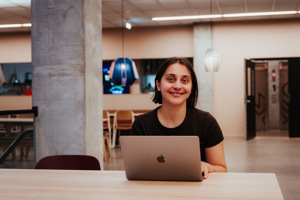
- Reklame og kreativ kommunikasjon - fullfinansiertstudier / fagskole / reklame-og-kreativ-kommunikasjon---fullfinansiertNøkkelinformasjon Hva lærer du? På Reklame og kreativ kommunikasjon jobber du praktisk og kreativt fra første studiedag. Gjennom utdanningen lærer du å anvende ulike dramaturgiske, språklige og visuelle virkemidler for å lage kreativ kommunikasjon til ulike målgrupper og kanaler. I løpet av studiet lærer du blant annet om: Kreative prosesser og metoder Konseptutvikling og idéarbeid Brukerinnsikt og markedsanalyse Digital innholdsproduksjon Visuell kommunikasjon og art direction Kreativ skriving og tekstforfatting Studiemodell Denne fagskoleutdanningen går over to studieår, og hvert studieår er delt opp i to semestre. Her ser du en oversikt over obligatoriske emner og hvilke muligheter du har for praksis og spesialisering. Vi tar forbehold om endringer. Hva kan du bli? Med en toårig fagskoleutdanning i Reklame og kreativ kommunikasjon, har du mange spennende karrieremuligheter. Du kan blant annet søke jobb i reklame- og kommunikasjonsbyrå, mediehus eller markedsavdelinger i privat og offentlig sektor. Du kan også starte eget selskap og jobbe som frilanser. Våre tidligere studenter jobber i kjente selskaper som: Møt familjøet Vår fagstab Reklame og kreativ kommunikasjon har et bredt og solid fagmiljø. Flere av lærerne jobber i bransjen og har et stort nettverk. Disse kontaktene benytter de inn i undervisningen for å gjøre den relevant og engasjerende. Gjennom studiet får vi jevnlig besøk fra kunder og kreative byråer som presenterer caser eller kundeoppdrag. Møt fagansvarlig På reklamestudiet kan du se frem til en variert studiehverdag. Som student hos oss får du være tett på bransjen, jobbe med arbeidslivsrelevante prosjekter og ha en nær dialog med lærere og medstudenter. Slik er søknadsprosessen Her finner du viktig informasjon om søknadsprosessen og hvordan du best kan forberede deg til studiestart. For å søke Viktige frister Dokumentasjonsfristen er lik akseptfristen som du mottar i tilbudet fra oss. For å sikre deg studieplass, må du laste opp nødvendig dokumentasjon og signere studiekontrakten innen akseptfristen. Selv om vi har mottatt bekreftelse fra skolen din om at du går siste året på videregående, må du i tillegg laste opp vitnemålet når du mottar dette i slutten av semesteret. Slik søker du Etter du har søkt på kristiania.no må du gå inn på Mitt Kristiania og laste opp dokumentasjon. Det er først når du har mottatt bekreftelse på at dokumentasjonen er godkjent, at du er sikret en plass. Dersom du fullfører videregående eller fagbrev/svennebrev denne våren, må du søke og så laste opp dokumentasjon fra skolen din som bekrefter dette. NB! Vi har et begrenset antall fullfinansierte studieplasser – vi anbefaler derfor å søke så raskt som mulig. Behandlingstid Dette studieprogrammet har rullerende opptak, men med begrenset antall studieplasser. Etter du har søkt vil motta en betinget studiekontrakt med en frist for å laste opp dokumentasjon på at opptakskravene er oppfylt. Fristen avhenger av når du søkte. Opptaket vil stenge når studieprogrammet er fullt. Om ikke opptakskravene er dokumentert innen fristen, risikerer du å miste plassen. Når du har fått studieplass Semesterregistring Du må registrere deg for semesteret i StudentWeb. Dette er et krav for å få utbetaling fra Lånekassen. SiO (Oslo) og Sammen (Bergen) SiO og Sammen tilbyr boliger, helsetjenester, barnehage, treningssenter og mye mer til sine medlemmer. Lånekassen Alle våre studier er offentlig godkjent og gir rett til å søke lån og stipend fra Lånekassen. Klar til studiestart Støtte og tilrettelegging Som student kan du få rådgivning, tilrettelegging og oppfølging på studierelaterte spørsmål og utfordringer. Vi har taushetsplikt. Mitt Kristiania Her finner du timeplan, pensum, tjenester og alle andre verktøy du trenger som student. Studentbevis Studentbevis er ditt adgangskort til campus, betalingskort på printere og lånekort på vårt bibliotek. Dette får du i våre resepsjoner. Hva lurer du på? Ofte stilte spørsmål Fagskole har kortere utdanninger som gir deg mulighet til å komme deg raskt ut i arbeidslivet eller teste et fagområde. Våre studier har en varighet på seks måneder til to år. Fagskoleutdanning skal svare på arbeidslivets behov for kompetanse, og vi har derfor et tett samarbeid med relevante aktører i forbindelse med utvikling og gjennomføring av studier. En fagskoleutdanning legger mer vekt på praktisk jobbing og ferdighetstrening, og mindre vekt på akademisk læring. Klassene er ofte små, og du får tett oppfølging av faglærer. Hos oss får du jobbe med virkelighetsnære oppgaver og tverrfaglige prosjekter, som gjør deg klar for arbeidslivet. Lærerne har bred erfaring fra fagfeltet de underviser i og et stort nettverk. Dette benytter de aktivt i undervisningen blant annet ved å invitere inn aktører fra bransjen til å ha gjesteforelesninger, utarbeide caseroppgaver og for å vurdere studentenes arbeid. Fagskole er høyere yrkesfaglig utdanning som ligger på nivå over videregående opplæring: nivå 5.2 for toårige fagskoleutdanninger på heltid (120 studiepoeng), og nivå 5.1 for ettårige fagskoleutdanninger på heltid (60 studiepoeng). Fullført og bestått toårig fagskolegrad vil gi deg generell studiekompetanse. Dette får du vite når du begynner på studiet. Vi anbefaler deg å vente med å skaffe utstyr til da. Men i tillegg til pensumlitteratur anbefales det å ha en relativt ny datamaskin som du kan jobbe på hjemmefra (enten PC eller Mac). Du må regne med noen ekstra kostnader knyttet til enkelte temaoppgaver, presentasjoner og mappeleveringer. Et eksempel er tema åtte der du skal lage et magasin, som vil medføre utgifter i forbindelse med å få det trykket. Programvaren som brukes er tilgjengelig på alle skolens datamaskiner i og utenfor undervisning. Siste semester av studiet kan du søke praksis i en valgfri bedrift. På denne måten får du mulighet til å tilegne deg verdifull arbeidserfaring og knytte kontakter i bransjen. Målet er at du etter to år hos oss, skal ha kunnskap og ferdigheter til for å ta steget ut i arbeidslivet. Tidligere studenter har hatt praksis i byråer som: Anorak Brunch Dinamo Kitchen Schjærven Tante Randi Trigger TRY Råd Etter fullført og bestått fagskolegrad, kan du søke deg til et universitet i utlandet hvor du kan bygge på til en bachelorgrad. Vår samarbeidspartner Education Link hjelper deg med søknadsprosessen. På Education Links nettside kan du lese mer om hvilke land og universiteter du kan søke deg til. Vi gjør oppmerksom på at det er opp til det utenlandske universitetet å vurdere om du kvalifiserer til opptak, og om det er ledige studieplasser ved det aktuelle studieprogrammet du søker deg til. Fagskolen Kristiania har fått tilskudd fra Oslo kommune for å kunne tilby et begrenset antall fullfinansierte (gratis) studieplasser i Oslo. Dette gjelder spesifikke studier med oppstart høsten 2025. Tilskuddet er et svar på kommunen og regjeringens ønske om gjøre fagskolene til en større og viktigere del av det norske utdanningstilbudet. Les mer om våre studenter
 OsloFagskoleHeltid
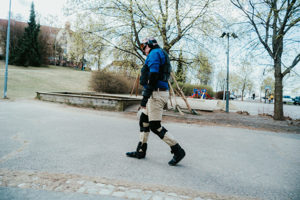
 - Applying empathy as a tool for innovative thinkingkunnskap-kristiania / 2021 / 5 / applying-empathy-as-a-tool-for-innovative-thinkingKNOWLEDGE @ KRISTIANIA: Innovation Thanks to modern medicine and improvements in lifestyle people are living longer. Figures suggest that by 2060 there will be more than double the number of older adults over the age of 70, triple the number over 80 and there is a good chance that almost 1 out of 5 will celebrate their 100th birthday. But fewer still will “age in place”; that is, in their own homes. Most of us hope to age in place. But the reality is that only 13% of Norwegians die in their own homes. Read also : Slik kommer du i gang med designtenkning (in Norwegian) Understanding “Age in Place” In order to be able to understand how older adults can “age in place” we need to understand the everyday challenges they face. An empathetic understanding of daily life can give researchers and practitioners the insight to re-frame potential problems and current limitations. At Kristiania University College, students are encouraged to try our “GERT” – an ageing suit to gain insight into an older adult’s world through the completion of simple tasks most adults consider normal, almost automatic activities of daily life. Read also: Designer en bedre verden (in Norwegian) When activities of daily life become a struggle The activities of daily life that most of us consider to be routine and easily completed can become a struggle in our older adult lives. This often leads to changes in behaviour, increased pressure from our environments, and the need for help which affects our personal independence and further, our dignity. Walking, getting up from a seated position, ascending and descending stairs, opening doors, and all the tasks we need to complete in a day to remain independent are attempted in an effort for designers to gain insight into a world they will inhabit in their future. Not to mention navigating retail and public spaces, reading product packaging labels and wayfinding information, paying for their purchases, and getting everything back home. Read also: Eye-shadowing Customers’ Reviews Feeling the restrictions of aging With the GERT suit we can, in effect, enter a world of sensory impairment (and to some degree deprivation) and literally feel the weight and kinaesthetic restrictions of ageing as well as haptic, audio and visual degradations. The activities of daily life become more challenging and what was once a semi-automatic easy task becomes something new as we struggle to cope with our body’s limitations and with new challenges within our familiar surroundings. According to the Lawton and Nahemow’s ecological theory of aging the performance of and comfort with daily activities is possible when an appropriate match between a person and his/her environment is achieved. This match is known as person-environment fit (P-E fit). The P-E fit is important in understanding the dynamic relationship between people and their environments in all fasits of life but especially as we age. Read also: Five principles in defining a powerful purpose Empathy-driven design To gain better personal insights into the subject matter students in interior architecture use this GERT suit as a pedagogical tool to sense the challenges via empathy-driven design. It allows them to feel, on their person, the challenges encountered by growing numbers in society. In order to make independent living and ageing in place possible for as many as possible, with as much dignity as possible, we require more research into the challenges being faced and the “jobs to be done” and to educate future generations to think differently about environments, products and services. Read also: How Business is Accelerating Toward a Fairer Future Sensing solutions My own research involves how our haptic senses “read” spaces and how we move around using kinesthetic and tactile modalities (senses) as our bodies slow down and our visual and auditory modalities decay. Within the domains of architecture and design, vision is the predominant sense. The dominance of the eye (ocularcentrism) and the suppression of the other senses tends to push us into detachment, isolation and exteriority. It is hoped that this research will help to aid architects, product and service designers by giving them more insight into the possibilities, beyond aesthetics, to engage haptics in design solutions to better meet the housing and service needs of a growing, and often misunderstood, user group. Read also: Why consumers co-create Finding innovative ways of reframing problems Empathy, by definition, is an action. It needs to be experienced, as the GERT suit enables, to be understood. Empathy is the first phase of design thinking and plays a critical role in finding innovative ways of redefining and reframing problems. As we age, our bodies go through gradual and progressive changes that can only be truly understood as we grow old. But if we can project this decline forward to the present, we can expose young (and not so young) designers, innovators and researchers to the problems the current and coming generations are facing. References: This article is based on lectures in the Interior Architecture bachelor’s «Ageing in Place» course at School of Arts, Design, and Media , Kristiania University College. The article also presents insights from an ongoing PhD research project on the use of haptics in interior architecture as a tool to extend the independence and dignity of the older adults in society. Text: Lecturer David Coates, Department of Economics and Innovation, Kristiania University College.
- Why consumers co-createkunnskap-kristiania / 2019 / 10 / why-consumers-co-createKNOWLEDGE @ KRISTIANIA: Co-Creation Most organizations want to get close to consumers and to learn about their needs and desires as a way of creating products and services, developing effective marketing campaigns and reducing risk. Increasingly organizations are using online co-creation communities to do this as it enables them to dig below the surface of people’s opinions and uncover their latent feelings. Usually this process involves recruiting people against a set of selection criteria that is relevant to the task and encouraging their active participation in a closed community of between 300 and 500 members. Some organizations have permanent communities, while others are task specific. If you ask managers why people are willing to participate in such commercially focused communities, their assumption is that it must be the money. They rate intrinsic factors such as sociality and meaningful experience as the least important. In search of Motivation We set out to determine whether this managerial belief is true and to better understand the role intrinsic and extrinsic motivation play in motivating people. To conduct this research, we invited members of three existing online communities to take part in a study. The communities came from quite different areas: consumer goods, diabetes and high blood pressure, and private health. The communities enjoy high levels of participation and have active facilitation, an emphasis on non-financial rewards and minimal use of financial rewards. 178 people agreed to participate in the study. Learning from Conversations To get insights into peoples’ motivations we used a two-phase online research process. In the first phase we used a qualitative/quantitative research tool, that combines conversation and machine learning to deliver quantitative insights to qualitative questions. Instead of framing questions where the options are limited and the language has already been determined, the tool allows people to answer open-ended questions by writing down their responses in their own words, which others then vote on, two at a time. The tool mirrors conversation in that it allows participants to interact with one another and to react in real time to thoughts being exchanged until a resolution is reached that best reflects the thinking of the group. The research featured 9 open-ended questions and 7 poll questions. The 9 open-ended questions generated 1,102 unique responses (the highest count for an open question was 153 responses) and 34,819 votes. Once the first phase of the research exercise was complete, we created brief summaries of the first phase research, which we then provided to the communities. In the online discussion we hosted with the participants, we asked whether the summary aligned with their personal experience and invited them to add further comments. The process generated a further 255 responses. Key motivational factors So, what did we learn? Most people in the three communities are dominantly intrinsically motivated. Their motivations are concerned with contributing to something they find valuable and interesting, having the opportunity to express themselves and the ability to develop their knowledge by sharing and listening to others. However, the research also suggests some nuances to the balance of intrinsic and extrinsic rewards. While 39% of people in the study said that they would still participate without financial rewards, the most strongly supported statements combine intrinsic benefits with financial rewards. Financial rewards are seen as more of a “thank you” for participation and for making a contributing to the community. Freedom of expression A second aspect of motivation is concerned with control versus freedom of expression. When people have a greater degree of freedom it enhances motivation. Participants feel that the balance is right in their communities and that they have sufficient freedom and good moderation. Notably 97% of participants believe that they have been treated fairly by the moderators, who clearly play a vital role in creating a positive culture and in helping to humanize and cement the solidarity of the community. Overall, when a community works well it generates high levels of engagement. This is notable in the way participants describe their experience. Positive, passionate and highly motivated The participants in these three online sponsored co-creation communities are positive, passionate and highly motivated. These might be attributes that we would expect from fan communities based around Milanese opera or Liverpool football club (both have been studied), but they are not necessarily what we might expect from consumers discussing tooth paste or a health club for commercial organizations. The study shows people can be highly participative if those managing online communities create an engaging purpose coupled with the freedom to explore ideas. This requires sensitive moderation, the creation of a trusting environment where people feel they can express themselves and a willingness to take the time to nurture community solidarity where people are connected to each other and to the sponsoring brand. Reference: Nicholas Ind, Nick Coates and Katrina Lerman (2019): ‘The Gift of Co-Creation: what motivates customers to participate ’. Journal of Brand Management https://doi.org/10.1057/s41262-019-00173-7 Text: Professor Nicholas Ind, Department of Economics and Innovation, Kristiania University College.
- Oslo: 30 studiepoengfor-studenter / valgemner-og-praksis / valgemner / valgemner-i-oslo-30-stpValgemner Oslo - Vår 2026
- People – not economies – react to climate changekunnskap-kristiania / 2023 / 03 / People-not-economies-react-to-climate-changeKNOWLEDGE AT KRISTIANIA: Europe's Green Deal ambition In 2022 the EU challenged the research community to improve the state-of-the-art of «Integrated Assessment Models» (IAMs), as the existing models are too complicated. Kristiania is one of 10 European partners who joined in a Horizon Europe-funded project called WorldTrans – Transparent assessment for real people . It aims at improving models to see how economic and social development affects climate change. IAMs are models designed to assess how choices about economic and societal development affect each other and the natural world, including climate change. They are different from the classic climate models that are based only on natural science. Today’s models are too complex IAMs are programmed to provide policy-relevant insights into global environmental change and sustainable development. They are named «integrated» because they combine different strands of knowledge to model human society alongside the natural Earth system. They can be used to answer questions like: How can the world avoid global warming of 1.5 °C above pre-industrial levels «at the lowest cost», or «without the use of nuclear power»? However, today’s state-of-the-art IAMs are so large and complicated that their mechanisms are fully understood only by their makers. Because of this, there is a growing information gap between modelers, domain experts, citizens and the people making decisions about climate action in the real world. Engagement of citizens is important to reach Green Deal ambition For Europe to deliver on its Green Deal ambition, which is to make Europe’s economy climate neutral by 2050, the engagement of citizens may be as important as dry facts and figures. An important hypothesis behind the project's approach is: “People (not economies) react to climate change; people make decisions to act or not to act. Such is the nature of a democratic process. It is this realization that has made us choose to address transparency, openness, engagement and to work with models of the system, not its parts.” Kristiania will develop financial and monetary modules WorldTrans will use system dynamics methods to develop models of lower complexity, which are still able to capture key interaction between socioeconomic development and biophysical dynamics. In fact, we aim to expand current best practices to provide better representations of the actual processes of climate change and the functioning of the contemporary financialized economy. This will allow us to answer new questions regarding the distribution effects of climate policy, and the relative merit of financial taxation for green purposes. Kristiania will be responsible for the development of the financial and monetary modules, thus expanding the frontiers of current best global practices. The models must be understandable and usable The team will also work to «bridge the gaps» between models, experts, and user communities to ensure that integrated assessments are understandable and usable for citizens and policymakers alike. In particular, we aim to provide effective visual representations of the key feedback loops operating between the socioeconomic and the natural world. One example is the complex interactions between economic growth, demographic expansion, technological development and CO2 management. We hope to be able to provide everyone with the ability to understand and engage with these complex issues that will be dominating the global political discourse over the next decades. About WorldTrans WorldTrans is a 4-year, €5 million Horizon Europe funded project led by the Norwegian Meterological Institute and supported by 10 partners across Europe. Other partners from Norway are Kristiania and The University of Bergen. The project started 1st of December 2022 and will end 30th of November 2026 with a total budget of € 4 635 775 We would love hearing from you: Send your comments and questions regarding this article by e-mail to kunnskap@kristiania.no .

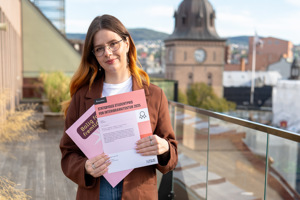
- Mormor inspirerte prisvinnende masteroppgaveaktuelt / 2025 / 10 / mormor-inspirerte-prisvinnende-masteroppgave– På et tidspunkt visste jeg ikke om jeg kom til å bli ferdig i tide, så det å ende opp med å få prisen betyr utrolig mye. Selv om Emily selv ble overrasket over utmerkelsen, var juryen aldri i tvil. De roser prosjektet opp i skyene og beskriver det som eksperimentelt, nyskapende og lekent, samtidig som det holder en imponerende høy faglig kvalitet. «Bolig for fremtiden – Håndbok for deg som ønsker å tilrettelegge for et langsiktig hjem» blir trukket frem som et forbilledlig eksempel på hvordan interiørarkitektur kan bidra til å møte store samfunnsutfordringer. Se mer om masteroppgaven på Emily Bakkes Instagram-side Fem intense år Hun visste tidlig hva hun ville. – Allerede som 13-åring visste jeg at jeg ville drive med interiør. Da tiden kom for å velge studieretning, falt valget på Bachelor i interiørarkitektur på Kristiania . – Etter bachelorgraden følte jeg meg klar til å gå rett ut i jobb, men etter å ha hørt litt om mastergraden måtte jeg bare søke. – Mastergraden i design er utforskende og fri, og man får mer rom til å bruke kreativiteten enn på bacheloren. Les mer om Master i design her! Etter fem intense år med hardt arbeid er hun nå klar for arbeidslivet. Hun vil bruke kunnskapen hun har tilegnet seg til å gjøre en forskjell i samfunnet, ett rom om gangen. – Med masteren har jeg fått verktøyene til å utforme enda mer funksjonelle og empatiske løsninger. Inspirert av mormor Ideen til masteroppgaven oppsto sommeren 2022 – etter en hendelse som skulle sette dype spor. Emilys mormor falt stygt og havnet på sykehus. Den sprekeste og mest selvstendige personen hun vet om fikk plutselig et varig behov for rullestol, rullator og andre hjelpemidler i alle rom. – Vi måtte flytte på møblene hennes og fjerne ting for at hun skulle få plass til hjelpemidlene. Det var ganske sårt. – Jeg så hvor brått hjemmet hennes endret seg. Vi måtte flytte på møblene hennes og fjerne ting for at hun skulle få plass til hjelpemidlene. Det var ganske sårt. Hendelsen fikk Emily til å reflektere over hva hun kunne gjort som interiørarkitekt for at overgangen ble mindre brå. Tidlig tilrettelegging for eldre i private hjem ble utgangspunktet for masteroppgaven hennes. Det handler ikke om å være gammel – Det handler om å være forberedt! Det er Emilys budskap til alle som mener de er for unge for å tenke på tilrettelegging. Fra forskning til håndbok – Jeg ville skrive om tilrettelegging, men da jeg begynte å undersøke temaet fant jeg lite informasjon spesifikt for eldre i private hjem. Jeg tenkte «Ok, dette blir min jobb». Informasjonen var spredt, og ofte rettet mot kommuner eller utbyggere, og det fantes ingen sjekkliste for hva privatpersoner kunne gjøre selv, i egne hjem. Da fikk hun idéen om å lage håndboken. Emily gjorde et stort arbeid med å samle og systematisere eksisterende kunnskap om tilrettelegging, og hentet informasjon fra andre fagfelt som helse, gerontologi og samfunnsutvikling. Hun fikk også kjenne hvordan alderen påvirker kroppen gjennom aldringsdrakten GERT. – Undersøkelsen gikk ut på at jeg brukte drakten gjennom en helt vanlig dag og dokumenterte mine opplevelser og tanker. Personlig og lekent uttrykk En slående egenskap ved håndboken er den lekne illustrasjonsstilen og de spenstige fargevalgene. Stilen var ikke et bevisst valg fra begynnelsen, men vokste fram helt naturlig underveis i prosessen. – Temaet er jo litt tungt og deprimerende. Det er ikke lystig at kroppene våre forfaller, og at vi ikke kan gjøre noe med det, så jeg tror det var en slags forsvarsmekanisme som kicket inn. Hun var bekymret for mottakelsen, men juryen mener at håndboken på tross av det noe stigmatiserende temaet etablerer en optimisme hos leseren. Vi gratulerer Emily Bakke med prisen, og med ny jobb som Kitchen advisor i Elkjøp!
- Når livet blir snudd på hodetaktuelt / 2020 / 05 / nar-livet-blir-snudd-pa-hodet– Filmen handler om Erik som er en bilmekaniker fra Hallingdal. Han har livet på stell med kjæreste, venner og jobb. En dag utsettes han for en snøskuterulykke hvor han blir lam fra livet og ned. Han må lære seg å leve med den nye situasjonen i relasjon til sine nærmeste, som nå er snudd på hodet. Der hvor Erik tidligere utstrålte selvtillit, er det nå usikkerhet og sjalusi han føler på, forteller avgangsstudenten Mats Bjerknes. Handlingen er lagt til Flå i Hallingdal som er hjembygda til Bjerknes. Han startet med å skrive på manuset i april i fjor, men idéen har han ruget på i mange år. Bjerknes sitter selv i rullestol, og syntes det er et viktig perspektiv å fortelle fra. Han håper at historien både kan underholde, men også å opplyse hvordan livet i rullestol kan være. – Jeg sparte denne idéen til bachelorfilmen min. Selv om det er en kortfilm, så håper at folk kan få et lite innblikk i hvordan hverdagen er når man sitter i rullestol. Da tenker jeg ikke bare på de negative sidene, men også de positive. Erik er i bunn og grunn et helt vanlig menneske, som ikke er altfor kul eller fullstendig pleietrengende. Jeg håper folk kan se at man kan gjøre helt vanlige ting - også i rullestol. Målet er å normalisere hele situasjonen. Tilbake til bygda Som en ekte Hallingdøling, syntes Bjerknes at det var gøy å ta med seg filmcrewet fra Oslo til hjembygda Flå. For å representere bygda inneholdt produksjonen både bil- og snøscooterkjøring på vidda i over 20 minus. Selv om deler av produksjonen kunne by på utfordringer, angrer ikke Bjerknes på at han filmet det så realistisk som mulig. – Jeg er faktisk i gang med å søke støtte til manusutvikling, og håper i enda større grad at en kinofilm kan bidra til å opplyse samfunnet om et så viktig tema. – Det er klart at jeg kunne gjort det enklere for meg selv, men det var viktig for meg å vise denne kulturen på en autentisk måte. Jeg husker en av de første scenene vi filmet var en Volvo stasjonsvogn som kjører full sladd gjennom noen svinger. Jeg har vært med på heftig bilkjøring før, men aldri filmet det med kamera, fullt crew og stengt vei. Etter at stasjonsvognen suste gjennom svingen så reagerte hele crewet på at dette var noe av det sykeste de hadde sett, sier Bjerknes og ler. Å filme i hjembygda har også mange praktiske fordeler. Ved siden av de 50 000 kronene filmteamet fikk i støtte fra skolen, fikk de også 30 000 kroner ekstra fra Flå kommune, samt 20 000 fra eksterne sponsorer. Dette gjorde at produksjonen til gikk i null. Bjerknes er klar på at det er både fordeler og ulemper ved å filme utenfor Oslo. – Det er jo dyrere å filme utenfor Oslo. Samtidig så fikk vi alle location gratis og mye støtte til mat og husly. Drømmer om langfilm Bjerknes nærmer seg snart slutten på den treårige bachelorgraden i Film og TV. Han sier han har møtt mange kreative og hyggelige studenter og lærere, som ser deg for den du er og bygger deg opp. Han forteller også om hvordan han har lært mye av den praktiske delen av undervisningen, og hentet mye inspirasjon gjennom studiene. – Jeg lærte om «kitchen sink realism» fra underviseren Fredrik Hestevold. Det er hardbarka realisme, og handler om ekte folk, ofte de som ikke er øverst på rangstigen. Jeg hadde ikke sett så mye av det før, og da tenkte jeg at dette er noe i min gate. Denne kortfilmen er ikke så mye innom denne sjangeren, men vil prøve å bruke det i fremtidige prosjekter, forteller Bjerknes. Bjerknes og teamet hans er nå inne i siste del av post-produksjonen. Selv om koronaviruset kan legge demper på premieren, så gleder han seg til å vise frem kortfilmen. Drømmen er å få vist den på festivaler i Norge, men han har også enda større planer for «Aktlaus». – Jeg merket fort at 25 minutter ikke er nok for å fortelle hele historien. I denne kortfilmen får jeg bare skrapet på overflaten. Men jeg vil gå dypere inn tematikken, så drømmen er definitivt å lage en langfilm en dag. Jeg er faktisk i gang med å søke støtte til manusutvikling, og håper i enda større grad at en kinofilm kan bidra til å opplyse samfunnet om et så viktig tema.

- Noen av verdens beste visuelle effekter lages i Osloaktuelt / 2024 / 03 / noen-av-verdens-beste-spesialeffekter-lages-i-osloStorm Studios er et av de eldste og største VFX-studioene i Norge. De var med å starte opp VFX-bransjen i Norge og jobber i dag stort sett bare på amerikanske produksjoner som «Star Trek»,«Shadow and Bone» og Marvel-filmer. Her jobber blant andre Markus Eiken, Ingvild Rein og Melvin Østensen som alle er tidligere studenter fra det som i dag heter Bachelor i Computer Arts . Første «norske» Emmy for VFX – Noe av det som er veldig fint med å jobbe her er at vi får jobbe med noen av de beste i bransjen i Norge og Skandinavia. Det er også morsomt at Kristiania er så godt representert her. I den avdelingen der vi jobber er det totalt 20 mennesker og 15 av dem er tidligere studenter fra Kristiania, forteller de. – Gratulerer med å vinne Emmy for jobben dere gjorde med «The Last of Us»! – Ja, vår supervisor Espen Nordahl var over i Los Angeles og tok imot prisen i januar. Det var veldig stas! Dette er første gang noen i Norge vinner Emmy for beste visuelle effekter! Rett fra skolebenken Ingvild er den ferskeste i gjengen, og fikk jobb i Storm Studios etter at hun hadde praksis der som en del av utdanningen . – Du kom jo rett fra skolebenken da du begynte på dette prosjektet. Følte du at du var klar for en slik produksjon? – Ja, jeg følte at jeg var klar. Jeg var ferdig på Kristiania sommeren 2022. Da hadde jeg hatt internship hos Storm hele våren som en del av utdanningen min, og som en del av det fikk jeg jobbe på filmen «Black Panther – Wakanda forever». Og så ansatte Storm meg etter at jeg var ferdig og da ble jeg også en del av «The Last of Us»-prosjektet. Les mer om Bachelor i Computer Arts her! – Kan dere si noe om hva dere gjorde på prosjektet? – Vi gjorde forskjellige typer effekter fra det vi kaller set extension og digitale bakgrunner til fulle CG-ansikter. Og så la vi til litt ekstra blod. De har ofte falskt blod på sett, men vi må ofte forsterke det ved å legge på litt til. Og så gjorde vi disse sopp-sporene, eller slyngtrådene, som vokser ut av munnen på de infiserte i serien. Det hender vi gjør ting som er litt ekkelt! De har ofte falskt blod på sett, men vi må ofte forsterke det ved å legge på litt til. – Ok, her var det en del uttrykk som jeg tror dere må forklare. Hva er set extension? – Det er når vi hjelper til med å lage bakgrunner og digitale kulisser. Ofte når man bygger kulisser i studio, bygger man bare de viktigste delene, kanskje de delene som skuespillerne kommer i direkte kontakt med. Og så lager vi resten digitalt og syr det sammen med det som var filmet i studio. – Dere nevnte CG-ansikter? – CG er et uttrykk vi bruker på elementer som 3D-modelleres i en datamaskin. I «The Last of Us» byttet vi noen ansikter med nye ansikter som vi laget i cg og digitalt festet på ansiktene til skuespillerne. – Kunne dere virkelig alt dette da dere gikk ut fra Bachelor-programmet? – Vi hadde ikke nødvendigvis gjort alt dette før, men vi hadde lært prinsippene og teknikkene, ja. Og set extension hadde vi gjort en del av. Men der Storm virkelig bidro med egne ting var disse slyngtrådene. Dette er de tråd-aktige soppene som vokser ut av munnen på de som er infisert. Her fikk Storm i oppdrag å finne ut hvordan de skulle se ut og oppføre seg. Et kyss med soppsmak Det var Markus som fikk oppgaven med å finne ut hvordan slyngtrådene fra de infiserte skulle se ut. – En morsom ting var at vi jobbet på et shot av en infisert med slike slyngtråder ut av munnen som kysser og dermed infiserer et annet menneske. Det shotet ble ganske kjent og det ble faktisk nominert til Best Kiss på MTV-awards, foreller han. – Jeg vet at det er ganske høye sikkerhetskrav her for at dere skal få lov til å jobbe på disse store amerikanske prosjektene. Kan dere si noe om det? – Det stemmer. Vi er sikkerhets-sertifisert og er en såkalt Trusted Partner som gjør at vi kan få jobbe på de store amerikanske produksjonene. Dette handler både om at det ikke skal være mulig å få tak i og spre bilder fra produksjonen før den er på tv eller på kino, men også at det skal være hemmelig hva vi jobber på til enhver tid. Arbeidsstasjonene våre er for eksempel ikke tilkoblet internett. Alt som skal inn i og ut av vårt system går gjennom noen få maskiner der alt blir logget og der ikke alle har tilgang, sier Melvin. Vi fikk ikke lov til å snakke om det, ikke en gang til vår egen familie. – Mens vi jobbet på «The Last of Us» fikk vi ikke lov til å snakke om det, ikke en gang til vår egen familie. Det kan være vanskelig fordi vi er veldig stolte av det vi holder på med, men vi vet at det er viktig så vi sier ikke noe. Når premieren nærmer seg, ser vi alltid fram til å få lov til å si hva vi har jobbet på. – Og hva jobber dere på nå? – Haha! Sorry, men det kan vi ikke si! – Det store spørsmålet nå er jo om dere også skal jobbe på neste sesong av «The Last of Us». Kan dere si noe om det? – Nei, det kan vi ikke. Det eneste vi vet er at de har fått støtte via insentivordningen til å legge jobb hos oss hvis de ønsker det. Men det hadde vært morsomt. – Har dere noen ønsker for sesong to hvis dere får jobben? – Hvis vi skal jobbe på neste sesong, hadde det væt morsomt å lage noen større environments, altså noen store bakgrunner slik som vi for eksempel gjorde i tv-serien «Shadow and Bone» som vi også ble Emmy-nominert for, sier Ingvild. Vi ble vant til å få – og til å forholde oss til – tilbakemeldinger. – Hva er det viktigste dere fikk med dere fra Kristiania som har hjulpet dere til å lykkes i bransjen? – Under studiet ble vi trygge på verktøyene, metodene og prosessene. Men noe av det viktigste var kanskje at vi ble vant til å få – og til å forholde oss til – tilbakemeldinger. Det var mye mas under studiet om det å bli vant med å vise uferdige ting for å få kommentarer på det tidlig. Og akkurat det har vært gull! Det er veldig viktig når man er i en produksjon. Mange er redde for å vise fram ting som ikke er ferdige, men det er ved å gjøre det og ved å få kommentarer på det at du ender opp med et best mulig resultat. Jo mer du viser en supervisor underveis, jo bedre blir resultatet, samstemmer de tre.
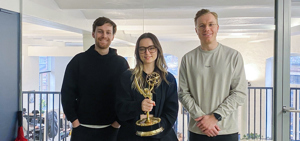
- Publiseringsavtale for masteroppgaver ved Høyskolen Kristianiaom-kristiania / biblioteket / skrive-og-henvise / tilgang-til-bachelor--og-masteroppgaver / publiseringsavtale-for-masteroppgaver-ved-hoyskolen-kristianiaScroll down for English version. Denne publiseringsavtalen gjelder for masteropp gaver som er innlevert og bestått ved Høyskolen Kristiania . Tillatelse til å publisere oppgaven i elektronisk form Hvis to eller flere studenter skriver masteroppgave sammen, må alle akseptere denne publiseringsavtalen for at oppgaven skal bli publisert . Forfatteren gir Kristiania en vederlagsfri, ikke-eksklusiv rett til å publisere forfatterens masteroppgave i elektronisk form i Nasjonalt vitenarkiv . Masteroppgaver som er begjært konfidensielle vil ikke tilgjengeliggjøres. Høyskolens plikter Ved godkjenning av vilkårene og samtykke har Høyskolen mulighet, men ikke plikt til å gjøre oppgaven tilgjengelig i Nasjonalt vitenarkiv. Dersom biblioteket benytter seg av denne retten, skal det som publiseres være samme utgave som ved innlevering til høyskolen. Høyskolen er ikke ansvarlig for å korrekturlese eller å kontrollere at den innleverte versjon samsvarer med eventuelle tidligere versjoner eller utkast. Høyskolen har ikke plikt til å beholde arkivkopier av oppgavene. Høyskolen Kristiania får ikke råderett over oppgaver utover det som uttrykkelig fremgår av denne avtalen. Forfatterens plikter Forfatter en skal følge de retningslinjer og reglement som til enhver tid gjelder ved høyskolen. Ved eventuell avtaleinngåelse med andre om overdragelse av retten til å publisere masteroppgaven, skal forfatteren alltid sørge for å ivareta og beskytte høyskolens rettigheter i denne avtalen. Forfatteren garanterer at hen har forfattet oppgaven og har fullstendig råderett. Det samme gjelder materiale som er lagt ved eller på annen måte er koblet til oppgaven, som for eksempel vedlegg, linker eller annet. Materiale som er innhentet fra andre kilder skal være referert i litteraturlisten, og forfatteren har ikke opphavsrett til disse. Forfatteren garanterer at hen ikke har kunnskap eller mistanke om at oppgaven inneholder materiell som kan anses å stride mot gjeldende norsk rett, eller inneholder lenker eller andre koblinger til slikt materiale. Dersom Høyskolen Kristiania skulle bli gjort erstatningsansvarlig overfor en tredjepart på grunn av at forfatteren ikke oppfyller sine plikter og garantier etter denne avtalen, er forfatteren forpliktet til å holde høyskolen fullt ut skadesløs. Opphør av avtalen Forfatteren kan når som helst si opp avtalen ved å gi skriftlig beskje d . Kristiania skal da fjerne oppgaven så snart som mulig. P ublishing agreement for Master’s Theses at Kristiania University College This publication agreement applies to master’s theses completed and passed a t Kristiania University College . Permission to publish the thesis in electronic form If two or more students have co- author ed the th e sis , they must all accept the terms of this publishing agreement in order for the thesis to be published . The author gives Kristiania a free, non-exclusive right to publish the author’s master thesis in electronic form in T he National Research Archive . If the author has deemed the thesis confidential, it will not get published. Kristiania’s obligations Upon the author ’ s consent to the agreement , Kristiania has the o ptio n , but is not o bligate d to make the thesis available in The National Research Archive. If the library exerts this right, the material published should be the same edition as the one submitted to Kristiania. Kristiania is not responsible for proof-reading, or for controlling that the submitted version is equivalent to earlier versions or drafts. Kristiania is not obligated to keep an archived copy of the thesis. Kristiania will not get right of disposal of the thesis beyond what is explicitly stated in this agreement. The author ’ s obligations The author sha ll follow the guidelines and r egulations that a pply at the university at all times . If the author enters into an agreement with third parties containing a transfer of the right to publish the thesis, the author will safeguard and protect Kristiania’s rights after the agreement. The author guarantees that they themselves have authored the thesis and have complete right of disposal over the thesis. The same applies to attached material and material that is somehow attached to the thesis, such as links and others. Material that has been acquired from other sources must be referenced in the bibliography, and the author does not have copyright to these. The author guarantees that they do not have any knowledge or suspicion that the thesis contains material that can be considered as going against Norwegian la w, or that the thesis contains links to or is in other ways connected to such material. If Kristiania should be held liable by a third party because the authors have failed to comply with their duties and guarantees after this agreement, the authors are obligated to exempt Kristiania from liability. Discontinuance of the agreement The aut h or can , at any time , discontinue the agreement. Kristiania will then remove the thesis as quickly as possible. Sist oppdatert: 13.12.2023
- Why we empower the authoritarian leader in times of fearkunnskap-kristiania / 2025 / 6 / Why-we-empower-the-authoritarian-leader-in-times-of-fearSCIENCE NEWS FROM KRISTIANIA: Leadership We often turn to strong leadership in times of uncertainty, chaos and crisis. The philosopher Thomas Hobbes pointed this out as early as the 1600s. Living in a time of conflict, he believed that only a strong state, led by strong leaders, could hold society together. His ideas can’t be scientifically proven, but they have helped shape a lasting belief in strong leadership. These days, strong leaders are thriving. The U.S. president sees himself - despite his egotism, childishness, and bullying behaviour - as a strong leader. And he prefers the company of others like him. When leaders like him team up with tech billionaires obsessed with corporate-style leadership, it’s time to buckle up. In times of disorder, people in general seem to be more willing to hand over power In the background, the manosphere is lurking. It glorifies masculinity, self-discipline, mental and physical toughness. Add a growing fan base for Ayn Rand’s controversial novel, Atlas Shrugged, and a pattern starts to emerge. Strong leadership can also be destructive Many strong leaders want the power to act without interference. Take Trump, for example. He tries to dethrone anyone who challenges him: the media, the courts, even public institutions. In times of disorder, people in general seem to be more willing to hand over power. We want someone to take control. To lead us through the storm. But we don’t always stop to question how that power is being used. Strong leaders who crave control often distrust transparency and democratic processes, as these processes slow things down and limit the freedom to act. Strong leadership is, of course, not always a bad thing. Yet some of the very traits that make leaders appear strong, like aggression, egocentrism and narcissism, can also be deeply destructive. Employee participation is head ing in the wrong direction We are an ocean away from the U.S., and Norwegian society is very different. Still, we need to be mindful of admiring leaders who are given too much power and unlimited manouvring space. In my latest book, Lederisme , I argue that society has shifted in ways that benefit leaders. Over the past 30 to 40 years, the leadership profession has gained more economic, cultural, social, and symbolic power. Set geopolitics aside, and we’ll see that when faced with unlimited leadership power, Norwegian workplace democracy is unlikely to escape without lasting harm When leaders are given too much freedom to act, cracks begin to show in the democratic Norwegian labour model. A gradual shift is occurring - tilting the balance from employees to employers. Studies show a steady erosion of employees’ rights to participate and influence decisions. Unlimited leadership is risky Strong leaders with no checks and balances threaten social contracts, institutions and established principles. That is the reality European leaders are now painfully learning, as they see long-standing structures being dismantled. In these cases, democratic ideals do not help. Only the hard truths of power politics apply. They must mobilise alternatives to unchecked power faster than they are able to. Set geopolitics aside, and we’ll see that when faced with unlimited leadership power, Norwegian workplace democracy is unlikely to escape without lasting harm. The question is, how suitable is labour democracy for handling contemporary challenges in the workplace? The answer to that question remains open. But the solution is certainly not to give leaders who are loyal only to their principles and themselves unlimited power and freedom to act. Being decisive and action-oriented are valuable leadership traits. But only when paired with accountability. Otherwise, if strong leaders with unchecked power – fuelled by global trends and blind admiration for strength – are given too much room, the working life in this country could face serious consequences. Text: Tom Karp, professor, School of Communication, Leadership and Marketing, Kristiania University of Applied Sciences. This article was first published in the Norwegian edition of Dagens Næringsliv on the 28th of February 2025 under the title “ Sterke ledere er i vinden ”. We love hearing from you! Send your comments and questions regarding this article by e-mail to kunnskap@kristiania.no .

- Klare for Young Lions 2021aktuelt / 2020 / 06 / klare-for-young-lions-2021I juni skulle Young Lions gå av stabelen i Cannes, men koronasituasjonen og stengte grenser ville det annerledes. – Det er jo selvsagt kjipt, men det var forventet, sier Michael Solbakken, tidligere student på Reklame og merkekommunikasjon ved Fagskolen Kristiania. Sammen med kollega i Kitchen, Calle Bjørnqvist, tok han gull i den nasjonale konkurransen, og skulle i utgangspunktet konkurrere med reklametalenter fra hele verden denne måneden. Young Lions er en del av Cannes Lions, men forbeholdt dem mellom 18 og 30 år. I konkurransen får hvert team en Mac, et filmkamera, en bildebank og 48 timer på å løse briefen på valgfri måte. Noe av det mest spennende med konkurransen er at alle starter med likt utgangspunkt. – Noe av det mest spennende med denne konkurransen er at alle starter med likt utgangspunkt, bortsett fra erfaringen man har med seg, sier Calle, som har en Bachelor i kreativ markedskommunikasjon fra Høyskolen Kristiania. I den nasjonale konkurransen var avsenderen av årets brief levert av World Food Program, hvor teamene skulle spre viktigheten av skolemat i vanskeligstilte land. Se den gullvinnende reklamefilmen nederst i saken. Forbereder seg til neste år Teamet trekker frem at de er glade for at de skal løse en ny brief i konkurransen i Cannes til neste år. I likhet med andre kreative mennesker kjenner de nemlig på hvordan produktet alltid kan justeres til det bedre. – Man er alltid den første til å gå lei av det man har laget, så vi kjenner selvsagt på endringstrangen selv om vi er fornøyd med resultatet, sier Michael. Man må levere det man har, enten man er ferdig eller ikke. – En del av denne konkurransen handler om å gjøre det beste man kan på de 48 timene man har til rådighet, og levere det man har – enten det er ferdig eller ikke. Endringstrang til tross, duoen kunne ikke fått et bedre resultat. Med et helt år til rådighet vet de hvordan de skal forberede seg til Young Lions 2021. – Når situasjonen ble som den ble tenker vi å benytte denne tiden til vår fordel og bli enda bedre på å lage reklame, sier Michael. – Og så skal vi skal se masse reklame! Med Calle som kreatør og Michael som videograf jobber guttene normalt sett i ulike faser: Calle er med fra idéprosessen, mens Michael jobber når produksjonen starter. I konkurransen er de derimot et sammensveiset team fra start til slutt. – Det er gøy å jobbe sammen gjennom hele prosessen, og så er det en kjempefordel å ha en videograf på teamet så vi kan produsere hele filmen selv, sier Calle. Ikke vær redd for å delta Guttene oppfordrer andre unge kreative mennesker til å bli med på de mange konkurransene som finnes der ute. – Det er dessverre litt sånn i denne bransjen at uansett hvor flink man er hjelper det ikke hvis man ikke blir lagt merke til. Å delta i konkurranser, og kanskje til og med vinne, er en mye sterkere søknad enn en CV, sier Michael. Man lærer ekstremt mye av å delta i denne type konkurranser. Calle er enig. De har allerede planlagt å delta i flere konkurranser sammen, være spontane og hive seg på det som dukker opp. – Ikke la være å delta i konkurranser fordi du er redd for å tape. Man innser fort i denne bransjen at man må tåle noen nederlag. Det er en del av det å pitche inn idéer, ikke bare i konkurranser, men på jobb også. Man lærer uansett ekstremt mye av å delta. – Og så må vi fortsette å vaske oss på hendene så vi får deltatt til neste år.
- How crisis Zoomed us away from Skypekunnskap-kristiania / 2020 / 03 / how-crisis-zoomed-us-away-from-skypeKRISTIANIA THOUGHTS: Brand Value through User Experience I admit, in February 2020, Zoom was unknown to me. Before Covid-19 I thought Skype was competing against Facebook and Google! Skype had such a strong position in 2011 that Microsoft was willing to pay a whopping $ 8.5 billion dollars for reasons no one understood back then (and much less today). Even though Skype was integrated into Microsoft as Skype for Business, hardly anybody was using it. Read also: Why consumers co-create Skype has fallen behind There are several reasons why its popularity dvindeled but few would ever had praised the application for being smart or reliable. Microsoft never managed to capitalise on the brand recognition Skype had. The application remained elementary and of little value for customers when competing platforms offered better quality via mobile operator networks. To be fair, Microsoft has managed to turn Skype into a useful work-communication tool within organisations. As a tool to host larger meetings and events, Skype has fallen behind. Read also: Co-creation of Brands Rocket success The lesson? In tech, brand value is hard to keep without a burning passion for great service design. In order to stay relevant, companies must study how usability can be implemented as valuable features of a brand. Recognition without relevance is a recipe for failure. This post will not dwell on Microsofts misfortune but rather explore the rocket success of Zoom.us. The outbreak of the novel Covid virus eventually lead to temporary lock-downs of business, schools and agencies around the world. In a matter of days, thousands were in need for reliable online tools to host meetings and seminars. There was an urgent demand for a service that facilitated for shared group meetings in a stimulating online scape. Read also: Kunsten å undervise digitalt (in Norwegian) Moving to Zoom Moving Several Universities around the world quickly moved teaching from the classroom to Zoom. The change has been enormous. For example in Norway. In the beginning of March 2020, less than a hundred Zoom meeting were organised daily. By 18th of March, more than 55.000 such meetings are being hosted with students and staff every day. The learning curve was steep for many but the transition has gone incredibly smooth. For this market, Zoom proved to be a fully functional and in-depth video conference tool. Anyone with the right URL can join the meeting, up to 100 participants to be exact. Hosts can divide large group into smaller groups, chat, poll, share, write and record – all at the same time. User experience These are features unknown in Skype but could have easily been there if user experience would have been the guiding light in its design. The sudden popularity of Zoom will be remembered because of great user experience. Such experiences can only be developed with close customer-provider interactions. The timing was perfect luck! No wonder Zoom.us has increased in market value. In less than two months Zoom.us increased in value by 100%. How much will Microsoft be willing to pay this time? Reference: This article was first published on Halldor Engilbertsson’s LinkedIN account on 27th of March 2020 . Text: Assistant Professor Halldor Örn Engilbertsson, Department of Marketing, Kristiania University College.