Søk
Filtre
Filtre
Resultat
- Music Business: Core Structuresstudieportal / fagskolen-kristiania / fagskoleniva / fmb1100 / music-business-core-structures
- Eucip core level modul planstudieportal / fakultet-for-helse-og-teknologi / bachelorniva / eu111 / eucip-core-level-modul-plan
- Music Business: Core Structures Appliedstudieportal / fagskolen-kristiania / fagskoleniva / fbm1200 / music-business-core-structures-applied
- Music Business: Core Structuresstudieportal / fagskolen-kristiania / fagskoleniva / fbm1100 / music-business-core-structures
- Eucip core level modul buildstudieportal / fakultet-for-helse-og-teknologi / bachelorniva / eu100 / eucip-core-level-modul-build
- Eucip core level modul planstudieportal / fakultet-for-helse-og-teknologi / bachelorniva / eu110 / eucip-core-level-modul-plan
- Eucip core level modul operatestudieportal / fakultet-for-helse-og-teknologi / bachelorniva / eu120 / eucip-core-level-modul-operate
- Eucip core level modul buildstudieportal / fakultet-for-helse-og-teknologi / bachelorniva / eu101 / eucip-core-level-modul-build
- Eucip core level modul operatestudieportal / fakultet-for-helse-og-teknologi / bachelorniva / eu121 / eucip-core-level-modul-operate
- Kristiania Responsible Disclosure Policyom-kristiania / kristiania-responsible-disclosure-policyKristiania Responsible Disclosure Policy
- TID Labforskning / forskningsgrupper / design-studies / skrivekunst / tidlab22TID Lab (Temporality - Interactions - Design)
- Interiør og innredningstudier / fagskole / interior-og-innredningNøkkelinformasjon Hva lærer du? På interiør og innredning får du kompetanse til å kunne utføre interiøroppdrag i private boliger, med vekt på funksjonalitet, estetikk og bærekraftighet. Gjennom studiet opparbeider du deg en god forståelse for interiørbransjen og designprinsipper. I tillegg får du kunnskap om ulike leverandører og produkter innen innredning. I løpet av ett år hos oss lærer du blant annet om: Stilhistorie Materialer, farger og lys Prinsipper for innredning Styling Bærekraft Interiør og innredning tilsvarer det første året av interiørdesign og romarkitektur . Studiemodell Denne fagskoleutdanningen går over ett studieår, og studieåret er delt opp i to semestre. Her ser du en oversikt over obligatoriske emner. Vi tar forbehold om endringer. Hva kan du bli? Etter endt utdanning kan du jobbe med innredning og styling av private boliger. Du kan starte din egen virksomhet og jobbe som selvstendig næringsdrivende, eller søke jobb i en etablert bedrift. Du kan blant annet jobbe som: Interiørkonsulent Planlegger for bad- og kjøkken Farge- og materialkonsulent Interiørstylist Møt fagmiljøet Vår fagstab Fagstaben vår består av dyktige faglærere med lang og bred erfaring innen interiørfaget. De har jobbet med store prisvinnende interiørprosjekter både nasjonalt og internasjonalt. Mange av dem har også erfaring med å bygge opp sin egen virksomhet. Disse spennende erfaringene tar de med seg inn i undervisningen, som gjør studiene våre både dagsaktuelle og bransjenære. I tillegg til våre faste ansatte får du møte erfarne gjesteforelesere, som vil fortelle deg om sine spesialfelt. Du får også dra på bedriftsbesøk til forskjellige interiørleverandører. På denne måten blir du introdusert for ulike segmenter av interiørbransjen. Møt fagansvarlig Jeg har over 20 års erfaring fra interiørbransjen og har jobbet med flere prisvinnende prosjekter. Jeg har blant annet vært interiørarkitekt for en bar i Oslo som har blitt kåret til en av verdens beste barer. Livet som student Å være student handler om mye mer enn å studere. På Kristiania får du tilgang på fasiliteter i toppklasse! Slik er søknadsprosessen Her finner du viktig informasjon om søknadsprosessen og hvordan du best kan forberede deg til studiestart. For å søke Viktige frister Søknadsfristen er 15. april. Dokumentasjonsfrist for vitnemål og attester er 1. juli. Slik søker du Send søknaden via vårt søknadsskjema. Blir du tilbudt studieplass, kan du akseptere tilbudet og laste opp dokumentasjon på kvalifikasjonene dine på Mitt Kristiania. Behandlingstid Du får beskjed når vi har behandlet søknaden din. For studier med rullerende opptak får du som regel et betinget tilbud innen 1–3 virkedager, så lenge det er ledige plasser på studiet. Hvis du får tilbud om studieplass, aksepterer du det på Mitt Kristiania. Når du har fått studieplass Semesterregistring Du må registrere deg for semesteret i StudentWeb. Dette er et krav for å få utbetaling fra Lånekassen. SiO (Oslo) og Sammen (Bergen) SiO og Sammen tilbyr boliger, helsetjenester, barnehage, treningssenter og mye mer til sine medlemmer. Lånekassen Alle våre studier er offentlig godkjent og gir rett til å søke lån og stipend fra Lånekassen. Klar til studiestart Støtte og tilrettelegging Som student kan du få rådgivning, tilrettelegging og oppfølging på studierelaterte spørsmål og utfordringer. Vi har taushetsplikt. Mitt Kristiania Her finner du timeplan, pensum, tjenester og alle andre verktøy du trenger som student. Studentbevis Studentbevis er ditt adgangskort til campus, betalingskort på printere og lånekort på vårt bibliotek. Dette får du i våre resepsjoner. Noe du lurer på? Ofte stilte spørsmål Fagskole har kortere utdanninger som gir deg mulighet til å komme deg raskt ut i arbeidslivet eller teste et fagområde. Våre studier har en varighet på seks måneder til to år. Fagskoleutdanning skal svare på arbeidslivets behov for kompetanse, og vi har derfor et tett samarbeid med relevante aktører i forbindelse med utvikling og gjennomføring av studier. En fagskoleutdanning legger mer vekt på praktisk jobbing og ferdighetstrening, og mindre vekt på akademisk læring. Klassene er ofte små, og du får tett oppfølging av faglærer. Hos oss får du jobbe med virkelighetsnære oppgaver og tverrfaglige prosjekter, som gjør deg klar for arbeidslivet. Lærerne har bred erfaring fra fagfeltet de underviser i og et stort nettverk. Dette benytter de aktivt i undervisningen blant annet ved å invitere inn aktører fra bransjen til å ha gjesteforelesninger, utarbeide caseroppgaver og for å vurdere studentenes arbeid. Fagskole er høyere yrkesfaglig utdanning som ligger på nivå over videregående opplæring: nivå 5.2 for toårige fagskoleutdanninger på heltid (120 studiepoeng), og nivå 5.1 for ettårige fagskoleutdanninger på heltid (60 studiepoeng). Fullført og bestått toårig fagskolegrad vil gi deg generell studiekompetanse. I tillegg til pensumlitteratur må du ha en relativt ny bærbar PC/Mac, som du kan jobbe på både på skolen og hjemme. Datamaskinen din må være i stand til å håndtere tunge programmer som Creative Cloud-programvare (Photoshop, InDesign etc.) og ArchiCAD. Anbefalt krav til datamaskin (med forbehold om endringer): PC - Bærbar CPU: Intel Core i7-12700H, Ryzen 7 5800H RAM: min 32 GB GPU: AMD Radeon RX 6650M 8GB, NVIDIA RTX A4000 8GB (Minimum 8 GB og kompatibel med DirectX 12, kompatibel med raytrace) DISK: 256 GB SSD NVMe til 500+ GB SSD NVMe OS: Windows 10 64-bit 21H1 Noen alternativer: • Multicom PC50H 15.6" QHD 165Hz • MSI Summit E16 Flip, Core i7 32GB 1000GB SSD 16" RTX 3050 • Lenovo Legion5 15ACH6H Mac - 16-inch MacBook Pro CPU: Apple M1 Pro 10-core RAM: min 32 GB GPU: 16-core GPU DISK: 512 GB SSD NVMe OS: macOS 12.3 Etter fullført studium kan du søke innpass på det andre året av Interiørdesign og romarkitekur , med forbehold om ledige studieplasser. Vi har et begrenset antall plasser på grunn av stor pågang til den toårige utdanningen. Les mer om våre studenter
 OsloFagskoleHeltid
- TID Labforskning / forskningsgrupper / design-studies / design-studies / skrivekunst / tidlab22TID Lab (Temporality - Interactions - Design)
- TID Labforskning / forskningsgrupper / design-studies / design-studies / tidlab22TID Lab (Temporality - Interactions - Design)
- TID Labforskning / forskningsgrupper / design-studies / tidlab22TID Lab (Temporality - Interactions - Design)
- Spilldesign – Programvareaktuelt / 2017 / 10 / spilldesign--programvareGjennom studietiden på spilldesign jobber du med reelle prosjekter hvor du designer og utvikler både deler av spill og komplette spill. Verktøyene du bruker er de samme som bransjen til enhver tid benytter. Her er noe av programvaren som blir brukt på spilldesign: Om du ønsker å lese mer om programvaren som blir brukt på spilldesign, kan du besøke de forskjellige nettsidene til selskapene her: Unity Unreal Engine 3D Studio Max Substance Painter Creative Cloud Perforce Monodevelop Visual Studio Anbefalt kravspesifikasjon til datamaskin: Laptop PC Windows 7/10, 64-bit Quad-core Intel eller AMD processor, 2.5 GHz eller raskere NVIDIA GeForce 470 GTX eller AMD Radeon 6870 HD grafikkort eller bedre 8 GB RAM eller bedre
- Interiørdesign og romarkitekturstudier / fagskole / interiordesign-og-romarkitekturNøkkelinformasjon Hva lærer du? Fagskolestudiet Interiørdesign og romarkitektur gir deg kompetanse til å skape funksjonelle, estetiske og bærekraftige interiørløsninger for private boliger og offentlige rom. Du lærer å jobbe ut fra en kundes ønsker og tilpasse løsningene til ulike målgruppers behov. I løpet av to år hos oss lærer du blant annet om: Designhistorie Konseptutvikling Materialer, farger og belysning Boligarkitektur Næringslokaler Universell utforming og bærekraft Studiemodell Denne fagskoleutdanningen går over to studieår, og hvert studieår er delt opp i to semestre. Her ser du en oversikt over obligatoriske emner. Vi tar forbehold om endringer. Hva kan du bli? Dette studiet utdanner fagfolk som er klare til å gå rett inn i interiørbransjen. For de som ønsker å jobbe på interiørarkitektkontorer, kan videre utdanning være nødvendig. Tidligere studenter har fått relevante jobber i bedrifter som for eksempel: Møt fagmiljøet Vår fagstab Våre dyktige faglærere har lang og bred erfaring innen interiørfaget. De har jobbet med store prisvinnende interiørprosjekter både nasjonalt og internasjonalt. Mange har også erfaring med å bygge opp sin egen virksomhet. Dette gjør studiene våre både dagsaktuelle og bransjenære. I tillegg til våre faste ansatte får du møte erfarne gjesteforelesere. Du får også dra på bedriftsbesøk til forskjellige interiørleverandører. På denne måten blir du introdusert for ulike segmenter av interiørbransjen . Praktisk undervisning Samarbeid med bransjen er viktig del av undervisningen. Bedriftene vi har samarbeidet med, er blant andre: &Tradition – Samarbeidsprosjekt der studentene lagde forslag til stand/utstilling for Designers Saturday 2023 Amidays – Innredning av Amidays' lokaler. Hay - Caseoppgaver Montana – Caseoppgaver Fogia – Caseoppgaver Møt fagansvarlig Jeg har over 20 års erfaring fra interiørbransjen og har jobbet med flere prisvinnende prosjekter. Jeg har blant annet vært interiørarkitekt for en bar i Oslo som har blitt kåret til en av verdens beste barer. Livet som student Å være student handler om mye mer enn å studere. På Kristiania får du tilgang på fasiliteter i toppklasse! Slik er søknadsprosessen Her finner du viktig informasjon om søknadsprosessen og hvordan du best kan forberede deg til studiestart. For å søke Viktige frister Søknadsfristen er 15. april. Dokumentasjonsfrist for vitnemål og attester er 1. juli. Slik søker du Send søknaden via vårt søknadsskjema. Blir du tilbudt studieplass, kan du akseptere tilbudet og laste opp dokumentasjon på kvalifikasjonene dine på Mitt Kristiania. Behandlingstid Du får beskjed når vi har behandlet søknaden din. For studier med rullerende opptak får du som regel et betinget tilbud innen 1–3 virkedager, så lenge det er ledige plasser på studiet. Hvis du får tilbud om studieplass, aksepterer du det på Mitt Kristiania. Når du har fått studieplass Semesterregistring Du må registrere deg for semesteret i StudentWeb. Dette er et krav for å få utbetaling fra Lånekassen. SiO (Oslo) og Sammen (Bergen) SiO og Sammen tilbyr boliger, helsetjenester, barnehage, treningssenter og mye mer til sine medlemmer. Lånekassen Alle våre studier er offentlig godkjent og gir rett til å søke lån og stipend fra Lånekassen. Klar til studiestart Støtte og tilrettelegging Som student kan du få rådgivning, tilrettelegging og oppfølging på studierelaterte spørsmål og utfordringer. Vi har taushetsplikt. Mitt Kristiania Her finner du timeplan, pensum, tjenester og alle andre verktøy du trenger som student. Studentbevis Studentbevis er ditt adgangskort til campus, betalingskort på printere og lånekort på vårt bibliotek. Dette får du i våre resepsjoner. Noe du lurer på? Ofte stilte spørsmål Fagskole har kortere utdanninger som gir deg mulighet til å komme deg raskt ut i arbeidslivet eller teste et fagområde. Våre studier har en varighet på seks måneder til to år. Fagskoleutdanning skal svare på arbeidslivets behov for kompetanse, og vi har derfor et tett samarbeid med relevante aktører i forbindelse med utvikling og gjennomføring av studier. En fagskoleutdanning legger mer vekt på praktisk jobbing og ferdighetstrening, og mindre vekt på akademisk læring. Klassene er ofte små, og du får tett oppfølging av faglærer. Hos oss får du jobbe med virkelighetsnære oppgaver og tverrfaglige prosjekter, som gjør deg klar for arbeidslivet. Lærerne har bred erfaring fra fagfeltet de underviser i og et stort nettverk. Dette benytter de aktivt i undervisningen blant annet ved å invitere inn aktører fra bransjen til å ha gjesteforelesninger, utarbeide caseroppgaver og for å vurdere studentenes arbeid. Fagskole er høyere yrkesfaglig utdanning som ligger på nivå over videregående opplæring: nivå 5.2 for toårige fagskoleutdanninger på heltid (120 studiepoeng), og nivå 5.1 for ettårige fagskoleutdanninger på heltid (60 studiepoeng). Fullført og bestått toårig fagskolegrad vil gi deg generell studiekompetanse. I tillegg til pensumlitteratur må du ha en relativt ny bærbar PC/Mac, som du kan jobbe på både på skolen og hjemme. Datamaskinen din må være i stand til å håndtere tunge programmer som Creative Cloud-programvare (Photoshop, InDesign etc.) og ArchiCAD. Anbefalt krav til datamaskin (med forbehold om endringer): PC - Bærbar CPU: Intel Core i7-12700H, Ryzen 7 5800H RAM: min 32 GB GPU: AMD Radeon RX 6650M 8GB, NVIDIA RTX A4000 8GB (Minimum 8 GB og kompatibel med DirectX 12, kompatibel med raytrace) DISK: 256 GB SSD NVMe til 500+ GB SSD NVMe OS: Windows 10 64-bit 21H1 Noen alternativer: • Multicom PC50H 15.6" QHD 165Hz • MSI Summit E16 Flip, Core i7 32GB 1000GB SSD 16" RTX 3050 • Lenovo Legion5 15ACH6H Mac - 16-inch MacBook Pro CPU: Apple M1 Pro 10-core RAM: min 32 GB GPU: 16-core GPU DISK: 512 GB SSD NVMe OS: macOS 12.3 Etter fullført og bestått fagskolegrad, kan du søke deg til et universitet i utlandet hvor du kan bygge på til en bachelorgrad. Vår samarbeidspartner Education Link hjelper deg med søknadsprosessen. På Education Links nettside kan du lese mer om hvilke land og universiteter du kan søke deg til. Vi gjør oppmerksom på at det er opp til det utenlandske universitetet å vurdere om du kvalifiserer til opptak, og om det er ledige studieplasser ved det aktuelle studieprogrammet du søker deg til. Les mer om våre studenter
 Bergen og OsloFagskoleHeltid
- Consumers expect brands to take a stance on key issueskunnskap-kristiania / 2021 / 08 / consumers-expect-brands-to-take-a-stance-on-key-issuesKNOWLEDGE @ KRISTIANIA: Sustainability During the 2017 Super Bowl, Anheuser-Busch (the makers of Budweiser) ran an advertisement about the German immigrant founders of the company. On one reading this was the American Dream written large—and indeed the end caption was ‘When nothing stops your dream.’ On another, it was a pro-immigration message as Adolphus Busch arrives in the US to be confronted with, ‘You’re not wanted here. Go back home’. Read also: Kunnskap Kristiania, the Innovation Issue (E-magazine) A sociopolitical choice of beer In the supercharged immigration rhetoric of the time, the advertisement was attacked and applauded along partisan lines. It made drinking Budweiser beer a sociopolitical choice. This shouldn’t be much of a surprise. As societies have become more politically polarized and trust in political systems has eroded, so consumers have become more aware of the way their choices can influence the world around them. They now have the opportunity, amplified through social media, both to construct their own sense of identity through what they consume and to influence the opinions of others. To explore this phenomenon, we established a research project to explore the way consumers and brands were adapting to this new reality. Read also: Do the Right Thing: How Business Can Respond to the Challenge of Racial Injustice Consumers want authenticity Using focus groups and a series of experiments in Germany, UK and USA, our research shows that consumers increasingly expect brands to adopt positions on key issues. They argue that this helps to create a point of difference and makes them feel closer to a brand. However, there is an important caveat here. Taking a stance is only credible when it is seen as authentic. This means that the brand has to match communication and action and to be consistent over time. Consumers only use brands in their own identity projects when they feel the overall brand experience is positive, in terms of the quality delivered, and the sociopolitical brand associations are aligned with the core of the business. The existing research diverges on whether authenticity is more credible for principle-driven brands such as Patagonia and Ben & Jerry’s versus more consumers driven brands such as Nike and Pepsi-Cola. However, our findings show that cause and commercialism can comfortably co-exist, as long as the former is not compromised by the latter, as the following quotes demonstrate: ‘I would say it’s fine for a brand to have a point of view … but only if it’s something that they truly believe in and they’re not just trying to jump on something that’s current and that everybody else feels strongly about … something that’s not core to themselves’ (UK). ‘No matter which direction you go, as a brand you should consistently stand behind it’ (Germany). ‘A brand like Ben & Jerry’s has always been outspoken, this is who they are, what they’re all about. The problem is when a brand like Pepsi tries to be woke by trivializing something as important as Black Lives Matter. Not only was this poorly executed, but it wasn’t authentic’ (U.S.). Read also: How enterprises can create meaningful purpose together with their stakeholders The opportunity and dangers for business In addition to the consumer research, we also had input from 34 senior marketing and brand managers. The literature argues that most businesses opt for comfortable issues and avoid highly politicized issues because they have the potential to alienate customers. However, this caution may be changing, as some brands are willing to support more contentious issues such as pro-choice (Yelp, H&M, Lush), LGBTQ (Burger King, Honey Maid, IKEA) and pro-immigration causes (Starbucks, Levi Strauss, Chobani, Edeka). This both reflects a shift of these causes into the mainstream and the willingness of business to fill a sociopolitical space, led by more activist Chief Executive Officers (CEOs). Our findings show that managers believe that taking a stance can help differentiate a brand, attract new customers, build emotional and self-expressive benefits, boost brand image, and generate customer loyalty. Managers recognize that their stakeholders want them to have a view and to express it: ‘Brands are much more conscious of their consumers being better educated, more environmentally aware and concerned about moral and political issues that affect life now, and in the future’ (Director of Brand Management, U.K.). ‘Consumers are increasingly demanding from their brands. Not only do they expect brands to meet their functional and emotional needs, but they expect the brands to have a purpose and stand for something’ (Senior Marketing Director, U.S.). ‘Not saying anything says a lot about who you are as a brand. Consumers expect brands to have values and be clear about them. At the same time issues that weren’t political in the past have been politicized, making it more complicated for brands to simply do what’s right without appearing to take political sides’ (Senior Director of Marketing, USA). Read also: How Business is Accelerating Toward a Fairer Future What should managers do? However, even if managers sense the opportunity, 20 out of 34 organizations had not taken a stance on an issue. The primary reason given to not adopt an explicit sociopolitical orientation was that it did not match the organization’s values and beliefs or did not align with the profile of the organization’s core target audience. Many managers perceive the risks involved are too high – that you can get stuck supporting a cause which is divisive. Our view is that managers cannot not take a stance. Actions are increasingly seen within a political context and consumers and other stakeholders increasingly expect brands to take a lead on sociopolitical issues. Instead of veering away, managers should be aware that associating with such issues is valuable when approached strategically and integrated into the core of the brand. Reference: Schmidt, Holger J, Nicholas Ind, Francisco Guzmán and Eric Kennedy (2021): ‘ Sociopolitical Activist Brands ’. The Journal of Product & Brand Management. This article is first published in Kunnskap Kristiania, The Innovation Issue (link to E-magazine) released on August 19, 2021. Text: Professor Nicholas Ind, School of Economics, Innovation and Technology E-mail: NicholasJonathan.Ind@kristiania.no We love hearing from you: Send your comments and questions regarding this article by E-mail to kunnskap@kristiania.no .

- How Business is Accelerating Toward a Fairer Futurekunnskap-kristiania / 2020 / 12 / how-business-is-accelerating-toward-a-fairer-futureKNOWLEDGE @ KRISTIANIA: Sustainability COVID-19 has created a health and economic crisis that has put pressure on companies to embrace their broader responsibilities and to become fairer and more conscientious. The interesting question here is whether companies will adapt to meet these new expectations, or will they tend to stick to old ways of working? Read also: Kunnskap Kristiania 2020/2021 (E-magazine). By looking at how pre-COVID trends have accelerated in the crisis and the responses of people and business to constraint and opportunity, we foresee that companies will have to take on three inter-connected imperatives in the future: Develop a balanced stakeholder perspective. Define and deliver a clear purpose that enables agility. Encourage the participation of employees, partners and citizens in co-creating the future. Read also: Treating consumers as citizens Death of shareholder primacy Since the publication of Milton Friedman’s polemic article, The social responsibility of business is to increase its profits , in 1970, in which Friedman railed against the ‘fundamentally subversive doctrine’ that organizations should be diverted from their primary responsibility to shareholders as ‘pure and unadulterated socialism’, shareholder primacy has been the dominant corporate governance model . However, over the years, the limitations of shareholder primacy have been questioned and challenged both in terms of ethics and effectiveness. In its stead, the stakeholder perspective has been put forward as an alternative. This view has countered the pure focus on shareholders and argued that companies have a responsibility to meet the interconnected needs of all stakeholders. Read also: The Rise of Generation Co The purpose is to engage all stakeholders Just before the pandemic, support for stakeholder theory had been gaining momentum. In August 2019, the Business Roundtable, which brings together the CEOs of some of the largest US companies, having long supported shareholder primacy, changed its mind and re-defined the purpose of the corporation to an explicit stakeholder perspective . Then in December 2019, the World Economic Forum published its stakeholder based 2020 Manifesto, in which it argued that ‘the purpose of a company is to engage all its stakeholders in shared and sustained value creation.’ With the onset of COVID, some of those companies that signed up to a stakeholder view, quickly reverted back to thinking about shareholders first and foremost . However, the stakeholder perspective was given an extra fillip as many companies recognized the need to ensure the safety and well-being of employees and customers, and to contribute to society . For example, in May 2020, dairy producer, Danone announced its commitment to become the first listed Enterprise à Mission company in France. This new structure creates a legal, and externally validated, obligation for Danone to align its business purpose with long-term objectives and to meet the needs of customers, employees, partners and communities. Similarly, wireless carrier, Verizon Communications has understood its responsibility to its stakeholders. The company has avoided furloughing its 135,000 employees and has enhanced compensation for engineers and other staff performing essential services. Verizon has pledged not to end contracts for customers who can’t pay. Notably , Forbes, rates Verizon number 1 in its list of the 100 largest employers among U.S. public companies in terms of response to the public health crisis. Read also: What are the long-term economic consequences of pandemics? The need for a clear purpose and agility The idea that companies should have a clearly defined purpose is hardly new. Yet, it is one thing to have a purpose and something else, to integrate it into actions. What COVID has brought to the fore is the value of purpose as an enabler of agility. A well-defined and shared purpose, which aims to meet stakeholders’ needs in a conscientious way, provides a powerful lens for agile strategic decision-making. Take the software company SAP and its purpose to ‘help the world run better and to improve people’s lives.’ SAP’s purpose grew organically from the more business-centric, ‘help the world run better,’ to a broader recognition of the company’s role and the imperatives of the UN’s Sustainable Development Goals (SDG), which have helped the company to focus hundreds of programs and initiatives down to seven SDG aligned themes that can contribute to ‘and to improve people’s lives’. SAP’s purpose comes to life through the way its strategy is structured around its core capabilities, activity programs, partnerships with commercial organizations and NGOs, and products that deliver results. At the onset of the crisis, SAP leveraged on its core cloud computing capabilities to help tackle some of the key challenges. For instance, it produced an App in just two days for the German Federal Foreign Office to co-ordinate the repatriation of 120,000 people stranded overseas during the emergence of the crisis. Another initiative was the development of a cloud-based application for the City of Hamburg and its development bank, to enable the rapid and secure disbursal of funds to small businesses and the self-employed. These initiatives came naturally to SAP, as they aligned with its corporate purpose and leveraged on its core capabilities, which allowed managers and developers to be agile as circumstances changed . Read also: Heroes on the edge of burnout The rise of co-creation The pandemic has emphasized the value of wide networks where knowledge and expertise can be shared. To solve the problem of shortages of personal protection equipment, hygiene products and medical equipment, companies and individuals have come together to build innovative solutions together. For example, engineering company, Bosch and Randox Laboratories, built on an existing relationship and used the knowledge and skills of a diagnostics company and distribution partners to launch a fully automated, fast and user-friendly COVID test within 6 weeks . By contrast a more organic, co-creative approach emerged in Spain where Coronavirus Makers – a network of companies and individuals came together to jointly design, produce and distribute the required material for health institutions to fight COVID. Since March 2020, the network of 20,000 partners has produced and distributed more than half a million items of individual protection equipment (PPE), including masks and artificial respirators . Read also: Government Coercion Backfires in Fighting COVID-19 Conscientious organizations It’s easy to be seduced by the rhetoric around stakeholders, purpose and co-creation. Yet, go beyond the groundswell of claims and you can find companies that have embedded a purposeful and participative approach to creating value for all stakeholders. These resilient businesses are in a good position to tackle the challenges of COVID, because they recognize their broader responsibilities to humanity and have the partnerships in place to act with agility. The same attributes will be essential in a post COVID world where there will be heightened expectations of business to act in a conscientious way. References: This article is previously published as an Insigt article in California management Review on August 20, 2020 . This article is also published in Kunnskap Kristiania 2020/2021 . Kunnskap Kristiania is a science Communication Magazine published by Kristiania University College. Text: Professor Nicholas Ind, Department of Economics and Innovation at Kristiania University College, Professor Oriol Iglesias at Universitat Ramon Llull, ESADE and Associate Professor Stefan Markovic at Copenhagen Business School.
- Why Sustainability needs a Consciencekunnskap-kristiania / 2023 / 01 / why-sustainability-needs-a-conscienceKNOWLEDGE @ KRISTIANIA: Sustainability Companies lack expertise on sustainability, fail to prioritise climate change and lack the commitment to drive environmental and social commitments into the core of the business. Why? Most business managers understand the importance of sustainability. However, their level of engagement is often superficial. External pressures from consumers and legislators, alongside a desire to be admired, encourage the narcissism that can be witnessed in sustainability reports which hide inconvenient truths and gloss over failings. What is required is an approach that is rooted in conscience. Conscience comes to life when purpose and principles are used in contexts where choices are made. Conscience is a belief system which drives good acts There may be people with Sustainability titles and there may be an office door somewhere with Corporate Social Responsibility on it, but you are unlikely to find individuals with the title Conscience Manager. Conscience is an idea with a long history. It is essentially a belief system rooted in experience, knowledge and reflection that involves awareness of others, which drives morally good acts. It both guides decisions and provides a point of accountability for choices made. To make conscience explicit and usable, a company has to put its belief system into words. It must use concepts such as purpose - what the company seeks to achieve in the world - and principles - the fundamental tenets that guide acts. This is not exactly conscience, which is ineffable and irreducible, but is rather a proxy for it. Conscience comes to life when purpose and principles are used in contexts where choices are made. It can drive business strategy and operations in a way that delivers social, environmental and economic value. The formula we use to explain this role of conscience is: Conscience = critical thought + acting together to effect change. Conscience is opportunity and obligation This means assembling with an open mind, the best insight on a given issue and reflecting critically on it. It requires the ability to distinguish fact from opinion. Second – and linked to the first part of the formula – is an awareness of the world and our common humanity that should enable us to step over narrow interests and to understand, empathise and work with others to create meaningful change. Thus, conscience is active, not passive. It is not simply about reacting to events. It is rather taking a proactive role to ensure that conscience is used to make key decisions and to guide sustainability strategies and corporate social responsibility programmes. As Wiebe Draijer, CEO of Rabobank, argues about the role of the bank in the world, ‘conscience has led to the conviction we have an opportunity, but also an obligation to sometimes bring about system change.’ Conscience in action Many of the organizations we researched have conscientious roots. Companies like fashion brand, Ecoalf with its commitment to recycled fabrics, anti-slavery campaigner Tony’s Chocolonely, retailer, John Lewis Partnership with its belief in democracy at work and passionate environmentalist Patagonia were founded on a cause. Yet, others, such as Britain’s largest supermarket, Tesco, have little in their pasts, that indicate anything other than a whole-hearted pursuit of profitability. Yet, Tesco is fascinating. It is typical of much of the commercial business landscape in its faltering journey from shareholder primacy and a focus on sales figures to a more conscientious and longer-term approach. Look at media commentary and you can find plenty of criticism of its environmental and social policies. But you can also see that the same energy that drove Tesco’s rapid business expansion, is now being used to transform its approach to sustainability. Do the right thing – and profit Is there reason to be optimistic about corporate commitments to sustainability? There is certainly plenty of greenwashing around with companies talking up their achievements without fully supporting their claims with action. But there are also businesses both large and small that have moved sustainability to the core. They argue that sustainability is only realizable when it is driven by a conscientious commitment to delivering transformative change. Demonstrating such commitment is not without its tensions. Companies must balance short and long-term goals, as well as work through the economic and moral costs of actions on different stakeholders. However, acting in good conscience reaps benefits in terms of creating firms that people want to work for, invest in and buy from. It is possible to do the right thing and be profitable at the same time. References: Ind, Nicholas, and Iglesias, Oriol (2022). In Good Conscience: Do the right thing while building a profitable business, Palgrave. Vi vil gjerne høre fra deg! Send spørsmål og kommentarer til artikkelen på e-post til kunnskap@kristiania.no.

- What can we learn from a Swedish fashion brand to innovate for a sustainable future?kunnskap-kristiania / 2023 / 09 / what-can-we-learn-from-a-swedish-fashion-brand-to-innovate-for-a-sustainable-futureSCIENCE NEWS FROM KRISTIANIA: Professor Nicholas J. Ind on sustainability Innovation is both a curse and a blessing. On the one hand, innovation encourages us to consume. We feel we must have that latest version of the smartphone, with all the consequent negatives involved in the mining of the materials inside it and in end-of-life disposal. On the other hand, innovation can help us to contribute to the world and to reduce our impacts. Our research shows that conscientious businesses can, and do, innovate new products, services and business models, that both appeal to consumers and help reduce consumption impacts. This is not because these businesses are more virtuous than others (although sometimes they are), but rather because they see the potential of innovation to deliver social, environmental and commercial benefits. Just look at the way Spanish fashion brand, Ecoalf, enables us to buy products made of recyled materials such as used car tyres, coffee grounds and plastic, and support the work of Mediterranean and Thai fishermen to upcycle the oceans through the recovery and reuse of waste. Conscientious innovation at the core of business A conscientious approach to innovation is rooted in the belief that by thinking critically about stakeholder needs (including those of the planet) it is possible to do the right thing and to build a profitable business. Companies, such as Patagonia and Unilever (numbers 1 and 2 on the 2023 GlobeScan/SustainAbility Leadership Survey) adopt this approach because they are driven by a transformative purpose, but they also reap the benefits of more engaged consumers, ecosystem partners and employees. In this way, conscientious innovation goes beyond traditional approaches to corporate social responsibility and sustainability as adjuncts to business strategy, and makes them core to what the business does. As Alan Jope, CEO of Unilever, notes, the big and escalating challenges of climate change and social inequality "requires business to step up and play a key role." Businesses must look outwards as well as inwards To become a conscientious innovator, a business has to look outwards to understand the stakeholders within its ecosystem and inwards to assess its own competencies and resources. In so doing, it needs to assess the role of sustainability in the decision-making of stakeholders and the viability of developing new conscientious business models. There are different strategies a company can adopt, such as slowing down consumption by enhancing durability and encouraging consumers to change their behaviours, designing circularity into processes, promoting repair, resale and rental, and making social impact integral. An example of a conscientious innovator is the Swedish fashion brand, Asket. Founded in Stockholm in 2015, Asket had a clear purpose from the outset, which was to enable consumers to live with less, by promoting a limited range of classic, high quality fashion items that would be long-lasting. The implication of this was that the products had to be researched and tested, supply chains had to be rigorously evaluated, repair and resale offered and total transparency practised as a means of validating quality. When someone purchases an Asket product they get an Impact Receipt, which shows the water, energy and CO2e emitted at the different stages of the production process and the margin made by Asket. Based on customer research, the receipt also specifies the number of times the product can be expected to be worn. LESS IS MORE: The Swedish company Asket promotes a range of high quality fashion items that are long-lasting. Their receipts show water, energy and CO2e emitted. Foto: Asket Co-founder August Bard Bringéus says: "So even if you don't care about social conditions or environmental impact, so long as you're interested in quality goods, you will appreciate that storytelling and knowing where your goods come from. And that's kind of the key driver to helping people live with less also. Once you know the story of your garments, you will appreciate them more." Getting there Innovation can be a driver of progress, as long as it a) creates value that strikes a reasonable balance among a company's stakeholders; b) fosters sustainability and helps to regenerate the planet; c) delivers social impact. However, there are challenges that have to be tackled. Balancing the needs of stakeholders is not necessarily a win-win and often involves a moral cost: what might seem a win for consumers might be a loss for employees and suppliers. Also, changing consumer behaviour is challenging. Unilever's Sustainable Living Plan (2010-2020), which involved decoupling growth from environmental impact, was difficult to realise, because around two-thirds of that impact came from consumer usage. Finally, some stakeholders argue against the involvement of business in social and environmental issues and see only costs and not opportunities. Ranged against the sceptics are businesses that use challenges as inspiration for thinking in new ways and using conscientious innovation as a way of both doing good and generating profit. References: Ind, Nicholas, and Iglesias, Oriol (2022). In Good Conscience: Do the right thing while building a profitable business , Palgrave. Baumann-Pauly D (2020) Why Cobalt mining in the DRC needs urgent attention , 29 October 2020, Council on Foreign Relations. Lotzok K (2020) Your mobile phone is powered by precious metals and minerals , 7 October 2020, Council on Foreign Relations. The Sustainability Institute by ERM: GlobeScan / SustainAbility Survey: 2023 Sustainability Leaders This text was first published at ScienceNorway.no on the 11th of August 2023 with the following headline " What can we learn from a Swedish fashion brand to innovate for a sustainable future? ". Author: Professor Nicholas Jonathan Ind , School of Economics, Innoavtion and Technology, Kristiania University College We love hearing from you: Send your comments and questions regarding this article by e-mail to kunnskap@kristiania.no .

- Five principles in defining a powerful purposekunnskap-kristiania / 2021 / 01 / five-principles-in-defining-a-powerful-purpose2KRISTIANIA TOOLBOX: Defining a meaningful purpose The traditional view of purpose is that it is an articulation of the essence of an organization, its reason for being, why it does what it does, and why that is relevant to its future. Yet, presentations on the subject tend to step over, the ‘meaning’ attached to a purpose, and ‘how’ it is arrived at. Generally, it is seen as the task of management to filter out the superfluous and focus in on that, which best represents the uniqueness of the organization. Inevitably this editing process brings some aspects of the organization into view and pushes others into the background. Even when the process is rooted in gaining feedback from people, this is still an inside-out approach. Read also: How enterprises can create meaningful purpose together with their stakeholders Engaging all stakeholders The alternative to the inside out approach is to become closer to stakeholders and to engage them as partners in the process of defining purpose together. An organizational purpose that involves all stakeholders is likely to be seen as more meaningful, drive better engagement, and generate developmental impacts that are more sustainable. Read also: The Power of a Story In a Fortune survey in May 2020 , around half the CEOs believed that COVID would accelerate the move to stakeholder capitalism. This shift requires purpose to become a core tenet of how an organization meets the needs of its different stakeholders. How? We recommend the following: 1. Make it simple, but not too bland A purpose statement only acquires meaning when it is used to steer the actions of stakeholders. Make a statement too complex and it will be ignored. Rather organizations should err on the side of simplicity and concision, but if a statement is so bland that it could apply to any organization at any time, then it is unlikely to appear relevant to employees and others. Of course, a purpose statement does not exist in isolation, and will be supported by other statements and values, but if it fails in its primary duty to direct and inspire, it becomes pointless. 2. Co-create it Organizations always have a purpose – from the start-up to the multinational enterprise. However, as organizations grow and develop, they move from an intuitive understanding of purpose, to one that is more nuanced and that needs to be articulated. If a purpose is to meet the needs of stakeholders, it should not simply be a managerial creation, but rather the result of a participative and involving process. This may slow things down, but it also helps to create something that is authentic and relevant to both internal and external audiences. 3. Integrate it A core benefit of a clear purpose is its role in decision-making. A purpose that is lived can guide strategy, but also the detailed everyday decisions that people make. This helps companies to be agile, because the boundaries of choice become clearer. In COVID times, this has been particularly important in enabling companies to innovate rapidly in such areas as personal protection equipment, track and trace systems, home working processes and small business funding. 4. Let others enrich it Alongside the managerial commitment to deliver on a purpose, organizations need to recognise that they also have to let go of the purpose and let others in their experience ecosystems build on it, develop it and enrich it. There is sometimes a fear that letting go can lead to a purpose that heads off in an unintended direction. There is certainly a risk here, but this is ameliorated, when a properly integrated purpose and effective governance processes combine to determine the way companies work with the ecosystem. 5. Communicate outcome impacts Often purpose statements deal in generalities about a future state – policies rather than outcomes and their impacts. This inhibits their organizational relevance, because it is hard to see what the impact will be and how stakeholders can contribute to it. Also, given that a purpose is designed to be enduring, how does an organization know whether it is making progress or needs to adjust. A company such as Philips, which has a target is in a better position in that it can measure its progress towards realising the purpose and motivate everyone involved. Read also: How Business is Accelerating Toward a Fairer Future Organizations will only realise the potential of purpose if it is used to guide managerial choices and the actions of stakeholders. This co-creative approach means a purpose has to be seen as a fluid, ever-evolving idea rather then something fixed. References: Gast A., Illanes, P., Probst N., Schaninger B. and Simpson B. (2020). Purpose: Shifting from why to how. McKinsey Quarterly. April 22 2020. Ramaswamy V. and Gouillart F. (2010) “Building the Co-Creative Enterprise,” Harvard Business Review, October 2010. https://hbr.org/2010/10/building-the-co-creative-enterprise Younger, R, Mayer, C. and Eccles, R. (2020) Enacting Purpose within the Modern Corporation: A Framework for Boards of Directors. EPI. This article is an excerpt from the article «How enterprises can create meaningful purpose together with their stakeholders» published in The European Business Review on January 21, 2021. Text: Professor Nicholas Ind, Department of Economics and Innovation at Kristiania University College and Professor Venkat Ramaswamy , the Ross School of Business, University of Michigan, Ann Arbor, USA.

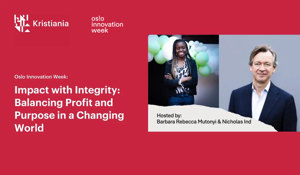
- Impact with Integrity: Balancing Profit and Purpose in a Changing Worldom-kristiania / kalender / impact-with-integrity-balancing-profit-and-purpose-in-a-changing-worldHow far should purpose-driven companies go when profits are on the line? Should a business committed to sustainability collaborate with oil and gas companies? Can a fashion brand known for environmental values partner with a fast fashion company and still maintain its integrity? In today’s complex world, leaders must navigate tough choices. Join us to explore how businesses can grow and make a positive impact, without compromising their core values.
- Film, TV og medierstudier / bachelor / film-tv-og-medierNøkkelinformasjon Hva lærer du? På Bachelor i film, TV og medier lærer du å utvikle, produsere og formidle audiovisuelle fortellinger i samarbeid med andre. Studiet kombinerer praktisk produksjon med teoretisk innsikt, og gir deg forståelse for hele prosessen; fra idé og konseptutvikling til ferdig verk. Studiet har to studieretninger, som samarbeider tett gjennom hele utdanningen: Foto, klipp og lyddesign: Denne studieretningen fokuserer på tekniske uttrykksformer innenfor audiovisuelle medier. Du får tilgang til fasiliteter som matcher bransjestandard, blant annet lydstudioer, miksekinoer, klippelabber, klipperom, gradekino, greenscreenstudio, blackboxer og kinosal med surroundlyd. Du får også tilgang til profesjonelt lyd-, kamera- og lysutstyr, og ulike digitale verktøy du kan forvente å møte ute i bransjen. Manus, regi og produsent: Her fokuserer vi på de kreative og narrative disiplinene, og utdanner studenter til å være premissleverandører og kreative ledere av prosjekter. Når du følger studieretningen manus, regi og produsent, vil du få mulighet til å fordype deg innen ett eller flere av disse fagområdene, men du vil også tilegne seg kunnskaper om alle de tre fagområdene og hvordan disse virker aktivt sammen. I denne studieretningen jobber dere i grupper og utvikler verk hvor alle gruppens medlemmer har vært med på hele forløpet. Uansett studieretning får du bred kompetanse, samtidig som du kan fordype deg i ett eller flere fagområder. Studiemodell Studiemodellen er et utdrag av programbeskrivelsen. Den gir deg en oversikt over obligatoriske emner og hvilke muligheter du har for praksis, utveksling og spesialisering. Bachelorgraden går over tre studieår. Hvert studieår er delt opp i to semestre. Vi tar forbehold om endringer. Hva kan du bli? Med denne bachelorgraden er jobbmulighetene mange innen film- og TV-produksjon, reklame og oppdragsfilm. Nesten alle produksjonsselskaper i Norge har ansatt en eller flere studenter fra våre film-, TV- og medieutdanninger. I dag jobber tidligere studenter blant annet i: Møt fagmiljøet Slik jobber vi Vi som fagstaben er aktive utøvere, forskere og kunstneriske utviklere innen film og relaterte medier. Det betyr at undervisningen er oppdatert, bransjenær og forankret i både praksis og teori. Vi har bakgrunn fra blant annet NRK og Monster, og står bak et utall prisvinnende og anerkjente produksjoner. Du vil møte undervisere som har vunnet Amanda-priser og priser fra Kortfilmfestivalen, samt vært kvalifisert og nominert til Oscar og Berlin filmfestival. Vi lager alt fra animasjons- og spillefilm til reklame og TV-serier, og vi gleder oss til å lære deg det vi kan om bransjen. Slik er studiehverdagen Bachelor i film, TV og medier er en del av Norges største kunstfaglige miljø. Skolens fasiliteter er i verdensklasse, og noe av det som skiller oss fra andre kunstfaglige utdanninger er at vi har samlet alle de kreative fagmiljøene under ett. Dette skaper et unikt læringsmiljø hvor studentene utfyller hverandre og bygger nettverk i løpet av studiene. Hverdagen er variert, intensiv og praksisnær. Du veksler mellom undervisning, workshops, øvelser, veiledning og selvstendig arbeid som ofte er knyttet til konkrete produksjoner. Mye av tiden foregår i studioer, klipperom og produksjonsmiljøer, alene eller sammen med medstudenter. Tilstedeværelse er viktig, fordi læringen skjer i samspill med andre. Studiehverdagen preges av samarbeid, diskusjoner og utprøving. Resultatet er et studiemiljø som speiler arbeidsformen i den profesjonelle film-, TV- og mediebransjen. Møt studieprogramleder Bli en del av et kreativt studentmiljø hvor teori møter praksis fra første dag. Gjennom bransjenært praktisk arbeid utvikler du et stort nettverk, faglig fordypning og helhetsforståelse. Livet som student På Kristiania får du en studietid som er mye mer enn forelesninger, fag og fakta. Du havner i et klassemiljø som motiverer. Foreleserne sørger for at alle blir ivaretatt, sett og hørt – slik at de virkelig kan prestere. Vi er også kjent for vårt inkluderende studiemiljø, og vi arrangerer alt fra konserter og fester, til filmvisninger og sosiale hyggekvelder. Målet vårt er at alle skal få en spennende studiehverdag – også utenfor klasserommet. Slik er søknadsprosessen Her finner du viktig informasjon om søknadsprosessen og hvordan du best kan forberede deg til studiestart. For å søke Søk tidlig! Vi anbefaler å søke så tidlig som mulig for å sikre deg studieplass. Slik søker du Send søknaden via vårt søknadsskjema. Blir du tilbudt studieplass kan du akseptere tilbudet og laste opp nødvendig dokumentasjon på dine kvalifikasjoner på Mitt Kristiania. Status på søknaden kan du se på Mitt Kristiania. Behandlingstid Du får beskjed når vi har behandlet søknaden din. For studier med rullerende opptak får du som regel et betinget tilbud innen 1–3 virkedager, så lenge det er ledige plasser på studiet. Du kan følge søknadsstatusen din på Mitt Kristiania. Når du har fått studieplass Semesterregistring Du må registrere deg for semesteret i StudentWeb. Dette er et krav for å få utbetaling fra Lånekassen. SiO (Oslo) og Sammen (Bergen) SiO og Sammen tilbyr boliger, helsetjenester, barnehage, treningssenter og mye mer til sine medlemmer. Lånekassen Alle våre studier er offentlig godkjent og gir rett til å søke lån og stipend fra Lånekassen. Klar til studiestart Støtte og tilrettelegging Som student kan du få rådgivning, tilrettelegging og oppfølging på studierelaterte spørsmål og utfordringer. Vi har taushetsplikt. Mitt Kristiania Her finner du timeplan, pensum, tjenester og alle andre verktøy du trenger som student. Studentbevis Studentbevis er ditt adgangskort til campus, betalingskort på printere og lånekort på vårt bibliotek. Dette får du i våre resepsjoner. Hva lurer du på? Ofte stilte spørsmål Ja, det er tilrettelagt for internasjonal studentutveksling i fjerde semester. Mer informasjon kommer. Det viktigste du trenger på bachelorprogrammet film, TV og medier er en god laptop som klarer å kjøre Davinci Resolve. Anbefalte minimumskrav til MAC: macOS 15 Sequoia eller nyere. Apple M2 eller nyere 16GB med system minne/RAM 512GB SSD eller mer Anbefalte minimumskrav til PC: CPU: Quad-core Intel eller AMD, 2.5 GHz eller raskere RAM: 16 GB DDR5 eller mer GPU: Dedikert grafikkkort med minst 4GB VRAM. NVIDIA GeForce RTX 3060 / AMD RX 6600M eller bedre, er gode valg. SSD: 512GB SSD I tillegg vil du trenge en hardisk (eller SSD) på minst 4TB til lagring av prosjekter og filer. Når dere jobber med større prosjekter på andre og tredje året har vi dedikerte klipperom til bruk. Les mer om våre studenter
 OsloBachelorHeltid