Søk
Filtre
Filtre
Resultat
- Green and Sustainable Logisticsstudier / nettstudier / enkeltemne / green-and-sustainable-logistics-Emnet skal gi deg det nødvendige rammeverk og strategi for å forstå grunnleggende sider involvert ved driften av grønn og bærekraftig logistikk.NettstudiumEnkeltemneHeltid \ Deltid
- Projectstudieportal / fakultet-for-helse-og-teknologi / masterniva / comm1l / project
- Research project archiveforskning / forskningsgrupper / design-studies / design-studiesCentre for Design Studies
- Project descriptionstudieportal / fakultet-for-helse-og-teknologi / masterniva / prd5100 / project-description
- Participants needed for research projectforskning / forskningsgrupper / healthpromotion / participants-research-projectSelf-help for ukrainian refugees - we need participants for this study
- The Green Transition: Leading and Communicating Sustainabilitystudieportal / hoyskolen-kristiania / doktorgradsniva / pcl9200 / the-green-transition-leading-and-communicating-sustainability
- Agile Projectstudieportal / fakultet-for-helse-og-teknologi / bachelorniva / pgr307 / agileproject
- Master Project 4studieportal / fakultet-for-samfunn-kunst-og-medier / masterniva / map5200 / master-project-4
- Participants needed for the research project “FactArt: Samfunnet ser”forskning / forskningsgrupper / participants-needed-for-the-research-project-factart-samfunnet-serParticipants needed for the research project “FactArt: Samfunnet ser”
- Systems project managementstudieportal / fakultet-for-helse-og-teknologi / masterniva / m5514 / systems-project-management
- Immersive Development Projectstudieportal / fakultet-for-helse-og-teknologi / masterniva / mie1200 / immersive-development-project
- Master Project 1studieportal / fakultet-for-samfunn-kunst-og-medier / masterniva / map4100 / master-project-1
- Master Project 2studieportal / fakultet-for-samfunn-kunst-og-medier / masterniva / map4200 / master-project-2
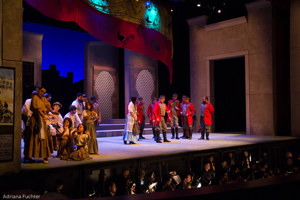
- Project Management at the Theatrekunnskap-kristiania / 2021 / 08 / project-management-at-the-theatreONGOING RESEARCH @ KRISTIANIA Creative industries To many in creative industries, the framework and vocabulary of project management seems unfamiliar to how they perceive their project-based work. Nonetheless they manage to develop and complete complex large-scale projects. The flexible and dynamic nature of project management in creative industries, along with an impressive ability to complete complex projects within set deadlines are under-researched and highlight the promise this field holds for the future of project management studies. Read also: Kunnskap Kristiania, the Innovation Issue (E-magazine) Increasing popularity From their roots in traditional organizational models of engineering and industrial mass production, a myriad of project management frameworks have emerged over the last few decades. Spearheaded by the software development industry, new and agile approaches to project management which emphasize creativity and flexibility, have been widely popularized and adapted in a wide range of industries, including creative industries. Despite their increasing popularity and usage however, knowledge about the appropriateness of project management philosophies in creative industries is limited. This is all the more surprising considering that this sector is considered to be one of the most established `industries’ when it comes to project-based, temporary organizational structures. Read also: Bak musikkbransjens glamorøse fasade (in Norwegian) Challenges Facing Creative Industries The increasing use of `project´ as a form of organization of work in both the private and public sector, also within creative industries, has made it possible to talk about a projectification of society. Some have gone so far as to suggest that short-term, project-based and contractual models of organization observed in the creative industries are harbingers of the next `new economy´ and could become the dominating organizational model for the broader, knowledge-based economy. Since the creative industry is highlighted as a rapidly growing part of international labor markets and play an increasing role for many countries' value creation and attractiveness, it is necessary to improve our understanding of how these organizational and leadership models work alongside the problems they face. The biggest challenge connected to the application of project methods and tools in the creative industries is the potential mismatch between using a streamlined and rigid approach of project management within the more flexible, creative industries. Project view on artistic production There is a need for more research exploring the contribution of the artistic, creative and explorer mindsets to project management. I will explore this field through a PhD and the research will be framed around the following key questions; How do the creative industries manage to complete large-scale, complex projects despite not necessarily identifying with project management terms and methodology? What elements of their practices can be understood to match with existing approaches and which, if any, represent entirely new ways of approaching the management of projects? To what extent can these insights be fruitfully applied to other project based work, both within and outside the creative industries? The project work form is important in the creative industry because all artistic production can be seen as a single project, be it a concert, a festival, a dance performance, a film or a theatre production. Read also: Skapte nye forbindelser mellom sang, dans og skuespill Characteristics of theatre projects To explore my key questions I intend to focus on the performing arts, in particular theatre productions (projects). They differs from other industries in having a variety of unique aspects which can provide important insights. Most theatrical producers and directors work with project management and planning in order to be able to coordinate everything. However, even though they use models for project context, they don´t necessarily identify with project management terms and methodology. The history of theatre is much longer than the comparatively short history of modern project management and during this long tradition a set of successful routines emerged which, consequently, could be considered as models for project contexts outside of theatre. While theatre productions exhibit a strong focus on human, creative and aesthetic aspects, they also involve other activities that are similar to more standard project management functions. Managerial personnel in a theatre operation must manage a complex of interrelated processes to ensure that crucial activities are completed on time. During the project, manuscripts are finished, teams are designed, scene construction and costumes developed, plans for rehearsal processes are made, plays and music are rehearsed. In parallel to these activities, the upcoming play is marketed and tasks related to economy, work conditions and stake-holders among others. An interesting aspect of theatre work is the common goal; the premiere. The completion of the project (production of the play) is subject to perhaps an even more critical deadline than projects managed in other industries, for example construction. It is very rare to hear about postponing or delaying a play in theatre, an interesting and possibly useful aspect that could be applied to other industries. Together, these unique characteristics highlight how the performing arts provide a rich and under-researched setting for new approaches and insights in the field of project management. References: Jones, Candanse, Mark Lorenzen, and Jonathan Sapsed. 2017. The Oxford Handbook of Creative Industries. Oxford: Oxford University Press. Petrović, Dejan, Vesna Milićević, and Adam Sofrinijević. 2017. “Application of project management in creative industry”. European Project Management Journal 7 (2): 59-66. Pielichaty, Hanya, Georgiana Els, Ian Reed, and Vanessa Mawer. 2017. Events project management. Adingdon: Routledge. This popular article presents higlights form a research proposal on Project management and creative industries in the era of projectification. This article is first published in Kunnskap Kristiania, The Innovation Issue (link to E-magazine) released on August 19, 2021. Text: Assistant professor Silje Straume, School of Arts, Design and Media, Kristiania University College. We love hearing from you: Send your comments and questions regarding this article by E-mail to kunnskap@kristiania.no .
- Systems project managementstudieportal / fakultet-for-helse-og-teknologi / masterniva / m5082s / systems-project-management
- Agile Project Managementstudieportal / fakultet-for-helse-og-teknologi / masterniva / ms210 / agile-project-management
- It project managementstudieportal / fakultet-for-helse-og-teknologi / masterniva / comm95 / it-project-management
- Master Project 3studieportal / fakultet-for-samfunn-kunst-og-medier / masterniva / map5100 / master-project-3
- Master’s Project in Design 2studieportal / fakultet-for-samfunn-kunst-og-medier / masterniva / mde5100 / masters-project-in-design-2
- Agile Project for Industry Challengesstudieportal / fakultet-for-ledelse-og-okonomi / masterniva / agp5100 / agile-project-for-industry-challenges
- Master’s Project in Design 1studieportal / fakultet-for-samfunn-kunst-og-medier / masterniva / mde4100 / masters-project-in-design-1
- Security Team Lead and Project Managementstudieportal / fakultet-for-ledelse-og-okonomi / masterniva / stp5100 / security-team-lead-and-project-management
- People – not economies – react to climate changekunnskap-kristiania / 2023 / 03 / People-not-economies-react-to-climate-changeKNOWLEDGE AT KRISTIANIA: Europe's Green Deal ambition In 2022 the EU challenged the research community to improve the state-of-the-art of «Integrated Assessment Models» (IAMs), as the existing models are too complicated. Kristiania is one of 10 European partners who joined in a Horizon Europe-funded project called WorldTrans – Transparent assessment for real people . It aims at improving models to see how economic and social development affects climate change. IAMs are models designed to assess how choices about economic and societal development affect each other and the natural world, including climate change. They are different from the classic climate models that are based only on natural science. Today’s models are too complex IAMs are programmed to provide policy-relevant insights into global environmental change and sustainable development. They are named «integrated» because they combine different strands of knowledge to model human society alongside the natural Earth system. They can be used to answer questions like: How can the world avoid global warming of 1.5 °C above pre-industrial levels «at the lowest cost», or «without the use of nuclear power»? However, today’s state-of-the-art IAMs are so large and complicated that their mechanisms are fully understood only by their makers. Because of this, there is a growing information gap between modelers, domain experts, citizens and the people making decisions about climate action in the real world. Engagement of citizens is important to reach Green Deal ambition For Europe to deliver on its Green Deal ambition, which is to make Europe’s economy climate neutral by 2050, the engagement of citizens may be as important as dry facts and figures. An important hypothesis behind the project's approach is: “People (not economies) react to climate change; people make decisions to act or not to act. Such is the nature of a democratic process. It is this realization that has made us choose to address transparency, openness, engagement and to work with models of the system, not its parts.” Kristiania will develop financial and monetary modules WorldTrans will use system dynamics methods to develop models of lower complexity, which are still able to capture key interaction between socioeconomic development and biophysical dynamics. In fact, we aim to expand current best practices to provide better representations of the actual processes of climate change and the functioning of the contemporary financialized economy. This will allow us to answer new questions regarding the distribution effects of climate policy, and the relative merit of financial taxation for green purposes. Kristiania will be responsible for the development of the financial and monetary modules, thus expanding the frontiers of current best global practices. The models must be understandable and usable The team will also work to «bridge the gaps» between models, experts, and user communities to ensure that integrated assessments are understandable and usable for citizens and policymakers alike. In particular, we aim to provide effective visual representations of the key feedback loops operating between the socioeconomic and the natural world. One example is the complex interactions between economic growth, demographic expansion, technological development and CO2 management. We hope to be able to provide everyone with the ability to understand and engage with these complex issues that will be dominating the global political discourse over the next decades. About WorldTrans WorldTrans is a 4-year, €5 million Horizon Europe funded project led by the Norwegian Meterological Institute and supported by 10 partners across Europe. Other partners from Norway are Kristiania and The University of Bergen. The project started 1st of December 2022 and will end 30th of November 2026 with a total budget of € 4 635 775 We would love hearing from you: Send your comments and questions regarding this article by e-mail to kunnskap@kristiania.no .
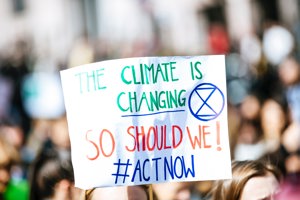
- Researcher calls for a new, sustainable normal after the pandemickunnskap-kristiania / 2021 / 11 / researcher-calls-for-a-new-sustainable-normal-after-the-pandemicKNOWLEDGE @ KRISTIANIA: Sustainability The ongoing COVID-19 pandemic has revealed how fragile our global development trajectory really is. While researchers, activists and public figures have tried to focus the attention on the critical environmental risks associated with unconstrained economic growth for decades, it took a global breakdown to shake the status quo . After two years of pandemic-related loss, fear and lockdowns, we are all eager to go back to normal times, to our career and our routines. But it must be a new normal, if we want to prevent much bigger disruptions down the road. We need to find a way to properly take into account our environmental, social and demographic limits, if we want to ensure that the normal times are here to stay. The Earth4 model The great challenge of the present is not to restore the previous trajectory of development after COVID-19, but to build a new one. And this is the challenge that our Earth4 project aims to help with. Connecting researchers active in different fields from all over Europe, the project aims to deliver the most ambitious sustainable development model ever created. We will combine environmental, social, demographic and economic trends, in order to develop a complex system dynamics model. This model will integrate both economic and environmental mechanisms for the creation, implementation and monitoring of ambitious policies supporting new, resilient growth trajectories. Available to the general public Policy-makers, however, are not the only planned beneficiaries. Earth4 will be made available to the general public, through a dedicated platform being developed by the Club of Rome. This club is a non-governmental organization (NGO) working since 1968 to promote environmental awareness at all societal levels, to enable everyone to engage with the issues at stake, and to monitor both global and local trends. This will measure the variety of socioeconomic and biological dimensions of current policies, aimed at comparing national efforts with what it would take to enact the global shift that we need. The model detects unsustainable development trajectories While the Earth4 model is not ready yet, the latest iterations already illustrate some key dynamics with perfect clarity. For years now, the awareness that environmental and social sustainability are one and the same. The Earth4 model is able to show their complex relations, illustrating how current development trajectories lead to both unsustainable environmental footprint and unsustainable debt ratios at the global level. Furthermore, it shows that policies aimed exclusively towards one side of the sustainability challenge, aggravate the other side, thus being ultimately self-defeating, as social collapse makes environmental progress impossible, and vice versa. Environmental limits and distributional inequality Cancelling or easing debts just accelerate unsustainable consumption and demographic patterns. Vice versa, imposing a qualitative shift towards green production and consumption makes existing debt loads impossible to bear, precipitating social upheaval. Earth4 shows that a holistic approach is not only desirable, but also the only desirable approach, under current conditions. Many solutions are possible. But all solutions must tackle both the environmental limits and the distributional inequality. Just an instrument, not an end To achieve this, academic research is insufficient. While the Earth4 team is looking forward to developing the best possible model integrating both socioeconomic and environmental mechanisms, the model in itself is just an instrument, not an end. The aim is to help activists, policy makers and the concerned public with the crucial political task of selecting, promoting, implementing and defending the policies we need to ensure that the new normal is here to stay. To this end, we plan to diffuse the Earth4 model, indicators, concepts and ideas as far and wide support the thousands of people that are already working, every day, in the same direction. Build a new normal Earth4 may look ambitious, but its complexity is just a pale reflection of the real issues that we are facing today. We need complex instruments to tackle complex problems. But the root of the solution is much simpler: get engaged. We all want a new normal after COVID-19. We need to realize, however, that the new normal will not be delivered to us: we need to build it. Reference: Collste, D., Randers, J., Goluke, U., Stoknes, P. E., Cornell, S., & Rockström, J. (2018). The Empirical Bases for the Earth3 Model: Technical Notes on the Sustainable Development Goals and Planetary Boundaries. Greaker, M., Stoknes, P. E., Alfsen, K. H., & Ericson, T. (2013). A Kantian approach to sustainable development indicators for climate change. Ecological Economics, 91, 10-18. Randers, J., Rockström, J., Stoknes, P. E., Goluke, U., Collste, D., Cornell, S. E., & Donges, J. (2019). Achieving the 17 Sustainable Development Goals within 9 planetary boundaries. Global Sustainability, 2. Text: Beniamino Callegari, Researcher at School of Economics, Innovation and Technology, Kristiania University College. We love hearing from you: Send your comments and questions regarding this article by E-mail to kunnskap@kristiania.no .