Søk
Filtre
Filtre
Resultat
- 5310studieportal / fakultet-for-samfunn-kunst-og-medier / bachelorniva / 5310
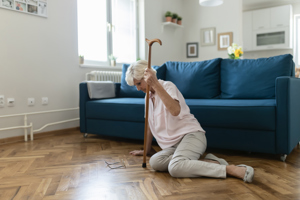
- Here's one way to make senior care saferkunnskap-kristiania / 2025 / 8 / Heres-one-way-to-make-senior-care-saferSCIENCE NEWS FROM KRISTIANIA: Health technology This text was published at Science Norway June 5 2025 titled " Improving elderly care with the latest fall detection technology ". In a recent study on how fall detection systems can improve safety and care quality, family members and next-of-kin expressed greater peace of mind, and healthcare personnel emphasised that fall detection systems improve their ability to respond rapidly. Family members said that knowing their senior relatives had reliable monitoring reduced their anxiety considerably, particularly during nighttime or when they were not physically present. As one family member described: "The most important thing for me is [knowing] that my mother is well taken care of." Healthcare personnel who participated in the study emphasised that the fall detection systems (FD) significantly improve their ability to respond rapidly, enhancing overall service quality. For example, one nurse noted that they can quickly intervene when patients truly need help, minimising unnecessary disturbances. The systems' reliable alerts also meant healthcare workers could better prioritise their workload, ultimately contributing to more efficient use of resources. How fall detection systems work When an elderly person falls, Internet of Things (IoT)-based fall detection systems use a combination of advanced sensors – such as ambient, wearable, and vision-based technologies – to automatically recognise the incident. The system then swiftly alerts caregivers or healthcare staff through smartphone notifications or dedicated monitoring devices, enabling immediate and targeted responses. In addition to making care safer and faster, these systems allow older adults to live independently at home for longer. This combination of sensor technologies ensures accurate detection while respecting individual privacy, which is crucial in healthcare settings. For example, ambient sensors discreetly monitor environmental changes such as vibrations or unusual sounds. Advanced vision-based sensors may utilise infrared or depth cameras, offering detailed detection without compromising personal privacy. Can support independent living at home longer The study shows that IoT-based fall detection systems can help improve senior care. In addition to making care safer and faster, these systems allow older adults to live independently at home for longer. This may reduce the need for institutional care and lead to significant savings for society, while also improving the quality of life for older adults. We also recommend further integrating IoT-based fall detection with broader healthcare technology ecosystems, such as smart home automation and telehealth platforms. This holistic approach can maximise benefits, streamline care processes, and provide comprehensive, personalised support to elderly individuals. Falls among older people pose a global challenge Falls among older people pose a significant and growing challenge globally, with serious consequences for individuals, families, and society. In Norway, nearly one-third of individuals over 65 experience at least one fall annually, leading to severe injuries, diminished quality of life, and increased healthcare costs. Norway ranks among the highest globally in fall-induced hip fractures, with around 9,000 cases each year. The number of falls underlines a need for effective technological solutions to enhance safety and timely care. Master students and researchers at the IDEAS Lab at Kristiania University of Applied Sciences have explored how the Internet of Things (IoT)-based fall detection systems can improve safety and care quality, specifically focusing on user experiences within elderly care services in Ulstein municipality. The study aimed to understand the benefits and challenges healthcare professionals, family members, and system managers faced when implementing such technologies. Participants in the study, including healthcare providers and family members (next-of-kin), highlighted several clear benefits. Limited sensor coverage and false alarms reduce trust Despite largely positive experiences, the study also revealed several challenges requiring attention for broader adoption and satisfaction, particularly in home care environments. Issues of limited sensor coverage appeared frequently due to room layouts or furniture placement, creating 'blind spots' where falls could go unnoticed. Additionally, instances of false alarms reduced users' trust in the system, emphasising the importance of accurate sensor calibration and data integration. Usability and training were also identified as critical improvement areas. Healthcare personnel called for more extensive training to maximise system effectiveness and reduce potential errors. Moreover, integrating these detection systems smoothly into existing digital platforms for healthcare providers remains a significant task for future implementation. Reference: Weng, A. L., Nysæther, M., Haddara, M., & Langseth, M. (2025). User satisfaction with fall detection systems in smart elderly care. Procedia Computer Science, 225, 563–570. Text: Moutaz Haddara , professor, School of Economics, Innovation and Technology, Kristiania University of Applied Sciences. This text was first published on sciencenorway.no on the 5th of June 2025 under the title " Improving elderly care with the latest fall detection technology ". We love hearing from you! Send your comments and questions regarding this article by e-mail to kunnskap@kristiania.no .
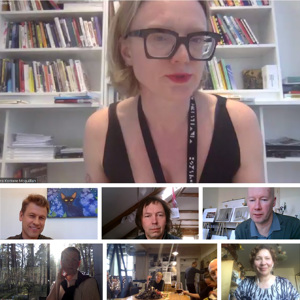
- How an Academic Lecturer became a Talk Show Host on Zoomkunnskap-kristiania / 2020 / 05 / how-an-academic-lecturer-became-a-talk-show-host-on-zoomSCIENCE COMMUNICATION: Talk Show on Design and Architecture “Episode 5 of Trentini Talk Show will look into the future of retail architecture, the domain that will be the most affected by COVID19. We already understand that some typologies are not going to survive the retail crisis, which we have entered with the international lockdowns.” At the end of 2019, the research group ArchCommLAb, that I’m chairing, delivered a book manuscript on retail architecture Fashion Spaces/ a Theoretical View to Dutch publisher Frame. In the forthcoming book, we examine how retail architecture is evolving from being brandscapes to becoming fashion spaces. We suggested that the separation between brandscapes, where the spatial production is closely linked to the brand, and fashion spaces, which can be considered as autonomous and sustainable, lies in the fact that brands might lose control over results (McQuillan, Hansen, 2020). It is important to note that we look at fashion not just as a study of dress, adornment and clothing, but as a broader phenomenon of social change. Listen to Podcast: Vésma Kontere McQuillan on Prada, Fashion Spaces, and Streetwear The release of the book was scheduled for May 28, 2020. Before the book launch came the date February 26, 2020, when the first coronavirus case was registered in Norway and March 12, when a national lockdown was announced. The release of the book is postponed until July 28, 2020. Read also: Co-creation of Brands Would you like to host a Talk Show? Shortly after the lockdown took place, a week before Easter, Mareks Nemme from Trentini called me. Trentini Spaces and Design is a design Gallery, located in Riga, Latvia. Before COVID19, they sold high- end design furniture. Now their objective was to create a new platform for design discussions, the first talk show for architects and designers on Zoom. The idea behind the show is every week, on Thursdays, to invite an internationally recognized professional in their fields such as architecture and design to discuss current topics in architecture and design. Trentini asked me to host the first season. Trentini Talk Show is a project I would never have imagined only two months ago. Read also: Instagram skaper ny arkitektur (article in Norwegian) I was not a TV show host but an academic lecturer I was not sure. On this point, Zoom was an unknown format for me. I was not a TV show host but an academic lecturer. I used to work with a visually strong presentation behind my back. The room was essential to me. I loved to come to space some time ahead of my lecture to make sure that the lights, sound, and position of the audience are working for me. I loved traveling with talks to try out different auditoriums created by other architects. Still, one of my favorites is the black auditorium by Kristin Jardmund Architects at Campus Vulkan, a signature building of Westerdals. Now, the venue is Zoom at the address Zoom Video Conference. The idea of “room” has changed during the COVID-19 situation, and it was an opportunity to test the hypotheses of fashion spaces in practice through the talk show format. New and unexpected zone of social interaction The significant changes in public architecture started already in 2005 with the second digitalization wave when Web 2.0 applications brought changes in consumer’s social and everyday behavior patterns. It was the beginning of the internet’s severe impact on spaces; even it was a voluntary choice by then. Already in 2019, the design society extensively was communicating via smartphones with apps of social media such as Instagram, while the phone owner’s favorite physical space was defined instead by free wi-fi than particular architecture. This year has brought us to a whole new and unexpected zone of social interaction between a retailer, who is the forcing power behind the retail architecture and their consumer. Right now, retailers do not sell products; they are trying to keep their communities via different types of social engagement, such as the talk show I’m hosting now. How will design and architecture change when we go back to physical spaces? Trentini Spaces and Design, has, at least temporarily, turned from a design retailer into a design educator. Right now Zoom is a new site of cultural production, do we want it or not. Retail architecture is developing the way we predicted. The question is – will be brands such as Trentini able to keep control over the cultural sites they are creating right now, and how it will change the architecture after we go back to physical spaces. But there is still time, and I’m thankful for those conversations with architects, designers, and audience. What I have learned so far, the Zoom room has it’s benefits. The last talk was with Sebastian Herkner , a German designer based in Offenbach am Main. He was in his studio, I was in Oslo, Trentini aired from their showroom in Riga while sitting on Herkner’s designed sofas, and design professionals from Stuttgart, Berlin, and Amsterdam joined our conversation. And while everyone is in different geographical places, the significant lesson I learned was an unexpected possibility to look another person in the eyes and connect in some not-yet- realized, imagined place. At the address Zoom Video Conference. Reference: Vésma K. McQuillan (2020): Fashion Spaces: A Theoretical View Paperback Frame Publishers. To be released on July 28, 2020. This feature article is written for Kunnskapsmagasinet Kristiania and first published on May 7, 2020. Text: Vésma K. McQuillan is Professor at Westerdals Department of Communication and Design, at Kristiania University College, Oslo, Norway, where she also chairs the ArchCommLab research group. Currently, she is hosting Trentini Talk Show , the first talk show for architects on ZOOM. Season one consists of eight episodes, which airs from April to June 2020 .
- Age-shaming er en trussel for arbeidslivetkunnskap-kristiania / 2023 / 04 / age-shaming-er-en-trussel-for-arbeidsmiljoetKUNNSKAP KRISTIANIA: Aldersdiskriminering Når du hører om aldersdiskriminering, tenker du kanskje på urettferdig eller dårlig behandling av eldre i arbeidslivet. Det er ikke så rart, fordi det har vært mye oppmerksomhet rettet mot aldersdiskriminering av eldre og hvilke negative konsekvenser dette har. Samtidig viser forskning at også unge voksne, definert som mennesker i slutten av 20- og starten av 30-årene, opplever fordommer og negative holdninger knyttet til alder. Vi mener det er mye å hente dersom en ser på hvilke styrker og kompetanser som trengs i dagens arbeidsmarked – fremfor hvilken alder de ansatte bør ha. Age-shaming – å bli sett på som for ung Age-shaming innebærer at unge voksne opplever diskriminering og negative holdninger knyttet til alder. For eksempel at unge arbeidstakere betegnes som «for unge», med mindre erfaring og dermed også med mindre kompetanse til å løse arbeidsoppgavene sine. Disse holdningene og fordommene er ikke bare skadelige for individet som rammes, men for hele organisasjonen. Hva går vi glipp av i arbeidslivet hvis disse holdningene fortsetter å regjere uten at vi er bevisst på dem? Er det en fare for at det blir en selvoppfyllende profeti? Alder sier lite om kompetanse Vårt utgangspunkt er at alder sier svært lite om hvilke styrker og hvilken type kompetanse et menneske besitter. For hva er egentlig kompetanse, hva er styrker – henger dette sammen med alder? Kompetanse defineres som « evner og ferdigheter som er nødvendige for å nå et bestemt mål» og kan opparbeides gjennom blant annet erfaring og utdanning. Fagspesifikk kompetanse, sosial kompetanse og teknologisk kompetanse er ulike former for kompetanse. Hvilke kvaliteter trengs for å nå målet? For å kunne si om noen har høy eller lav kompetanse, må man starte med å se nærmere på oppgaven eller målet med oppgaven man skal løse. Lang erfaring kan i mange tilfeller føre til god kompetanse på et område, men tilsier ikke nødvendigvis riktig kompetanse for måloppnåelse. Når vi snakker om riktig kompetanse for måloppnåelse, spiller også et begrep som styrker inn. Styrker er underliggende kvaliteter som gir oss energi, bidrar til personlig utvikling og gir grunnlag for mestring. Eksempler på styrker er kreativitet, empati, samarbeid og effektivitet. Når vi bruker styrkene våre bidrar det til gode resultater og engasjement på arbeidsplassen. Det er gjort undersøkelser av sammenhengen mellom alder og styrker, eksempelvis alder og kreativitet. Det er ingen klar korrelasjon mellom alder og kreativitet. Selv om det for eksempel finnes studier som indikerer at eldre kan ha lavere digital kompetanse, er ikke dette nok til at en kan skjære alle over en kam, og si at alle eldre har lav digital kompetanse. Som vi argumenterte for innledningsvis, er det heller aktuelt å se på hvilke styrker og kompetanser som trengs i dagens arbeidsmarked – fremfor hvilken alder de ansatte bør ha. Går glipp av verdifull kompetanse Dagens arbeidsliv preges av endringspress og komplekse problemstillinger. Kreativitet, samarbeid, innovasjonsevne og problemløsningsevne anses som svært ettertraktete styrker og kompetanser for organisasjoner som skal løse de problemstillingene vi står overfor. Forskning viser også at innsats, utholdenhet og lidenskap er like viktig som IQ i mange sammenhenger. Det er lite som tyder på at disse evnene kan knyttes til alder. Derimot kan age shaming føre til at vi går glipp av verdifulle styrker og kompetanser vi gjerne skulle dratt nytte av i arbeidslivet. Selvoppfyllende profeti Vi vet at holdningene våre ofte påvirker adferden vår. Pygmalioneffekten, som også er kjent som «selvoppfyllende profeti», gir en forklaring på hvordan forventingene våre styrer hvordan vi opptrer og påvirker utfallet av hendelser. Dersom du har negative forventinger, påvirker det hva du legger merke til rundt deg, og bevisst eller ubevisst handler du deretter. La oss si at en senior i en organisasjon ser på en junior som mindre kompetent eller som lite kreativ. Da vil muligheten for at senioren lærer noe av junioren være dårligere, samtidig som junioren kan få negativ selvoppfattelse av egne evner. Det kan gjøre at junioren eksempelvis ikke tør å stille spørsmål, eller uttrykke egne meninger og ideer i frykt for å bli oppfattet som uvitende. Age-shaming er negativt for arbeidsmiljøet Lite hemmer organisasjoners og individers læringsprosess så mye som frykt. Og motsatt; hvis kulturen og arbeidsmiljøet er preget av psykologisk trygghet, noe som innebærer at individer opplever det som trygt å ta risiko for eksempel ved å stille spørsmål, være uenig og uttrykke egne meninger, vil det kunne fremme læring, innovasjon og et mangfold av perspektiver. Age shaming kan true arbeidsmiljøet og den psykologiske tryggheten fordi individer blir usikre på egen kompetanse, og derfor unngår å stille spørsmål og uttrykke sine meninger. For å lykkes med å møte de komplekse problemstillingene og endringspresset i organisasjoner, må vi få bukt med negative holdninger og fordommer knyttet til alder. Så hva kan vi gjøre for å håndtere, og forhåpentlig redusere, age shaming på arbeidsplassen? Tre tiltak mot age-shaming Vil vil løfte fram tre tiltak som kan bidra til å minske age shaming på arbeidsplassen: Vær bevisst egne holdninger Har du kanskje en kollega du opplever som «for ung»? Holdninger våre er tillært gjennom våre erfaringer og de påvirker hvordan vi opptrer i ulike situasjoner og hvordan vi møter andre mennesker. Hvis du er bevisst din holdning og i tillegg vet at alder og kompetanse ikke nødvendigvis hører sammen, har du mulighet til å lære noe og samarbeide godt med den «for unge» kollegaen din. Møt hverandre som deltakere gjennom dialog Den norske filosofen Hans Skjervheim bruker begrepene deltaker og tilskuer når han snakker om hvordan vi kan møte andre mennesker gjennom dialog. Ser du på den «for unge» kollegaen din som en deltaker, da er du åpen og nysgjerrig på vedkommedes meninger og retter oppmerksomheten mot dem. Du kan likevel ha egne meninger, som du inviterer kollegaen din til å være enig eller uenig i. Gjennom dialogen møter vi hverandre som likeverdige deltakere der alle har noe å lære av hverandre. Frem god læringsholdning Læringsholdning defineres som en prosess der man stiller spørsmål, reflekterer og stiller seg åpen for feedback. Dersom de ansatte i organisasjonen føler seg trygge til å gjøre dette, vil sannsynligheten for at de lærer mer av hverandre være til stede. Man kan fremme læringsholdning i et team eller i en organisasjon ved å stille spørsmål til hverandre og se hverandre som kompetente mennesker med ulike styrker og perspektiver. Du bør derfor være nysgjerrig på den unge kollegaen din sitt perspektiv. Alle har noe å lære av hverandre I et bærekraftig arbeidsliv bør vi etterstrebe å møte hverandre som likeverdige deltakere, med ulike styrker, kompetanse og erfaringer og kompetanser. Vi har alle noe å lære av andre som er ulike oss selv. Denne teksten er også publisert på forskning.no den 26. april 2023 under tittelen Age shaming er en trussel for arbeidsmiljøet , på Nettavisen den 29. april 2023 under samme tittel og i HR-magasinet den 23. mai 2023 under samme tittel . Vi vil gjerne høre fra deg! Send spørsmål og kommentarer til artikkelen på e-post til kunnskap@kristiania.no. Referanser Binnewies, C., Ohly, S., & Niessen, C. (2008). Age and creativity at work: The interplay between job resources, age and idea creativity. Journal of Managerial Psychology , 23 (4), 438-457. Brook, J., & Brewerton, P. (2016). Optimize Your Strengths: Use your leadership strengths to get the best out of you and your team . John Wiley & Sons. Collins, M. H., Hair, Jr, J. F., & Rocco, T. S. (2009). The older‐worker‐younger‐supervisor dyad: A test of the Reverse Pygmalion effect. Human resource development quarterly , 20 (1), 21-41. Duckworth, A. (2017). GRIT Lidenskapen og standhaftighetens kraft. Cappelen Damm. Littman-Ovadia, H., Lavy, S., & Boiman-Meshita, M. (2017). When theory and research collide: Examining correlates of signature strengths use at work. Journal of Happiness Studies , 18 , 527-548. Edmondson, A. (1999). Psychological safety and learning behavior in work teams. Administrative science quarterly , 44 (2), 350-383. OECD. (2005). The definition and selection of key competencies - Executive Summary, fra http://www.oecd.org/pisa/35070367.pdf. Raymer, M. , Reed, M. , Spiegel, M. & Purvanova, R. K. (2017). An Examination of Generational Stereotypes as a Path Towards Reverse Ageism. The Psychologist-Manager Journal, 20 (3), 148-175. doi: 10.1037/mgr0000057. Skjervheim, H. (1976) Deltakar og tilskodar og andre essays. Oslo: Johan Grundt Tanum Forlag. Weinert, F. E. (2001). Concept of competence: A conceptual clarification. In D. S. Rychen & L. H. Salganik (Eds.), Defining and selecting key competencies (pp. 45–65). Kirkland, WA: Hogrefe & Huber. World Economic Forum, V. (2020). The future of jobs report 2020. Retrieved from Geneva . Denne teksten er også publisert på forskning.no den 26. april 2023 under tittelen Age shaming er en trussel for arbeidsmiljøet og på Nettavisen den 29. april 2023 under samme tittel .