Søk
Filtre
Filtre
Resultat
- – Bergen er en veldig kreativ by!aktuelt / 2024 / 02 / -bergen-er-en-veldig-kreativ-byDet var ønsket om å studere noe kreativt, som ledet Lene til fagskoleutdanningen Grafisk design i Bergen. – Vi var en liten klasse med et godt miljø, forteller hun. – Alle ble godt kjent med hverandre, og vi visste hvem som gikk i klassen over og under oss. Du kan ta fagskoleutdanning i Grafisk design i både Oslo og Bergen – les mer her! Lene mener at små klasser er en fordel for studentene, ettersom man kommer tettere på faglærerne. – Alle som underviste hadde bransjeerfaring. Vi kunne spørre om hva som helst og få ærlige tilbakemeldinger, husker hun. Fikk drømmejobben Da studiet gikk inn i sitt siste semester, var arbeidsmarkedet krevende. Lene forberedte seg på at det kunne bli vanskelig å få jobb som grafisk designer i Bergen. Derfor vurderte hun å prøve seg som frilanser eller ta en bachelor i utlandet. Så oppdaget hun stillingsutlysningen fra det digitale byrået Agens. – Faglærerne våre hadde sagt mye bra om Agens, så det var et sted jeg gjerne ville jobbe, forteller hun. Etter flere intervjurunder, ble Lene til slutt tilbudt en stilling som grafisk designer. – Jeg var innstilt på å måtte flytte til Oslo, hvor hovedkontoret ligger. Men de lot meg velge, så da ble det selvfølgelig avdelingen i Bergen. Jeg er hjemmekjær, og har familie og venner her, forklarer hun. Etter to og et halvt år gleder jeg meg fortsatt til å gå på jobb hver dag. – Det blir en del reiser til hovedkontoret hvert år, og vi har en årlig «workation» hvor vi jobber fra utlandet. Slik får jeg likevel tatt del i det store miljøet. Allerede én uke etter fullført studium, stilte hun opp på sin første arbeidsdag. – Jeg hadde aldri trodd jeg skulle få drømmejobben så fort! sier hun, og legger til at hun føler seg veldig heldig. – Etter to og et halvt år gleder jeg meg fortsatt til å gå på jobb hver dag. Kunsten å håndtere tilbakemeldinger Også erfaringen med å håndtere konstruktive tilbakemeldinger fra faglærerne, har vært nyttig i arbeidslivet. – Det var tøft å høre «Kanskje du skal begynne på nytt?», men jeg lærte veldig mye av det. I Agens samarbeider jeg med mange ulike utviklere og prosjektledere, og jeg presenterer arbeidet mitt både internt og for kunder. Det er ofte ulike meninger rundt bordet, og da er det fint å ha lært å ikke ta ting personlig, forteller hun. I løpet av de to studieårene fikk Lene prøve seg på alt fra app-design og nettside-design til plakater, bokomslag og pakningsdesign. Den brede erfaringen mener hun har vært nyttig å ha med seg inn i jobben. – Jeg føler meg veldig fleksibel. Selv om jeg i hovedsak er UX- og UI-designer, gjør jeg veldig mye forskjellig i arbeidshverdagen, forteller hun. Holder kontakten med klassen To og et halvt år etter at hun var ferdig utdannet grafisk designer, har Lene fortsatt kontakt med sine tidligere studiekamerater. – Vi hjelper hverandre fortsatt. Det hender at jeg sender dem spørsmål og får tilbakemeldinger og innspill i retur, forklarer hun. Hun har aldri angret på at hun valgte å studere grafisk design i Bergen. – Det er en veldig kreativ by. Etter at jeg begynte å jobbe, har jeg oppdaget at det finnes mange flere designbyråer her enn jeg trodde. Det er lett å tenke at man må til Oslo for å jobbe med design, men det må man absolutt ikke! avslutter hun.
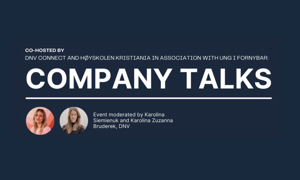
- Company Talks - by DNV Connect, Ung i Fornybar and Kristianiaom-kristiania / kalender / company-talks-by-dnv-connectWe invite you to Høyskolen Kristiania for a memorable evening, where we will take a deep dive into topics regarding digitalisation, artificial intelligence, climate change and sustainability.
- Why conspiracies catch fire – and how to stop themkunnskap-kristiania / 2025 / 8 / why-conspiracies-catch-fire--and-how-to-stop-themSCIENCE NEWS FROM KRISTIANIA: Conspiracy theories This text was first published on sciencenorway.no on the 14th of May 2025 with the title "How conspiracies spread - and how we stop them" . In 2023, nearly 1 in 4 people believed that Covid-19 was a bioweapon – despite overwhelming scientific evidence to the contrary. This is not just a fringe belief – it reflects a growing crisis of mistrust that’s undermining public health around the world. As misinformation becomes more sophisticated and harder to detect, health professionals must understand why people believe it in the first place Our recent study reveals how these narratives – from Covid-19 misinformation to HIV/AIDS denial – spread, who they affect, and what we can do to stop them. Is someone secretly harming your health? Health conspiracy theories claim hidden agendas behind public health policies, medical treatments, or scientific research. They suggest that powerful groups – like governments or pharmaceutical companies – are secretly harming the public for profit or control. Popular examples include claims that vaccines cause infertility, that HIV was engineered as a weapon, or that cancer cures are being hidden to protect pharmaceutical profits. These theories have real-world consequences. They reduce trust in health systems, increase vaccine hesitancy, and worsen health disparities – especially for already marginalised groups. Who believes them – and why? These beliefs are particularly widespread among people with low trust in government, lower education levels, and limited access to credible health information. A U.S. study found that nearly one-third of older black adults believed in HIV-related conspiracy theories, reducing their willingness to get tested or seek care. In South Africa, beliefs among adolescents were linked to scepticism about HIV prevention. In Spain, people with far-right political views were less likely to get vaccinated. Globally, people who believed in Covid-19 misinformation were less likely to follow public health advice like masking or social distancing. In extreme-right political circles, health misinformation is often framed in pseudo-scientific or racist narratives, which further erode public trust and threaten social cohesion. A combination of psychological, social, and technological factors drives these beliefs. Misinformation is more visible than reliable information The algorithms on social media platforms prioritise sensational content, making conspiracy theories more visible than reliable health information. During the Zika outbreak, false stories were shared three times more frequently than factual ones. Belief in conspiracy theories affects more than just individuals – it impacts entire communities Some influencers promote conspiracy-based health content while selling alternative products, using personal stories and emotional language to build trust with their followers. It puts all of us at risk Belief in conspiracy theories affects more than just individuals – it impacts entire communities. People may choose not to immunise their children, putting others at risk. Others may delay cancer treatment because they believe natural remedies are being suppressed. The mental health effects are also concerning. Healthcare workers who believed Covid-19 was man-made reported higher anxiety, depression, and lower job satisfaction. False narratives that link disease to specific ethnic or political groups can deepen societal divides, lead to stigma, racism, or even violence. What can we do? Several strategies have shown promise: 1. Inoculation messaging: Exposing people to weak versions of conspiracy theories along with factual refutations, helps them build resistance to future misinformation. In one study, this approach improved vaccine attitudes, especially in low-trust settings. 2. Media literacy education: Teaching people how to spot false claims and check sources can reduce the spread of misinformation. But caution is needed – some interventions make people overly sceptical. 3. Trust-building: Community engagement is key. Involving trusted community leaders, using culturally relevant messages, and being transparent about health decisions can help rebuild trust, particularly in communities with a history of medical mistreatment or marginalisation. 4. Platform accountability: Social media companies must take responsibility by adjusting algorithms, labelling false content, and cracking down on financial incentives for conspiracy promoters. 5. Long-term research: We need more studies comparing which strategies work best in different populations; testing over the long term and across diverse sociopolitical contexts. We must address the root causes As misinformation becomes more sophisticated and harder to detect, public health professionals must not just 'debunk' false claims but understand the social and emotional reasons people believe them in the first place. We must address the root causes: low trust, inequality, and lack of access to reliable information. That means combining digital tools with community-based outreach and evidence-based education. It also means holding platforms accountable while respecting free expression. In a world where misinformation spreads with a click, building resilience to conspiracy theories is not just an option – it’s a public health imperative. Reference: Kisa, A. & Kisa, S. Health conspiracy theories: a scoping review of drivers, impacts, and countermeasures , International Journal for Equity in Health, vol. 24, 2025. Text: Adnan Kisa, professor at the School of Health Sciences, Kristiania University of Applied Sciences. This text was first published on sciencenorway.no on the 14th of May 2025 with the title "How conspiracies spread - and how we stop them" . We love hearing from you! Send your comments and questions regarding this article by e-mail to kunnskap@kristiania.no .

- Fighting Fake Newskunnskap-kristiania / 2020 / 11 / fighting-fake-newsKNOWLEDGE @ KRISTIANIA: Teaching If there is one term that has dominated in media during the last years, it is “fake news”. “Fake news” refers to false information that is disseminated with dishonest intent. In addition, and most dangerously, fake news resembles accurate (validated, or fact-checked) news, but rather originates from non-trustworthy or dubious sources. Fake news is a type of disinformation, and can be contrasted with misinformation that refers to spreading false information in good faith, with intent to inform rather than deceive. Read also: Kunnskap Kristiania 2020/2021 (E-magazine). Designed to look real The spreading of false information that is designed to look real is not a new phenomenon, but the rate at which it can be produced, distributed and accessed by the public, are. In combination with other factors, this has led to the dawn of the “post-truth era” (Sinatra & Lombardi, 2020). A defining feature of the post-truth era is that many people are inclined to rely on their own beliefs rather than scientific knowledge, and even prominent figures, such as presidents, allegedly invent their own truths. Read also: The fight against fake news and electoral disinformation «Let me google that for you» Many higher education students are digital natives – the generation that have grown up with the Internet and Google at their fingertips. What’s more, these students may believe that facts, and thereby knowledge, are social constructions, and, in turn, all truths are relative. The same students have also been taught source evaluations skills in schools, but they may often fail to use these skills in daily life or in meeting with higher education courses. What’s more, fake news proliferators are so advanced that the skills students have been taught are becoming increasingly difficult to apply, redundant even. Les også: Slik lærer du barna dine å være kildekritiske Modern digital technology allows “anyone” to publish and share information. Due to the rate at which this occurs, the “self-cleansing” nature of the internet, where people can edit and correct one another’s mistakes, is “out of order”. Also, many search-engines work in a way that means that the first hits on a search result are not always the most scientifically objective, but rather likely to be paid advertisements. In other words, students who simply choose the first result that their search engine provides are likely to gain a skewed view of the issue in question. Read also: Farene ved falske nyheter (in Norwegian) “Everyone’s entitled to an opinion” Educational attempts to keep pace with societal advances, like teaching about critical source intervention, may be inadequate (Sinatra & Lombardi, 2020). For example, it is no longer sufficient to study the “about” information on websites, since this can easily be manipulated. Additionally, people and organisations in positions of authority may spread misinformation in good faith, so defaulting to trusting an authority may no longer work. In the face of this, students may experience feelings of frustration or a lack of trust in authority. Read also: Tsunami av falske nyheter, rykter og desinformasjon (in Norwegian) Students that hold stances such as “all opinions are equal”, “all knowledge is uncertain and created by human minds”, “critical thinking and attention to source information are (therefore) irrelevant”, is the stuff of educational research on epistemic beliefs. Epistemic beliefs are beliefs about knowledge and the process of knowing. “Everything’s broken” Traditionally, researchers have found that students progress through stages from viewing the world and it’s knowledge from categorical, right-or-wrong thinking, to anything-goes and everyone is entitled to an opinion, and eventually (hopefully) where students judge knowledge claims according to criteria like argument and evidence, and employ critical thinking and source evaluation. We now know that views like this develop in relation to specific knowledge domains, or topics, and that higher education seems to help this process. But could this progress be threatened or slowed down by fakes news and alternative facts, and lead to feelings that “everything’s broken”? Read also: Bruker falske nyheter for å slå ned på ytringer som ikke faller i smak (in Norwegian) How teachers can help students Source evaluation skills such as paying attention to who said what, based on what evidence and for what reason, as well as noting the author’s expertise continue to be vital. Students also need to learn that although everyone is entitled to an opinion, some opinions are better qualified than others, as well as understanding the importance of validating claims by cross-checking information sources. But in addition, students need to learn to think critically and analytically about claims, sources, and the links between, to compose and evaluate reasoned arguments, and develop understanding of methods and how to interpret research results. To be able to use these skills in relation to their studies and everyday life, they should be taught in context, as part of higher education courses, and not as a generic “study skills class”. Higher education teachers’ main foci are the subject they teach and their students’ well-being. Academic success and well-being in terms of being informed and making good decisions need time to develop. Some questions higher education teachers might ask themselves when considering how to help students to learn to navigate an alternative fact world are: How can I ensure that students are gradually introduced to the complexities of my subject? How can I help students see that knowledge claims are interconnected, developing and sometimes conflicting? What background knowledge do students need to be able to navigate (potentially false) claims in my subject? Can I include multiple (even conflicting) information resources to help shed light on phenomena from different sides and help students understand how different perspectives can co-exist? How can I show students that different authors have different beliefs that influence how they interpret issues and relations between them? Can I help students to gain an understanding of the processes researchers and scientists use to arrive at valid knowledge claims, for example, by including them in my own research? This list is not exhaustive and should be adapted to the intricacies of teachers’ specialist fields of knowledge, with the same being true of the teaching methods that educators use. Some suggestions for teaching include: starting discussions where students are asked to adopt different perspectives and argue a case that they don’t necessarily believe, inviting guest lecturers with clashing views or presenting findings from different research paradigms as ways to improve perspective-taking and argumentation skills. Involvement in designing research projects, collecting and analysing data, and communicating results will also help improve students’ understanding of what research reports mean and how results can be misrepresented, or even faked. References: Greene, J. A., Sandoval, W. A., & Bråten, I. The handbook of epistemic cognition , New York, NY: Routledge. Kendeou, P., Robinson, D. H., & McCrudden, M. T. (Eds.). (2019). Misinformation and fake news in education . Charlotte, NC: Information Age Publishing. Kuhn, D., Cheney, R., & Weinstock, M. (2000). The development of epistemological understanding. Cognitive Development, 15, 309-328. Sinatra, G. M., & Lombardi, D. (2020). Evaluating sources of scientific evidence and claims in the post-truth era may require reappraising plausibility judgments. Educational Psychologist, 55 , 120-131. Wendling, M. The (almost) complete history of ‘fake news’ (22.01.18) https://www.bbc.com/news/blogs-trending-42724320 . This popular article is first published in Kunnskap Kristiania 2020/2021 . Kunnskap Kristiania is a science Communication Magazine published by Kristiania University College. Text: Professor Leila Ferguson, School of Health Sciences at Kristiania University College.
- Nine recommendations on risk communication during health criseskunnskap-kristiania / 2023 / 06 / nine-recommendations-on-risk-communication-during-health-crisesKNOWLEDGE FROM KRISTIANIA: Audra Diers-Lawson on risk communication In December 2022 I found myself sitting in a hotel bar in Almaty, Kazakhstan talking with a friend and colleague who works for the World Health Organization. We talked about the importance of building communities of knowledge, practice, and experience to tackle global problems like COVID-19. I was in Kazakhstan to participate in the WHO’s workshop on risk communication and community engagement for Central Asia, offering a keynote address on lessons learned from the pandemic in Europe, as a way of sharing best practice. How governments should communicate during a health crisis To promote self-protective behaviours during a pandemic like covid-19, governments must ensure interactions between all stakeholders – citizens as well as all the managing institutions. In my research I had chosen 9 countries of focus (Bulgaria, France, Germany, Hungary, Italy, Lithuania, the Netherlands, Portugal, and Sweden) and 2 countries for comparison (UK and US), based an exhaustive search for English-language resources related to the pandemic. What I found was this: Trust in the communicating institutions is a central – if not the central – feature of communication success, regardless of relative success in managing the pandemic. Two-way communication or citizen engagement was crucial for communication success. Governments must actively listen and respond to their citizens’ needs. Effective pandemic communication strategies should focus on explaining to citizens what self-protective behaviours should be taken and why , within each country’s national contexts. During a pandemic, governments should adopt a positive tone supporting citizen confidence in taking action, communicating engagement and responsiveness because defensive messages are simply less effective. Citizens prefer transparency and a constructive management of fear and anxiety. Tailoring the messages to meet different demographics’ information needs and attitudes about government is essential. For example, minority communities within countries often have different information and communication needs. A contingency approach to responding to health crises Overall, the literature analysing COVID-19 communication supports the need for an effective stakeholder relationship management framework . This framework focuses on the interactions between the institutions managing COVID-19, citizen interests, and COVID-19-related issues that lead to self-protective behaviours being enacted. This kind of framework is meant to support agile crisis response to allow governments and public health authorities to diagnose the key communication challenges within a population and then design messages to meet those citizen information needs – reflecting one of the best practices learned from COVID-19. Strategies must be informed by context Across the EU, UK, and US literature, citizens’ knowledge of the disease, their own perception of risks, and the amount of control they feel they have directly, affect their willingness to take measures to protect themselves. Within the context of the COVID-19 pandemic, people were already afraid. Therefore, it makes more sense to focus on building positive messages about reducing risk rather than fear-based messages. Countries like England and Hungary used fear-based messaging or emphasised punishment for non-compliance and had lower levels of citizen compliance with instructional messages. A key factor to behaviour is citizens’ trust in institutions In my research of 236 scientific publications and institutional reports related to the COVID-19 pandemic between 2020 and 2022, I found that institutional trust emerged as central to citizen behaviour. Building and maintaining a good reputation and trust – especially related to health issues – is an essential tool for governments and public health authorities in order to effectively manage future pandemics. Whether research was analysing the high-trust environments in Sweden or explaining why political polarisation eroded institutional trust and correlated with a low level of adoption of self-protective behaviours in countries like the US, UK, Bulgaria, and Hungary, institutional trust was the key factor. People do what they believe has an effect Our confidence in our ability to enact certain behaviours AND that those behaviours lead to positive outcomes, guides what we actually do. Such citizen-related factors highlight the demographic and attitudinal predispositions for people to enact self-protective behaviours. Demographic factors matter and depend on location, culture, and timing. The evidence from across the countries clearly concludes that governments and public health authorities should: (1) explain what people should be doing, (2) provide clear instructions on how to perform the behaviour correctly, and (3) provide evidence that there is a benefit for them in performing the behaviours. Information gaps lead to mis- and disinformation Popular media and scientific research widely recognise that the COVID-19 ‘infodemic’ poses a serious threat persuading citizens to adopt self-protective behaviours. When citizens feel they do not have enough quality information from their governments and public health authorities, they will fill perceived information gaps by relying on other sources of information - thus opening the door to mis- and disinformation. Additionally, in such a prolonged crisis, several pieces of research also identified a new challenge related to information fatigue. Information fatigue emerged as a prominent factor in countries like Germany, Italy and Lithuania. Finally, when there are lower levels of information literacy – that is being able to discern good information – citizens are more resistant to adopting self-protective behaviours recommended (or required) by governments and public health institutions. While it is obvious to say that ‘good pandemic communication practice’ is necessary, good pandemic communication practice requires planning, adaptability, and a strong understanding of citizen attitudes. References: Jacob, C., Hausemer, P., Zagoni-Bogsch, A., Dr. Diers-Lawson, A. The effect of communication and disinformation during the COVID-19 pandemic , European Parliament 2023. We love hearing from you: Send your comments and questions regarding this article by e-mail to kunnskap@kristiania.no .

- A simple trick for personalized Christmas photos - with an added science bonuskunnskap-kristiania / 2023 / 12 / A-simple-trick-for-personalized-Christmas-photos-with-an-added-science-bonusCHRISTMAS AT KRISTIANIA: Álvaro Lomba on blur and bokeh in photos The end of the year is approaching and with it comes the time to meet family and loved ones, materialising their existence into a physical form that we can experience through all our senses and not through a mere digital interface. These are moments for taking dreamy photographic memories in front of bright Christmas lights to the delight of our social media contacts. Here's a little project for customizing your family photos ’ high lights using a DIY creative “ bokeh ”: Step 1: Cut out a recognizable shape Use cardboard or thick paper and cut out a shape you like: a heart, a tree, a star, your cat - use your imagination! Start with a small cut-out shape first (2x2cm). Its size depends on your lens’ aperture, if you cut it too big, the effect won’t work. Step 2: Place the card in front of your lens and focus on an object Make sure the paper is placed close, even touching the glass in front of your lens. Step 3: Shoot the picture The same picture shot with and without our heart-shaped-card. How is this effect created? Lens bokeh , taking its name from the Japanese term “boke”, means “blur” or “haze”. Bokeh is the name given to the quality of the out-of-focus areas in a photograph, and its appearance depends on the construction of the lens. Let’s start by explaining the meaning of out-of-focus and how this happens. Optical lenses use the properties of multiple glass elements to spread and bend light into converging at the camera’s sensor. When we rotate the focus ring on a camera lens (or chose the focus on a mobile phone), we are changing the position of those glass elements, altering the convergence or meeting point of the light rays inside the lens. By doing this, the light from all the objects the lens “sees” at a specific distance come together, producing sharp contours. These “objects” may be your family members, who you want to be in focus. The rest of the room will be blurred because the rays from those areas don’t converge on your sensor. In those areas, the photosensitive sensor will not be hit by the light of a especific point but rather from a wider area called circle of confusion , blending all the details into a blurry, featureless blob. Bokeh occurs on all areas of all photographs. However, its effects are much more noticeable in the very out-of-focus areas due to the bigger circle of confusion. And especially in dimly lit scenes with small points of light far from the focal point. Imagine a night shot of a person in front of distant city lights, sinilar to the header photo in this article. This creates rear bokeh. A party sparkler very close to the camera while the focus is on a on a person farther behind would create front bokeh . Rear and front bokeh of the same lens in different positions. Notice the uneven distribution of light on the screen. Rear bokeh has darker and softer edges while front bokeh shows a brighter edge. The size of the bokeh can be adjusted by changing the lens aperture. Bokeh size and aperture are proportional. This is because the aperture determines how big the area, through which light enters the sensor. That way the bigger that area is, the bigger the circle of confusion and consequently, the bigger the bokeh. By placing our cut-out card in front of the lens we are blocking the light from some specific directions, an effect barely noticeable in the in-focus areas, but clearly visible in the parts where the circle of confusion is bigger (out-of-focus areas). Bokeh “character” is determined by the construction of the lens elements, leaving limited space for artistic expression, but its shape can be easily altered by partially blocking the incoming light in front of the lens. This is why we can create the shapes we want out of the lights in our photos – hearts, trees, stars, snow flakes; use your imagination and add a personal touch to your Christmas photos! Text: Álvaro Lomba , høyskolelektor ved Westerdals Institutt for film og medier, School of Arts, Design and Media ved Kristiania. Foto: Álvaro Lomba og Hilde Finnseth. We love hearing from you! Send us your questions or comments by e-mail: kunnskap@kristiania.no . Stay up to date on news from Kunnskap Kristiania: News letter Facebook

- What are the long-term economic consequences of pandemics?kunnskap-kristiania / 2020 / 12 / what-are-the-long-term-economic-consequences-of-pandemicsKNOWLEDGE @ KRISTIANIA: Economic impact of pandemics Months after the first outbreak, the ongoing pandemic remains an emergency, demanding immediate attention, quick responses and a lot of flexibility from all of us. Directly or indirectly, our lives have been affected, forcing us to focus on the short-term task of re-organizing routines and plans to adapt to ever evolving limitations, rules, and pathological conditions. Read also: Kunnskap Kristiania 2020/2021 (E-magazine). The public response has similarly been concentrated on the impelling need to slow down the contagion, provide for the afflicted and organize appropriate quarantine measures. The specter of economic damage, and how to pay for the necessary accompanying stimulus measures, have entered the debate, especially in the EU, but remains somewhat marginal in the face of the second wave hitting Europe in the Fall. Read also: Heroes on the edge of burnout Changing everything, something, anything really? These conditions make taking a long-term perspective quite difficult, as it is generally the case in any serious crises. Some debates have started, however, on how COVID-19 is going to change everything, something, anything really. Many contradicting voices can be heard already. Perhaps it would be useful to listen to what economics has to say in this regard. The “dismal science”, that won such a somber title in consequence of its early fascination with the apparent inevitability of poverty, famine and disease, has since then largely abandoned the issue of pandemic and diseases. Read also: The Rise of the Counterfeit Industry Long-term consequences of a pandemic These topics are rarely found in economic textbooks anymore. However, some lessons can still be found in the scientific literature, provided one is willing to take a systematic and comprehensive look. At Kristiania University College, we did just that, looking for a scientifically founded vision of what the long-term consequences of a pandemic would look like, from an economic perspective. Here is what we found. Read also: Fighting Fake News Black Death – a historical turning-point The first surprising result is that, historically, most pandemics have had long-term beneficial consequences for socio-economic development. Even the most terrifying of such events, the Black Death, is generally considered a historical turning point, whose long-term consequences were key to explaining the relative rise of Europe in relation to other previously more advanced areas, such as the Middle East and the Far East. Noticeably, this was not a result of Europe being spared from the worst of the disease, but rather a consequence of the particularly high mortality rates experienced by the West at the time. Strange as it may sound, the exceptional unhealthiness of European cities, described as “open-air graveyards” in some chilling passages, was key to ensure perpetually higher salaries, leading to positive feedbacks in consumption patterns and production techniques, and the accumulation of substantial technological advantages in many areas. Listen to podcast : Take-Home Lessons from the Corona Crisis Long-term impacts of AIDS The present world, however, is vastly different from the one visited by the Black Death. To understand the present, the numerous studies on the long-term impacts of that modern pandemic, AIDS, may be more relevant. Surprisingly, however, the picture remains somewhat consistent. Some researchers claim that higher mortality rates will eventually result in more sustainable long-term growth patterns, accompanied by much higher per-capita GDP growth rates. Others point to the severe and long-lasting human and medical costs of the disease. Crucially, while the expected increase in salaries appear to have taken place in most heavy-hit African countries, this seems to also have increased the rates of pupils dropping out from education; while some are forced to work after being orphaned by the disease, most seem to be attracted by the relatively higher wages now available. As a result, in the current economic system, higher wages may lead to a subtle but persistent reduction in the accumulation of human capital, thus counteracting the benefits attending a more sustainable demographic expansion. Read also: The Rise of Generation Co Lessons from the economic literature While the complete long-term impact of pandemics is complex, two primary implications can be drawn by policy-makers from economic literature: The first is that the mechanisms of each pandemic are idiosyncratic: forecasting exercises commonly fail to account for the true scope of its effects, while the most desirable characteristic of response plans appear to be flexibility and willingness to quickly implement new solutions and approaches. The second is that, while the public response dominates the first phase, it is the private response that shapes the long term, as either entrepreneurial opportunities are discovered and exploited to bring about economic and institutional renewal, or the economic system struggles to recreate an old normal when surrounding conditions have changed. The effort to save and preserve must give way to the will to change and evolve. References: This popular article is based on two articles currently under review. Their titles are: “Pandemics and development: A literature review”, and “Entrepreneurial responses to health shocks: A literature review”. Both are authored by Christophe Feder and Beniamino Callegari. The article is first published in Kunnskap Kristiania 2020/2021 . Kunnskap Kristiania is a science Communication Magazine published by Kristiania University College. Text: Beniamino Callegari, Researcher at School of Economics, Innovation and Technology, Kristiania University College. Photo: Covid-19 has affected us all. What will be the long-term economic impact of the pandemic? Photo by Colin D on Unsplash.
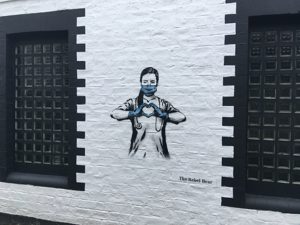
- Bridging the gap between art and sciencekunnskap-kristiania / 2021 / 09 / bridging-the-gap-between-art-and-scienceKNOWLEDGE @ KRISTIANIA: Artistic Research When Johannes Kepler drew musical notes in his books reflecting on the universe as a harmony in music and when Albrecht Dürer developed the linear system in painting based on scientific calculations, science, humanities, art, knowledge production, epistemology had not yet been exposed to systematic institutionalisation and claustrophobic categorisation. Kepler, the scientist, and Dürer, the artist, shared basic ways of producing knowledge and approaching their material, e.g., by observing, by finding patterns and by conceptualizing. To them mixing the fields of art and science did not represent a schism, it offered possibilities and solutions they could not have accessed by treating either field separately. Read also: Kunnskap Kristiania, the Innovation Issue (E-magazine) What qualifies as Artistic Development Work? Today Artistic Development Work presents us with an opportunity to enhance our perception of art, science and academia in general. Art is intrinsically reflective, researching and investigative, so what kind of artistic activity qualifies as Artistic Development Work and not simply as art? Whereas making art contains different forms of reflection and knowledge production the primarily objective is production of art within a given artistic community, i.e., a given art product being the main goal. Artistic Development Work, on the other hand, attempts in and through the art production (the process and the practice) not only to participate in and contribute to the artistic community, but also to gain an epistemological outcome of art making and art practice, i.e., to what we comprehend and cognize. Thus, Artistic Development Work includes a wide range of explorative and reflective methods, concepts, and ideas rooted in the making of art. Read also: Project Management at the Theatre Useful beyond the sphere of art Since the focal point of Artistic Development Work is to create new knowledge within a given area there is generally a strong emphasis on developing new methods and practices. This exploratory – and not explanatory – approach to research is often seen as contrary to traditional scholarly research. However, Artistic Development Work-methods have turned out to be useful also beyond the sphere of art. Artistic Development Work-projects are documented to intertwine with non-artistic projects on a variety of fields such as gender issues, environment, political matters, globalization etc. Perhaps the most tangible example of the benefits of Artistic Development Work-methodology in science is the concept of art-science. Typically, art-science projects are conducted as artist-in-residence programs. The artists may function as advisors, collaborators, interlocutors or give workshops or work on an artwork. Fusion of science, technology and arts The STARTS (Science + Technology + Arts)-project, initiated and funded by the European Commission, is an emblematic example of how art-science can contribute to technological innovation safeguarding human needs and values. The fusion of science, technology and arts has shown how transdisciplinary approaches can handle complex challenges not only within the realm of science and technology, but also with regards to organizations and organizational structures. Read also: Skapte nye forbindelser mellom sang, dans og skuespill (in Norwegian) Platform for transdisciplinary collaboration Kristiania University College is an adequate platform for transdisciplinary collaboration. Health sciences, innovation and technology are obvious areas where Artistic Development Work can be involved in developing new knowledge and new methods and simultaneously gain experience with and insight into theories and methods beyond art and Artistic Development Work. As the largest centre of arts education in Norway, the School of Arts, Design and Media at Kristiania is a crucible of creativity and learning. Students meet music, dance, film, music theatre, creative writing, acting, and more under the same roof while Artistic Development Work is grounded in a diverse academic environment. Read also: Bak musikkbransjens glamorøse fasade (in Norwegian) Tool for reaching out Together a variety of disciplines from seemingly adversarial professional zones can bridge the academic gap between art and science. Transdisciplinary collaborations within Kristiania could even be used as a tool for reaching out, initiating research alliances and partnerships with both public institutions and private companies, nationally as well as internationally. So, the paradigmatical gaze of the scientist can indeed be combined with the mystifying gaze of the artist researcher. Or maybe that is the wrong way to put it. Perhaps there is a closer affinity between the scholar’s approach to finding out and the artist’s way of exploring than institutional borders suggest. Furthermore, the typical meeting the extraordinary, the typical linked with the idiosyncratic, the general facing the individual etc. is not only enriching both science and Artistic Development Work in itself, but also forcing us to continuously revaluate what science and research is all about, and eventually spur us on to find what we are not looking for. Reference: This article is first published in Kunnskap Kristiania, The Innovation Issue (link to E-magazine) released on August 19, 2021. Text: Associate professor Ole Egeberg, School of Arts, Design and Media, Kristiania University College. We love hearing from you: Send your comments and questions regarding this article by E-mail to kunnskap@kristiania.no .

- Scandinavian responses to a crisiskunnskap-kristiania / 2024 / 05 / Scandinavian-responses-to-a-crisisSCIENCE NEWS FROM KRISTIANIA: Magde Mohamed Nour on crisis communication during COVID-19 Renowned for their robust healthcare systems and superior living standards, Scandinavian nations faced a rigorous test during the covid -19 pandemic. Despite their intertwined geographical and cultural links, Denmark, Sweden, and Norway unfolded divergent approaches to combating this unseen adversary, revealing subtle nuances within their governance, public health strategies, and communication methodologies. C rafting a c ollective r esponse Navigating uncharted territories , Scandinavian leaders harnessed a range of communication strategies, intertwining scientific rationale, public health imperatives, and a plea for collective responsibility. Messages were crafted to instruct and inspire, motivate, and mobilize their nations toward a common goal. Sweden, for instance, emphasized tolerance and a collective, sustainable approach, advocating for methods their society could uphold for an extended duration. Norwegian communications interwove messages of nationalism and solidarity, while Denmark ensured the transparent conveyance of their strategies and rationale, aiming to nurture understanding and compliance among citizens. A c risis u nfolds As covid -19 relentlessly threaded its way across the globe in early 2020, Scandinavian countries were not invulnerable despite being shielded by their adept healthcare frameworks . All three nations, Denmark, Sweden, and Norway, recorded their inaugural cases in February, swiftly followed by escalating infection rates and mortality. An intimate examination discloses the profound and intriguing ways these nations navigated policy making, crisis management, and public communication during these pivotal times. Diverse s trategies, a c ommon e nemy In its initial response, Sweden adopted a conspicuously lenient approach, eschewing stringent lockdowns and placing a substantial emphasis on individual responsibility, with advice and recommendations taking precedence over enforced restrictions. Swedish Prime Minister Stefan L ö fven encapsulated this sentiment, underlining the pandemic ' s enduring nature and asserting that individuals' diligence and adherence to guidelines were crucial for national wellbeing. Conversely, Norway and Denmark implemented stricter and more authoritarian measures. Norway enacted the National Preparedness A ct and executed a lockdown, ensuring comprehensive awareness through multilingual alerts to citizens and foreign investors alike. In response to a concerning surge in cases, Denmark introduced new policies, amended existing legislations, and enforced measures, such as social gathering restrictions and border controls, to curb the spread of the virus. Unveiling r esilience and f lexibility The responses from these countries reveal discrepancies in their immediate strategic approaches and showcase their systemic resilience and flexibility in adapting to an evolving crisis. Although Sweden's more lenient approach was met with global scrutiny, the various strategies in the Scandinavian countries were deeply entrenched in the respective nations' socio-cultural, political, and administrative contexts. A tension between decentralized and centralized management Intriguingly, the pandemic highlighted the tension between decentralized and centralized management within the healthcare systems of these nations. Denmark and Norway, utilizing centralized decision-making, could promptly enact comprehensive policies, such as lockdowns and movement restrictions. Meanwhile, Sweden ' s decentralized model placed significant autonomy in the citizens' hands, aligning with their historically ingrained values of personal freedom and responsibility. The r ole of i ndividuals as a ctive p articipants Beyond policy making and strategy implementation layers, the Scandinavian responses collectively illuminated the indispensable role of the individual. Through public address, leaders of these nations acknowledged the intrinsic value of each citizen ' s contribution, crafting a narrative where every person became a pivotal component in battling the pandemic. S trategies for the f uture While the contours of the covid -19 responses among the Scandinavian nations diverged, unity prevailed as a common thread: in adherence to recommendations, compliance with restrictions, and a shared commitment to societal well-being. The strategies adopted by each country offer unique insights into their governance structures, public health systems, and societal values, providing a rich tapestry for comparative analysis and facilitating future learning and preparedness for the global challenges that lie ahead. covid -19 underscored that while a virus may not respect borders, a unified, well-communicated approach rooted in a country ' s socio-political context is paramount in steering through such crises. It serves as a reminder that the collective actions of individuals, guided by clear, compassionate, and coherent leadership communication, form an invaluable asset in confronting adversities that span across nations. Tekst: Magde Mohamed Nour, P h.d. -candidate, Department of H ealth Sciences, Kristiania. This text was published at Science Norway on 3rd of April 2024 titled " Embracing unity: how Scandinavia responded to combat Covid-19 ". References : Bjørkdahl , K., Kjeldsen, J. E., Villadsen , L., & Vigsø , O. (2021). Argumentum ad solidaritatem : Rhetorical Leadership Strategies in Scandinavia During COVID -19. In Communicating COVID - 19 (pp. 163-184). Springer. Christensen, T., & Lægreid , P. (2020). Balancing governance capacity and legitimacy: how the Norwegian government handled the COVID ‐19 crisis as a high performer. Public Administration Review , 80(5), 774-779. Lemke, T. (2015). Foucault, governmentality, and critique . Routledge. Yarmol -Matusiak , E. A., Cipriano, L. E., & Stranges , S. (2021). A comparison of COVID -19 epidemiological indicators in Sweden, Norway, Denmark, and Finland. Scandinavian Journal of Public Health , 49(1), 69-78. We love hearing from you: Send your comments and questions regarding this article by e-mail to kunnskap@kristiania.no .

- The pervasive dangers of autocratic responses to criseskunnskap-kristiania / 2024 / 04 / the-pervasive-dangers-of-autocratic-responses-to-crisesSCIENCE NEWS FROM KRISTIANIA: Adnan Kisa on global responses to crises Although Brazil and Turkey captured international attention with their audaciously autocratic responses to COVID-19, it's imperative to underscore that analogous trends have permeated throughout various countries across the globe. In numerous nations, leaders have adeptly manipulated the crisis as a potent pretext to constrict civil liberties, mute opposition, and consolidate power in an autocratic fashion. Quite frequently, these leaders have intentionally downplayed the pandemic's severity, disseminated misinformation, and utilized a palette of divisive rhetoric. Such tactics not only impedingly obfuscated effective pandemic response, but also significantly eroded trust within public institutions. The erosion of democratic norms In Hungary, for instance, Prime Minister Viktor Orbán strategically utilized the pandemic to push through emergency legislation, rendering him the power to rule indefinitely by decree. Though ostensibly framed as a responsive measure to the crisis, it has tangibly undermined democratic checks and balances, fostering pervasive concerns about Hungary's future trajectory as a democratic state. In the Philippines, President Rodrigo Duterte implemented a stringent lockdown, endowing security forces with sweeping powers to enforce quarantine measures, which critics argue were astutely used to suppress dissent and strategically target political adversaries. Nationalism and the blame game Various leaders have resorted to wielding nationalism, framing the pandemic as an external threat and strategically orchestrating a blame game. Such an approach often involved deftly deflecting blame onto other nations, thereby diverting attention from domestic failures in managing the pandemic response effectively. Globally, governments have enforced stringent crackdowns on opposition and insidiously restricted freedom of speech during the pandemic Former President Donald Trump's articulation of the "China virus" exemplifies this strategic tactic, wherein he incessantly blamed China for the virus's spread. Analogously, leaders in Russia and India have employed nationalist narratives to overshadow their governments’ respective shortcomings. Suppressing dissent and underreporting cases Globally, governments have enforced stringent crackdowns on opposition and insidiously restricted freedom of speech during the pandemic. Public demonstrations were often outright banned or met with unabated force in a myriad of countries, thereby inhibiting the potential for dissident voices to be heard and their concerns aired. Another alarming trend was the conspicuous underreporting of COVID-19 cases and deaths. In some instances, governments intentionally manipulated data to downplay the scale of the crisis, impeding global efforts to combat the virus effectively. International collaboration remains crucial Autocratic responses to the pandemic have also manifested questions regarding the role of international organizations. On several fronts, leaders have questioned the credibility and validity of global health authorities like the World Health Organization (WHO), veering toward more isolationist approaches. In Brazil and Turkey, debates concerning withdrawal from international organizations and dependence on national expertise for pandemic response emerged. This palpable shift away from international cooperation could spell formidable implications for managing future global health crises. The covid-19 pandemic has unveiled the pervasive dangers of autocratic responses to crises in disparate parts of the world. Leaders prioritizing their parochial interests over public health and democratic norms perilously undermine the foundational pillars of stable governance and international cooperation. To adeptly address the multifaceted challenges posed by future pandemics, it is fundamentally essential for leaders to valorize transparency, instill trust in scientific expertise, and ardently protect democratic institutions. The importance of international collaboration remains crucial, as pandemics inherently transcend national borders. As starkly witnessed in nations such as Brazil and Turkey and echoed in other countries, autocratic approaches during crises serve as a poignant reminder of the quintessential importance of staunchly upholding democratic values, respecting human rights, and preserving the integrity of robust public health systems. This text was published at Science Norway on the 5th of April, titled " T he Covid-19 pandemic has unveiled the pervasive dangers of autocratic responses to crises" References: Gulseven E. (2021). Identity, Nationalism and the Response of Turkey to COVID-19 Pandemic. Chinese Political Science Review. 6(1):40–62. doi: 10.1007/s41111-020-00166-x. Kisa, A. (2023). A Comparison of the Authoritarian Strategies Used by Brazil and Turkey to Tackle the COVID-19 Crisis. Journal of Applied Business and Economics, 25(4). https://doi.org/10.33423/jabe.v25i4.6348 Kisa, A. (2021). Turkey’s COVID-19 strategy: “the west is jealous of us”. Journal of Public Health Policy, 42(4), 612-621. https://doi.org/10.1057/s41271-021-00314-w . Lasco, G. (2020). Medical populism and the COVID-19 pandemic. Global Public Health, 15(10), 1417-1429. https://doi.org/10.1080/17441692.2020.1807581 . Ortega, F., & Orsini, M. (2020). Governing COVID-19 without government in Brazil: Ignorance, neoliberal authoritarianism, and the collapse of public health leadership. Global Public Health, 15(9), 1257-1277. https://doi.org/10.1080/17441692.2020.1795223 . We love hearing from you: Send your comments and questions regarding this article by e-mail to kunnskap@kristiania.no .
- Blir akupunktur anbefalt i det norske helsevesenet?kunnskap-kristiania / 2020 / 06 / blir-akupunktur-anbefalt-i-det-norske-helsevesenetKUNNSKAP FRA KRISTIANIA: Helsevitenskap Den 22. januar 2020 godkjente « Medicare », den amerikanske offentlige helseforsikringen, akupunktur som behandling for kroniske lave ryggsmerter. Denne type informasjon om kliniske retningslinjer som anbefaler bruk av akupunktur, finner ikke norske helsearbeidere med søk i medisinske databaser. Helse og omsorgsdepartementet i Norge har lagt til grunn at helsetjenesten i Norge skal være basert på evidensbasert medisin og faglige retningslinjer som er basert på best tilgjengelig kunnskap. Lanserer fagblogg om akupunktur: AcuBreast – Kan akupunktur redusere fatigue etter avsluttet brystkreftbehandling ? I praksis betyr det at de kliniske retningslinjene gir systematisk utviklede råd og konklusjoner for å hjelpe helsearbeider og pasient til å velge å passende/hensiktsmessig behandling for en definert klinisk problemstilling (Hayward 1995). En kunnskapsbasert retningslinje , veileder, prosedyre eller handlingsprogram anbefaler tiltak og behandling basert på vitenskapelig dokumentasjon som er systematisk samlet inn. Denne vitenskapelige dokumentasjonen skal også være kritisk vurdert. Anbefaler akupunktur Finnes det kliniske retningslinjer for bruk av akupunktur? Ja, både nasjonale og utenlandske retningslinjer inkluderer akupunktur for en rekke sykdomstilstander. I Norge er det i dag fire nasjonale kliniske retningslinjer som anbefaler bruk av akupunktur som behandling. Akupunktur anbefales som behandling ved kronisk lave ryggsmerter, ved kjemoterapi- og anestesiindusert kvalme, ved svangerskapskvalme og i behandling av kjevesmerter. Du finner lenker til de fire nasjonale kliniske retningslinjene i referanselisten nederst i artikkelen. 40 av 50 norske sykehus oppgir at de tilbyr akupunkturbehandling i en studie fra 2011 som undersøker bruk av komplementær og alternativ medisin i Norge og i Danmark (Salomonsen et al., 2011). Denne behandlingen er som oftest knyttet til smertebehandling- kroniske og ved fødselssmerter. Forskerne skriver blant annet at: “In Norway […] it was the interest of a hospital employee, except for acupuncture where the introduction is more often initiated by the leadership and is more based on scientific evidence of effect.” Det er altså sykehusets ledelse som oftest introduserer akupunktur, og da på bakgrunn av at det foreligger vitenskapelig evidens på effekten av behandlingen. Studie av kliniske reningslinjer Fra før vet vi at det finnes internasjonale kliniske retningslinjer som ikke anbefaler akupunktur som behandling. Akupunktur hjelper ikke for alt. De siste årene har flere studier vist positive effekter av å bruke akupunktur som behandling mot en rekke sykdomstilstander. Gjenspeiles dette i de kliniske retningslinjene? Jeg har sammen med en internasjonal forskergruppe undersøkt om det finnes internasjonale kliniske retningslinjer som anbefaler bruk av akupunktur. Hva fant vi? Mer enn 2000 anbefalinger Studien har identifisert 2189 internasjonale kliniske retningslinjer som anbefaler bruk av akupunktur som en av flere behandlinger for ulike sykdomstilstander. Retningslinjene er ført i pennen av ekspertgrupper satt sammen av helsedepartementet i de ulike landene, eller internasjonale ekspert grupper eller forsikringsselskap. Anbefalingene i retningslinjene er basert på tilgjengelig forskning som er kritisk evaluert. Det gjenstår å dokumentere om alle er vurdert etter tilgjengelig verktøy (GRADE, AGREE II). To tredjedeler av anbefalingene (1486) er relatert til 107 forskjellige smertetilstander, mens en tredjedel (703) er relater til 97 andre tilstander (uten smerte). Effektstørrelsen fra akupunkturbehandling kan variere fra liten til moderat. Det er i tråd med hva annen behandling kan tilby for enkelte tilstander hvor det er ukjent patologi. Akupunktur kommer godt ut selv med en liten effektstørrelse. Behandlingen er trygg for pasienter. Det er en ikke medikamentell behandling, som er gunstig siden overdreven og unødig medisinbruk ofte forkommer hos enkelte pasientgrupper med kroniske lidelser. Referanser: Lærum EH.: Korsryggssmerter med og uten nerverotaffeksjon . Oslo: Sosial- og helsedirektoratet, 2007. Nasjonalt handlingsprogram med retningslinjer for palliasjon i kreftomsorgen . Klovning A. Retningslinjer for svangerskapsomsorgen Oslo: Sosial- og helsedirektoratet, 2005 . Behandlingstiltak ved TMD . Salomonsen, L.J., Skovgaard, L., la Cour, S. et al. Use of complementary and alternative medicine at Norwegian and Danish hospitals. BMC Complement Altern Med 11, 4 (2011). https://doi.org/10.1186/1472-6882-11-4 Stephen Birch, Myeong Soo Lee, Terje Alraek, and Tae-Hun Kim. Overview of Treatment Guidelines and Clinical Practical Guidelines That Recommend the Use of Acupuncture: A Bibliometric Analysis The Journal of Alternative and Complementary Medicine. Aug 2018.752-769 http://doi.org/10.1089/acm.2018.0092 Foto: Fire nasjonale kliniske retningslinjer anbefaler akupunktur som behandling. Illustrasjonsbilde. (Foto – Høyskolen Kristiania). Tekst: Professor Terje Alræk, avdeling for helsevitenskap ved Høyskolen Kristiania.

- – Sverige mislyktes i håndteringen av koronapandemienkunnskap-kristiania / 2021 / 10 / -sverige-mislyktes-i-handteringen-av-koronapandemienKUNNSKAP FRA KRISTIANIA: Koronapandemien Mange har fulgt spent med på konsekvensene av Sveriges håndtering av koronapandemien. Da land etter land stengte grensene, valgte Sverige å holde åpent. Folk i Norge, Danmark, Finland og en rekke andre europeiske land ble beordret til å ta maskene på, holde seg hjemme og ikke besøke bestemor på sykehjemmet. Svenskene fikk få påbud, men heller anbefalinger som å vaske hendene og holde avstand. – Den svenske Folkehelsemyndigheten gikk tidlig ut og forklarte med store ord at de skulle beskytte eldre og folk i risikogruppene. Bare to uker senere, 1. april 2020, hadde smitten nådd eldre på svenske sykehjem. Det er en dårlig aprilspøk. Deretter fantes det ingen stopp på det, sier professor Göran Svensson ved Høyskolen Kristiania. Han er svært kritisk til svenskenes håndtering av krisen. Umulig å være uvitende om massedød I en studie har Svensson undersøkt hvorvidt det finnes en forutsigbar sammenheng mellom antallet smittede, syke og døde. Studien er publisert sammen med professorene Rocio Rodriguez og Carmen Padin i det vitenskapelige tidsskriftet Scientific Reports . Det var fullt mulig å forutse hvor mange som vil bli syke, og hvor mange som vil dø. Forskerne brukte helsedata fra Sverige. – Vi fant at sammenhengene er skremmende sterke. Det var altså fullt mulig å forutse hvor mange som vil bli syke, og hvor mange som vil dø, når smitten er på et gitt nivå, sier han. – Det var mulig å se denne sammenhengen etter bare noen få uker med registrerte data helt i begynnelsen av pandemien. Også de dødelige konsekvensene av smittespredningen som vi så i Kina og Italia, burde fått varsellampene til å lyse rødt, understreker han. Svensson ser det som umulig at den svenske Folkehelsemyndigheten, som tilsvarer det norske Folkehelseinstituttet (FHI), med sine 500 ansatte ikke kjente til konsekvensene av smittespredning for sykelighet og død. Ligningen er svært enkel, påpeker han: – Ingen smittespredning er lik ingen syke og døde. Helsedataene viste tydelig at i takt med økt smittespredning, økte sykelighet og dødelig nesten lineært. Det vil si at sammenhengen er svært tydelig. Fra starten av pandemien har Sverige hatt høyere smittespredning enn nabolandene, uke etter uke. Regjeringen overlot ansvaret til befolkningen I Norge tok regjeringen beslutningene om å innføre ulike tiltak og restriksjoner for å begrense smitten. Regjeringen støttet seg på faglige råd fra Folkehelseinstituttet og andre offentlige ekspertinstanser. I Sverige overlot regjeringen ansvaret til Folkehelsemyndigheten, som på sin side nøyde seg med å gi anbefalinger, uten påbud, til den svenske befolkningen. – Det var altså befolkningen selv som fikk ansvaret, i stedet for at regjeringen selv tok ansvar, kommenterer Svensson. I Norge understreket statsminister Erna Solberg tidlig at landet stod i en samfunnskrise, ikke en helsekrise. Håndteringen ble derfor et politisk ansvar, påpeker han. – En regjering og statsminister må selv ta ansvar og ikke lempe dette over på en myndighet. En folkehelsemyndighet kan ikke forholde seg til alt det som et samfunn består av. Det har de verken oversikt eller kompetanse til, understreker Svensson. Gikk bort fra egne mål I en relatert studie om konsekvensene av den svenske strategiske håndteringen av pandemien finner Svensson og Rodriguez at Folkehelsemyndigheten så bort ifra regjeringens strategiske mål for pandemihåndtering. Ifølge målene skulle Sverige redusere hastigheten på smittespredningen. Ambisjonen var å flate ut smittekurven, slik at ikke veldig mange blir syke på en gang. – Vi kan fastslå at regjeringens mål ikke ble nådd. Svenske myndigheter innførte ikke tiltak tidlig for å begrense smitten. Resultatet ble at mange ble syke samtidig, og mange døde, sier Svensson. Også Folkehelsemyndigheten hadde selv formulert en plan for pandemiberedskap. Der gikk målene ut på å minimere dødelighet og sykelighet i befolkningen og andre negative konsekvenser for individet og samfunnet. Også disse målene ble oversett av Folkehelsemyndigheten selv, kommenterer forskerne i studien. – Konsekvensene av å eksponere befolkningen for sykdom og død har av Folkehelsemyndigheten blitt nedprioritert, undervurdert, og verst av alt, kanskje neglisjert, sier han. Bevisst spredning av viruset Tidlig argumenterte representanter fra Folkehelsemyndigheten for sin lite inngripende strategi med at svenskene snart ville oppnå flokkimmunitet. Flokkimmunitet oppstår når en betydelig andel av befolkningen blir immun mot viruset. Det kan skje ved at mange nok blir smittet, eller vaksinert. Men på den tiden fantes det ikke enda noen vaksine for koronaviruset. – Det vil si at strategien tok utgangspunkt i bevisst spredning av viruset, selv om regjeringen benekter dette offentlig. Det fantes ingen erfaringer som tilsa at den påståtte flokkimmuniteten skulle oppstå. Etter mer enn 18 måneder var den fortsatt uteblitt, sier Svensson. Han mener svenskene håndterte koronaen som et influensavirus og ikke et pandemisk virus. – Med sin befolkning på 1,4 milliarder tok Kina fatt i storsleggen, mens Sverige fant fram den minste pinsetten i verktøykassen, sier forskeren. I bølge to, som begynte i november 2020, ble tiltakene i Sverige strengere enn de hadde vært i den første smittebølgen. – Våre tall viser likevel at tiltakene kom for sent og ikke var strenge nok. Den andre bølgen ble dødeligere enn den første. Også i denne perioden var det mange flere smittede, syke og døde enn i de andre nordiske landene, sier Svensson. Like forutsetninger, ulik håndtering og resultat Konklusjonen etter et og at halvt år med koronavirusets herjinger er at antallet alvorlig syke og døde i Sverige det høyeste i Norden. – Det innebærer konkret at flere tusen mistet livet unødig, og mange flere har blitt syke enn om den svenske håndteringen ikke var preget av forsinkelse og utilstrekkelighet, sier forskeren. Per innbygger er dødstallene i Sverige på samme nivå som Russland, Sør-Afrika og Iran, uten at mørketall er med i regnskapet. Dette er til tross for at landet har en godt utviklet økonomi med en liten, spredtbodd befolkning. Ifølge Svensson er Sverige uten tvil det nordiske landet som har blitt hardest rammet i form av dødelighet i pandemien. Og vi vet at de sosiale, kulturelle og økonomiske forutsetningene i Norge, Sverige og Danmark er svært like. – Tenk hva som hadde hendt om det hadde gått lengre tid før vi fikk vaksinen. Veldig mange flere ville blitt syke og mistet livet, sier Svensson. Hva skal vi gjøre neste gang? Koronapandemien er verken den første eller siste pandemien som vil ramme verden. Forskerne er derfor opptatt av å trekke noen lærdommer fra håndteringen av koronaviruset i de ulike landene. – Vi ser at den svenske håndteringen ikke har fungert. Det nytter ikke å vente og se før tiltak eventuelt innføres, sier Svensson. – Det gjelder å være forut for spredningen dersom vi skal oppnå færrest mulig syke og døde. Det er flott å vaske hendene og holde avstand, men til syvende og sist er det smittespredningen som fører til sykdom og død. Det må utarbeides en plan, og den må følges. Vår modell viser at det var mulig å forutse konsekvensene av smittespredning. Tiltak må iverksettes enten med et føre-var-prinsipp, altså med utgangspunkt i det sikre før det usikre eller på grunnlag av de faktiske sammenhengene mellom smitte, sykdom og død, sier han. Referanser: Göran Svensson og Rocio Rodriguez: A Laissez-Faire Strategy Marked by Blinkers to Fulfill Established Pandemic Goals—The Case of Sweden. International Journal of Environmental Research and Public Health . 2021. Sammendrag . Doi.org/10.3390/ijerph18189551 Göran Svensson mfl.: Predictability of COVID-19-related morbidity and mortality based on model estimations to establish proactive protocols of countermeasures . Scientific Reports, 2021. Doi.org/10.1038/s41598-021-93932-z Tekst: Tove Rømo Grande, seniorrådgiver i forskningskommunikasjon ved Høyskolen Kristiania. Vi vil gjerne høre fra deg! Send dine spørsmål og kommentarer til denne artikkelen på E-post til kunnskap@kristiania.no .

- Why the WHO failed when the world needed it mostkunnskap-kristiania / 2025 / 11 / why-the-who-failed-when-the-world-needed-it-mostSCIENCE NEWS FROM KRISTIANIA: Health and communication When COVID-19 struck, we watched as the World Health Organization, humanity’s supposed guardian against pandemics, became a target of political attacks. A group of researchers embarked on an ambitious project: to systematically map every criticism leveled at the WHO during the pandemic. What we found shocked even us. Diving into the chaos We analyzed documents focusing on the most thorough studies from around the world. Think of it as an autopsy of a failed global response, examining every organ of dysfunction. We weren't interested in pointing fingers; we wanted to understand the systemic failures that turned a health crisis into a geopolitical battlefield. Our research revealed six major failure points, each more troubling than the last. The delay that cost lives The most damaging criticism was WHO's sluggish response to early warnings. We documented how Taiwan , excluded from WHO due to Chinese political pressure , sent alerts about human-to-human transmission that went unacknowledged. By the time WHO declared a pandemic, the virus had already conquered the globe. But here's what most critics miss: WHO can only act on information member states provide. It's like being a fire chief who can't enter a burning building without the owner's permission. The organization was structurally designed to fail in exactly this scenario. Following the money trail During our research, we found out that over 80% of WHO's budget comes from voluntary contributions that donors control. Imagine trying to manage a pandemic while your funders dictate which diseases you can fight and which countries you can help. We found that this financial stranglehold meant WHO often had to prioritize donor interests over global health needs. It's not corruption; its structural dysfunction built into the system. When communication became contamination We meticulously analyzed WHO's communication strategies and found a devastating pattern. The organization's messaging was inconsistent, unclear, and often contradictory. Remember the mask confusion? First, they weren't necessary, then they were essential, then only medical-grade ones worked. Our analysis showed this wasn't just about evolving science , it was about an organization trying to balance scientific uncertainty with political pressure while lacking a coherent communication strategy for the social media age. The vaccine divide deepen ed COVAX was supposed to be the solution to vaccine inequality. Our research documented how it instead became a symbol of failure. While wealthy nations stashed vaccines, COVAX struggled with underfunding, supply chain disasters, and political interference. We found that some countries were administering fourth doses while others hadn't received their first shipments. This wasn't just inequality; it was a breeding ground for new COVID variants that would come back to haunt the vaccinated world. The geopolitical tornado Perhaps our most alarming finding was how the U.S.-China rivalry paralyzed WHO's response. We documented how accusations flew both ways ; the U.S. claimed WHO was "China-centric," while China portrayed criticism as Western bias. Meanwhile, the virus didn't care about politics. This political tension escalated further with President Trump’s use of the term “Chinese virus” and his threats to withdraw funding. These weren’t just diplomatic tantrums ; they represented a fundamental breakdown in global health cooperation when unity was essential. As we write this, new health threats are already emerging Trump's announcement to pull America out of WHO on day one of his presidency wasn't surprising ; our data predicted it. We'd documented how trust in WHO had split along partisan lines like a geological fault. Republicans viewed the organization as compromised by China, while Democrats saw it as essential but flawed. This wasn't just American drama. Our research revealed similar fractures globally. When the world's largest economy and historically biggest health donor walks away, it validates every concern we raised about WHO's structural vulnerabilities. What next? Our research doesn't just diagnose problems ; we offer a prescription. WHO needs guaranteed funding independent of political manipulation. It needs authority to declare emergencies without waiting for political permission. It needs transparent governance that rebuilds public trust. We also discovered something hopeful: regional organizations like Africa's CDC showed that decentralized responses could work. The future might not be one global authority but networked regional bodies that can act quickly while coordinating internationally. As we write this, new health threats are already emerging . Our research isn't just academic ; it's a warning. Without fundamental reforms, the next pandemic will find us just as divided, just as unprepared, and just as vulnerable. The virus taught us that pathogens don't respect borders. Until our response systems learn the same lesson, we're fighting blindfolded with our hands tied. References: Mohamed Nour, M., Kisa, S., & Kisa, A. (2025). Examining criticism of WHO’s COVID-19 response: a scoping review. Humanities and Social Sciences Communications , 12 (1), 1-13. Text: Magde Mohamed Nour , PhD-candidate, School of Health Sciences, Kristiania University of Applied Sciences. This article was also published on sciencenorway.no on the 13. November 2025, with the title " Why the WHO failed when the world needed it most ". We love hearing from you! Send your comments and questions regarding this article by e-mail to kunnskap@kristiania.no .
- Teaching is a profession in crisiskunnskap-kristiania / 2023 / 12 / teaching-is-a-profession-in-crisisSCIENCE NEWS FROM KRISTIANIA: Leila Ferguson on teachers' situation “Lack of training, unattractive working conditions and inadequate funding all undermine the teaching profession and aggravate the global learning crisis. UNESCO has always placed teachers at the heart of the fight for the right to inclusive and quality education. There is an urgent need to better recognise this profession on which the future of our children depends”. ( UNESCO Director-General Audrey Azoulay, 2022) While the teaching profession was previously held in high regard, teachers in many countries are no longer privy to such respect. T eacher education programmes and schools around the world are struggling to recruit and UNESCO has sounded the alarm on the global teacher shortage crisis . There are multifarious explanations for the current lack of qualified teachers and high dropout rates from teacher education and the teaching profession . In the digital age acknowledge building is de-valu ed and students may have illusion s of expertise and skewed views of knowledge . Teachers need help to regain pride, status and professionalism around the world. This article offers 5 steps to help teachers as well as students meet changing society . The de-valuing of knowledge building and the rise of information managing A key characteristic of the digital age , in general , and the smart phone in particular, has been the proliferation and ease of access to information. Given the convenience, speed and relative cheapness of smart phones , the need to ponder over tricky quandaries , or take the time to jog one’s memory, have been virtually eliminated: “Googl e it” has become the solution to almost every possible imaginable problem . I t thereby follows that y oung people question the value of struggling to comprehend and build a knowledge base ( knowledge building ) over accessing, using and , ultimately forgetting snippets of information. T he relative value of knowledge acquisition , elaboration and deep understanding has been eroded . This initial decline plummeted even more steeply with the advent of artificial intelligence solutions like C hat GPT , which has left academics around the world struggling to keep up with how to test students’ ability to understand, analyse and apply what they are supposed to learn through their studies , and students struggling to comprehend why they should bother. Everyone’s an expert Current trends in educational approaches , including inquiry- and problem-based learning , aim to maximize student activity, and perhaps counter passivity . T hey emphasis e students’ ability to ask novel questions , gather relevant information and use it to present innovative solutions. These are twenty-first century skills that may help young people to engage in lifelong learning . But there are empirical and theoretical reasons to critique this kind of didactic approach , and these student-centred methods h ave been heavily criticized for downplaying the importance of knowledge . Coupled with omni-presen t, ever - alluring online resources like Khan Academy and YouTube tutorials , that explain complex phenomena in simple steps , digital technology may be contributing to young people assum ing expertise, or fall ing for the “easiness effect”. This means that people feel like experts without really understanding complex issues or phenomenon, and, once again, reducing their experienced need (and motivation) for schooling. All opinions are equal When “everyone’s an expert” and “facts are lies ”, it can be tempting to believe that facts and opinions are the same thing , and that they are constantly evolving , at neck-break speed . In our “ p ost-truth era” , it has become difficult, exhausting even, for laypeople to judge the veracity of information. If, indeed, everyone is an expert, then it becomes tempting for individuals to discount scientific research in light of their own “theories and research ”, often conducted on social media and available to them because algorithms are trained to give the reader more of what they already “know ”. And let’s face it, i f all opinions are equal, then why should students listen to their teachers – what do they have to teach them? A ll of the above can lead to apath y and confusion in students, and teachers who struggle to motivate them . Five s uggest ions for change If students are going to rely on solutions from artificial intelligence and search engines , they need to be able to make judgements about what they read and who has written it. In today’s world that also includes knowledge about how knowledge is produced and made available to us. Here are some research-based suggestions from educational psychology that teachers can implement to motivate and empower their students, and themselves. Teach critical thinking . Since information is always at the tip of their fingers, students need deep knowledge in order to judge other knowledge claims and the ir validity . Furthermore, they need to be wary of echo chambers and willing to engage with views that conflict with their own. They need help from teachers to become critical thinkers. Build advanced views of knowledge. Anything goes views of knowledge and science - skepticism that plague students in the digital world are actually a necessary stage of young people’s developing views of knowledge. T o help students to move beyond this and develop more advanced views of knowledge , teachers can open up scientific and argumentative methods and processes for students , showing them how science and its discourse evolves over time. Teach sourcing skills . To help students , teachers can stress the importance of checking the source of information . Sourcing skills like checking author s’ motives, credentials and perspective, can be taught in schools by teachers with deep knowledge of their discipline . Teach knowledge building practices. Teachers can combine inquiry and direct learning , so that students have the knowledge they need to ask good questions and to realise what knowledge they lack , or the motivation to do so . Everyone who has ever immersed themselves in a larger task knows that learning more ultimately leads to realizing how much they do not understand. However, the greatest predictor of students’ learning is precisely that – the prior knowledge that they have when they start working with a topic. Teacher educators and researchers also have a role to play in conducting r igorous and relevant research that they communicate , and raising teachers’ awareness of the importance of using evidence-based practices and teaching them how they can integrate this into their practice . Text: Leila Ferguson, Professor, Department of Health Sciences, Kristiania This text was first published at Science Norway on the 28th of November 2023 titled "T eaching is a profession in crisis ". References: Alexander, P.A. (2018). Information Management Versus Knowledge Building: Implications for Learning and Assessment in Higher Education. In: Zlatkin- Troitschanskaia , O., Toepper , M., Pant, H., Lautenbach, C., Kuhn, C. (eds) Assessment of Learning Outcomes in Higher Education. Methodology of Educational Measurement and Assessment. Springer. Braasch , J. L. G., Bråten, I., Strømsø, H. I., Anmarkrud , Ø. & Ferguson, L. E. (2013). Promoting secondary school students’ evaluation of source features of multiple documents. Contemporary Educational Psychology , 38, 3, 180-195. De Jong , T. et al . ( online first ). Let's talk evidence – The case for combining inquiry-based and direct instruction. Educational Research Review , 39. Dobson, S. (2023): Why universities should return to oral exams in the AI and ChatGPT era. T he Conversation . Accessed 01.09.23 https://theconversation.com/why-universities-should-return-to-oral-exams-in-the-ai-and-chatgpt-era-203429 Ferguson, L. E. (202 1 ) . Evidence-informed teaching and practice-informed research. Zeitschrift für pädagogische Psychologie , 35 (2-3), 199-208 . Kirschner, P. A., Sweller , J. & Clark , R. E. (2006). Why minimally guided instruction does not work: An analysis of the failure of constructivist, discovery, problem-based, experiential, and inquiry-based teaching. Educational Psychologist , 41 (2), 75-86 . Munthe , E. & See, B. H. (2022). Å rekruttere og beholde lærere i barnehage og skole – et kunnskapsgrunnlag . Kunnskapssenter for Utdanning , University of Stavanger. Scharrer , L., Rupieper , Y., Stadtler , M., & Bromme , R. (2016). When science becomes too easy: Science popularization inclines laypeople to underrate their dependence on experts. Public Understanding of Science , 26 (8) , 1003–1018 Sinatra, G. M. & Lombardi, D. (2020). Evaluating sources of scientific evidence and claims in the post-truth era may require reappraising plausibility judgments. Educational Psycholo gist , 55 ( 3 ) , 120–131. UNESCO (2022). World Teachers’ Day: UNESCO sounds the alarm on the global teacher shortage crisis ( Unesco Press Release, accessed 30.08.23) Varkey Foundation (2018). Global t eacher s tatus i ndex . (Accessed 30.08.23) We love hearing from you: Send your comments and questions regarding this article by e-mail to kunnskap@kristiania.no .

- The fight against fake news and electoral disinformationkunnskap-kristiania / 2020 / 10 / the-fight-against-fake-news-and-electoral-disinformationKNOWLEDGE @ KRISTIANIA: Bente Kalsnes on Fake news Just as COVID-19 is a stress test of every nation’s health system, an election process is a stress test of a nation’s information and communication system. A week away from the US presidential election, the symptoms are not so promising. News reports about the spread of so-called “fake news,” disinformation, and conspiracy theories are thriving as they did in 2016. Disinformation and “fake news” are not new, but the 2016 US presidential election placed the phenomenon squarely onto the international agenda . The spread of false and manipulated information dressed as news is closely associated with social media platforms such as Facebook, Twitter, and YouTube. In a 2018 study , researchers examined the exposure to misinformation during the American election campaign in 2016; they found that Facebook was a key vector of exposure to fake news. Read also: Farene ved falske nyheter (in Norwegian) Harder to differentiate It becomes harder to differentiate between false and trusted information when supposedly everyone can publish and spread information online that looks like news to large groups of people. The spread of disinformation and conspiracy theories has been identified as a problem in several states, for example in Florida , and news publications, such as the New York Times , are daily tracking viral misinformation ahead of the 2020 election. While disinformation and foreign influence was of great concern in the 2016 election, disinformation from domestic sources is additionally reported as a major threat in the 2020 US election. The spread of fake new, rumors, and conspiracy theories is problematic in itself, but the main damage of such orchestrated campaigns might be the systematic erosion of citizens’ capacity to recognize facts, the undermining of established science, and the sowing of confusion about what is real or not. Read also: Kunnskap Kristiania 2020/2021 (Kristiania Knowledge Magazine) The rumor mill turn faster than ever The COVID-19 pandemic has demonstrated how a health situation dominated by uncertainty and the lack of a vaccine makes the rumor mill turn faster than ever. A new study by the Oxford Internet Institute and the Reuters Institute for the Study of Journalism reveals that coronavirus-related misinformation videos are predominantly disseminated through social media and that Facebook is the primary channel for sharing misinformation due to a lack of sufficient fact checks in place to moderate content. Another study found that one in four popular YouTube videos on the coronavirus contained misinformation, while more than 1,300 anti-vaccination pages on Facebook had nearly 100 million followers. Countering disinformation and fake news Countering disinformation and fake news has become such a major issue that international institutions such as the United Nations, the European Union, the World Health Organization, and the World Economic Forum have published reports and recommended actions for how to tackle disinformation, particularly electoral and health disinformation. In June 2020, more than 130 United Nations member countries and official observers called on all states to take steps to counter the spread of disinformation, especially during the COVID-19 pandemic. Nevertheless, tackling false and manipulated information is far from straightforward. It requires a complicated balancing act between countering disinformation and protecting freedom of speech. A report from the United Nations Educational, Scientific, and Cultural Organization (UNESCO) recommends how to avoid sacrificing freedom of speech in the fight against fake news and disinformation. The report warns against “quick fixes” such as “‘fake news’ laws” and other measures to curtail viral disinformation, which may end up censuring legitimate journalism or legitimate criticism of authorities. Four main measures The UNESCO report suggests four main measures to identify and address fake news, disinformation, and misinformation—of particular concern during election campaigns. The report suggests a range of measures, from policy and legislative approaches to technological efforts and media and education literacy initiatives, in order to identify the problematic information, its producers, the distribution mechanism, and its targeted audience: 1. Identification responses (aimed at identifying, debunking, and exposing disinformation). Monitoring and fact-checking Investigative During the US election, news media have conducted live fact checks of the presidential debates, and major hoaxes have been identified and debunked. But to identify and expose all disinformation spreading during the election campaign, particularly on social media, is hardly possible. 2. Responses aimed at producers and distributors (intended towards the altering of the environment that governs and shapes behavior, i.e. law and policy responses) Legislative, pre-legislative, and policy responses National and international counter disinformation campaigns Electoral responses Based on evaluation from independent fact checkers, Facebook and Twitter have marked electoral disinformation, including from president Donald Trump. 3. Responses aimed at the production and distribution mechanisms (pertaining to the policies and practices of institutions mediating content). Curatorial responses Technical and algorithmic responses Economic responses Bots—automated Twitter accounts—are spreading disinformation and sowing division in America. A Carnegie Mellon University study found that nearly half of accounts tweeting about the coronavirus were likely bot, and as a response Twitter has unveiled new labels that will accompany misleading, disputed, or unverified tweets about the coronavirus. 4. Responses aimed at the target audiences of disinformation campaigns. Ethical and normative responses Educational responses Empowerment and credibility labelling efforts Several organizations and groups are offering training and tools both for citizens and journalists to increase skills in fact checking and verification. One of them, the project First Draft , offers tools and training to build resistance against misinformation. Electoral disinformation is of specific concern because it can damage democratic processes and reduce citizens’ rights. Electoral responses to disinformation can thus include a range of real-time detection, such as election-specific fact checks, election ad archives, as well as debunks, counter-content, and retrospective assessments. They can also entail campaigns linked to voter education and regulations about electoral conduct. The health of a democracy’s information system is critical, especially during election campaigns. By applying some or all of these measure during the US election, as well as other election campaigns in the near future, it might be possible to protect democratic elections from disinformation and increase citizens’ capacity to recognize facts. Reference: This article is first published in OUPblog, Oxford University Press’s blog sharing Academic Insights, on October 25th 2020 . Text: Bente Kalsnes is Associate Professor at the Departement of Communication, Kristiania University College. Photo: The health of a democracy’s information system is critical, especially during election campaigns, writes Bente Kalsnes. Photo by Element5 Digital on Unsplash.

- Verdien av stillhetkunnskap-kristiania / 2026 / 2 / verdien-av-stillhetKUNNSKAP FRA KRISTIANIA: Indre ro Vi lever i en tid der hvert øyeblikk kan fylles – av lyd, informasjon, samtaler, varsler og tanker. Vi bader ikke i stillhet. Vi bader ikke i krystallklart skogsvann. I dag bader vi i tv-serier med cliffhanger etter cliffhanger , i sosiale medier, i nyheter og i dating apper. I hysteriet føler vi oss uren, overveldet, sliten. Stillheten har blitt et sjeldent landskap, nesten et fremmed språk. Likevel finnes det i oss en lengsel etter noe roligere, dypere, enklere – en lengsel etter å høre det som ikke kan sies med ord. Stillheten er ikke et fravær av liv, men livets egen bakgrunnstone . Den er stedet alt oppstår fra, og stedet alt vender tilbake til når ordene har stilnet. I stillheten blir vi mer enn våre roller, våre meninger og våre historier. Vi blir lyttende vesener, åpne for den intelligensen som alltid har bodd i oss. Å vende tilbake til stillheten Vi skal vende tilbake, ikke som et mål, men som en måte å være på. En påminnelse om at visdom ikke finnes i mer lyd, mer kunnskap, eller mer tempo – men i evnen til å stanse, lytte og virkelig være til stede. I podkasten SAND blir den åndelige læreren Adyashanti invitert til samtale med Dr. Gabor Maté . «Fortell om stillhet», sier Maté . Adyashanti svarer: «Jeg tror det er åpenbart at vi ikke verdsetter stillhet som en del av kulturen vår. Ved første øyekast virker stillhet ubrukelig. Det er jo bare stillhet! Men våre stille rom gir oss tilgang til å dykke under den typen rasjonalitet som ofte er irrasjonell – og leder oss til en åpen dør.» Visdom gjemmer seg i stillheten Vi trenger ikke mer informasjon eller kunnskap, men visdom. Visdom har sitt gjemmested i stillheten. Når du er stille, ser og lytter, våkner en dypere intelligens i deg – en invitasjon til å la stillheten lede dine ord og handlinger. I George Bernard Shaws velkjente skuespill St. Joan , basert på historien om Jeanne d’Arc fra 1400-tallet, møter vi en bondejente som hevder å høre Guds stemme. Hennes tro på at hun er utvalgt av Gud fører henne til å lede den franske hæren i kamp mot engelskmennene. Kongen og mange andre rundt henne er skeptiske, da de selv ikke hører Gud. Kongen sier: «Å, stemmene dine, stemmene dine. Hvorfor kommer ikke stemmene til meg? Jeg er konge, ikke du!» Joan svarer: «De kommer til deg, men du hører dem ikke. Du har ikke sittet ute på marken om kvelden og lyttet etter dem. Når angelus-klokkene ringer, korser du deg og er ferdig med det. Men hvis du lyttet til vibrasjonene i luften etter at klokkene har stilnet, ville du høre stemmene like godt som jeg gjør.» Stillheten venter ikke på oss i fjerne fjell eller klostre Shaw snakker ikke nødvendigvis om Gud, men om menneskets indre stillhet – en stillhet som gir rom for vår intuisjon. En stemme fra naturen, ikke fra reels , lydbøker eller konstant tankekjør. Stillhet er ikke en flukt fra virkeligheten, men en vei inn til den. Gjennom å omfavne stillheten kan vi gjenoppdage evnen til å lytte – ikke bare til verden utenfor, men også til oss selv. Hvor finner vi stillheten? Stillheten venter ikke på oss i fjerne fjell eller klostre. Den er her, midt i alt. Mellom to pust, i pausen før du svarer, i øyeblikket du legger telefonen fra deg og lar verden få være stille et øyeblikk. Vi tror ofte vi må finne stillheten, men sannheten er at stillheten alltid finner oss – så snart vi slutter å fylle rommet. Den er ikke noe vi må skape, bare noe vi må huske. Kanskje er det nettopp nå du kan begynne å øve: Lukk øynene i noen sekunder. Kjenn kroppen puste. La verden få være uten at du prøver å gripe den. Legg merke til hva som skjer når du ikke gjør, men bare er. For i stillheten begynner livet å tale igjen. Og når du lytter, vil du oppdage at visdommen du har lett etter, alltid har hvisket i ditt eget indre. Så — lytt. Ikke etter lyd, men etter livet som lever stille i deg. Tekst: Håkon Njøten , høyskolelektor, School of Communication, Leadership and Marketing, Kristiania. Denne saken ble først publisert i Harvest Magazine den 28. november 2025 under tittelen " Verdien av stillhet ". Referanser: Nguyen, T. T., Ryan, R. M., & Deci, E. L. (2018). Solitude as an approach to affective self-regulation. Personality and Social Psychology Bulletin , 44(1), 92–106. Weinstein, N., Vuorre, M., Adams, M., & Nguyen, T.-V. (2023). Balance between solitude and socializing: Everyday solitude time both benefits and harms well-being. Scientific Reports , 13, Article 21160. Bernardi, L., Porta, C., & Sleight, P. (2006). Cardiovascular, cerebrovascular, and respiratory changes induced by different types of music in musicians and non-musicians: The importance of silence. Heart, 92(4), 445–452. Manocha, R., Black, D., Sarris, J., & Stough, C. (2011). A randomized, controlled trial of meditation for work stress, anxiety and depressed mood in full-time workers . Evidence-Based Complementary and Alternative Medicine, Article 960583. Vi vil gjerne høre fra deg! Send spørsmål og kommentarer til artikkelen på e-post til kunnskap@kristiania.no .

- Making your knowledge more impactfulkunnskap-kristiania / 2020 / 09 / making-your-knowledge-more-impactfulKNOWLEDGE & KRISTIANIA: Science in Society New research does not create value for society before it is translated into innovative new practice. This can take the form of better decisions, better policies, smarter ways of doing things, or new products and services. Universities, university colleges and other research institutions are doing a lot of great work spreading the results of research and making it known to a wider audience. Researchers are trained in writing and communicating their research in a language that newspaper readers can understand. This training provides visible results in the form of feature articles, editorials and media coverage, mostly in traditional media. At the same time, the Research Councils in Europe works with universities to ensure that everyone has free, open access to research. Read also: The Power of a Story From research to better practice If research is to be incorporated into existing practice, it is necessary that research is readily understood and accessible. Unfortunately, that is not enough. Research must also be communicated in a way that it is perceived as relevant and interesting to those who can put the knowledge into practice. If new research is to contribute to a better way of doing things, traditional one-way research communication from researchers and institutions must be supplemented with two-way and multi-way research communication . The word communication comes from the Latin, communicare , which means «to make something common». If we are to succeed in making something common, we must draw those who can apply the knowledge into both dialogue about the research as well as participating and looking for possible practical applications of the research. It is not enough just to publish research results. Read also: Ti nøkler til å løse skrivekoden (in Norwegian) Strategic tool for putting research into practice Science communication can be a strategic tool for making research both understandable, relevant and interesting for those who can use the knowledge. The goal of effective science communication is to contribute to making a better society, not only getting as much publicity as possible in traditional and online media. Publicity still has its value, but as an indirect channel to those who can actually put the knowledge into practice. In recent years, the UK has changed its funding model for research. As much as a one-fourth (25 percent) of basic grants for research depend on the institution being able to prove that outstanding research at the institution has resulted in concrete changes in society, so-called «impact». Here in Norway as well, talk is increasing that we must become better at translating new research-based knowledge into better practice. So far, there has been more talk than concrete action. What can researchers do to contribute to new research-based knowledge being translated into a better way of doing things? Eight pathways to Impact May I be so bold as to suggest eight ways researchers can change the world for the better, at least a little. Talk about your research when starting new projects and request input. Traditionally, we have looked at research and dissemination as two isolated activities. First, research must be peer reviewed through scientific journals. Then through public outreach we can spread the results and hope something happens. Alternatively, we can imagine science communication as an integral part of the research process. This perspective can for example lead to inviting practitioners to provide input that can improve the research and make it more relevant. You will also build a network among whom you can share results. Give advice on research applications. Don’t settle for just publishing results. Point out the possible practical implications of the study. What can your research be used for? Give practitioners advice on the possible applications of the research. Arrange and attend physical and digital gatherings between researchers and those who can apply the knowledge. New ideas and applications are often born in personal discussions between researchers and those who can put the knowledge into practice. Invite practitioners to suggest topics for breakfast meetings or other types of gatherings. Then the programme can provide research-based answers to the challenges experienced by the practitioners. Set aside plenty of time for discussion. Establish a network of practitioners. In order to increase the chance of new knowledge being translated into better practice, make it a habit to involve those who can benefit from your research. Share and talk about your research in social media. You build a professional, digital identity through blogging and sharing your knowledge on LinkedIn, Twitter and Facebook. If you regularly share knowledge, these pages will rank high on Google. When managers, politicians, journalists, those funding research, students and anyone else is searching for answers for what they are wondering about, you increase the chances of your expertise being discovered. Through social media, you can also communicate with those who can put your knowledge into practice. Creative multi-use gives you increased impact. If you have had a feature article published or written a good article communicating your research, you can use the same content in different genres among various channels aimed at different target groups with just a bit of adaptation. A feature article can also be posted on your blog and shared in other social media. You can bring up the topic in a breakfast meeting. You can make a podcast, post a video on YouTube, or you can make an educational game. Offer courses and seminars to translate knowledge into better practice. The Learning Environment Centre at the University of Stavanger, for example, offers a comprehensive programme of courses for schools and day-care centres that gives advice on how research and experience-based knowledge can bring about a better learning environment. Tell good stories. What can we learn from them? Find examples of how research is put into practice. What was done so this was able to happen? What can we learn from these success stories? Do you have other examples and ideas on how we can make Science more impactful? Looking forward to hearing from you. References: Farbrot, Audun (2013): Forskningskommunikasjon. Praktisk håndbok for forskere og kommunikasjonsrådgivere. Cappelen Damm Akademisk. This article is published as a blogpost in Audun Farbrots blog Forskningskommunikasjon on 20 January 2020 . Text: Audun Farbrot, Head of Science Communication and Impact at Kristiania University College. Photo: Making knowledge more impactful. Illustration Photo by ThisisEngineering RAEng on Unsplash.
- Blir akupunktur anbefalt i det norske helsevesenet?forskning / forskningssamarbeid / acubreast / 2020 / blir-akupunktur-anbefalt-i-det-norske-helsevesenetTekst: Professor Terje Alræk, avdeling for helsevitenskap ved Høyskolen Kristiania. Les artikkelen i Kunnskapsmagasinet . Den 22. januar 2020 godkjente «Medicare», den amerikanske offentlig helseforsikringen, akupunktur som behandling for kroniske lave ryggsmerter. Denne type informasjon om kliniske retningslinjer som anbefaler bruk av akupunktur, finner ikke norske helsearbeidere med søk i medisinske databaser.Helse og omsorgsdepartementet i Norge har lagt til grunn at helsetjenesten i Norge skal være basert på evidensbasert medisin og faglige retningslinjer som er basert på best tilgjengelig kunnskap. I praksis betyr det at de kliniske retningslinjene gir systematisk utviklede råd og konklusjoner for å hjelpe helsearbeider og pasient til å velge å passende/hensiktsmessig behandling for en definert klinisk problemstilling (Hayward 1995).En kunnskapsbasert retningslinje, veileder, prosedyre eller handlingsprogram, anbefaler tiltak og behandling basert på vitenskapelig dokumentasjon som er systematisk samlet inn. Denne vitenskapelige dokumentasjonen skal også være kritisk vurdert. Du kan lese mer om faglige retningslinjer i Helsebiblioteket.no . Anbefaler akupunktur Finnes det kliniske retningslinjer for bruk av akupunktur? Ja, både nasjonale og utenlandske retningslinjer inkluderer akupunktur for en rekke sykdomstilstander. I Norge er det i dag fire nasjonale kliniske retningslinjer som anbefaler bruk av akupunktur som behandling. Akupunktur anbefales som behandling ved kronisk lave ryggsmerter, ved kjemoterapi- og anestesiindusert kvalme, ved svangerskapskvalme og i behandling av kjevesmerter. Du finner lenker til de fire nasjonale kliniske retningslinjene i referanselisten nederst i artikkelen. 40 av 50 norske sykehus oppgir at de tilbyr akupunkturbehandling i en studie fra 2011 som undersøker bruk av komplementær og alternativ medisin i Norge og i Danmark (Salomonsen et al., 2011). Denne behandlingen er som oftest knyttet til smertebehandling- kroniske og ved fødselssmerter. Forskerne skriver blant annet at: “In Norway […] it was the interest of a hospital employee, except for acupuncture where the introduction is more often initiated by the leadership and is more based on scientific evidence of effect.” Det er altså sykehusets ledelse som oftest introduserer akupunktur, og da på bakgrunn av at det foreligger vitenskapelig evidens på effekten av behandlingen. Studie av kliniske retningslinjer Fra før vet vi at det finnes internasjonale kliniske retningslinjer som ikke anbefaler akupunktur som behandling. Akupunktur hjelper ikke for alt. De siste årene har flere studier vist positive effekter av å bruke akupunktur som behandling mot en rekke sykdomstilstander. Gjenspeiles dette i de kliniske retningslinjene? Jeg har sammen med en internasjonal forskergruppe undersøkt om det finnes internasjonale kliniske retningslinjer som anbefaler bruk av akupunktur. Hva fant vi? Mer enn 2000 anbefalinger Studien har identifisert 2189 internasjonale kliniske retningslinjer som anbefaler bruk av akupunktur som en av flere behandlinger for ulike sykdomstilstander. Retningslinjene er ført i pennen av ekspertgrupper satt sammen av helsedepartementet i de ulike landene, eller internasjonale ekspert grupper eller forsikringsselskap. Anbefalingene i retningslinjene er basert på tilgjengelig forskning som er kritisk evaluert. Det gjenstår å dokumentere om alle er vurdert etter tilgjengelig verktøy (GRADE, AGREE II). To tredjedeler av anbefalingene (1486) er relatert til 107 forskjellige smertetilstander, mens en tredjedel (703) er relater til 97 andre tilstander (uten smerte). Effektstørrelsen fra akupunkturbehandling kan variere fra liten til moderat. Det er i tråd med hva annen behandling kan tilby for enkelte tilstander hvor det er ukjent patologi. Akupunktur kommer godt ut selv med en liten effektstørrelse. Behandlingen er trygg for pasienter. Det er en ikke medikamentell behandling, som er gunstig siden overdreven og unødig medisinbruk ofte forkommer hos enkelte pasientgrupper med kroniske lidelser. Referanser: Lærum EH. Korsryggssmerter med og uten nerverotaffeksjon. Oslo: Sosial- og helsedirektoratet, 2007. https://oslo-universitetssykehus.no/Documents/FORMI,%20forskningsenhet%20for%20muskel%20og%20skjeletthelse/Brosjyrer/Fullversjon_nasjonale%20kliniske%20retningslinjer%20for%20korsryggsmerter.pdf Nasjonalt handlingsprogram med retningslinjer for palliasjon i kreftomsorgen. https://www.helsebiblioteket.no/retningslinjer/palliasjon/symptomer-og-tilstander/kvalme Klovning A. Retningslinjer for svangerskapsomsorgen Oslo: Sosial- og helsedirektorate, 2005. https://helsedirektoratet.no/Lists/Publikasjoner/Attachments/393/nasjonal-faglig-retningslinje-for-svangerskapsomsorgen-fullversjon.pdf(2.11.2017) Behandlingstiltak ved TMD. https://www.helsedirektoratet.no/retningslinjer/temporomandibulaer-dysfunksjon-tmd/behandlingstiltak-ved-tmd Salomonsen, L.J., Skovgaard, L., la Cour, S. et al. Use of complementary and alternative medicine at Norwegian and Danish hospitals. BMC Complement Altern Med 11, 4 (2011). https://doi.org/10.1186/1472-6882-11-4 Stephen Birch, Myeong Soo Lee, Terje Alraek, and Tae-Hun Kim. Overview of Treatment Guidelines and Clinical Practical Guidelines That Recommend the Use of Acupuncture: A Bibliometric Analysis The Journal of Alternative and Complementary Medicine. Aug 2018.752-769 http://doi.org/10.1089/acm.2018.0092

- Hugh McPhersonforskning / forskningssamarbeid / acubreast / 2020 / hughWe are very sad to report the death of Professor Hugh MacPherson, 20th of August 2020. Hugh McPherson was an important part of the AcuBreast research team and we thank him for his significant contributions in the funding application and in the work to establish a protocol. Professor Hugh MacPherson was an Emeritus Professor at the Department of Health Sciences, University of York and the first Professor of Acupuncture Research in UK. His effort and dedicated work to establish acupuncture as a scientific and evidence based practice has had a defining impact on the profession and the research of acupuncture. Hugh has touched the life and careers of acupuncturists around the world.
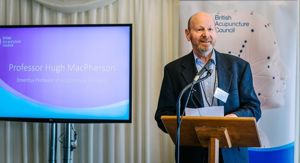

- Faktasjekking i journalistikken - heldagskonferanseom-kristiania / kalender / photofakekonferanseHøyskolen Kristiania og Faktisk.no inviterer deg til heldagskonferanse der vi går i dybden på utfordringene og mulighetene AI gir innen faktasjekking.
- Participants needed for the research project “FactArt: Samfunnet ser”forskning / forskningsgrupper / participants-needed-for-the-research-project-factart-samfunnet-serParticipants needed for the research project “FactArt: Samfunnet ser”
- Application form for EU/EEA/Swiss applicantssoknad / international-applicantsIf you have a Norwegian identification number, you must apply through our regular application portal . *Please note that the deadline for submitting an application for non-EU/EEA applicants who need a permit to study in Norway is February 15th. Application registrations received after this deadline will not be processed. If you have any questions regarding your application, please contact admission@kristiania.no by e-mail.